

In a professional kitchen, a salamander isn't some kind of lizard—it's a seriously powerful, specialized broiler that blasts intense, top-down heat. Think of it as the secret weapon chefs use for finishing dishes. It’s like a culinary spotlight, perfectly browning, melting, and caramelizing food without overcooking what’s underneath. From a food truck in Los Angeles melting cheese on nachos to a high-end restaurant creating that perfect sugar crust on a crème brûlée, the salamander provides that final, unforgettable touch.
The Chef's Secret for a Perfect Finish
Ever wonder how restaurants get that perfectly bubbly, golden-brown crust on a gratin or a steak? The secret is almost always a salamander broiler. It's a completely different beast from a standard oven, which cooks with ambient heat. A salamander is designed for one thing: hitting a dish with intense, direct heat from above. It doesn't cook a dish from scratch; it elevates an already-cooked meal to its final, glorious state.
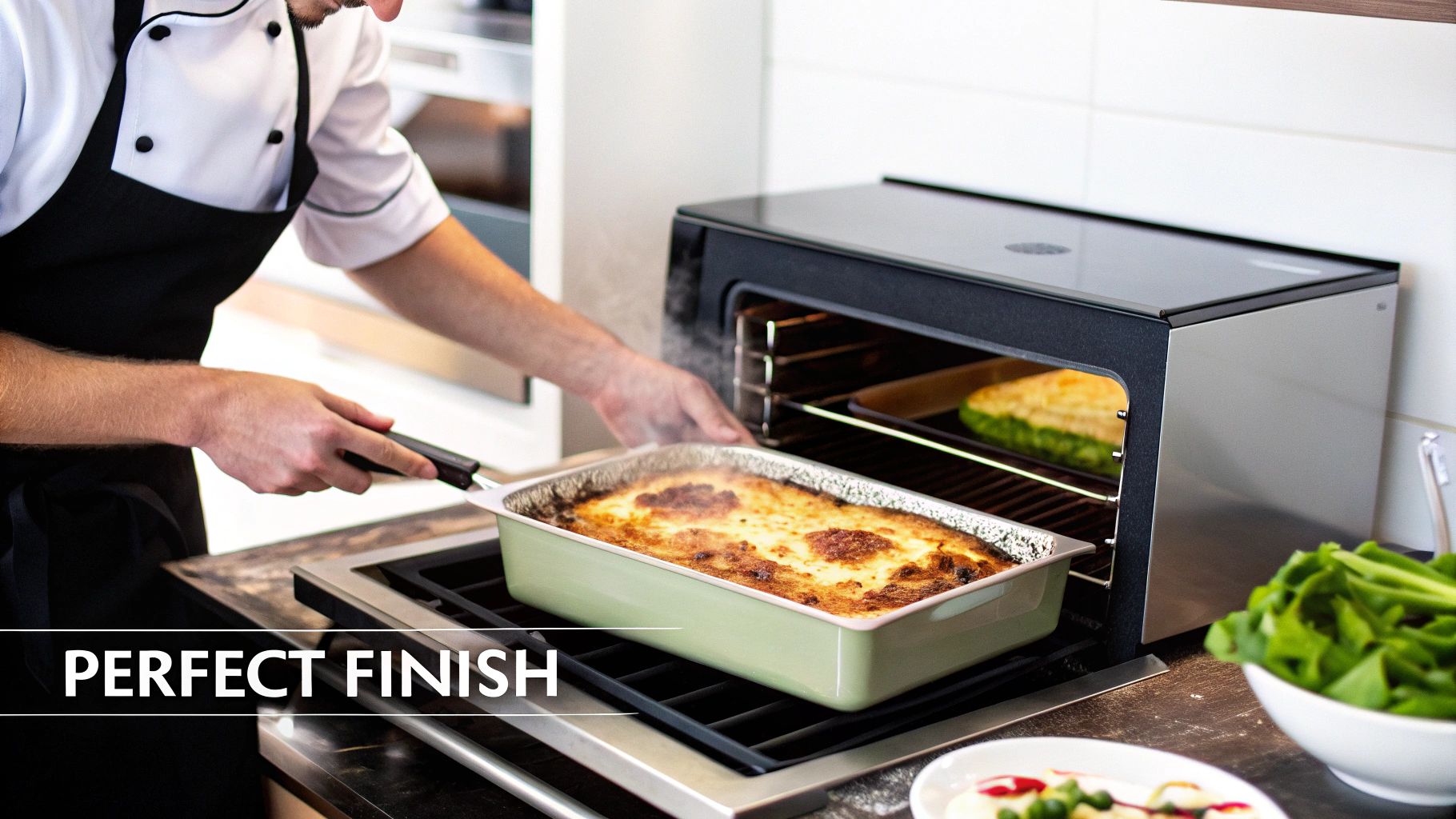
This incredible piece of restaurant equipment is a master of texture and color. Its focused heat can flawlessly pull off a range of finishing techniques that are just plain difficult to replicate with any other tool.
What Is a Salamander Used For
The applications are all over the place, touching nearly every part of a modern menu. In the fast-paced world of pro cooking, this compact overhead unit is a chef's go-to for adding that perfect last touch. It provides radiant heat to get flawless browning, melt cheese into oozy perfection, or caramelize sugars to a shatter-crisp finish.
The idea actually dates back to the 1600s in European kitchens, where chefs used hot pokers—also called 'salamanders'—to scorch food. Today's version has evolved into a modern essential, exported to over 200 countries and powering everything from fine-dining spots to bustling food trucks.
A salamander’s job is one of precision. It adds the crucial visual and textural elements—the crisp, the char, the melt—that signal a dish is complete and ready to impress. It’s the difference between a good dish and a great one.
The sheer versatility of a salamander makes it indispensable in kitchens all across Southern California. Common jobs for this workhorse include:
- Melting: Creating an even, bubbly layer of cheese on French onion soup or nachos, a staple in many Mexican food restaurants.
- Browning: Giving macaroni and cheese or casseroles that delicious golden-brown top.
- Caramelizing: Forming the signature hard sugar crust on a crème brûlée.
- Grilling: Quickly cooking thin cuts of fish or charring vegetables to perfection.
- Toasting: Nailing the perfect toast for bruschetta or sandwiches in seconds, a technique used by many Los Angeles food trucks.
To get straight to the point, here’s a quick breakdown of what a salamander brings to the table.
Salamander Broiler At a Glance
| Primary Function | Common Use Case | Key Benefit |
|---|---|---|
| Finishing dishes with intense, top-down radiant heat. | Melting cheese, browning casseroles, caramelizing sugar. | Adds texture, color, and flavor without further cooking the dish. |
| Quick, high-temperature cooking. | Grilling thin fish fillets or toasting bread. | Extremely fast results, ideal for a busy and high-volume kitchen line. |
| Holding and warming plates before service. | Keeping a finished dish hot until it's ready to go out. | Ensures food is served at the perfect temperature for the customer. |
Ultimately, understanding what a salamander is in cooking means seeing it as a finisher. It’s the last stop for a dish before it heads out to the customer, ensuring it looks every bit as incredible as it tastes.
Understanding How a Salamander Broiler Works
To really get what a salamander is all about, you have to look under the hood at how it generates heat. A salamander gets its power from one of two places: infrared or radiant heat. Each one cooks differently, making them perfect for specific jobs in a busy professional kitchen, whether it's a bustling Los Angeles pizza joint or a high-end bistro.
Think of an infrared salamander like a magnifying glass focusing the sun's rays on a single point. It shoots out intense, targeted heat waves that cook and brown surfaces in a flash. The technology is incredibly fast, often hitting full temperature in just seconds—a huge advantage during a chaotic dinner service.
The real magic of infrared is its speed and raw power. It delivers a direct, searing heat that’s perfect for creating a deep crust on a steak or blistering cheese on a dish right before it heads out to the customer.
This rapid, high-energy heat makes infrared models the go-to choice in many modern kitchens. The whole idea of a salamander actually started way back in the 17th century with a red-hot iron tool used to brown food. Today, it’s a staple piece of restaurant equipment, with the global market hitting a staggering USD 1.54 billion. Infrared models own the biggest slice of that pie, mostly because they heat up so quickly—some are ready in as little as 90 seconds—and their searing power is unmatched for high-volume cooking. You can read more about this cool tool's history on The Restaurant Warehouse.
Radiant Heat: A Gentler Approach
On the other side of the coin, you have radiant heat salamanders, which usually rely on ceramic burners. Picture the gentle, consistent warmth coming off hot asphalt on a sunny day—that's pretty much how radiant heat works. It spreads the warmth more evenly and with less intensity than infrared.
It might take a little longer to get up to temperature, but that gentler approach gives chefs incredible control. This makes it the perfect choice for jobs that need a softer touch.
Here’s where a radiant heat salamander really shines:
- Delicate Browning: It's perfect for getting an even, golden-brown top on a meringue without torching the delicate peaks.
- Holding Temperatures: The steady warmth can keep finished plates hot and ready for service without actually overcooking them.
- Even Melting: It’s a pro at melting cheese on more sensitive dishes where the aggressive blast of an infrared unit might scorch the other ingredients.
Choosing between infrared and radiant really comes down to what's on your menu and how your kitchen flows. If you're running a busy food truck or a steakhouse that depends on speed and a hard sear, an infrared model is your best friend. But for a kitchen that puts out delicate pastries or just needs a more versatile finishing tool, the even-tempered nature of a radiant heat salamander might be the smarter play.
Salamander vs Broiler vs Oven Explained
In the whirlwind pace of a professional kitchen, knowing your equipment's specific role isn't just helpful—it's essential. While a salamander, a standard oven broiler, and a convection oven all bring the heat, they are fundamentally different tools designed for completely different jobs. Thinking they're interchangeable is like trying to use a sledgehammer for delicate woodwork; you'll get a result, but it definitely won't be the one you wanted.
Most people are familiar with a standard oven's broiler from their home kitchen. It’s usually a heating element at the very top of the oven cavity or sometimes a separate drawer at the bottom. Sure, it can melt cheese or toast a piece of bread, but it's a far cry from the power and precision of a salamander. It heats the whole oven space, takes its sweet time, and gives you almost no control over the heat intensity. That just won't cut it during the lunch rush at a busy Los Angeles restaurant.
A Specialist vs. Generalists
A convection oven, on the other hand, is the master of even cooking. It uses fans to circulate hot air, which is perfect for baking a tray of delicate pastries or roasting a large prime rib uniformly. It’s the polar opposite of what a salamander does. For a deeper dive, you can learn more about convection vs. conventional ovens in our guide. A salamander doesn’t circulate heat; it blasts a powerful, focused wave of energy straight down to finish a dish.
The real difference comes down to specialization. An oven is a generalist, built to take food from raw to cooked. A salamander is a specialist—a finishing tool that perfects dishes in mere seconds.
A salamander is not an oven. It's a high-precision instrument for browning, caramelizing, and melting. Using an oven broiler for this is like using a floodlight for surgery—it's too slow, too broad, and lacks the necessary focus.
This diagram shows you exactly how a salamander generates its signature, intense heat.
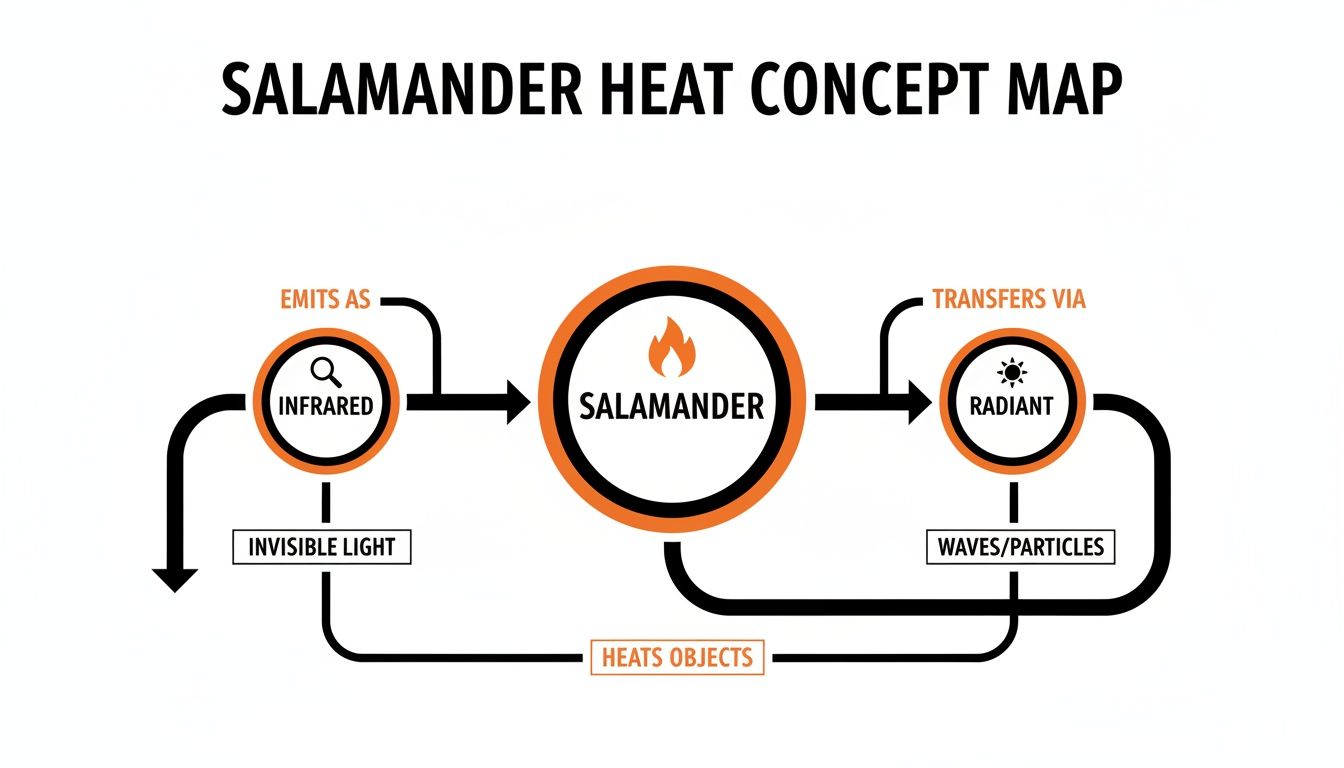
Whether it's using infrared or radiant elements, the goal is the same: transfer a massive amount of heat directly onto the food's surface for an incredibly fast finish.
Choosing Your Heat Source Salamander vs Broiler vs Oven
To really spell it out, let's put these three pieces of equipment side-by-side. The table below makes it clear why a dedicated salamander is a non-negotiable tool for so many chefs, especially in high-volume kitchens that need to perfectly melt cheese on hundreds of plates a night.
| Feature | Salamander | Standard Oven Broiler | Convection Oven |
|---|---|---|---|
| Primary Use | Finishing, browning, melting, caramelizing | Basic top-down broiling | Baking, roasting, even cooking |
| Heat Source | Intense, direct overhead (Infrared/Radiant) | Less intense overhead element | Circulated hot air |
| Speed | Extremely fast (seconds to minutes) | Slow (several minutes) | Moderate to slow |
| Control | High precision and temperature control | Limited to on/off or high/low | Precise temperature control for baking |
| Best For | Perfecting crème brûlée, melting cheese on pizza | Light toasting, simple melting jobs | Roasting chickens, baking cookies |
Ultimately, a salamander isn't a replacement for an oven—it's a powerful addition to a chef's arsenal for adding those final, perfect touches that elevate a dish.
Real World Uses in Los Angeles Kitchens
Alright, let's step out of the textbook and into the heat of a real SoCal kitchen. From a packed food truck on Abbot Kinney to a high-end steakhouse in Beverly Hills, the salamander broiler is the unsung hero of the line. It's that final, fiery touch that takes a dish from "good" to "unforgettable."
Once a chef gets one of these installed, they almost always wonder how they ever got by without it.
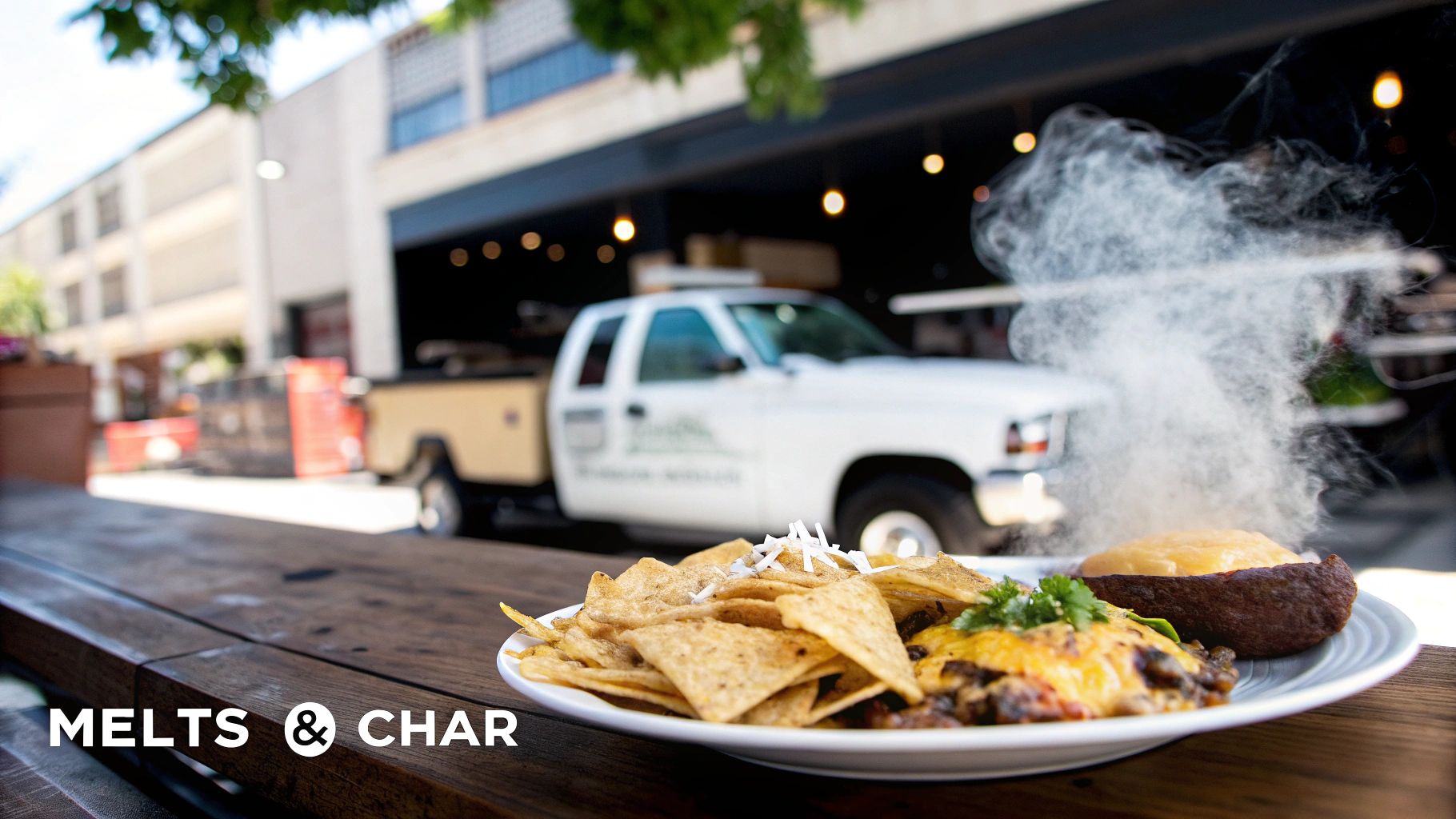
Think about your favorite Los Angeles Pizza spot. The big deck oven does most of the work, sure. But that last-second blast from a salamander? That's what gets the cheese perfectly molten and bubbly, and what adds those beautiful "leopard spots" to the crust without turning the whole slice into a cracker.
It’s the same story in the city’s incredible Mexican Food scene. A busy food truck needs to pump out orders fast. A salamander is the secret weapon for getting that perfect blister on the queso for a plate of nachos or finishing an authentic queso fundido. It delivers that signature melted, slightly browned top in just a few seconds—a game-changer when you're slammed. Many Los Angeles Food Trucks rely on this piece of restaurant equipment for speed and quality.
Elevating Steaks and Finishing Casseroles
In a serious steakhouse, the salamander is where the magic happens. A steak might be cooked to a perfect medium-rare, but it's that final, quick trip under the intense heat of the salamander that creates the deep, flavorful crust. This is the Maillard reaction in hyperdrive.
That rapid, top-down heat develops all those complex flavors and textures people pay top dollar for, all while locking in the juices. It’s what creates a truly memorable bite.
But it’s not just for the fancy stuff. A salamander proves its worth all day, every day with dozens of little finishing touches.
- Toasting Sandwiches: It's perfect for an open-faced sandwich, melting the cheese on top while leaving the bread underneath soft and pillowy.
- Browning Gratins: That golden-brown, crunchy top on a potato gratin or a killer mac and cheese? That’s the salamander’s handiwork.
- Finishing Desserts: It’s the go-to for caramelizing the sugar on a crème brûlée or browning the peaks of a meringue pie just right.
The salamander is a finishing artist. It takes a dish that's already 90% there and adds the visual and textural pop that makes customers' eyes light up—and justifies a higher price point.
Versatility for Modern Menus
Even kitchens leaning into plant-based cooking have come to rely on the salamander. It can put a beautiful char on asparagus or bell peppers, adding a smoky depth that elevates the whole plate. The ability to add texture and complexity so quickly makes it a must-have for any modern kitchen, whatever the cuisine.
From melting the Gruyère on a classic French onion soup to just keeping plates hot during a chaotic dinner rush, the salamander is a true workhorse. When you understand the full range of commercial kitchen equipment, you see how one smart piece can boost both quality and efficiency. The salamander is a prime example of a specialized tool that pays for itself over and over again.
How to Choose the Right Salamander
Picking out the right salamander isn't just about ticking another box on your equipment list; it's about investing in a workhorse that will define your dishes and smooth out your kitchen's flow. Making the best call means really thinking about your menu, your space, and how your team operates day-to-day. The choice really boils down to three big factors: the power source, the type of heat, and the size.
A bustling Mexican Food truck hitting the streets of Los Angeles has totally different needs than a high-end steakhouse. The food truck is probably looking for a compact, electric countertop model they can just plug in and go. But the steakhouse? They’ll need a beast—a powerful, wall-mounted gas unit that can handle the heat of a relentless dinner rush.
Power Source: Gas vs. Electric
Your first big decision is whether to go with gas or electric. Gas salamanders, running on natural gas or propane, are the classic choice for a reason. They heat up incredibly fast and give chefs super responsive temperature control for on-the-fly adjustments. They pump out powerful, consistent heat that’s perfect for high-volume jobs like searing a dozen steaks or finishing plate after plate.
On the other hand, electric models offer a ton of flexibility, especially in kitchens where you can't easily tap into a gas line—a common issue for a Los Angeles Food Truck. They're often considered a safer bet in tight quarters and can be more energy-efficient if you only use them here and there. And don't think they're slow; modern infrared electric units are lightning-fast, easily keeping up with their gas-powered cousins.
The right power source is all about your kitchen's setup and your daily volume. Gas brings the raw power for the busiest spots, while electric offers versatility and a simpler installation, making it a great option for mobile kitchens and smaller cafes.
Heat Type and Mounting Options
Next up, you have to choose between infrared and radiant heat. As we've touched on, infrared delivers that intense, direct heat for a quick, powerful sear. It's exactly what a Los Angeles Pizza joint needs to get that perfect bubbly, blistered crust. Radiant heat is much gentler, providing more of an even warmth that’s better for delicate jobs like browning a meringue without burning it.
Finally, think about where you're going to put it. You've got two main choices:
- Wall-Mounted: This is a fantastic way to save precious counter real estate. It gets mounted right on the wall, often over your main range. It’s a permanent solution that works great for established kitchens with a layout that's already locked in.
- Countertop: These units give you way more flexibility since you can move them around as your needs change. It's the perfect pick for smaller kitchens, catering businesses, or any food truck where every square inch counts.
Thinking through these factors will make sure you land a salamander that fits right into your operation. For a full rundown of all the gear you'll need, check out our guide on building a commercial kitchen equipment checklist. It’ll help you make smart buys for every corner of your kitchen.
Common Questions About Salamander Broilers
Even after you know what a salamander broiler does, a few practical questions always pop up before a chef or owner pulls the trigger on buying one. It’s a real investment, and getting clear answers is the only way to make sure it’s the right investment for your kitchen’s workflow and food quality.
We hear the same questions all the time, so we've put together the answers to clear up any confusion. Let’s get you feeling confident about not just choosing the right salamander, but running it like a pro from day one.
Can I Use a Salamander to Cook Raw Food?
This is probably the most common question we get, and the short answer is no. A salamander is a finishing tool, not a primary cooking appliance. Its heat is incredibly intense and comes straight down from the top.
If you tried to cook a raw chicken breast or a thick piece of fish in one, you’d end up with a charred, burnt surface long before the inside was even close to a safe temperature. Think of it as a specialist for browning, melting, and getting that perfect caramelized crust on dishes that are already cooked or just about there.
How Much Space Do I Need for Installation?
Giving your salamander enough breathing room isn't just a good idea—it's a critical safety rule. These units throw off a massive amount of heat, and putting one too close to a wall or other equipment is a serious fire hazard. Always, always check the manufacturer’s specific clearance guidelines for your model first.
As a general rule of thumb, you’ll want to plan for at least 6-12 inches of space from any combustible surfaces on the sides and back.
Safety has to be the number one priority. You must follow local fire codes, and we always recommend a professional installation. It’s the best way to ensure your unit is set up correctly, protecting your staff and your business.
Sticking to these standards is essential for safe operation, especially in the tight, chaotic environment of a busy kitchen.
Is Gas or Electric Better for a Food Truck?
For a mobile kitchen, like the countless Los Angeles Food Trucks cruising our streets, this decision really comes down to your current setup. A gas salamander heats up fast and gives you that instant control many chefs love, but it needs a dedicated propane line and, most importantly, proper ventilation—something that’s tough to manage in a small space.
For that reason, electric models, especially the newer infrared ones, are usually the more practical choice for a food truck.
- Easier Installation: There are no complex gas lines to worry about, making setup much simpler.
- Safety in Tight Spaces: In a cramped truck, many operators feel an electric unit is the safer bet.
- Power Consideration: The only catch is you have to be sure your truck's generator can handle the electrical draw.
For most food truck owners, the plug-and-play nature of an electric salamander just makes more sense.
What Is the Best Way to Clean a Salamander?
A clean salamander is a happy salamander. Keeping it clean isn’t just about hygiene; it’s about performance and making sure your investment lasts. Once the unit is completely cool, a few daily and weekly tasks will prevent grease from building up and keep it running at its best.
- Daily Cleaning: Pull out the crumb tray, wash it, and wipe down all the exterior stainless steel surfaces.
- Scrub the Grates: Get any baked-on food off the grates. You want a clean surface for your dishes every time.
- Heating Elements: Be careful here and follow the manufacturer’s guide. Some infrared burners can be wiped gently, while ceramic ones might just need a light brushing.
A little bit of regular maintenance will keep this powerful finishing tool in prime condition for years to come.
Ready to add the perfect finishing touch to your menu? The experts at LA Restaurant Equipment can help you choose the ideal salamander broiler for your kitchen's unique needs, from high-volume restaurants to nimble food trucks. Explore our selection of new, warranty-backed equipment online at https://larestaurantequipment.com and get fast, free shipping on your order.