

When you get down to it, the convection oven vs conventional oven debate comes down to one simple thing: a fan. A convection oven has one to circulate hot air; a conventional oven doesn't.
That single difference is a game-changer for Los Angeles restaurants, from popular pizza spots to bustling food trucks. By actively moving the heat around, a convection oven cooks food faster and more evenly. It zaps the hot spots that plague conventional ovens, making it the go-to for most high-volume Los Angeles kitchens I work with. A conventional oven, relying on old-school radiant heat, is simpler but just can't keep up with the demands of a busy Mexican food restaurant or any commercial operation.
Foundations Of Commercial Oven Technology
Picking the right restaurant equipment is one of the most foundational decisions you'll make for your Southern California restaurant. It doesn't matter if you're running a bustling Mexican food spot in East LA, a pizza place, or one of the many Los Angeles food trucks—the oven you choose directly hits your cooking speed, how consistent your product is, and ultimately, your bottom line. Let's break down the basic mechanics.
A conventional oven is the classic kitchen workhorse. It has heating elements, usually on the top and bottom, that just radiate heat into the box. Since hot air naturally rises, you end up with uneven temperature zones. This is why you see chefs constantly rotating pans—they're fighting those hot and cold spots to get a consistent bake.
A convection oven, on the other hand, adds a fan and an exhaust system to the mix. This setup actively pushes hot air all around the cavity, creating a totally uniform cooking environment from top to bottom, corner to corner. It's a simple tweak that completely transforms the cooking process, giving you huge gains in efficiency.
If you're digging into different models, you can learn more about the best gas stoves and ovens in our detailed guide.
Convection Vs Conventional Oven At a Glance
To cut to the chase, I've put together a quick table that breaks down the essential differences. This should give you a fast first look at which technology lines up with what you're trying to do in your kitchen.
Convection Vs Conventional Oven At a Glance
| Feature | Convection Oven | Conventional Oven |
|---|---|---|
| Heating Method | Fan-circulated hot air | Static radiant heat |
| Cooking Speed | 25-30% faster on average | Standard cooking times |
| Heat Distribution | Even and consistent | Prone to hot and cold spots |
| Best For | Roasting, baking, high volume | Delicate items like custards |
| Energy Efficiency | Generally more efficient | Less efficient due to longer times |
As you can see, the choice isn't just about a fan—it's about speed, consistency, and the type of food you're putting out.
How Each Oven Technology Impacts Food Quality
When you get down to it, the whole convection vs. conventional oven debate is really about one thing: how the heat gets to your food. This single difference completely changes the texture, color, and moisture of whatever you're cooking. One method is passive, letting heat radiate naturally, while the other is active, using a fan to force hot air everywhere. This creates two totally distinct cooking environments.
The Conventional Oven Cooking Environment
A conventional oven is pretty simple. It has stationary heating elements, usually one on the top and one on the bottom, that just radiate heat into the oven box. Because hot air naturally rises, you end up with a very inconsistent environment. The top rack gets blasted, while the bottom rack cooks way slower. It’s a recipe for uneven results.
This design is what causes those infamous "hot spots." You'll find areas in the oven that are significantly hotter than others, forcing your cooks to constantly rotate pans midway through. In a high-volume Los Angeles kitchen, that’s just not an efficient way to operate.
The Convection Oven Advantage
A convection oven tackles this problem head-on with a surprisingly simple upgrade: a fan. This fan is a game-changer. It constantly circulates hot air throughout the entire oven, wiping out temperature swings and wrapping your food in a consistent wave of heat. This moving air does two things really well: it speeds up cooking and promotes incredible browning and crisping.
For one of the many Los Angeles food trucks that needs perfectly crispy fries or a Mexican food restaurant baking multiple trays of flan, this consistency is a game-changer. It means every item, on every rack, cooks uniformly without manual intervention.
The circulating air also pulls moisture away from the surface of foods. This is exactly why convection technology is the clear winner for certain jobs:
- Roasting Meats: It creates a dry atmosphere that’s perfect for rendering fat and getting that beautiful, crispy skin on a chicken or pork roast.
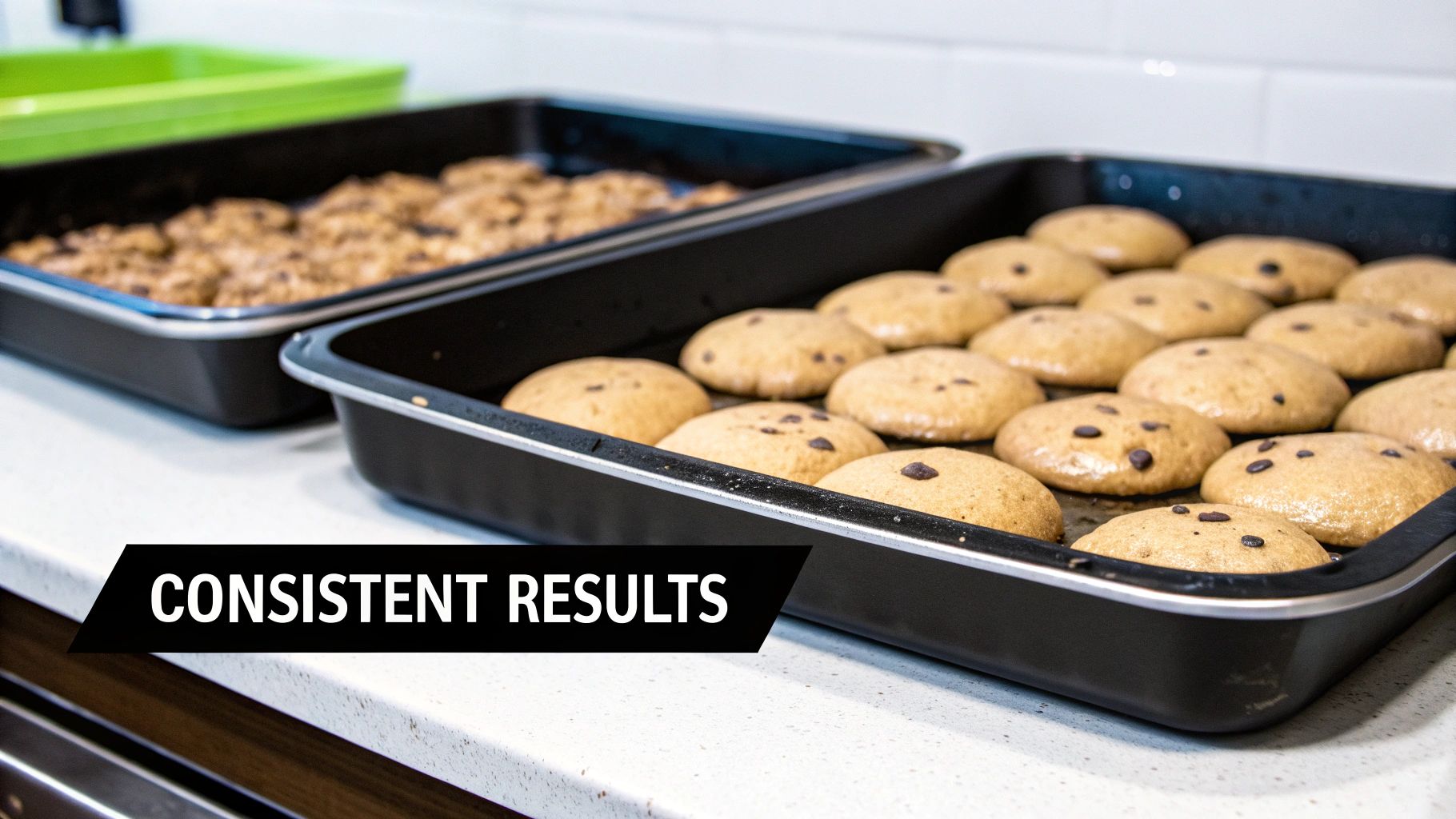
- Baking Pastries: The even heat helps pastries and breads achieve a better, more uniform rise. You get consistent color across a whole sheet of croissants or cookies.
- Dehydrating: That dry, moving air is exactly what you need to make great jerky or fruit chips in less time.
For any kitchen that relies on volume and repeatability, being able to load up every rack and trust that everything will come out perfect is a huge operational win. It cuts down on food waste from burnt or undercooked product and guarantees every customer gets the same fantastic meal. You can explore more about what makes a great commercial convection oven in our detailed overview.
Analyzing Speed And Kitchen Throughput
In the fast-paced Southern California restaurant scene, time is money. Whether you're slammed during a dinner rush in downtown LA or have a line wrapped around your food truck, speed is everything. This is where the debate between convection and conventional ovens gets real, directly hitting your kitchen's output and, ultimately, your bottom line.
The magic of a convection oven is its fan. By constantly circulating hot air, it completely changes the cooking game. No more waiting around for radiant heat to do its job. This active heat transfer gets food cooked faster and, just as importantly, more evenly on every single rack. This is a critical piece of restaurant equipment for a busy operation.
How Much Time Do You Really Save?
We’re not talking about a small tweak here; this is a major operational upgrade. A good convection oven can cut your cooking times by a solid 25-30%. Think about what that means—less time running the oven translates directly to lower utility bills.
This efficiency boost happens because the moving hot air gets the job done quicker than the static heat inside a conventional model. For a deeper dive into the science, check out these insights on oven efficiency from Plessers.com.
That speed directly impacts your ability to serve customers. Faster cooking means shorter ticket times, which is the key to turning tables during peak hours and keeping diners happy. You can serve more people in the same amount of time, which is a straightforward way to boost revenue without having to stay open later.
Boosting Production and Keeping It Consistent
Beyond cooking one dish faster, convection ovens are a game-changer for batch cooking. The even heat means you can load up every rack and trust that everything will cook uniformly. Imagine pulling out multiple trays of roasted vegetables or sheet pans of cookies where every single one is perfectly browned.
This multi-rack capability is huge for high-volume operations:
- Los Angeles Food Trucks: In a tight space, you need maximum output. A single convection oven can bake bread, roast meats, and finish dishes in rapid succession.
- Mexican Restaurants: Knocking out big batches of roasted corn or baking multiple flans for dessert service becomes way more efficient.
- Los Angeles Pizza Restaurants: While deck ovens are for pizza, a convection oven is perfect for quickly cooking sides like wings or appetizers, ensuring they are ready with the main order.
The bottom line is that a convection oven helps your kitchen push out more food in less time, without cutting corners on quality. This increase in throughput affects your labor costs—letting your team get more done—and makes it easier to handle those unexpected rushes.
Comparing Energy Use And Long-Term Operating Costs
When you look past the initial price tag of restaurant equipment, the long-term running costs are where a convection oven really starts to pull away from a conventional model. For any kitchen in Southern California staring down high utility bills, this efficiency isn't just a bonus—it's a critical piece of your profitability puzzle. The magic is in how convection ovens cook faster and at lower temperatures, a one-two punch for energy savings.
Because the fan is constantly circulating hot air, heat gets to the food way more efficiently. This means you can often drop your cooking temperature by a good 25°F and still slash cook times by up to 30%. That might not sound like a huge deal for a single dish, but when you multiply it by hundreds of hours of operation every month, the savings really start to add up.
Calculating The Return On Investment
This efficiency isn't just a minor perk; it's a real, measurable return on your investment. A more efficient oven means your gas or electric meter isn't spinning as fast, which directly cuts down your monthly utility bills. When you’re trying to figure out the true cost of a new oven, you have to think about its total cost of ownership, not just the sticker price. A thorough analysis, like the kind detailed in a commercial kitchen EPC assessment, shows you the whole picture.
There's another angle to this, too. A more efficient oven throws off less ambient heat. In a packed Los Angeles kitchen, especially during a summer heatwave, that can seriously reduce the strain on your HVAC system. A cooler kitchen doesn't just save you money on air conditioning; it makes for a much more comfortable workspace for your crew, which can boost both morale and productivity.
The convection oven vs conventional oven debate isn't just about how well they cook. It’s a strategic financial choice. Over the life of the equipment, the energy savings from a convection model often completely pay back the higher initial cost.
Long-Term Benefits Beyond The Utility Bill
The financial upsides don't stop with your energy bill. By cooking food more efficiently, you're also putting less wear and tear on the oven's heating elements and other parts over the long haul. This can easily translate into a longer lifespan for your oven and fewer emergency service calls.
Think about all the benefits stacked together:
- Lower Monthly Utilities: You’re using less gas or electricity because of those shorter, lower-temperature cooking cycles.
- Reduced HVAC Strain: Less waste heat means your air conditioning doesn't have to work as hard, saving you even more on energy.
- Increased Throughput: Cooking faster means you can get more food out to more customers, which directly bumps up your revenue potential.
At the end of the day, choosing a convection oven is an investment in your kitchen’s overall efficiency. It's a move that delivers continuous savings, making it the smarter financial decision for most modern restaurants, bakeries, and food trucks.
Making The Right Choice For Your LA Business
Choosing between a convection and conventional oven isn't about finding a single "best" option; it's about matching the right restaurant equipment to your specific Los Angeles business. What works for a high-volume pizza joint in Koreatown will be totally different from what a nimble food truck needs to succeed on the Santa Monica pier. The right call comes down to your menu, your space, and your production goals.
For most modern, fast-paced kitchens, the sheer speed and consistency of a convection oven make it the go-to workhorse. But there are definitely situations where a more traditional approach is better.
Recommendations For Los Angeles Food Businesses
Let's break it down by business type, focusing on Los Angeles Pizza, Los Angeles Food Trucks, and Mexican Food restaurants.
Los Angeles Pizza Restaurants
While a specialized deck oven will always be king for getting that perfect pizza crust, a convection oven is an absolutely essential secondary piece of equipment. It’s perfect for quickly and evenly cooking appetizers like chicken wings, garlic knots, and toasted sandwiches. That forced air ensures every single item comes out crispy and consistent—a lifesaver for maintaining quality on popular sides during a hectic dinner rush.
Los Angeles Food Trucks
In the tight quarters of a food truck, every inch and every second is precious. A convection oven is the undisputed champion here. Its smaller footprint and 25-30% faster cook times are game-changers. You can crank out more food in less time, which is exactly what you need to serve those long lines that make or break your profitability. From baking empanadas to roasting vegetables for burritos, a convection oven delivers the throughput you need to compete in LA's crowded mobile food scene.
Mexican Food Restaurants
For a Mexican food restaurant, the best oven really depends on the menu. A convection oven is fantastic for batch-roasting vegetables for salsas, cooking multiple trays of carnitas evenly, or baking desserts like flan. The consistent heat gives you uniformity across large batches. On the other hand, a conventional oven might be better for those delicate, slow-cooked dishes where gentle, static heat is what you want.
For bakers and pastry chefs, this decision is even more critical. While a convection oven creates incredible browning on croissants and cookies, that intense airflow can be a disaster for delicate custards or cheesecakes. Those items thrive in the moist, still environment of a conventional oven.
Convection Ovens: A Clear Path To Savings
At the end of the day, the efficiency of convection technology delivers real benefits that hit your bottom line. This flowchart shows you exactly how a convection oven's core strengths translate into savings for your business.
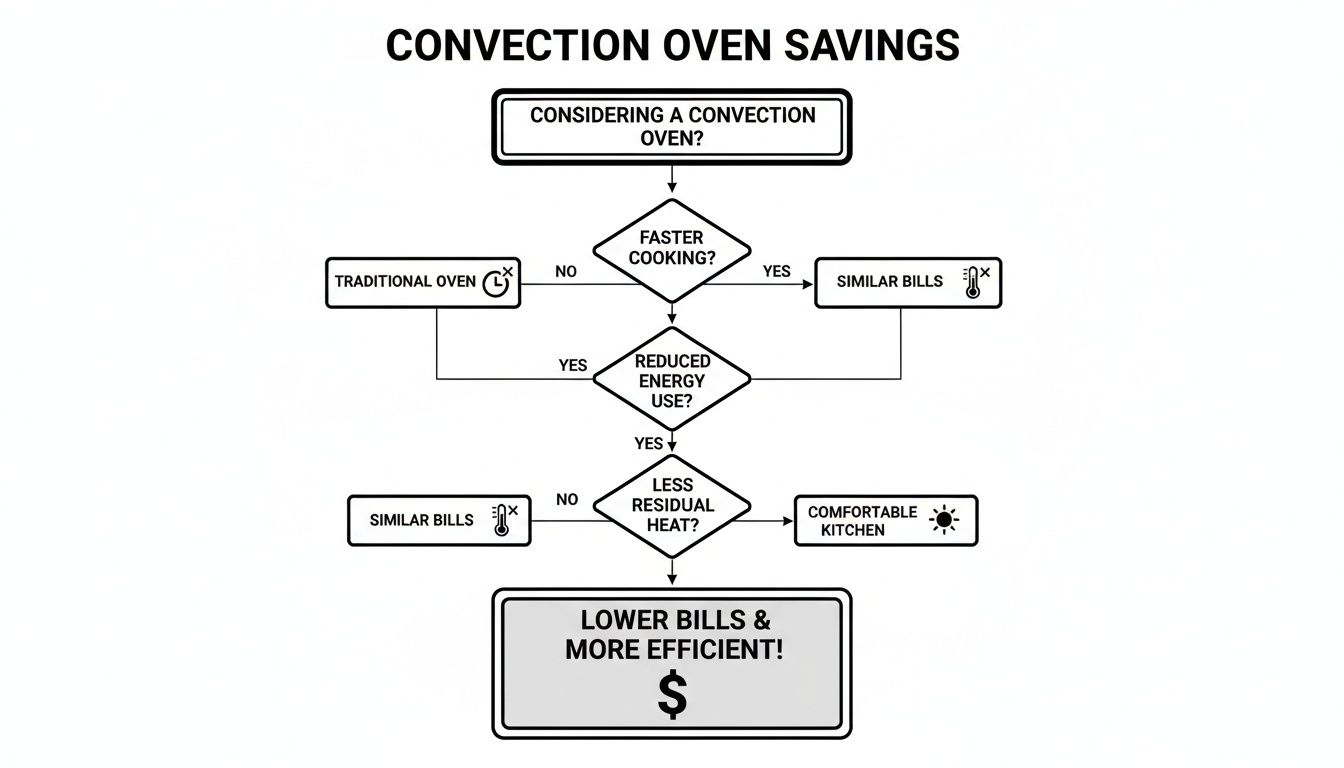
The takeaway here is simple: by cooking faster and at lower temperatures, convection ovens cut down on energy use. That directly lowers your monthly utility bills, which is a massive operational advantage for any Southern California business.
Oven Recommendations By Business Type
To make your decision even easier, we've put together a quick-reference table matching oven types to common LA food service businesses. This should help you pinpoint the best fit for your kitchen.
| Business Type | Primary Recommendation | Key Considerations |
|---|---|---|
| High-Volume Restaurants | Convection Oven | It's all about maximizing throughput and keeping food consistent during those crazy peak hours. |
| Bakeries & Cafes | Both (Dual or Separate) | Use a convection oven for browning pastries and a conventional one for delicate cakes and custards. |
| Los Angeles Food Trucks | Convection Oven | You just can't beat the speed, efficiency, and compact footprint for these types of operations. |
Ultimately, the goal is to equip your kitchen with an oven that not only handles your current menu but also supports your future growth.
Investing in Your Kitchen With The Right Partner
Picking between a convection and a conventional oven isn't just about buying a piece of equipment. It's a strategic move for your business. The right oven is directly tied to the quality of your food, how smoothly your kitchen runs, and, ultimately, your bottom line. Whether you need the high-speed output of a convection oven for a bustling Los Angeles food truck or the delicate, even heat of a conventional oven for a specialty Mexican food dish, getting it right from the start is absolutely crucial.
Here at LA Restaurant Equipment, we don't just sell boxes; we partner with Southern California's chefs and restaurateurs to set them up for success. We’ve cut out the expensive showrooms, which lets us offer brand-new, warranty-backed commercial ovens at warehouse-direct prices. If your business is in Los Angeles or Orange County, that also means fast, free shipping—often landing at your door in just one to two business days.
Making New Equipment Affordable
We get it. Cash flow is king in the restaurant world. That’s exactly why we have flexible financing options available, making the jump to new, reliable restaurant equipment a smart and manageable financial decision. You can find out more about how we can help you finance your restaurant equipment on our blog.
Choosing new equipment with a warranty eliminates the risks and hidden repair costs that often come with used models, giving you peace of mind and operational stability from day one.
Of course, your oven is just one piece of the puzzle. Keeping all your commercial kitchen equipment in top shape is key to long-term success. On that note, you might also find this detailed commercial deep fryer cleaning guide helpful for maintaining your other essential investments.
Answering Your Questions: Convection vs. Conventional
When it's time to decide between a convection oven vs a conventional oven, a lot of practical questions come up for Los Angeles restaurant owners. Here are some quick, straightforward answers to the most common ones we hear.
Can You Use Conventional Recipes In a Convection Oven?
Yes, you absolutely can, but you'll need to make a simple tweak. Convection ovens cook with more intensity and speed, so the go-to rule is to drop the recipe's temperature by 25°F.
Let's say your Mexican food restaurant's famous tres leches cake recipe calls for baking at 350°F in a standard oven. You’d just set your new convection oven to 325°F. You’ll also want to start checking on it sooner—about two-thirds of the way through the original bake time. Most things will finish 15-25% faster.
Are Convection Ovens Harder To Clean?
They aren't really harder to clean, but there is one extra piece to the puzzle: the fan. The fan and its housing at the back of the oven can definitely collect grease, especially in a high-volume spot like a busy LA food truck.
Keeping it in top shape is simple:
- Wipe Down Daily: Clean the interior surfaces every day, just like you would with any other oven.
- Mind the Fan: Every so often, you'll need to carefully clean the fan blades and the area behind the guard. Always follow the manufacturer's directions for this part.
- Schedule a Pro: Make sure the fan system is on the checklist for your regular professional equipment maintenance. This keeps it running right and prevents bigger problems down the road.
Do You Need Special Ventilation For a Commercial Convection Oven?
Yes, and this is a big one. Pretty much any piece of commercial cooking equipment, whether it's a convection or conventional oven, requires a proper commercial kitchen hood for ventilation. This isn't just a suggestion—it's a critical safety and compliance issue for any food business in Los Angeles, from a small pizza joint to a massive catering kitchen.
Your ventilation hood is there to pull heat, smoke, grease, and other gunk out of your kitchen's air. The exact type of hood you'll need depends on the oven's size, whether it's gas or electric, and local health codes. Always bring in a licensed pro to make sure your setup is compliant. A good system keeps your kitchen safe, your air clean, and your team happy.
Ready to bring the speed and consistency of a new commercial convection oven to your kitchen? LA Restaurant Equipment has you covered with warehouse-direct pricing on top-quality, warranty-backed equipment. We offer fast, free shipping to Los Angeles and Orange County. Check out our selection and find the perfect oven for your operation at larestaurantequipment.com.