

Think of your commercial kitchen's cooking line. It's the heart of the whole operation, the engine that powers every single dish that comes out of your kitchen and, ultimately, your profitability. In the fast-paced food scene here in Southern California, gas is still the undisputed champion. It’s all about raw power and precision control.
From a bustling Mexican food spot in East L.A. to an innovative Los Angeles food truck hitting the lunch rush in Irvine, or a pizzeria crafting the perfect Los Angeles pizza, gas is the workhorse that gets the job done.
The Engine Room of Your Commercial Kitchen
Picking the right restaurant equipment is one of the most important decisions you'll make as a restaurant operator in Los Angeles or Orange County. Your gas stove and oven aren't just pieces of stainless steel; they're the core of your kitchen's efficiency, the key to your menu's quality, and a huge factor in your bottom line. This is where your ingredients become signature dishes. It's where speed, precision, and consistency are born.
This is especially true when you're up against the fierce competition in the local food scene. Picture a high-volume restaurant on a Friday night or a food truck with a line wrapped around the block. In those moments, you absolutely need to be able to crank the heat, drop it in an instant, and have your oven recover its temperature in a flash. There's no room for equipment that can't keep up.
Gas cooking equipment gives chefs that instant response and high-heat output they need. Electric just can't compete. It lags when you change temperatures, while gas gives you that subtle control that’s so critical for a perfect sear, a quick sauté, or a gentle simmer.
This guide is designed to walk you through everything you need to know to select the best gas stoves and ovens to bring your culinary vision to life. We’ll break it all down, covering:
- Types of Equipment: From standard ranges to specialized pizza deck ovens.
- Key Specifications: Getting a real-world understanding of BTUs, burners, and capacity.
- Installation and Safety: How to navigate local codes and ventilation requirements without headaches.
- Smart Purchasing: Why buying new, warranty-backed equipment is always the smarter long-term investment.
At the end of the day, the goal is simple: set up your kitchen for success. For restaurant owners here in Los Angeles and Orange County, that means finding reliable gear that doesn't break the bank. Working with a local supplier who gets the unique pressures of this market is the key to getting the right equipment delivered fast, so your business can get cooking.
Alright, let's fire up the burners and get started.
Choosing The Right Tools for Your Menu
Think of your kitchen's cooking line like a master mechanic's toolbox—you wouldn't use a sledgehammer to fix a watch. Every single piece of restaurant equipment is engineered for a specific job. Picking the right gear isn't about finding a one-size-fits-all solution; it's about matching the hardware to your menu. A high-volume Los Angeles food truck needs different firepower than a pizzeria obsessed with the perfect crust, and getting this right from the start is fundamental.
The decisions you make here will echo through your daily service, dictating workflow, kitchen space, and the quality of every plate that goes out. It's all about aligning your culinary vision with the physical tools that bring it to life, ensuring you invest in equipment that makes service smoother, not harder.
The Everyday Workhorse: The Restaurant Range
For most kitchens, the restaurant range is the undisputed centerpiece. It’s a workhorse, plain and simple. You get a versatile combination of open burners on top and a standard oven down below, making it the go-to for just about everything—sautéing, simmering, searing, and even small-batch baking. Whether you're running a classic diner or an upscale bistro, this is the machine that handles the bulk of the work with rock-solid reliability.
These ranges are the backbone of countless Los Angeles kitchens for a reason. They offer a familiar, no-nonsense setup that chefs can count on when the pressure is on. Firing multiple pans at once while finishing a dish in the oven below? That's what they're built for. Check out our collection of durable and powerful commercial restaurant ranges to find the perfect fit for your line.
High-Volume Heroes: Convection and Combi Ovens
When your menu calls for baking, roasting, or cooking large quantities with absolute consistency, a convection oven is your best friend. Unlike a standard oven, it uses a fan to circulate hot air, wiping out hot spots and ensuring everything from sheet pans of veggies to trays of cookies cooks evenly and up to 25% faster. For bakeries, caterers, and busy restaurants, that kind of efficiency is a total game-changer.
Ready to take it a step further? Meet the combi oven. This powerhouse unit combines convection cooking with steam, and can even do both at the same time. This lets you roast meats that are ridiculously juicy on the inside with a perfectly browned crust, bake bread with an ideal rise, or gently steam vegetables—all in one piece of equipment. It's a bigger investment up front, but its ability to replace multiple other appliances can save a ton of precious kitchen space.
To help you map this all out, here’s a quick visual guide to the decision-making process.
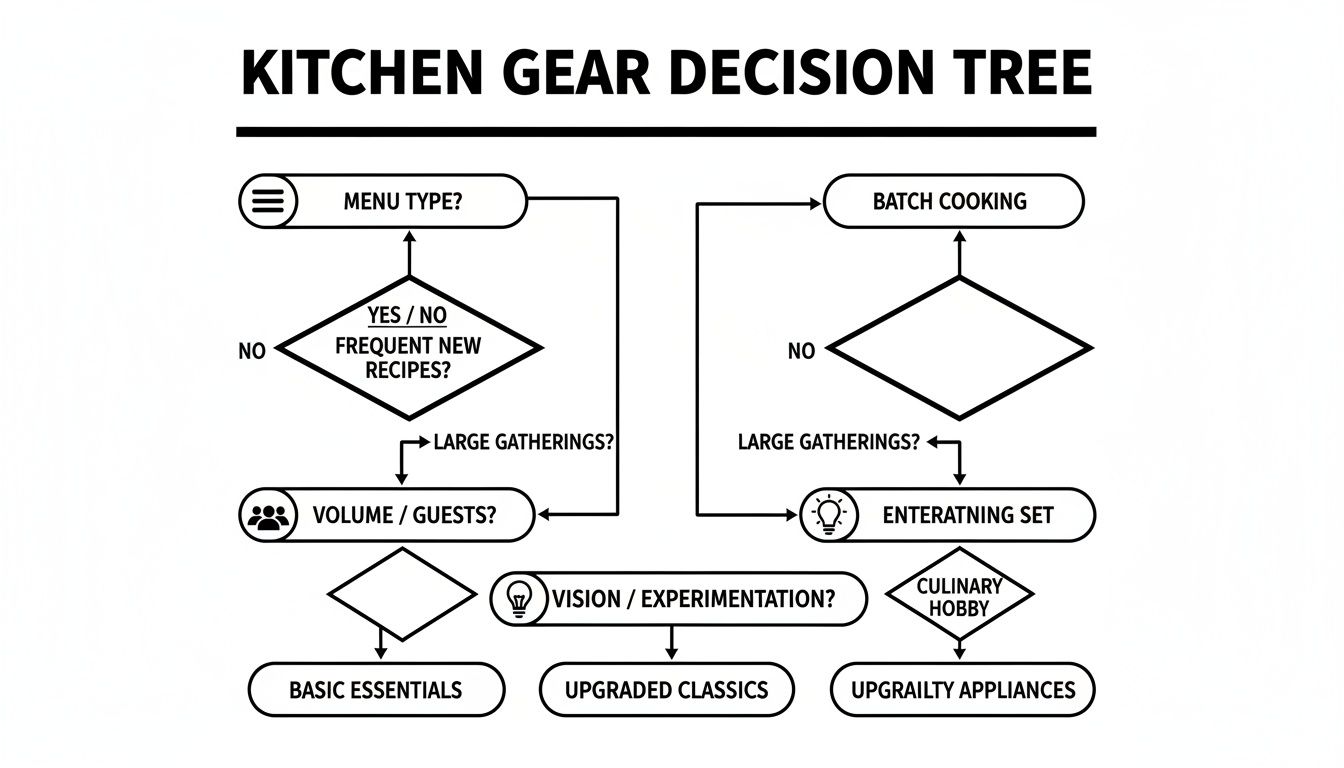
As you can see, your menu's core items should be the main driver behind your equipment choice, followed closely by how many customers you plan to serve.
Specialized Equipment for a Signature Menu
Sometimes, a standard range or oven just won’t cut it. For businesses built around a single, iconic item, specialized equipment is non-negotiable. The best example here in Los Angeles? The deck oven—the secret weapon behind every authentic, crispy-crusted Los Angeles pizza. Its stone or ceramic "decks" soak up and radiate intense, even heat, crisping the dough from below while melting the cheese to perfection on top.
For concepts like an authentic pizzeria or a taqueria serving authentic Mexican food by making tortillas from scratch, the right oven isn't just an accessory; it's the main character. A deck oven delivers a specific kind of heat that simply can't be faked, creating the exact texture and flavor that keeps customers coming back.
It’s really no surprise that gas ovens are the undisputed kings of commercial cooking in North America. They just dominate the market, making them the go-to for restaurants, bars, and food trucks that need that perfect sear and bake. This all comes down to gas's superior heat control. It delivers precise BTU outputs that electric just can't touch, and can cut cook times by 15-20% on average—a massive advantage for high-turnover spots in SoCal's buzzing food scene.
To help you sort through these options, here's a quick cheat sheet.
Commercial Gas Cooking Equipment at a Glance
Use this table to quickly compare common gas equipment and find the perfect match for your restaurant's needs.
| Equipment Type | Primary Use Case | Best For | Key Feature |
|---|---|---|---|
| Restaurant Range | All-purpose cooking | Diners, bistros, cafes | Combines cooktop and oven for maximum versatility. |
| Convection Oven | Baking, roasting, high-volume | Bakeries, caterers, high-turnover restaurants | Fan-circulated air for fast, even cooking. |
| Combi Oven | Steaming, roasting, baking | Fine dining, hotels, large-scale operations | Combines convection, steam, and both for ultimate control. |
| Deck Oven | High-heat baking | Pizzerias, artisan bakeries | Stone/ceramic decks radiate intense, direct heat for perfect crusts. |
Each of these tools has its place, and choosing the right one is about understanding what your menu—and your customers—demand.
Understanding the Specs That Matter Most
Okay, let's cut through the sales talk and get down to what actually makes a difference in your kitchen. When you're picking out the best gas stoves and ovens, the spec sheet tells the real story. It’s all about translating those numbers into how the equipment will perform for your Los Angeles kitchen when the tickets start piling up.
Getting this part right is the difference between a smooth service and a major bottleneck during the dinner rush. You're not just buying a piece of metal; you're giving your chefs a tool that can either help them shine or hold them back.
Decoding BTUs: The Horsepower of Your Kitchen
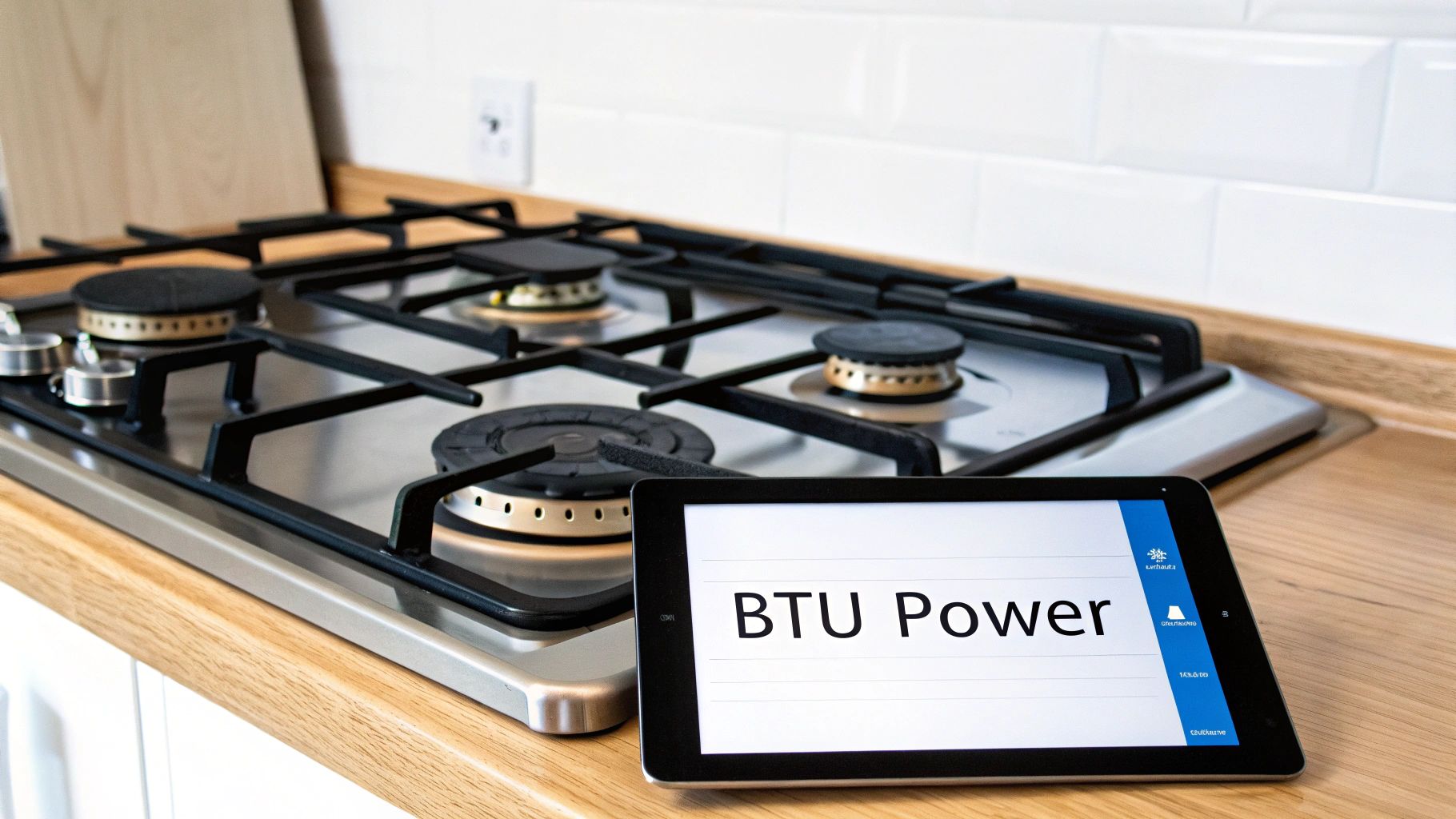
Think of BTUs (British Thermal Units) as the engine's horsepower. A higher BTU number means more raw power. That translates directly to faster preheating, quicker cooking, and—most critically—lightning-fast recovery time. When your line cook slaps a cold sauté pan on the burner, a high-BTU unit gets it screaming hot again almost instantly.
For any fast-paced restaurant, this is non-negotiable. Whether you're running a Los Angeles food truck with a line around the block or a busy Mexican food joint searing carne asada all night, you need that immediate heat. Commercial gas equipment delivers serious punch, with some burners hitting 50,000+ BTUs, leaving electric options in the dust when it comes to pure speed and volume.
That raw power is what keeps your line moving and your customers happy.
Configuring Your Burners for Maximum Efficiency
Beyond pure power, the burner configuration on your range top is just as important. Don’t just grab the first six-burner you see; think about what you actually cook. The layout of your cooktop should be a direct reflection of your menu.
A standard setup might work, but customizing it to your kitchen's workflow is a pro move. Here’s a quick rundown of your options:
- Open Burners: The industry workhorse. They deliver direct, intense heat that’s perfect for sautéing, searing, and pan-frying. You get instant response when you turn the knob.
- Grates: Look for heavy-duty cast iron. They hold heat like a champ and let your cooks slide heavy stockpots from one burner to another without any heavy lifting. It’s a huge boost for efficiency and safety.
- Specialty Burners: Many ranges let you mix and match. You could have a couple of high-output burners for getting big pots to a boil quickly, right next to smaller burners designed for a delicate, low-flame simmer.
If your kitchen is constantly making soups and stocks, you might want a couple of powerhouse burners paired with a dedicated stock pot range. A fine-dining spot, on the other hand, would probably prioritize burners that can hold a super-low, precise flame for delicate sauces. It’s all about matching the hardware to your menu.
Oven Capacity and Cooking Style
The oven sitting below your cooktop is half the equation. Oven capacity, measured in cubic feet, dictates how much you can cook at once. A small cafe might get by just fine with a standard-size oven, but if you're running a catering operation or a busy pizzeria, you're going to need a lot more room to work.
The type of oven matters, too. A standard oven provides radiant heat from the bottom, which is a solid all-rounder. But if baking or roasting is a core part of your menu, you really should be looking at a commercial convection oven. These units use a fan to circulate hot air, which leads to faster, more even cooking.
To really dig into this, take a look at our complete guide on the benefits of a commercial convection oven for your kitchen. The right oven can slash your cook times and give you perfectly browned results every time—a massive win for any business that relies on baked goods or roasted proteins.
In the end, choosing the right restaurant equipment comes down to an honest look at your menu, your volume, and how your team works. When you understand these core specs, you can invest in a gas range that will truly be a partner in your kitchen's success.
Navigating Installation and Safety Codes
Picking out your new gas stove or oven is a huge step, but the job is only half done. Getting it installed correctly isn't just a friendly suggestion—it’s a non-negotiable requirement for safety, performance, and keeping your Southern California restaurant on the right side of the law.
A shoddy installation can lead to dangerous gas leaks, equipment that runs inefficiently, and code violations that could shut you down before you even serve your first customer.
Think of it like this: you just bought a high-performance engine for a race car. You wouldn't let a random amateur just drop it under the hood and hope for the best. The same logic applies here. Professional installation ensures every connection is tight, every part is calibrated, and your kitchen is truly ready for the grind of daily service.
Ultimately, a proper setup protects your investment, your staff, and your entire business from disasters that are entirely preventable.
Ventilation: The Unsung Hero of Kitchen Safety
When you're running powerful gas equipment, you’re creating a ton of heat, smoke, grease, and fumes. Managing all of that isn't optional—it's critical for health and fire safety. This is where your commercial kitchen hood and ventilation system come in, acting as the lungs of your kitchen by pulling all those harmful byproducts out of the air.
It's crucial to understand the two main types of hoods:
- Type I Hoods: These are required for any equipment that produces greasy smoke, like your ranges, fryers, and charbroilers. They have a special baffle filter system designed specifically to trap grease particles, stopping them from building up in the ductwork where they can become a massive fire hazard.
- Type II Hoods: You'll see these over equipment that only produces heat and steam, like most ovens or your commercial dishwasher. They don’t need the heavy-duty grease filters because there's no grease to catch.
Installing the wrong kind of hood is a common—and very expensive—mistake. For almost all of the best gas stoves and ovens, a Type I system is mandatory to keep your kitchen's air clean and compliant with fire codes.
Choosing the Right Installer and Fuel Source
Finding a qualified and licensed installer in the Los Angeles area is absolutely essential. This is not a job for a general handyman. You need a certified professional who knows local building codes, fire regulations, and the specific demands of commercial gas lines inside and out. Before you hire anyone, ask them directly about their experience with commercial kitchen jobs and check their references.
When you're getting new gas stoves and ovens installed, you have to be compliant with all local and national safety standards. To get a better handle on your responsibilities, it’s a good idea to review the commercial property fire safety regulations.
A real pro won't just hook up your equipment. They’ll verify the gas pressure is correct, meticulously check for leaks, and make sure your ventilation system is properly integrated. This final check is your best defense against hazards and guarantees your new gear performs at its peak from day one.
You also need to think about your fuel source. The type of gas you use—natural gas or propane—will directly impact the installation. While most of Southern California has access to natural gas, Los Angeles food trucks and some remote spots rely on propane. The equipment needs different fittings and regulators for each fuel type.
If you’re thinking about making a switch, make sure you understand the details of converting from natural gas to propane for your restaurant equipment. Talking this through with your installer beforehand will prevent headaches, delays, and ensure a smooth, safe setup.
Protecting Your Investment with Smart Maintenance
Getting the right gas stove or oven into your kitchen is a huge first step. But the real test—and the real value—comes from how that equipment holds up, service after service. The sticker price is just the beginning of the story. Your bottom line is truly shaped by long-term running costs and sheer reliability.
Think of your new range like the engine in a delivery truck for your Los Angeles business. You wouldn't skip the oil changes, right? Same thing here. If you ignore routine care, you’re just asking for a breakdown. In a busy commercial kitchen, that kind of failure during the dinner rush isn’t just an inconvenience; it’s a disaster that costs you money and customer trust.
The Power of Proactive Upkeep
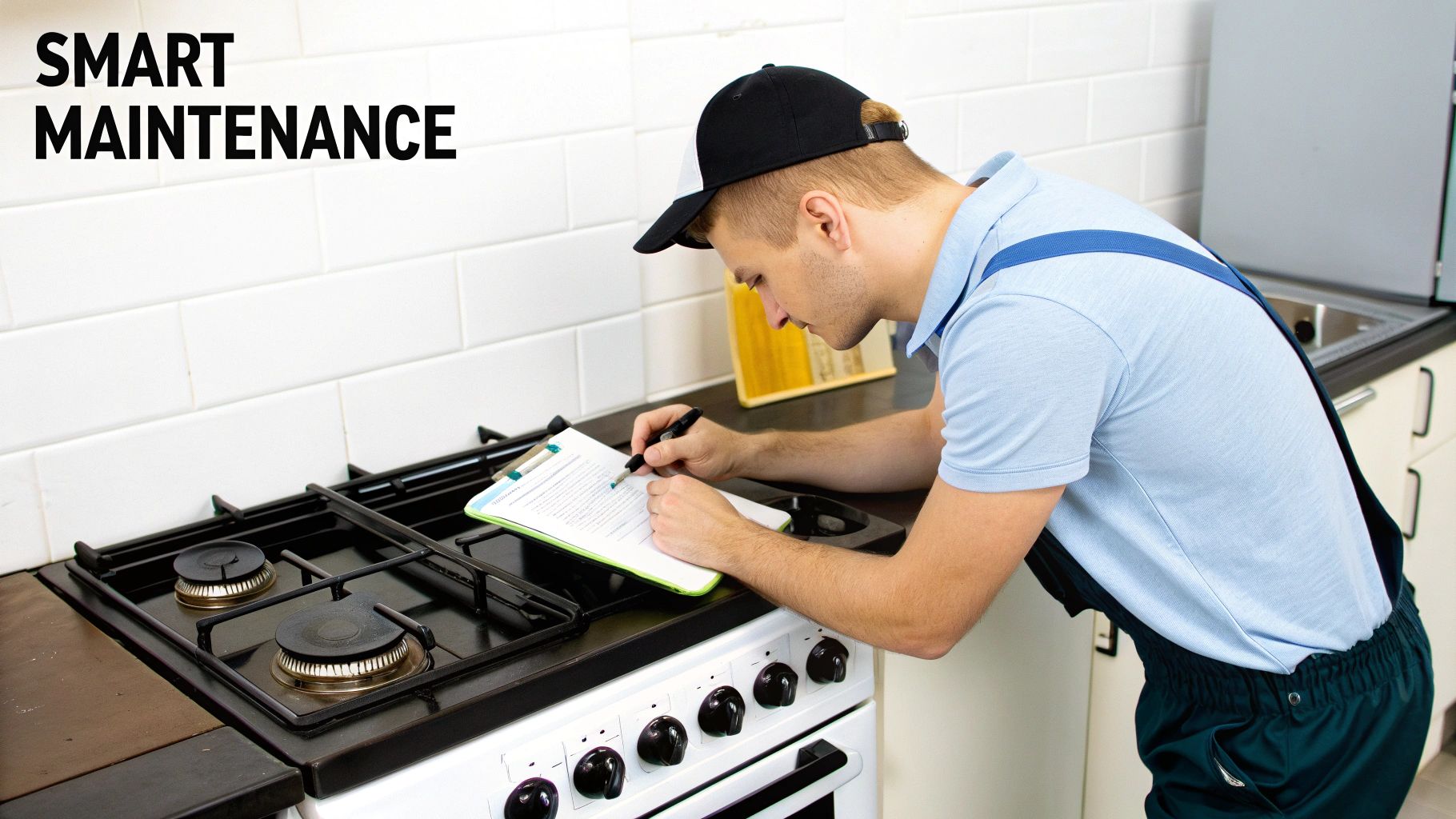
Smart maintenance isn’t about scrambling to fix things when they go wrong. It’s about stopping them from breaking in the first place. Your best line of defense is a simple, consistent checklist that your kitchen team follows religiously. You don't need a bunch of specialized tools for this, just a daily commitment to keeping your kitchen's workhorse in peak condition.
Making this a routine builds a culture of ownership and ensures your big investment pays off for years, delivering the same great performance day in and day out.
A solid daily and weekly plan should hit these key tasks:
- Burner and Grate Cleaning: Pull off the grates and burners after service. A thorough cleaning to get rid of grease and food bits is crucial—that stuff clogs burner ports and causes uneven flames.
- Oven Interior Wipe-Down: A quick wipe-down of the oven cavity at the end of the night prevents that nasty carbon buildup that messes with heat distribution and smells awful.
- Pilot Light Inspection: Do a quick visual check. All pilot lights should be on with a steady, blue flame. If you see a yellow or flickering flame, that’s a red flag that something needs looking at.
- Thermostat Calibration Checks: Every so often, stick an independent oven thermometer inside to see if it matches the dial. If it's off by more than 15-20°F, you probably need a professional to calibrate it.
The real goal of a maintenance schedule is to turn upkeep from a major, disruptive project into a quick, automatic daily habit. A few minutes of cleaning and inspection each day can save you from hours of downtime and hundreds of dollars in emergency repair bills.
Focusing on Long-Term Savings and Reliability
Modern restaurant equipment is about more than just brute force BTUs; it’s built to be efficient. And energy efficiency is a huge deal. Newer gas models can seriously cut down on consumption compared to older units, which is a big win as regulations push for greener kitchens. For an independent restaurant, that can add up to thousands of dollars in savings every year.
When you pair that efficiency with the reliability of new, warranty-backed equipment, the financial argument becomes a no-brainer. The warranty is your safety net, protecting you from paying out-of-pocket for premature part failures. That's a level of peace of mind you just don't get when you roll the dice on the used market.
For another layer of protection on your most valuable appliances, it's smart to look into specialized coverage like equipment breakdown insurance. This can help cover you for unexpected failures that go beyond what a standard manufacturer's warranty might handle.
At the end of the day, protecting your investment comes down to two things: buying new, reliable equipment and backing it up with diligent, everyday care. That's the formula for a kitchen that runs smoothly, efficiently, and profitably for the long haul.
Making a Smart Purchase in Southern California
Alright, we’ve covered all the technical specs, maintenance checklists, and installation guides. But it all comes down to one final, critical decision: where and how you actually buy your equipment. Especially for restaurant owners in the hyper-competitive Los Angeles and Orange County markets, making a smart purchase is just as crucial as picking the right BTU rating. This is the moment you lock in long-term value and shield your kitchen from future chaos.
The temptation to buy used equipment is strong, I get it. Those low upfront costs look great on paper. But that initial savings can disappear in a flash. A second-hand gas range is a total gamble—it comes with no warranty, a hidden history of who-knows-what, and a much higher chance of a catastrophic failure right in the middle of your busiest Friday night service. Think about it: the cost of just one lost night of business because your oven died will almost always be more than what you "saved" upfront.
The Hidden Costs of Used Equipment
When you buy used, you're really just inheriting someone else's problems. These hidden costs can absolutely cripple a new or growing business, particularly a Los Angeles food truck or a small independent spot where every single dollar counts.
Let's look at the real-world consequences:
- Unexpected Repairs: With no warranty, every service call and replacement part comes straight out of your pocket.
- Downtime and Lost Revenue: A broken-down stove means you aren't serving customers. This is the single most expensive "cost" of unreliable gear.
- Lower Efficiency: Older units are almost always less energy-efficient. That means higher monthly gas bills that slowly eat away at your profit margins.
The real value of new equipment isn't just that it’s shiny and new; it's the reliability. Investing in a new, warranty-backed gas stove is an investment in consistency, efficiency, and the peace of mind that your kitchen's engine won't quit when you need it most.
A Smarter Path for LA and Orange County Operators
For local businesses, there’s a much better way. Partnering with a Southern California supplier who operates on a warehouse-direct model gives you the best of both worlds. You get access to top-tier, reliable equipment without the inflated prices from traditional showroom markups and sales commissions. This approach is a perfect fit for independent restaurants, food trucks, and caterers who need quality without paying for unnecessary overhead.
This model is especially powerful here in North America, where gas-powered appliances still reign supreme in commercial kitchens. A local supplier offering warranty-backed gas ranges and convection ovens at warehouse-direct prices, with fast and free shipping, is a game-changer. Ditching the used gear for new units helps you avoid the costly breakdowns that plague so many second-hand buys. You can learn more about the trends in the integrated gas stove and oven market on Cognitive Market Research and see why new equipment is a superior investment.
Look for a partner who offers these key advantages:
- Warehouse-Direct Pricing: This cuts out the middleman, passing those savings directly on to you.
- Fast, Free Local Shipping: With warehouses right here in Southern California, you can get critical equipment delivered in just one or two business days, minimizing downtime.
- Flexible Financing: This makes it possible to get the best gas stoves and ovens with manageable monthly payments, preserving your crucial startup capital for other expenses.
By choosing this path, you’re setting up your kitchen with the reliable tools it needs to succeed. It's a confident and financially sound decision for the future of your culinary business.
We Get These Questions All The Time
When you're about to invest in the heart and soul of your kitchen, you're going to have questions. That's a good thing. Here are some quick, no-nonsense answers to the most common things we hear from restaurant owners in Los Angeles and across SoCal.
Getting these details sorted out from the start is the difference between a kitchen that hums and one that holds you back.
What Kind of BTU Power Do I Actually Need?
Your menu dictates everything. If you're running a high-volume stir-fry station or a bustling Mexican food spot, you need that instant, roaring heat to get a good sear and recover fast between orders. For that, you’ll want burners pushing 30,000 BTUs or more.
But let's be realistic. If you're a café that's mostly simmering soups and gently warming sauces, all that extra firepower is just money wasted. Look at the most demanding dish you make during your busiest hour—that’s your benchmark. Don't pay for power you'll never use.
Is a Convection Oven Really Better Than a Standard One?
One isn't "better" than the other; they're just different tools for different jobs. A convection oven is an absolute workhorse for baking and roasting. It uses a fan to circulate hot air, which blasts away hot spots and cooks food faster and more evenly. If you're a bakery, a place specializing in Los Angeles pizza, or any high-volume spot, it's pretty much essential.
A standard oven is much gentler. It uses radiant heat from a fixed source, which is perfect for delicate items like custards or cheesecakes that would be ruined by the drying effect of a convection fan. The menu is always the deciding factor.
Think of it this way: a Los Angeles pizza joint needs the crisping power of convection, but a classic French bistro needs a standard oven to nail its sensitive desserts.
Why Not Just Buy Used Equipment and Save Some Cash?
This is a classic trap that comes down to the upfront price versus the real cost over time. Sure, used equipment looks cheaper on paper. But it's a total gamble. It shows up with zero warranty, a much higher chance of breaking down mid-service, and it's almost always an energy hog.
Imagine a critical oven failing on a slammed Friday night. The revenue you lose in that one evening could easily be more than what you "saved" on the used price tag.
New, warranty-backed restaurant equipment gives you reliability and top-tier performance from day one. It's an investment in keeping your doors open and your kitchen running smoothly. For any serious restaurant, that kind of stability is priceless.
Ready to build a kitchen you can count on? At LA Restaurant Equipment, we offer new, warranty-backed gas stoves and ovens at warehouse-direct prices, with fast, free shipping across Southern California. Check out our commercial cooking equipment.