

Thinking about converting your commercial kitchen from natural gas to propane? It’s a pretty common job for most modern appliances, but you can't just flip a switch. It takes the right parts and, usually, a bit of professional help. The gist of it is swapping out the burner orifices and tweaking the pressure regulator to handle propane's extra kick, making sure your gear runs safely and cooks just right.
Why LA Restaurants Are Converting To Propane
In the Southern California food scene, you need every edge you can get. For a growing number of Los Angeles restaurants, especially mobile operations like food trucks and pop-ups, switching from natural gas to propane isn't just a technical change—it's a strategic one. It's about gaining an advantage in performance, flexibility, and even cost.
Think about a packed food truck in Orange County or a pop-up kitchen serving Mexican food in downtown LA. These operations thrive on being mobile; they can't be tethered to a city gas line. Propane gives them that freedom. It delivers powerful, consistent heat wherever they set up shop, which is the absolute lifeblood for any mobile vendor hitting farmers' markets, festivals, and catering gigs. Many Los Angeles food trucks rely on propane-powered restaurant equipment to serve everything from tacos to gourmet burgers.
The Power and Performance Edge
The biggest reason for the switch comes down to pure physics. Propane simply packs more punch. It delivers a massive 2,490 BTUs per cubic foot, while natural gas lags behind at just 1,030 BTUs. That’s more than double the energy!
In a real-world kitchen, this means your fryers, griddles, and pizza ovens get hotter, faster. You’re not wasting time and money waiting for equipment to preheat during a dinner rush. For more on how this impacts a kitchen's bottom line, you can find some great insights on restaurant equipment performance on sites like The Restaurant Warehouse.
For a busy kitchen, faster heat-up times are not a small convenience—they are a critical operational advantage. A griddle that reaches cooking temperature in minutes instead of waiting saves valuable time, improves ticket times, and increases customer satisfaction.
Before we go further, let's break down the key differences that really matter to a restaurant owner.
Natural Gas Vs Propane At A Glance For Commercial Kitchens
| Feature | Natural Gas | Propane |
|---|---|---|
| Energy Output | 1,030 BTUs per cubic foot | 2,490 BTUs per cubic foot (more than 2x the power) |
| Portability | Requires a fixed utility line connection | Highly portable, stored in tanks on-site |
| Best For | Brick-and-mortar restaurants with existing gas lines | Los Angeles Food Trucks, pop-ups, caterers, and off-grid locations |
| Supply Chain | Dependent on the municipal grid (vulnerable to outages) | Independent supply stored locally in tanks |
| Pressure | Low pressure (approx. 0.25 PSI) | High pressure (approx. 100+ PSI in the tank) |
This table makes it clear why propane is the go-to for any mobile or high-performance cooking setup.
Unlocking Greater Efficiency and Stability
Beyond raw power, propane gives you more stability and control. Since it's stored in tanks right on-site, your fuel supply is completely independent of the city grid. No more worrying about service interruptions or pipeline issues—a huge advantage for any business that can’t afford a single minute of downtime.
That efficiency also hits your bottom line. An appliance that heats up faster uses less fuel over a long day. Here are the main benefits you'll see from making the switch:
- Faster Cooking: Your equipment hits the right temperature quicker, which means more food out the door.
- Location Independence: It's the only real option for Los Angeles food trucks, pop-ups, and catering services.
- Consistent Supply: With tanks on-site, you’re insulated from public utility problems.
- Cost-Effectiveness: The higher energy density often means you use fuel more efficiently, which can lower your operating costs over time.
For restaurant owners in Los Angeles and Orange County, deciding to convert from natural gas to propane is a smart, practical choice that boosts performance and prepares your operation for whatever comes next.
Can Your Kitchen Equipment Even Be Converted?
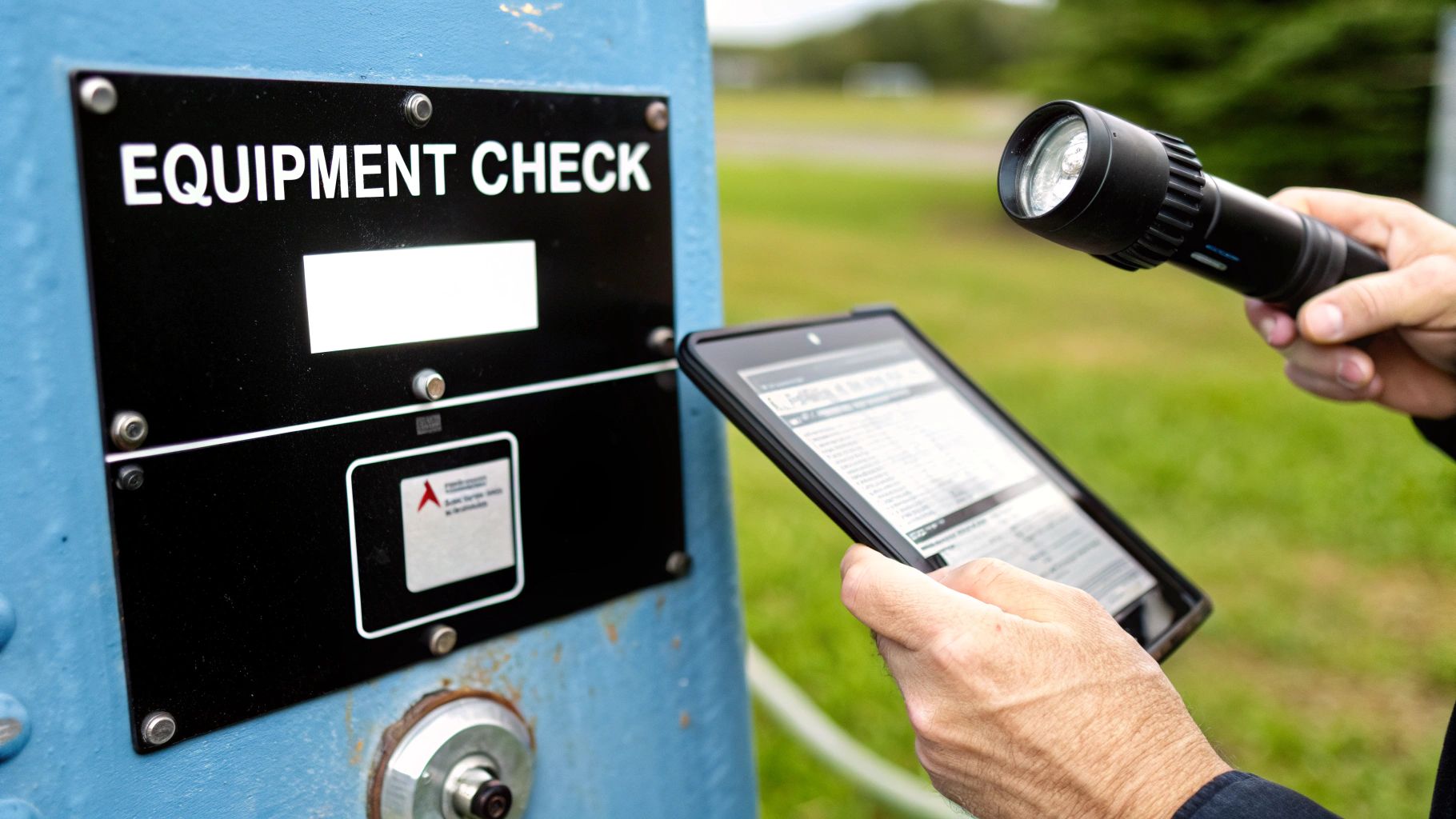
Before you spend a dime on conversion kits or call up a technician, your first move is a simple but critical check you can do yourself. You absolutely have to confirm whether your existing commercial restaurant equipment can handle the switch from natural gas to propane. Not all appliances are built the same, and trying to force a conversion on an incompatible range or fryer is a recipe for terrible performance and serious safety hazards.
Think of this initial assessment as your most important financial checkpoint. It's what tells you whether you're looking at a pretty straightforward modification or if you need to start budgeting for new, propane-ready equipment. I've seen kitchens rush this step, and it almost always ends in damaged appliances, voided warranties, and dangerous operating conditions.
What the Manufacturer's Data Plate Tells You
Every piece of commercial cooking equipment comes with a manufacturer's data plate. It’s usually a small metal tag or sticker you can find on the back, side, or sometimes tucked inside the door panel. This little plate is the official source of truth for your appliance.
It’s packed with vital info like the model and serial numbers, but what you’re really hunting for are the fuel specifications. You need to look for specific wording that signals whether a conversion is possible.
Here’s what you’re looking for:
- "Field Convertible": This is the magic phrase. It means the manufacturer designed the unit to be safely converted from natural gas to propane (or vice versa) right there on-site by a qualified pro.
- "Dual Fuel": This is another great sign, confirming the equipment was engineered from the get-go for both fuel types.
- "Natural Gas (NG) / Liquid Propane (LP)": If you see both NG and LP listed, you’re good to go. It’s a clear indicator that conversion is an option.
For example, let's say a busy Mexican food truck in LA has an Atosa charbroiler. If that data plate clearly states "Field Convertible to LP," you have a green light. You can confidently start looking for the right conversion kit. But if it just says "For Use with Natural Gas Only," the decision is already made for you—do not even think about converting it.
Red Flags: When to Stop Immediately
Knowing the green lights is half the battle; recognizing the red flags is just as crucial. If the data plate on your fryer or oven is missing, so beat up you can't read it, or just gone, you have to assume it cannot be converted. End of story. Likewise, if the plate only mentions "Natural Gas" with zero reference to LP or convertibility, that’s a hard stop.
This is especially true for older restaurant equipment. A lot of vintage gear was built for a single fuel source, period. Trying to rig up an unapproved conversion on one of these units is incredibly dangerous. The internal parts, from the valves to the burner design, simply aren't engineered to handle the higher pressure of propane.
Before you touch a single screw, doing a proper risk evaluation is a must. This practical guide on how to do a risk assessment is a great resource for understanding the potential hazards you’re dealing with.
The Dangers of Forcing a Conversion
So what happens if you try to force a natural gas-only appliance to run on propane? The results can be disastrous. The core issue is the pressure difference. Propane needs much smaller orifices to deliver the right amount of fuel. If you use the existing natural gas orifices with propane, you’re asking for trouble.
You’ll end up with:
- Huge, out-of-control flames: This is an obvious and serious fire hazard that can easily damage the appliance and anything around it.
- Soot and carbon monoxide: When the fuel doesn't burn completely, it creates black soot and releases carbon monoxide—a colorless, odorless gas that can be lethal in an enclosed kitchen.
- Awful performance: The appliance won't heat correctly, leading to wasted fuel and food that just won't cook right.
Getting this initial assessment right is a fundamental part of smart kitchen management. If you want a bigger picture of how to keep your kitchen in top shape, check out our comprehensive commercial kitchen equipment checklist for more tips. This simple check empowers you to make a smart, safe, and cost-effective decision for your restaurant.
Sourcing The Right Parts For A Safe Conversion
Okay, you've confirmed your equipment can be converted to propane. Now comes the part where you absolutely can't afford to guess: getting the right hardware. When you're dealing with gas, "close enough" is a recipe for disaster. Using the wrong parts isn't just a bad idea; it's a direct path to serious safety hazards and a quick way to ruin expensive restaurant equipment.
The entire conversion process comes down to just a few crucial components, usually bundled together in a manufacturer-approved conversion kit. You can think of it as a precision-engineered toolkit made specifically for your appliance. It has the exact parts you need to safely handle propane's unique characteristics.
The Two Most Important Parts You Can’t Ignore
At the core of any conversion are two pieces you can't overlook: the orifices and the pressure regulator. They each have a distinct job, but they work together to make sure your equipment burns fuel safely and efficiently. Getting these two parts right is the difference between a high-performance kitchen and a dangerous liability.
Let's quickly go over what they do.
- Burner Orifices (Spuds): These are small brass fittings with a precisely drilled hole that meters the flow of gas to the burner. Propane is more energy-dense and is delivered at a higher pressure than natural gas, so it needs a much smaller opening. If you tried to use a natural gas orifice with propane, you'd get a massive, out-of-control flame.
- Pressure Regulator: This is the brain of the operation. It takes the high-pressure gas from the propane tank and steps it down to a consistent, usable level for the appliance. A propane-specific regulator is calibrated to deliver a steady, clean blue flame every time.
For anyone in Orange County or L.A. thinking about this switch, the numbers speak for themselves. Propane packs more punch, with 2,490 BTUs per cubic foot versus natural gas's 1,030. This means your charbroilers and convection ovens heat up faster, which is a huge advantage for a Los Angeles pizza place or Mexican food spot during a busy service. Plus, with U.S. propane production on the rise and the global market projected to hit USD 150 billion by 2035, it’s becoming a smart, stable choice for many kitchens.
Why You Must Use Manufacturer-Approved Kits
You'll see generic or "universal" conversion kits for sale online, and while they might be tempting, using them on commercial restaurant equipment is a huge gamble. Your appliances are built to incredibly specific standards. Only a kit approved by the manufacturer guarantees that every single component, from the orifice size to the spring inside the regulator, is perfectly matched to your model.
Using a generic kit is like putting the wrong kind of oil in a high-performance engine. It might seem to work for a bit, but you're risking catastrophic failure, voiding your warranty, and creating a major fire hazard. Always track down the specific kit for your appliance's exact model number.
Sourcing the right parts goes beyond the kit itself. The connection from your propane tank to the appliance is just as critical. This means using a high-quality, durable gas hose that meets all local codes for commercial use. Our selection of commercial gas hoses and connectors provides the reliability you need to keep your kitchen running safely.
By insisting on manufacturer-approved parts, you're ensuring the job is done right from start to finish. It protects your investment, keeps your staff safe, and gives you the performance you expect. This careful approach is the foundation of a successful and stress-free conversion.
The Professional Conversion Process Explained
Once you've got the right, manufacturer-approved parts in hand, the real work of swapping your restaurant equipment from natural gas to propane can get started. I have to be clear: this job is only for a licensed professional. But knowing how it’s done helps you understand the process and make sure it’s done right. This isn’t just about yanking out old parts and shoving in new ones; it’s a meticulous procedure that ensures your equipment runs safely and efficiently for the long haul.
A good technician won't just jump in with a wrench. The first, non-negotiable step is a full safety shutdown. That means closing the gas valve right at the appliance and at the main supply line. From there, they'll bleed any leftover gas from the lines to make the whole area safe to work in. It's a fundamental precaution that protects both the technician and your kitchen.
Swapping Critical Components
With the gas supply completely cut off and secured, the technician can get to the core components. This usually means pulling off burner grates, front panels, or whatever else is needed to get to the orifices and the pressure regulator.
The process follows a pretty specific order:
- Orifice Replacement: The existing natural gas orifices get carefully unscrewed. They’re replaced with the smaller, precisely drilled propane orifices from your conversion kit. Every single burner gets a new orifice that’s matched to its specific BTU rating.
- Regulator Installation: Next, the natural gas pressure regulator is removed and replaced with the new propane regulator. This new part is built to handle the higher pressure of propane and step it down to the correct level for the burners.
- Pilot Light Adjustment: If your appliance uses a standing pilot light, its tiny orifice also needs to be swapped out. This guarantees the pilot flame is the right size—small, steady, and blue.
This flowchart breaks down the key parts you'll need to source for the conversion.
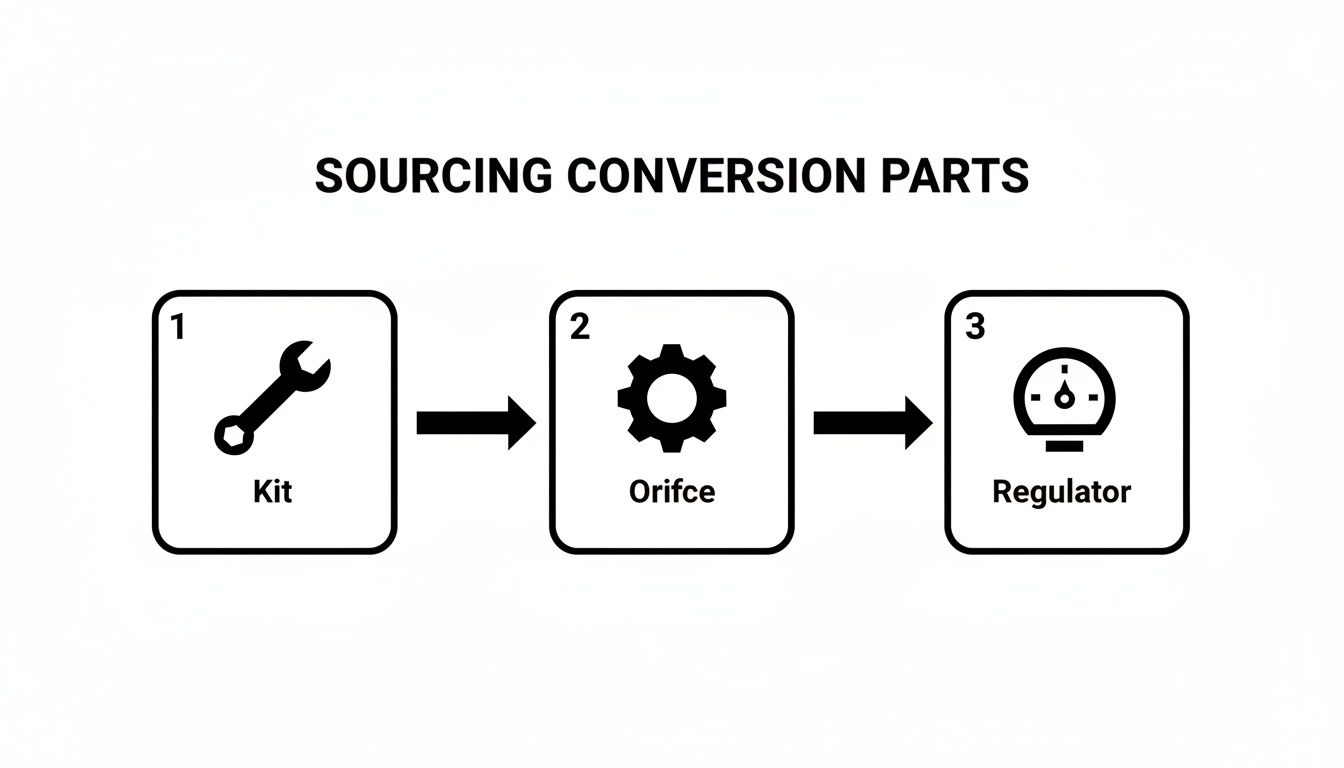
As you can see, getting the right kit, orifices, and regulator is the foundation for a successful job.
Leak Testing and Flame Diagnostics
After the appliance is all put back together, the work is far from over. The technician will slowly turn the gas back on and then meticulously check every single connection with a leak detection solution. If any bubbles pop up, that’s a leak, and it has to be fixed immediately. This step is absolutely critical and can't be rushed.
For many independent restaurant and food truck owners in Los Angeles, propane is a smart move. The global propane market hit USD 120 billion in 2020 and is projected to climb to USD 150 billion by 2035, growing at a 2.3% CAGR. For Los Angeles food trucks hitting different spots around SoCal, it means reliable fuel for their ranges and fryers without needing a natural gas hookup. Propane production has doubled over the last decade, now powering 1.1 million commercial businesses like breweries and cafes. You can explore the propane market's growth and future projections to see why it's a solid choice.
Once the system is 100% leak-free, it's time for the final and most important test: firing up the burners to check the flame. This is where you can literally see the results of a job well done.
A healthy propane flame should be mostly blue with just a tiny bit of yellow at the tips. It needs to be stable, quiet, and consistent. This means you’re getting complete combustion—maximum heat and minimum wasted fuel.
Knowing what a good flame looks like lets you confirm the work yourself. Here’s a quick guide to what the flames are telling you.
Flame Color and What It Means
| Flame Appearance | Indication | Potential Action |
|---|---|---|
| Mostly Blue, Stable | Correct Combustion | This is exactly what you want to see. The conversion was a success. |
| Yellow or Orange, Sooty | Incomplete Combustion | The fuel-to-air mix is too rich. This wastes fuel and can produce dangerous carbon monoxide. |
| Lifting or "Floating" | Too Much Air | The flame looks like it's lifting off the burner. It's inefficient and likely needs an air shutter adjustment. |
A true pro will then fine-tune the burner's air shutters to dial in that perfect blue flame. This last calibration step ensures your restaurant equipment performs at its best, giving you the powerful, clean heat you expect from a propane system.
Navigating Safety Codes And Permits In Southern California
Getting the conversion right is one thing, but making sure it’s legal is another ballgame entirely. In the high-stakes food scenes of Los Angeles and Orange County, cutting corners on safety codes and permits isn't just a simple mistake—it's a massive business risk. These regulations exist for a very good reason: to prevent disasters.
This is precisely why you must hire a licensed gas plumber or a certified technician. Their job isn't just about connecting pipes; they're your guide through the maze of local rules from agencies like the Los Angeles Department of Building and Safety (LADBS). Trying to do this yourself to save a few bucks can backfire in truly devastating ways, both legally and financially.
Understanding Local Requirements
Every project has its own quirks, but some rules are pretty standard across Southern California. If you're running a brick-and-mortar spot like a Los Angeles pizza restaurant, any change to your gas system—including a propane conversion—is almost guaranteed to require permits and inspections. You can't just swap orifices and call it a day.
For mobile businesses like Los Angeles food trucks, the rules are just as strict, but they focus more on the mobile nature of the business.
- Secure Tank Storage: Your propane tanks have to be securely mounted to the vehicle's frame. They need to be kept far from heat sources and positioned to avoid getting hit.
- Proper Ventilation: The kitchen absolutely must have adequate ventilation. This is non-negotiable for preventing the buildup of dangerous gas fumes or carbon monoxide.
- Approved Hoses and Connectors: All your gas lines and connectors must be commercially rated and in perfect condition—no cracks, kinks, or damage.
Failing an inspection on any of these points can get a health or fire inspector to shut you down on the spot.
The High Cost of Non-Compliance
Don't underestimate the risks of unpermitted or amateur gas work. An improper conversion is a ticking time bomb that can lead to gas leaks, fires, or even explosions. If the worst happens and your gas work is found to be unpermitted, you can bet your insurance claim will be denied. That leaves you personally on the hook for all damages, injuries, and lawsuits.
Think of hiring a professional not as an expense, but as critical insurance for your business. It’s an investment in your restaurant's future, your staff's safety, and your own peace of mind. It’s what stands between you and a preventable catastrophe.
A licensed pro ensures every connection is tight, every part is correct, and the whole system is tested and signed off according to local codes. This creates an official paper trail proving the work was done right, which is invaluable for insurance, liability, and passing future inspections.
Fire Safety Beyond The Fuel Source
A compliant gas system is just one piece of the safety puzzle. The fuel you use has a direct impact on your fire suppression plan. Since propane is a flammable liquid gas, having the right fire extinguishers is essential. Our guide on the importance of Class B fire extinguishers for restaurants has crucial information every operator should know.
At the end of the day, navigating Southern California's safety codes is all about diligence. It means committing to doing things the right way, every single time. By working with qualified professionals and understanding the local rules, you make sure your conversion is not only functional but completely safe and legal. Getting this foundational work right lets you get back to what you do best: making incredible food.
Common Questions About Propane Conversions
Even with a clear process, I get a lot of the same questions from LA restaurant owners thinking about making the switch from natural gas to propane. Let's tackle the most common concerns head-on so you can feel confident about what’s right for your kitchen.
How Much Does It Cost To Convert To Propane?
You’re looking at two main costs here: the parts and the person doing the work. A manufacturer-certified conversion kit for a single appliance usually costs somewhere between $50 and $150. The bigger ticket item is the labor.
To have a licensed and insured technician handle the job in Los Angeles or Orange County, you can expect to pay anywhere from $150 to $400 per appliance. The final price really depends on how tricky the job is and how easy it is to get to all the parts.
And a crucial piece of advice: if your restaurant equipment is on the older side or wasn't built to be converted, your money is almost always better spent on a new, propane-ready unit. A new piece of equipment under full warranty is a much smarter long-term play than gambling on a risky conversion.
Will My Cooking Performance Change After Converting?
Yes, it will—and almost always for the better. This is honestly one of the biggest reasons chefs decide to switch. Propane is a much hotter fuel, packing more than double the BTUs of natural gas.
Once a pro handles the conversion with the right parts, you’ll see a real difference in heat and control.
- Faster Preheating: Your griddles, ovens, and charbroilers will hit their target temps much quicker.
- Quicker Recovery Times: Fryers bounce back to temperature faster between baskets, which means crispier food and more output during a dinner rush.
- More Responsive Control: You’ll get more precise control over the flame, letting you make those fine adjustments that separate good food from great food.
The catch? It has to be done right. A shoddy conversion job will leave you with weak, sooty yellow flames and terrible cooking results.
A correctly performed conversion enhances your equipment's capabilities. The extra power from propane allows your kitchen to operate more efficiently, turning tables faster and improving the quality of every dish that leaves the line.
Can I Convert Any Natural Gas Appliance To Propane?
Absolutely not. Many modern commercial appliances are designed as "field convertible," which is the manufacturer's green light for an on-site conversion. But a lot of older gear or specialized restaurant equipment was built for natural gas and natural gas only.
Before you do anything, find the appliance's data plate and read it carefully. If it doesn't explicitly say it's convertible or list both NG (Natural Gas) and LP (Liquid Propane), don't even think about it. Trying to force a conversion on an incompatible unit is a massive safety hazard that can lead to gas leaks, fires, or a completely ruined machine.
When that's the case, replacing the unit with a new, certified propane model is the only safe move. For those new to propane conversions, understanding the differences between LPG fuels is a common inquiry. Learn more about the comparison of Propane vs. Butane to get a better grasp of the fuel you'll be using.
Do I Need A Permit For This In Los Angeles?
Whether you need a permit in Los Angeles really comes down to the scope of work. The rules can be a bit tricky, which is another great reason to have a licensed pro on your side who knows the local codes.
Generally speaking, just converting a single appliance that's hooking up to an existing, approved propane source—like the tanks on a Los Angeles food truck—probably won't need its own permit. But the initial gas system on that food truck definitely did.
For a brick-and-mortar spot, installing new gas lines or a big stationary propane tank on your property will almost certainly require a permit and an inspection from the Los Angeles Department of Building and Safety (LADBS). A good technician will know exactly when a permit is required and will handle the paperwork to make sure your entire setup is safe and compliant.
Whether you're looking to upgrade your cooking line or need advice on the best propane-ready restaurant equipment for your Los Angeles kitchen, LA Restaurant Equipment is here to help. We offer warehouse-direct pricing on new, warranty-backed gear to help you get the performance you need without the risks of used equipment. Explore our selection and find the perfect solution for your restaurant, bar, or food truck at https://larestaurantequipment.com.