

Welcome to the heart of the LA food scene. If you're running an independent restaurant, a food truck, or a bar, you know success is about more than just a great menu—it’s built on a smart, efficient kitchen. Think of your commercial kitchen equipment not as a simple purchase, but as a strategic investment in your restaurant's future.
Building Your LA Kitchen From the Ground Up
This guide is your roadmap for outfitting a professional culinary space right here in Southern California. We’ll walk through the essential equipment that powers LA's most successful kitchens, from high-performance cooking lines to rock-solid refrigeration. More importantly, we'll connect these tools to the very concepts that define this city's incredible food culture.
The right equipment is the foundation of consistency, speed, and quality. For a busy kitchen, a powerful six-burner range isn't just a stove; it's the engine that lets your team crush the dinner rush without missing a beat. In the same way, a well-organized refrigerated prep table makes sure every ingredient is fresh, safe, and ready to go.
Tailoring Equipment to Your Vision
Every great LA food concept has its own unique set of tools. The gear needed for an authentic Mexican restaurant is worlds apart from what a mobile pizza truck needs to operate efficiently. This guide is built to tackle those specific demands.
We’ll break down how to choose the right stuff for specific concepts:
- Los Angeles Pizza: A deep dive into the high-temperature ovens and specialized prep tables that create the perfect pie.
- Los Angeles Food Trucks: Focusing on the compact, multi-functional units essential for maximizing precious mobile space.
- Mexican Food in LA: Covering the charbroilers and griddles that are fundamental for authentic, classic flavors.
By understanding these details, you can dodge costly mistakes and build a kitchen designed for your menu. A smart layout and the right appliances are just as critical as your recipes. To learn more about setting up an efficient workspace, check out our guide on commercial kitchen layout and design.
Navigating the Practical Realities
Beyond the food, running a business means managing money and logistics. Equipping a kitchen is a major expense, but it doesn't have to stop you from getting started. We'll also get into the practical side of budgeting and financing in Southern California.
Smart equipment financing lets you get the high-quality, reliable tools you need now while keeping cash on hand for other critical expenses like payroll, inventory, and marketing. It’s a strategy that helps new and growing businesses compete.
Ultimately, our goal is to help you build a kitchen that works as hard as you do. Let's dive in.
Understanding the Core Components of Your Kitchen
Think of your kitchen's layout like a well-organized workshop. Every station has a purpose, and every piece of commercial kitchen equipment plays a specific role. When you break it all down into three core systems—Refrigeration, Cooking, and Preparation—the whole process of designing a functional kitchen gets a lot simpler.
This approach makes it much easier to plan your space and, just as importantly, your budget. The infographic below shows how your equipment is the real foundation of your business, nested inside the kitchen and the restaurant itself.
While the building is just the shell, the equipment is what actually drives your day-to-day operations and, ultimately, your profitability.
The Refrigeration System
Your refrigeration isn't just a cold box; it's the heart of your entire operation. It’s what stands between you and thousands of dollars in spoiled inventory. This system is your first and last line of defense for ingredient quality and food safety. A fridge failure doesn't just mean lost product—it means lost revenue and a potential visit from the health department.
And it’s more than just a single walk-in. A smart refrigeration system is a whole family of specialized tools working together.
- Walk-In Coolers & Freezers: These are your bulk storage workhorses. They let you buy ingredients in larger, more cost-effective quantities and keep everything from produce to proteins safely stored.
- Reach-In Refrigerators: You’ll find these right on the line, giving your cooks instant access to prepped ingredients. They are absolutely critical for keeping things moving during a busy dinner rush.
- Undercounter Refrigerators: Perfect for squeezing utility out of tight spaces. Think food trucks, coffee shops, or bar stations—these units fit neatly under countertops to maximize every square inch of your workspace.
- Prep Tables: For a pizzeria or a sandwich shop, a refrigerated prep table is a complete game-changer. It combines a chilled ingredient rail up top with cold storage below, making the assembly line incredibly efficient.
The Cooking Line
If refrigeration is the heart, then the cooking line is the engine that brings your menu to life. This is where raw ingredients get transformed into the dishes your customers will rave about. The equipment here has to be tough, reliable, and ready to pump out consistent results, night after night.
Your cooking equipment directly dictates your menu's potential and your kitchen's speed. Investing in the right tools for your specific cuisine—whether it's for a Los Angeles food truck or a high-end bistro—is non-negotiable for success.
It’s all about matching the tool to the task. A great Mexican restaurant needs the blistering heat of a charbroiler for that perfect carne asada, while a breakfast joint is useless without a big, flat-top griddle for pancakes and eggs.
The Preparation Zone
Finally, we have the preparation zone—your kitchen’s command center. This is where all the detailed work happens: the chopping, mixing, and portioning that sets the stage for service. A great prep area is built around durable, easy-to-clean surfaces that keep you organized and help maintain food safety.
When it comes to surfaces, stainless steel is the undisputed champion, and for good reason. It’s non-porous, won't rust, and can take the daily beating of a commercial kitchen without flinching.
- Stainless Steel Work Tables: These are the backbone of your prep area, providing the main surface for all your prep work. They come in tons of sizes and can be ordered with undershelves for extra storage.
- Chef Bases: This is one of the smartest pieces of equipment you can buy. A chef base is a low-profile refrigerated cabinet built to hold heavy cooking equipment like a griddle or charbroiler right on top. This keeps crucial ingredients perfectly chilled and literally at the chef’s feet.
By seeing how these three pillars—refrigeration, cooking, and preparation—work together, you can design a kitchen that’s more than just a room full of appliances. You can build a highly efficient system tailored to your unique menu.
Equipping Your Specific LA Restaurant Concept
Generic checklists just don't cut it in the Los Angeles restaurant scene. Think of your menu as your business plan, and your commercial kitchen equipment is the set of tools you need to execute that plan perfectly. A one-size-fits-all approach is a recipe for disaster, leaving you with wasted space, money tied up in gear you never use, and frustrating bottlenecks at the stations you rely on most.
The secret is to build your kitchen around your signature dishes. It's like putting together a specialist's toolkit. A plumber and an electrician both show up with a bag of tools, but what's inside is completely different because the jobs are completely different. Your kitchen is no exception. Let’s break down what this looks like for three classic LA food concepts.
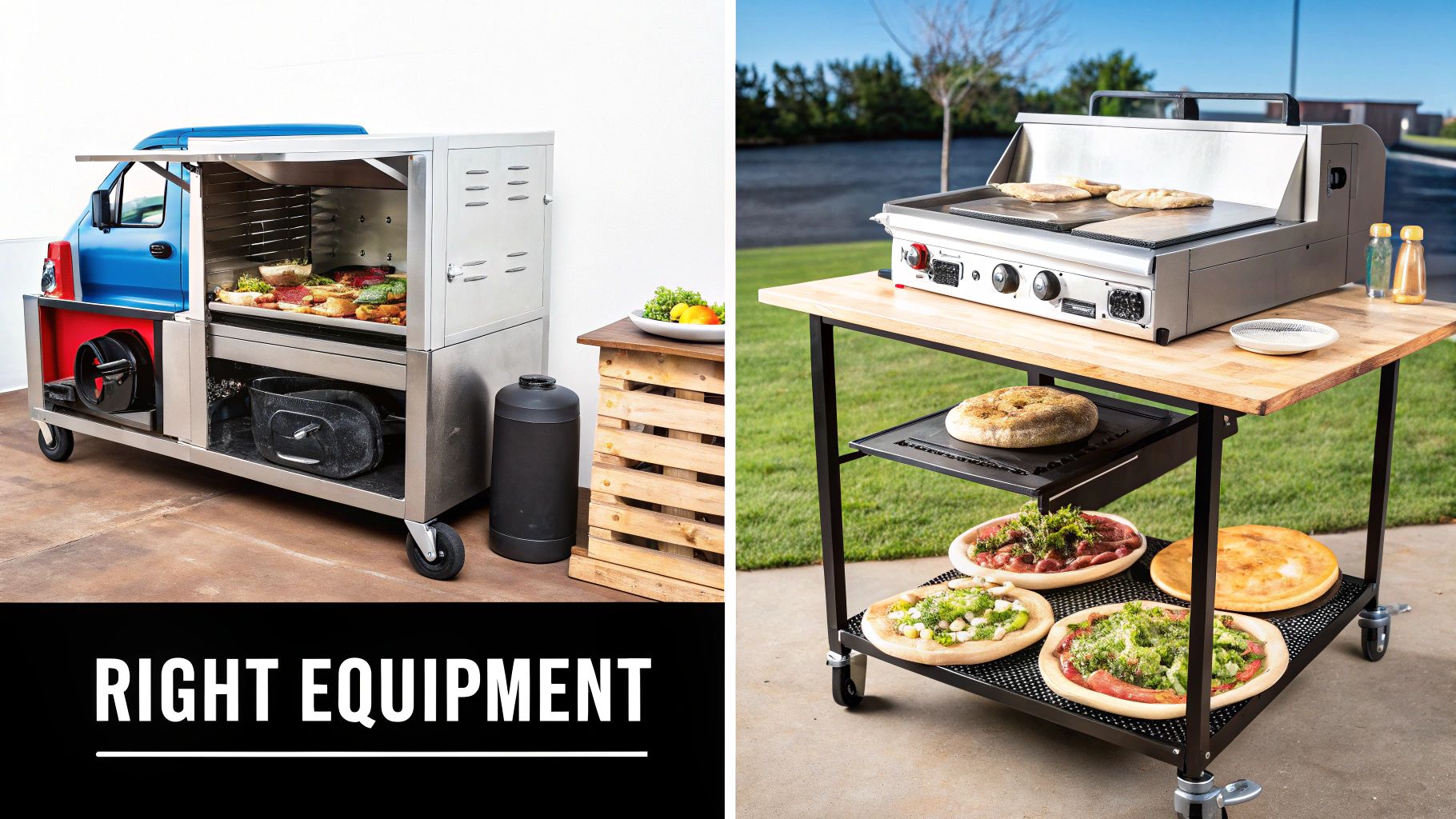
For Los Angeles Pizza Shops
From classic New York-style slices to wild sourdough creations, Los Angeles pizza has an incredible and diverse scene. While the toppings might change, the core equipment needed to pump out perfect pies is pretty universal. In the pizza game, it's all about speed, consistency, and a seamless workflow.
Your entire operation is basically an assembly line. The right equipment makes this process smooth and repeatable, so every pizza comes out looking and tasting exactly the same, even when you're slammed on a Friday night.
- Pizza Prep Table: This is the absolute, non-negotiable heart of your kitchen. It's a refrigerated rail for toppings, a big marble or steel work surface, and cold storage underneath all rolled into one. Everything stays chilled, organized, and right where you need it.
- Commercial Dough Mixer: You're not mixing dough by hand. It's just not possible at scale. A powerful spiral or planetary mixer is your best friend for churning out huge, consistent batches of dough every single day, saving you an insane amount of labor.
- High-Temperature Pizza Oven: Whether you go for a deck, conveyor, or a classic brick oven, it has to hold incredibly high heat—we're talking 550°F to over 800°F. That intense heat is what gives you that perfect crust that's crispy on the bottom and chewy inside.
For Los Angeles Food Trucks
On a food truck, space is the ultimate luxury. Every single square inch has to count and be optimized for pure output. You're basically trying to cram the power of a full-size kitchen into a tiny metal box on wheels. This means you have to be smart and choose multi-functional equipment.
You aren't just buying appliances; you're solving a complex puzzle. The goal is a layout where two or three people can work elbow-to-elbow without killing each other while serving a line of hungry customers that wraps around the block.
- Combination Griddle and Range: Why waste space on two separate units? A combo gives you a flat-top for searing burgers or toasting buns right next to open burners for simmering chili or boiling water.
- Undercounter Refrigeration: Forget standard reach-in fridges; they're way too big. Undercounter units and chef bases are your saving grace, tucking critical cold storage right under your prep areas and cooking line.
- Compact Fryers: Even a small countertop fryer can be a massive money-maker. It lets you add high-profit items like fries, tots, or onion rings to your menu with very little fuss.
Food trucks thrive on efficiency. Investing in compact, NSF-certified commercial kitchen equipment designed for mobile operations isn't just a good idea—it's essential for meeting health codes and maximizing your profitability on the street.
For Authentic Mexican Food in LA
Real-deal Mexican food is all about fresh ingredients and specific cooking methods that build those deep, complex flavors. Your equipment plays a huge role in getting those traditional techniques right, time and time again. From the perfect char on carne asada to fresh, hand-pressed tortillas, your gear is what makes your food authentic.
The market for this gear has exploded. The global commercial kitchen equipment market hit around USD 99.28 billion recently and is expected to climb as high as USD 219.75 billion by 2034. North America is the biggest piece of that pie, making up about 31–35% of demand. For an independent spot in LA, that tells you something: modern, efficient kitchens are the new standard everyone is chasing. You can dig into the full research on commercial cooking equipment market trends.
Here’s the must-have gear for a truly authentic Mexican kitchen:
- Commercial Charbroiler: This is how you get that smoky, flame-kissed flavor on carne asada, al pastor, and grilled veggies. The intense, direct heat creates a char and flavor that you just can't get from a flat-top.
- Large Flat-Top Griddle (Plancha): The plancha is the workhorse. It’s for warming tortillas, melting cheese in quesadillas, searing meats, and sautéing fajita veggies. You'll use it for everything.
- Stock Pot Range: You need a low, powerful, high-BTU burner for simmering huge pots of beans, brothy soups, and complex sauces like mole that need to cook low and slow for hours.
- Tortilla Press or Griddle: If you’re making your own tortillas—and you should be—a dedicated press and a hot comal (or griddle) are non-negotiable. It's a clear signal to your customers that you're serious about freshness and authenticity.
Making Smart Investments in Efficiency and Reliability
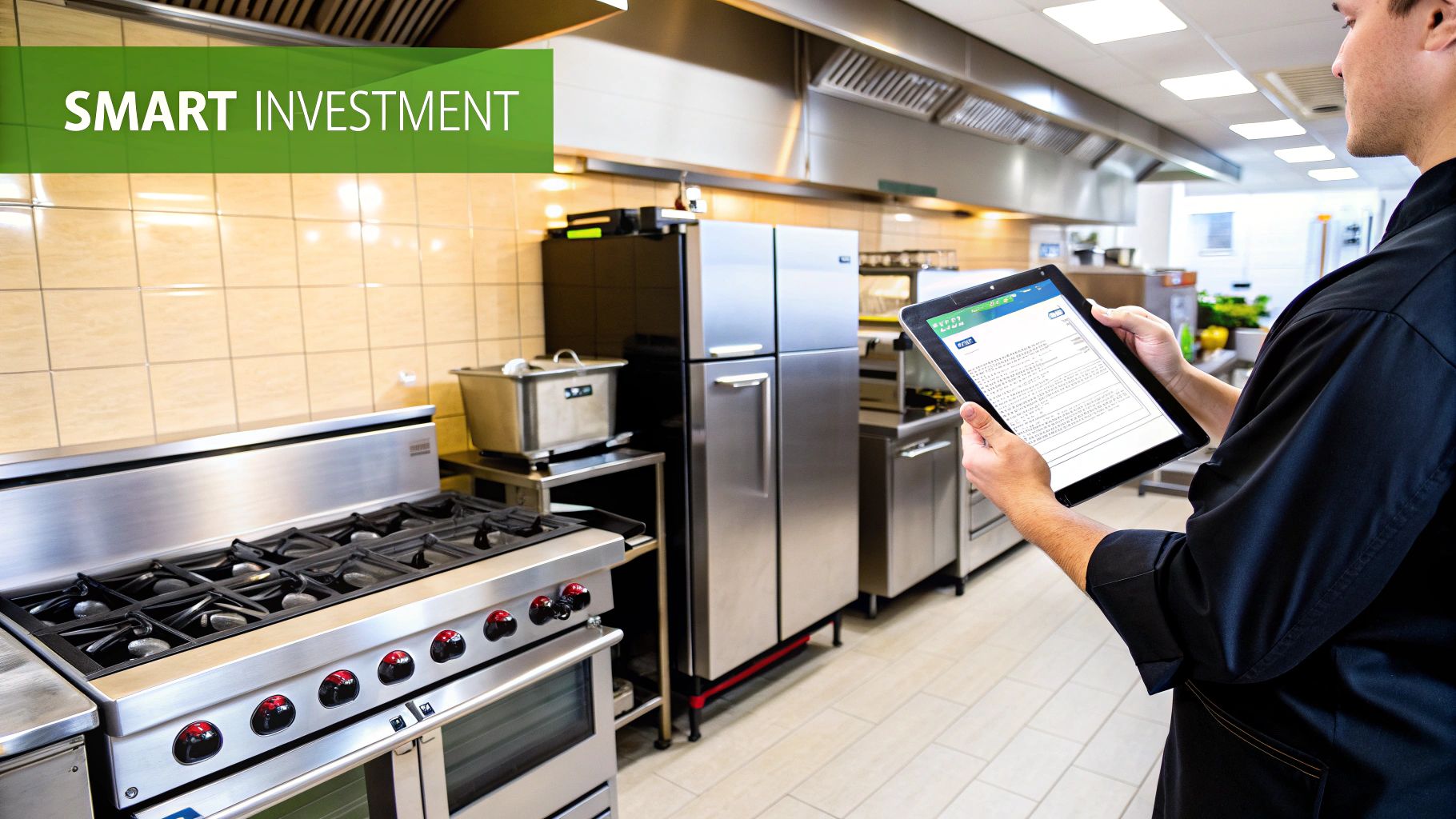
When you're outfitting a kitchen, it’s easy to get tunnel vision and focus only on the sticker price. But the real cost—and the real value—of your equipment reveals itself over months and years of operation. Think of your gear less like a one-time purchase and more like a long-term business partner. A smart investment pays you back.
This is especially true in a place like Southern California, where utility costs can really sting. Modern, energy-efficient appliances are your best defense. It's like choosing a fuel-sipper for your daily commute on the 405; you might pay a little more upfront, but the savings at the pump add up fast. For your restaurant, that means lower gas and electric bills hitting your desk every single month.
New vs Used Equipment A True Cost Analysis
The allure of a cheap, used piece of equipment is undeniable. I get it. But that initial savings can vanish in a heartbeat. Imagine your fryer going down in the middle of a packed Friday night dinner service. That’s not just a repair bill; it's lost orders, angry customers, and a hit to your hard-earned reputation. New equipment with a solid warranty is your insurance policy against that kind of chaos.
This isn’t just a hunch; the entire industry is moving in this direction. The global market for commercial kitchen appliances, currently valued around USD 99.28 billion, is expected to skyrocket to nearly USD 219.75 billion by 2034. Why the massive jump? It's driven by operators demanding smarter, more efficient systems that slash utility bills and reduce labor. For LA restaurant owners, the message is clear: upgrading your gear is a competitive advantage.
So, let's break down the real-world math of new versus used.
New vs Used Equipment A Cost-Benefit Analysis
This table cuts through the noise and compares what you're really getting for your money over the long haul.
| Consideration | New Equipment | Used Equipment |
|---|---|---|
| Warranty | Comes with a full manufacturer's warranty covering parts and labor. Peace of mind is built-in. | Zero warranty, or a very limited one from a third party. Every single repair comes out of your pocket. |
| Reliability | Engineered for top performance right out of the box. You can count on it from day one. | You're rolling the dice. Its history of use, abuse, or proper maintenance is a total mystery. |
| Energy Costs | Modern ENERGY STAR® certified models are designed to sip, not guzzle, energy, lowering your utility bills. | Older units are notoriously inefficient. Get ready for shockingly high monthly energy costs. |
| Financing | Easy to finance, allowing you to manage cash flow with predictable monthly payments. | Almost impossible to get financing for. You'll need a big chunk of cash upfront. |
| Total Cost | Higher initial price but significantly lower long-term costs for operation and repairs. | Lower sticker price but a much higher risk of eye-watering repair bills and inflated energy costs. |
Ultimately, new equipment isn't just about avoiding headaches; it's about building a more predictable and profitable business from the ground up.
Protecting Your Investment with Simple Maintenance
Once you've made that smart investment, you have to protect it. A little bit of consistent, simple maintenance goes a long way. It’s the difference between a machine that lasts for a decade and one that gives you problems after a year. Good upkeep keeps your equipment running safely, efficiently, and reliably.
A well-maintained kitchen is a profitable kitchen. Simple, regular upkeep on key pieces of equipment prevents costly emergency repairs and ensures you get the maximum return on your investment for years to come.
You don't need to be a mechanic. Just start with a basic checklist for your workhorse items:
- Refrigeration Units: Make it a habit to clean the condenser coils. Dust and grease buildup makes the compressor work overtime, driving up your energy bill. Also, check that the door gaskets have a tight seal to keep the cold air where it belongs. Get more pro tips from our guide on maintaining energy-efficient commercial refrigerators.
- Fryers: Filter your oil every single day. It’s non-negotiable for food quality and it stretches the life of your oil. To really get the most out of this critical piece of equipment, you need to know your commercial deep fryer cleaning best practices.
- Ranges and Griddles: A thorough wipe-down at the end of every shift is essential. Carbon buildup creates nasty hot spots that throw off cooking times and ruin food.
By choosing reliable new equipment and committing to its care, you're not just buying steel—you're building a foundation of efficiency that frees you up to focus on your food and your customers.
How to Budget and Finance Your Kitchen Equipment
Getting your kitchen kitted out is one of the biggest investments you'll make, but don't let the price tags intimidate you. You don't need a mountain of cash sitting in the bank to get started. Honestly, understanding how to budget and finance your commercial kitchen equipment is one of the most powerful tools a Los Angeles restaurant owner can have.
Think of financing as a strategic business move, not a sign that you're short on funds. It’s how you get the high-quality, reliable, and energy-efficient gear you need right now while holding onto your precious cash flow. That capital is the lifeblood of your business, better spent on things like payroll, inventory, and a killer marketing campaign for your grand opening.
Smart Financing Preserves Your Capital
Equipment financing is pretty straightforward: it breaks down a huge, scary purchase into small, predictable monthly payments. This is what makes top-tier equipment accessible to brand-new startups, growing food trucks, and established spots looking to upgrade their gear. Instead of wiping out your bank account on day one, you can pay for the equipment as it starts making you money.
A well-structured financing plan empowers your business. It transforms a significant capital expenditure into a predictable operating expense, making your financial planning much smoother and more reliable from month to month.
This approach gives you immediate access to the tools you need to go head-to-head with the competition in LA's crowded food scene. To really get into the nitty-gritty of how these plans work, check out our detailed guide on financing restaurant equipment.
Building Your Total Cost Budget
Putting together a realistic budget is about more than just adding up the sticker prices on the appliances. A handful of other costs need to be on your radar to get the real picture of your total investment. Forgetting these is how you get hit with nasty surprises down the line.
Your all-in budget should always account for these items:
- The Equipment Itself: This is the big one, of course. It covers everything from your six-burner range and deep fryer to your walk-in cooler.
- Delivery and Shipping: Some suppliers might offer free local delivery, which is great, but always double-check. You need to know if there are freight charges, especially for those heavy, oversized items.
- Installation Fees: Certain pieces of equipment—especially anything that needs a gas line or complex electrical work—aren't just plug-and-play. They require a professional to get them set up safely and correctly.
- Taxes and Fees: When you’re running the numbers, don't forget the financial details. A key part of this is understanding sales tax implications to make sure your budget is spot-on.
By mapping out every potential expense, you can walk into a financing discussion with total confidence. You'll know exactly what you're committing to, which is crucial for making smart, sustainable decisions that will set your restaurant up for the long haul.
Your Commercial Kitchen Equipment Questions Answered
Running a food business in Los Angeles is a high-stakes game, and navigating the world of commercial kitchen equipment can feel like one more thing on an endless to-do list. We get it. Here are some straight answers to the most common questions we hear from restaurant and food truck owners across Southern California.
Why Should I Buy New Equipment Instead of Used in Los Angeles?
The temptation of a lower sticker price on used equipment is real, but it’s a gamble that can cost you dearly in a market as competitive as LA. Used gear often comes with a hidden story—no warranty, a questionable maintenance history, and older, less efficient technology that quietly inflates your utility bills.
New commercial kitchen equipment, on the other hand, comes with a full manufacturer's warranty. That’s your safety net. When you tally up the potential costs of repairs, lost sales from unexpected downtime, and higher energy bills, new equipment often turns out to be the smarter financial move in the long run.
In the fast-paced LA food scene, equipment failure isn't just an inconvenience—it's lost revenue. A new, warrantied appliance is an investment in operational stability, protecting your business from the costly surprises that often come with used gear.
How Quickly Can I Get Equipment Delivered in Southern California?
In this business, speed is everything. Whether you’re racing to meet an opening deadline or a critical fryer goes down during a Friday night rush, waiting for a replacement is not an option. That’s where a local supplier with an in-state warehouse becomes your best friend.
For most orders in Los Angeles and Orange County, you can expect delivery within one to two business days. This kind of quick turnaround gets your kitchen back up and running fast, minimizing downtime and keeping your operation moving.
What Are My Financing Options for a Food Truck?
For any business, but especially for a Los Angeles food truck, cash flow is king. You need to keep your capital working for you, not tied up in equipment. That's precisely why flexible financing plans exist—to help you get rolling without draining your bank account on day one.
Instead of dropping a huge chunk of cash upfront, you can get all the essential gear you need—compact fryers, griddles, undercounter refrigerators—for a predictable monthly payment. This frees up your capital for other must-haves like permits, inventory, and marketing. It’s a strategic way to equip yourself to compete from the moment you hit the streets.
Ready to build a kitchen that can keep up with your vision? LA Restaurant Equipment offers new, warranty-backed commercial kitchen equipment at warehouse-direct prices, with fast, free shipping across Southern California. https://larestaurantequipment.com