

Picking the right chafing dish is simpler than you think. For big crowds, the full-size (8-quart) chafer is your go-to workhorse. For smaller gigs or side dishes, the half-size (4-quart) chafer is your best friend. Getting this choice right is a huge part of your event's success, making sure food stays hot and the buffet line moves like a dream.
Your Quick Guide to Chafing Dish Sizes
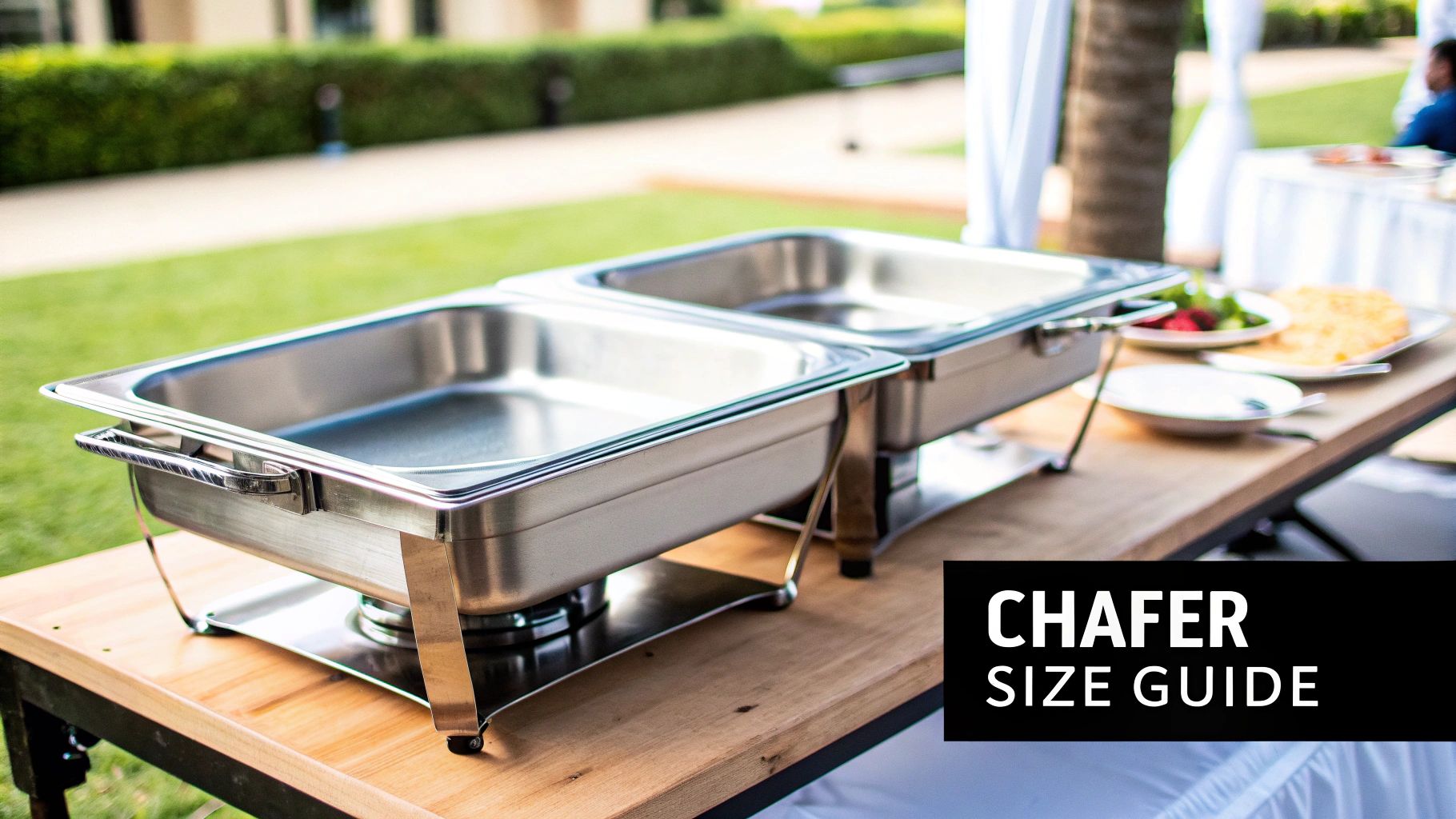
For any Los Angeles caterer or food truck owner, choosing the right chafing dish is one of the most basic—and important—decisions you'll make. This piece of restaurant equipment is fundamental. Think of it like picking the right pot for a recipe. You wouldn't try to warm a small sauce in a massive stockpot, and the same logic applies here. Your chafer size has to match your guest count, your menu, and the vibe of your event.
It's no surprise that this equipment is in high demand. The global market for chafing dishes hit a massive USD 875.6 million in 2024, which shows just how essential these tools are for buffets everywhere. This market is dominated by standard half-size (2.5-4 quart) and full-size (6-8 quart) models, the bread and butter for everything from a Los Angeles food truck's taco bar to a fancy corporate lunch. You can discover more insights about the chafing dish market on dataintelo.com.
Starting with the Basics
If you're new to planning a buffet, the lingo might feel a little confusing at first. But don't worry, it really just boils down to a few key options designed to give you maximum flexibility.
- Full-Size Chafers: These are the industry standard, and for good reason. They're perfect for main courses like pasta, roasted chicken, or carne asada for a Mexican food pop-up. Their big capacity means you won't be running back to the kitchen for refills every five minutes.
- Half-Size Chafers: These are perfect for side dishes, appetizers, or smaller, more intimate gatherings. They let you offer more variety on your buffet line without having to commit to a giant batch of just one thing.
The name of the game is efficiency. Using the right size chafing dish cuts down on food waste, keeps everything heated evenly, and just looks more professional and organized for your guests.
To give you a head start, I've put together a quick reference table. It breaks down the common sizes and how many servings you can expect to get out of each one.
Chafing Dish Size Quick Reference Guide
| Chafing Dish Size | Typical Capacity (Quarts) | Estimated Servings (per dish) |
|---|---|---|
| Full-Size | 8-9 Quarts | 25-35 |
| Half-Size | 4-5 Quarts | 12-18 |
| Third-Size | 2.5-3 Quarts | 8-10 |
Use this as a quick cheat sheet when you start planning the menu and equipment for your next event. Getting these basics down will set you up for success as we get into more advanced setups later in this guide.
Understanding Chafing Dish Dimensions and Capacity
You see "8-quart capacity" on a product description, but what does that really mean when you've got a hundred hungry guests lining up? Let's break down the numbers and get a real feel for how the size of a chafing dish translates to actual servings on a plate. This is where you move from just buying equipment to mastering your buffet.
Think of your standard full-size rectangular chafer as the workhorse of your catering setup. It’s basically built around a standard hotel pan. Its generous size is what you need for that massive tray of lasagna for a big family event or a hearty portion of barbacoa that needs to stay hot and juicy for hours. That capacity isn't just a number; it's your guarantee for handling the main courses without a hitch.
This is exactly why chafers are still a cornerstone of the food service game. The market for them is actually growing, and these days, over 60% of products are made from tough, corrosion-resistant materials that can handle the daily grind. The most common sizes you'll see range from 4 to 8 quarts, which is the sweet spot for keeping food at a safe temperature and stopping bacteria in its tracks. You can actually dig into the trends in the electric chafing dish market on businessresearchinsights.com if you're curious.
Rectangular vs. Round Chafers
The shape you choose is just as critical as the size. It dictates how you present your food and how your entire buffet line flows. Each one has a job to do.
- Rectangular Chafers: These are the undisputed champions of the buffet line. Their straight edges let you line them up side-by-side with zero wasted space, perfect for maximizing your table real estate. They’re the go-to for anything you can line up neatly, like enchiladas, rows of chicken skewers, or a colorful vegetable medley.
- Round Chafers: These add a bit of style and are great for breaking up the straight lines of a long buffet. They're perfect for foods that don't need a specific layout—think soups, sauces, meatballs, or even a warm dessert like an apple crumble. The round shape just naturally invites guests to scoop from the middle.
Here’s a good way to think about it: a rectangular chafer is like a perfectly organized bookshelf, making everything efficient and easy to access. A round chafer is more like a centerpiece bowl, designed to draw the eye and show off what’s inside from every angle.
From Quarts to Tangible Servings
Alright, let's get down to the most important part: translating quarts into actual servings. While every event is different and appetites vary, there's a solid rule of thumb that will save you a lot of headaches during planning.
A standard 8-quart full-size chafer will reliably give you about 25-30 average-sized servings of a main dish. If you're serving something lighter, like a side of roasted vegetables, you might stretch that to 35 servings.
This simple calculation is everything for a Los Angeles food truck prepping for a crazy lunch rush or a caterer stocking up for a weekend wedding. Once you get a feel for this conversion, you can order your food with confidence, avoid running out of the main course, and cut down on waste. Master these dimensions, and you'll be planning your menus like a seasoned pro.
How to Configure Food Pans Like a Pro
The real genius of a chafing dish isn't the shiny frame—it's the system of modular food pans that nestle inside. A standard full-size chafer is so much more than a big container for one dish. Think of it as a blank canvas, a customizable serving station you can set up exactly how you need it.
When you master pan configurations, you can get incredibly creative and efficient, all while offering a much wider variety of foods in a tight space.
This kind of flexibility is a game-changer for any modern food service operation, from a bustling Los Angeles food truck to a high-end wedding caterer. It’s all about making every single inch of your buffet table work harder. By mixing and matching different pan sizes within a single chafer, you can build a dynamic, visually appealing spread that keeps your guests happy and the line moving.
This flowchart breaks down the three most common chafing dish shapes you'll see in any professional setup.
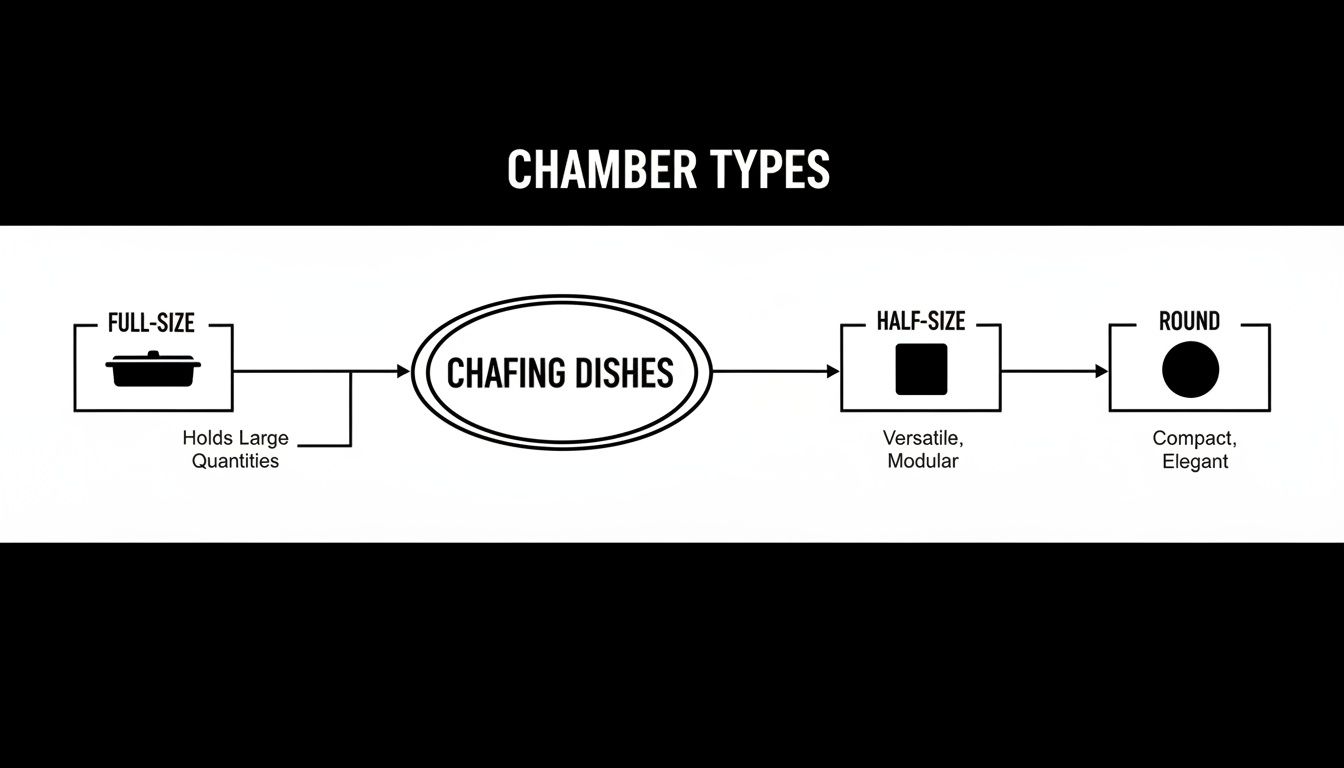
As you can see, the rectangular full-size and half-size options are built for modularity, while the round chafer delivers an elegant, standalone presentation for a centerpiece dish.
Common Pan Combinations
Here's the key: a standard full-size chafing dish frame is designed to hold specific combinations of smaller pans. This is where your buffet strategy really comes to life. Instead of tying up an entire 8-quart chafer for a single item, you can break it up.
These are the most practical and widely used configurations out in the field:
- Two Half-Size Pans: This is the undisputed classic. It’s the perfect way to offer two main proteins (like grilled chicken and pulled pork) or a main dish next to its go-to side, all kept warm in one unit.
- Three Third-Size Pans: Ideal for setting up a "bar" concept. For a taco station serving great Mexican food, this could be your ground beef, refried beans, and Mexican rice, all lined up and ready to go. It’s also fantastic for a trio of sauces or a medley of vegetable sides.
- One Half-Size and Two Quarter-Size Pans: This setup gives you even more granular control. You could feature a main dish in the half-size pan and use the two smaller pans for toppings or garnishes, like sour cream and fresh guacamole.
Think of your chafing dish frame like a bento box. The frame is the container, and the pans are the individual compartments you can fill to create a complete, organized, and appealing meal experience.
This modular approach doesn't just save valuable table space; it also cuts down on the number of chafers you need to buy, transport, and clean at the end of a long night. For anyone managing restaurant equipment, that efficiency translates directly into saved time and money.
For a deeper dive into the specs of these workhorse containers, check out our complete guide on the full-size steam table pan. It’s the foundational piece that makes all these professional configurations possible.
Matching Chafing Dish Size to Your Event
Alright, let's put all this theory into practice. Knowing the difference between a full-size and a half-size pan is one thing, but figuring out how many you need for a wedding versus a corporate lunch is where the real magic happens. Getting this right is the secret to a smooth, professional-looking buffet line.
For a big wedding with 150 guests, you'll need a solid lineup of full-size chafers to handle the main courses. We're talking three to four 8-quart units for your proteins and starches. But for an intimate office meeting of 25 people, a couple of half-size dishes will be more than enough—no need to overwhelm the table or your budget.
This isn't just a local trick; it's a global standard. Chafing dish sizes are designed to scale for everything from a backyard party to a massive banquet. The market offers sizes like quarter (1-2 quarts), half (3-5 quarts), and full (6+ quarts) to give you incredible flexibility. A single 8-quart chafer can reliably keep food hot and safe at 165°F for 50-100 people, which is a non-negotiable in the food service world. If you want to dive deeper into the industry trends, you can read the full research about the electric chafing dish market.
Menu Choices and Dish Density
Beyond just counting heads, the menu itself is a huge factor. The density of your food—how hearty or light it is—dramatically changes how many servings you can fit in a single pan. This is a detail that trips up a lot of new caterers.
Think about it: a dense, heavy dish like baked mac and cheese is going to fill up a chafer much faster than something light and airy.
- Hearty Mac & Cheese: An 8-quart chafer might give you around 25-30 servings.
- Steamed Green Beans: That same 8-quart chafer could easily hold 40-50 servings.
It's like the old riddle: what weighs more, a pound of feathers or a pound of rocks? They weigh the same, but the feathers take up way more space. A fluffy serving of rice needs more room than a dense scoop of beef stew. You have to plan your chafer count accordingly.
For any Los Angeles caterer putting together a diverse menu, like a taco bar with both heavy carnitas and lighter grilled veggies, this is key. You’ll need more chafer space for the low-density items to make sure your buffet looks full and inviting all the way through service.
Your Event Planning Cheat Sheet
To take the guesswork out of it, we've put together a simple guide. Think of this as your go-to cheat sheet whether you're a Los Angeles operator setting up for a casual party, a food truck service, or a formal gala.
Chafing Dish Selection Guide by Event Size
Here’s a quick framework to help you map out your needs based on guest count and the type of event you’re catering.
| Guest Count | Event Type | Recommended Chafing Dish Configuration |
|---|---|---|
| 20-40 | Corporate Lunch | 2-3 half-size chafers for a main and sides, or 1 full-size chafer with multiple food pan inserts. |
| 50-75 | Graduation Party | 2 full-size chafers for main dishes, plus 2-3 half-size chafers for sides and appetizers. |
| 100-150 | Wedding Reception | 3-4 full-size chafers for proteins and starches, and 4-5 half-size chafers for a variety of side dishes. |
Using this as your starting point ensures you have the right restaurant equipment without the stress. By matching your chafing dishes to your specific event and menu, you cut down on food waste and guarantee a seamless, professional service every single time.
Designing a Functional and Appealing Buffet Layout
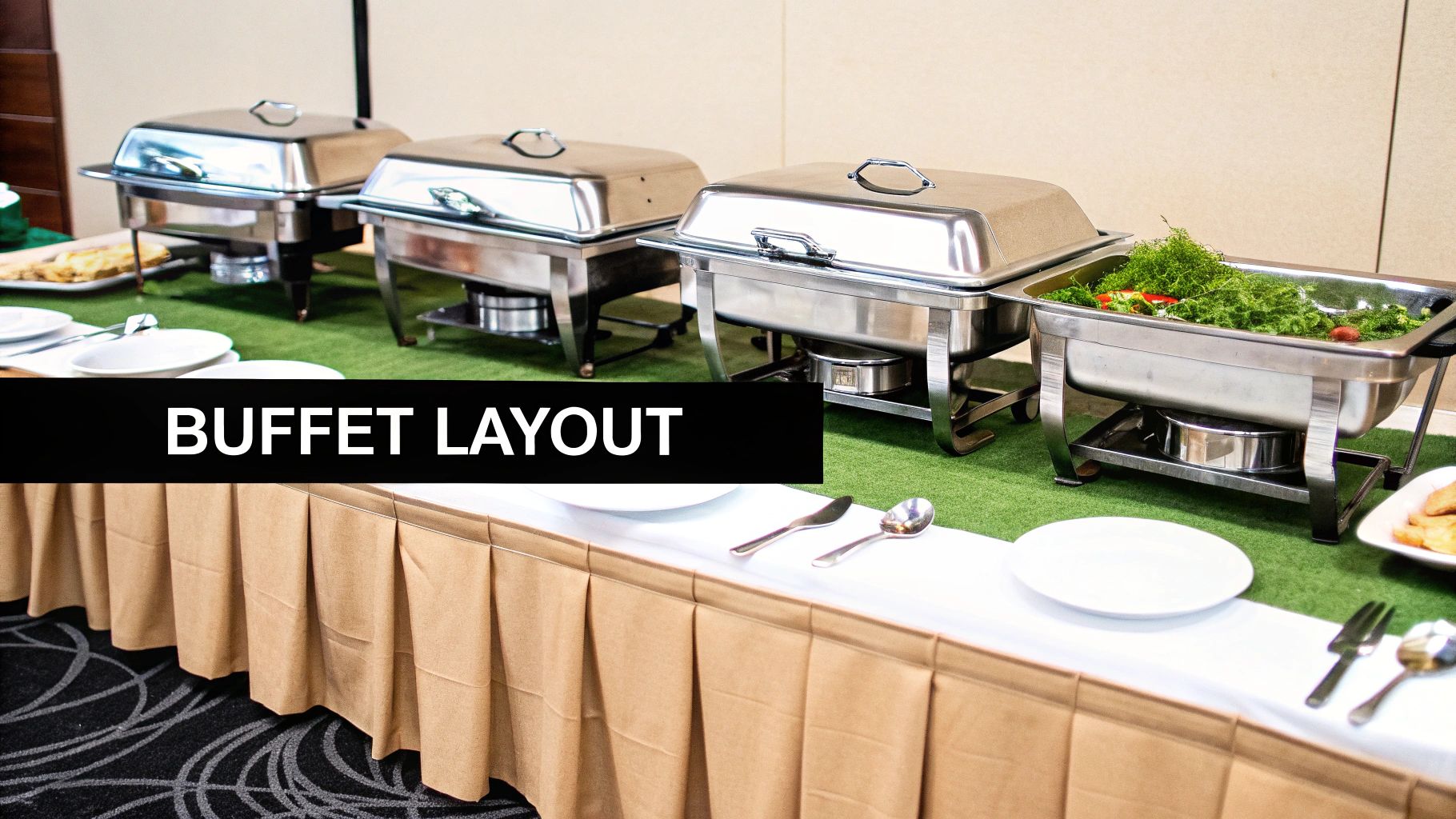
Having the perfect size of chafing dish is only half the battle. The real secret to a successful event is arranging your equipment in a way that just works. A well-designed buffet layout isn't just about looking good—it’s about creating a smooth, intuitive experience that prevents those frustrating traffic jams around the green beans.
Think of a standard banquet table as your canvas. Whether you're working with a 6-foot or 8-foot table, your goal is to create a logical flow that guides guests from start to finish. A simple bottleneck can sour an otherwise perfect meal, so a little smart planning goes a long way.
Maximizing Your Table Space
So, how many chafers can you realistically fit on a table? An 8-foot banquet table is the industry workhorse. It can comfortably hold three full-size chafing dishes and still leave enough room for all the other essentials. This gives you space at the beginning for plates and at the end for utensils and napkins.
For a smaller 6-foot table, you’ll want to stick with two full-size chafing dishes. If you try to cram a third one in there, you’ll end up with a cluttered, difficult-to-navigate mess for your guests.
A great buffet layout tells a story, guiding guests effortlessly from one dish to the next. The best setups are so intuitive that people don't even have to think about where to go—they just naturally follow the flow you've created.
This idea of flow is a core part of any food service operation. If you're planning a new kitchen or trying to make your current one more efficient, digging into the fundamentals of a good commercial kitchen layout design can make a huge difference behind the scenes and lead to a better guest experience out front.
Arranging Dishes for a Better Flow
The order of your food can make or break the buffet line. A logical sequence not only prevents bottlenecks but also helps people build their plates in a way that makes sense. You always want to start with the main attractions and work your way down.
Here’s a proven layout that works every single time:
- Plates First: The line always, always begins with a stack of plates.
- Main Courses: Next up are your primary proteins and starches. This is where guests will take their largest portions, so put them front and center.
- Side Dishes: Follow the mains with vegetables and other complementary sides.
- Sauces and Breads: Position any sauces, gravies, and dinner rolls near the end of the line.
- Utensils Last: This is a big one. Placing forks, knives, and napkins at the very end is crucial. It frees up your guests' hands so they can serve themselves without juggling their silverware.
For a Los Angeles food truck with barely any counter space, these rules are even more critical. Using risers can be a total game-changer here. Elevating some of your dishes creates a dynamic, multi-level display that saves precious real estate and adds a touch of visual flair, making your setup both space-efficient and elegant.
Essential Tips for Managing Your Chafing Dish Inventory
Picking the right size chafing dish is half the battle; knowing how to manage your inventory is the other half. Getting this right is what separates the pros from the amateurs, ensuring your gear lasts, your setup is a breeze, and you’re ready for anything—from a bustling Los Angeles food truck service to a massive wedding reception.
One of the smartest moves you can make is investing in stackable chafing dish models. Storage space is almost always tight, and these units are absolute lifesavers. It’s a simple feature that cuts down on clutter and makes hauling your equipment from one gig to the next a whole lot more organized.
Choosing Materials and Pans Wisely
Here’s another pro tip: go for interchangeable food pans. Think about it—pans that can go straight from your commercial oven to the buffet line without a second thought. This drastically cuts down on washing and streamlines your entire process, saving you precious minutes during the chaos of an event.
When it comes to the chafers themselves, you need to think long-term.
- Stainless Steel: This is the workhorse of the catering world for good reason. It’s tough, stands up to rust and dings, and is a snap to sanitize. It's a reliable choice that won't let you down.
- Chrome-Plated: These often look great and come with a friendlier price tag, but they can scratch or chip. Once that happens, the metal underneath is exposed and rust isn't far behind. They’re a decent option if you're on a budget, but expect to replace them more often.
Think of your chafing dishes as a long-term investment in your business's efficiency. Choosing durable, versatile equipment pays dividends by reducing replacement costs and saving labor hours during setup and teardown.
These practical choices help Los Angeles operators make every part of their workflow smoother, from transport and setup to cleaning and storage. For a complete rundown of all the gear your kitchen needs to run like a well-oiled machine, our commercial kitchen equipment checklist is a fantastic resource. Making smart choices from the start ensures your restaurant equipment works as hard as you do, which always helps the bottom line.
Still Have Questions? Let's Clear Things Up.
We've gone over the essentials, but sometimes you just need a quick, straight-to-the-point answer. Here are some of the most common questions we hear from Los Angeles caterers and restaurant pros about chafing dish sizes.
How Many People Does an 8 Quart Chafing Dish Serve?
A standard 8-quart full-size chafing dish will typically get you about 25 to 30 servings, assuming a normal portion size of around 4-5 ounces.
Of course, this is just a starting point. If you're dishing up something heavy and hearty, like carnitas for a Mexican food buffet, you'll probably land closer to 25 servings. For lighter sides like a vegetable medley, you could easily stretch that to serve 35 people.
Can I Put Different Sized Food Pans in One Chafer?
Yes, absolutely! This is one of the best features of a standard chafer. The frame is designed to be modular, so you can mix and match pans to fit your menu.
A full-size chafer frame can hold:
- Two half-size pans
- Three third-size pans
This setup is a game-changer for a Los Angeles food truck that needs to offer multiple toppings or for any caterer wanting to serve a main and a side from a single unit. It’s all about maximizing your space and your options.
What Is the Difference Between a Chafing Dish and a Buffet Server?
The real difference comes down to the heat source. A traditional chafing dish uses that classic setup: a water pan heated from below by fuel cans, creating a nice, moist steam heat that keeps food from drying out.
A buffet server, on the other hand, is usually electric. It has a built-in heating element that warms the food pans directly. Chafers are your go-to for portability and events where you don't have power, while electric servers are perfect for permanent buffet lines or any spot with a reliable outlet.
For all your restaurant equipment needs, from chafers to commercial ranges, trust the experts at LA Restaurant Equipment. We offer warehouse-direct pricing on new, top-quality gear with fast, free shipping for Southern California businesses. Explore our full inventory and find the perfect tools to keep your kitchen running smoothly at https://larestaurantequipment.com.