

If you're looking to boost profits, the fastest way is often hiding in your trash can. Turning discarded ingredients back into revenue isn't just a nice idea—it's a core business strategy for any sharp operator, whether you're running a Los Angeles Pizza spot, a fleet of Los Angeles Food Trucks, or a classic Mexican Food joint. It all starts with a simple audit to see where the money is leaking out, from spoilage and prep scraps to what’s left on the plate.
Why Food Waste Is Secretly Costing Your Restaurant Money
Let's be blunt: for any restaurant owner in Los Angeles or Orange County, every single ingredient has a price tag. Food waste isn't some abstract green-friendly concept; it’s a daily expense that quietly drains your profits. Every spoiled tomato, every oversized portion, every unused vegetable trim is cash thrown directly into the bin.
And this isn't a small-time problem. In 2022, the global food service industry generated a mind-boggling 290 million tonnes of food waste. That’s 28% of all waste at the retail and consumer level. Here in the U.S., restaurants are a huge part of the $162 billion annual cost of food waste, with food costs already eating up 28-35% of most restaurants' sales.
The True Cost for Local LA Eateries
For a Los Angeles Pizza spot, this might look like dough that expired after a slow Tuesday or tubs of toppings that didn't get used. For a busy food truck, it’s the specialty items that didn't sell and won't last until the next service. And for a packed Mexican joint? It's all the trim from prepping hundreds of avocados and onions for that signature guacamole.
But the real cost of food waste is so much more than just the price of the food. You're also throwing away the labor spent prepping it, the energy used to cook and store it, and the fees you pay to have it all hauled away.
These hidden costs pile up fast, which makes waste reduction one of the most powerful tools you have for improving your bottom line. To really get a handle on your financial health, you might want to check out our guide on how to calculate your restaurant's profit margin.
Identifying Your Biggest Leaks
The first step to plugging these financial leaks is figuring out where they're coming from. In my experience, almost all restaurant food waste falls into three buckets:
- Spoilage Waste: This is stuff that goes bad before you can even use it. It’s a huge red flag pointing to problems with your purchasing, forecasting, or storage. A failing walk-in cooler or a disorganized dry storage room can be a massive culprit here.
- Preparation Waste: This happens on the cutting board—vegetable peels, meat trimmings, and over-prepped ingredients that never see a plate. While you can't eliminate it completely, smart techniques and better menu planning can drastically cut it down.
- Plate Waste: This is the food your customers leave behind. It’s direct feedback. It could mean your portion sizes are too big, a recipe is off, or a particular menu item just isn't a hit with your diners.
The Power of a Food Waste Audit
To fix these problems, you need data. A food waste audit is the single most important place to start, and it doesn't have to be complicated. You don't need fancy software or expensive consultants.
Just grab a few separate, clearly labeled bins for spoilage, prep, and plate waste. For one week, have your team toss everything into the right bin and weigh the contents at the end of each day.
This simple exercise makes an invisible problem completely visible. You’re no longer guessing—you have hard numbers. You might discover you’re consistently over-ordering fresh herbs that wilt and die, or that your "famous" green bean side dish is always coming back half-eaten. This data gives you a clear roadmap and a profit-driven reason to start making changes.
How to Run a Practical Food Waste Audit in Your Kitchen
The idea of a food waste audit sounds complicated, but it doesn't have to throw a wrench in your dinner service. The real goal is simple: start with a "measure and manage" mindset. You're just trying to make an invisible problem visible, and that starts with gathering clear, actionable data without getting in the way.
The whole process kicks off by setting up a few designated, clearly labeled bins. You’ll want three separate containers to get a real handle on where your waste is coming from:
- Spoilage Bin: This is for anything that goes bad before you even get a chance to use it. Think produce that rots in the walk-in or dairy that hits its expiration date on the shelf.
- Prep Waste Bin: This one catches all the trimmings, peels, and scraps from your prep cooks.
- Plate Waste Bin: All the food that comes back from the dining room untouched goes here.
Just by separating waste this way, you'll immediately see where your biggest headaches are. A constantly full spoilage bin could mean you're over-ordering or that your refrigeration units aren't holding temperature. A heavy prep bin might be a sign that your team needs a refresher on knife skills or a more creative approach to using trimmings.
Simple Tracking Tools for Any Kitchen
You don't need a fancy tech setup to get going. A simple log sheet taped to the wall near the bins is all you need to start gathering solid information. Your team can quickly jot down what's being tossed, a quick reason why, and an estimated weight.
For example, a busy Los Angeles food truck could track unsold prepped toppings at the end of the night, quickly learning which specialty items just aren't moving. On the other hand, a high-volume Mexican restaurant might focus on the trim waste from avocados and onions during morning prep to see if there's a more efficient way to break them down.
The key here is consistency. Ask your team to track everything for one full week. This gives you a snapshot that accounts for the slow days and the crazy busy ones, providing a powerful baseline to work from.
Don't aim for perfection on day one. Just focus on building the habit of tracking and getting your staff to see what's being thrown out. You can always get more detailed later once the basics are second nature.
Analyzing Your Findings to Create an Action Plan
Once you have a week's worth of data, it’s time to sit down and look for patterns. Is the same type of produce getting tossed every few days? Is one particular dish consistently coming back half-eaten?
The numbers might shock you. In the U.S., restaurants and food service outlets are responsible for nearly 40% of the 60 million tons of food wasted every year. The biggest culprits are things you can now measure in your own kitchen: spoilage (12.1%) and over-preparation (23.6%). By zeroing in on these areas, you can make a huge dent—just look at Vermont, which cut its landfill food scraps by 13% between 2018 and 2023 by tackling these exact issues. You can dive deeper into the data in the full 2024 ReFED Food Waste Report.
To help make sense of it all, a simple tracking sheet is your best friend. It doesn't need to be complicated; something like this works perfectly.
Simple Food Waste Audit Tracking Sheet
Here’s a basic template you can print out or recreate to start tracking in your own kitchen. It helps turn observations into organized data you can actually use.
| Date | Item | Waste Type (Spoilage/Prep/Plate) | Weight (lbs) | Reason/Notes | Estimated Cost |
|---|---|---|---|---|---|
| 10/26 | Roma Tomatoes | Spoilage | 5 lbs | Went soft in walk-in | $7.50 |
| 10/26 | Onion Ends | Prep | 2 lbs | Trim from salsa prep | $1.00 |
| 10/26 | Pizza Dough | Spoilage | 3 lbs | Over-proofed, not used | $4.00 |
| 10/26 | Side Salads | Plate | 4 lbs | Returned uneaten | $12.00 |
This kind of straightforward data immediately points to where your money is going. If side salads are always coming back, it’s a clear sign to rethink the portion size or even the recipe. If tomatoes are spoiling, maybe it's time to adjust your purchasing frequency or double-check the temperature on your Atosa refrigeration unit. This simple analysis is what turns abstract numbers into a concrete action plan for cutting food waste.
Engineer Your Menu to Minimize Waste and Maximize Profit
Once your food waste audit shows you what’s really hitting the bin, you have the exact data you need to turn your menu into a lean, profit-driving machine. Menu engineering isn't just about what tastes good; it’s about strategically designing a lineup that cuts down on waste from start to finish. This means taking a hard look at the dishes that consistently leave scraps or rely on ingredients that spoil too quickly.
Maybe your audit revealed that a specific garnish is always pushed to the side of the plate, or that a low-selling specialty dish is causing pricey proteins to expire in the walk-in. These are your red flags. Start by cross-referencing the profitability and popularity of each menu item with its waste data. High-waste, low-profit dishes? They should be the first ones you consider cutting.
Cross-Utilize Ingredients Like a Pro
One of the most powerful tactics for reducing food waste in restaurants is ingredient cross-utilization. It's a simple concept: design your menu so one ingredient has a home in multiple dishes. This ensures nothing sits on the shelf collecting dust, a game-changing strategy for high-volume kitchens and smaller operations like food trucks where every inch of storage counts.
Here's a real-world scenario for a Mexican Food business in Los Angeles:
- Dinner Special: You sell a ton of slow-braised carnitas on Friday night, but you always end up with a few pounds left over.
- Next-Day Lunch: Don't let that perfectly good pork sit. Feature it in Saturday's lunch specials—think carnitas burritos, loaded nachos, or tortas.
- The Result: You've just sold the same product twice, wiped out potential spoilage, and created an enticing special that feels brand new to your customers.
This approach works for just about any cuisine. A Los Angeles Pizza kitchen can use leftover roasted veggies from a gourmet pie as a topping for stromboli or a calzone filling the next day. The trick is to think ahead and build that versatility right into your menu from the get-go.
The smartest menus are designed like a puzzle, where every ingredient piece has more than one place it can fit. This flexibility is your best defense against unexpected lulls in service or supply chain hiccups.
Master Portion Control for Better Margins
Generous portions might feel like good hospitality, but they're often a one-way ticket to plate waste and shrinking profit margins. If your audit shows certain dishes are constantly coming back half-eaten, that’s a clear sign your portions are too big. Here's the good news: recent surveys show over 75% of diners actually prefer smaller portions, making this an easy win-win adjustment.
Standardizing your recipes is the bedrock of good portion control. Every dish needs to be made with precise measurements, every single time. This consistency not only locks in your costs but also guarantees your customers get the same quality experience with every visit.
The flowchart below breaks down the main sources of food waste, helping you pinpoint where your efforts will make the biggest impact.
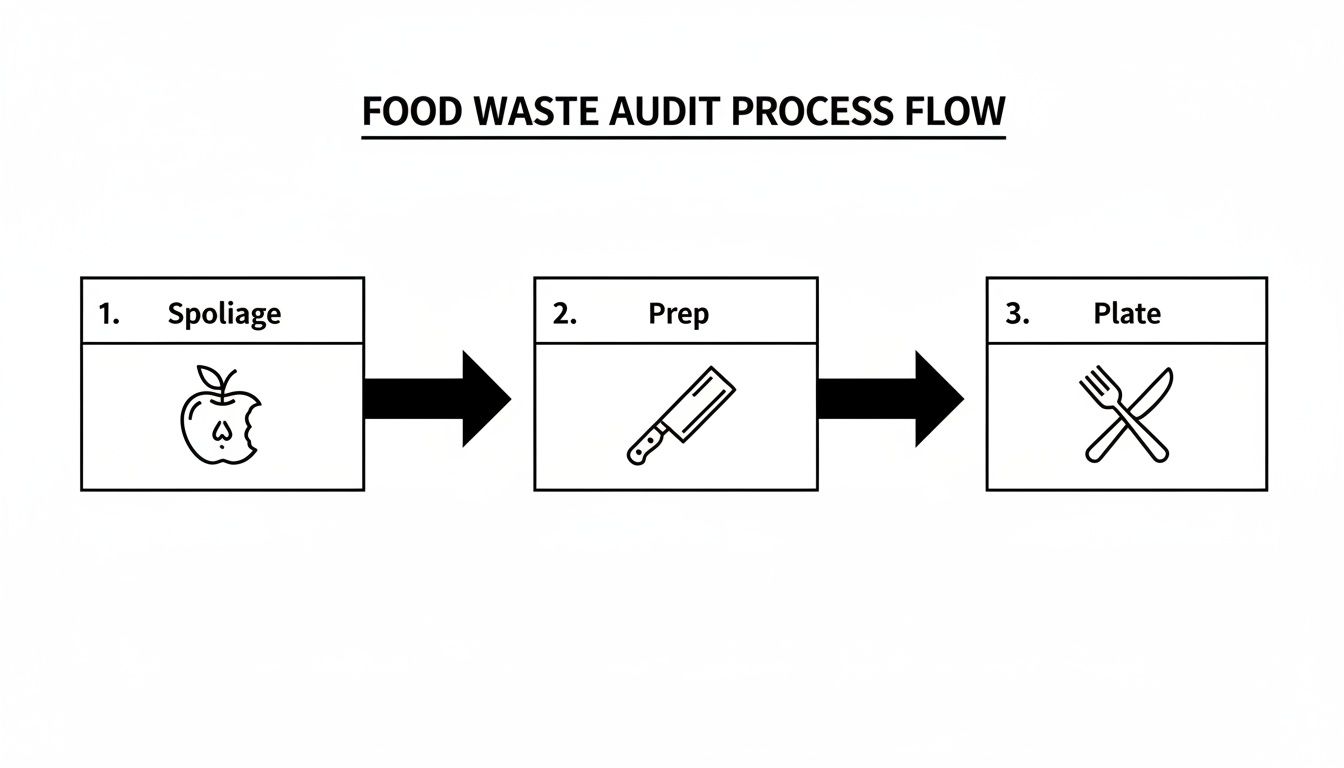
This process highlights how waste happens at every stage—spoilage in storage, scraps during prep, and leftovers on the plate. It really drives home the need for a multi-front attack.
The Right Equipment Makes Consistency Easy
Nailing perfect portions during a chaotic dinner rush comes down to having the right restaurant equipment for the job. A high-quality pizza prep station with refrigerated ingredient wells keeps toppings fresh and organized, helping your team build pies quickly and consistently without just piling things on.
In the same way, a well-organized chef base with refrigerated drawers keeps key ingredients right under the griddle. This smooths out the workflow and reduces the chance of someone grabbing way too much during a rush. Investing in simple portioning tools like scoops, scales, and measured ladles makes your standardized recipes become second nature for the whole team.
To truly take control, think about how modern tools like restaurant digital menu software can let you make dynamic changes to your menu. When you can easily 86 an item or promote a special to use up extra ingredients, you gain an incredible amount of power over both your inventory and your bottom line.
Optimizing Your Kitchen Workflow and Storage
An efficient, well-organized kitchen is your best defense in the fight against food waste. This goes way beyond just menu planning. Your team's day-to-day habits—how you store ingredients, manage prep, and set up your space—have a massive impact on how much product ends up in the bin. The whole process really kicks off the second a delivery hits your back door.
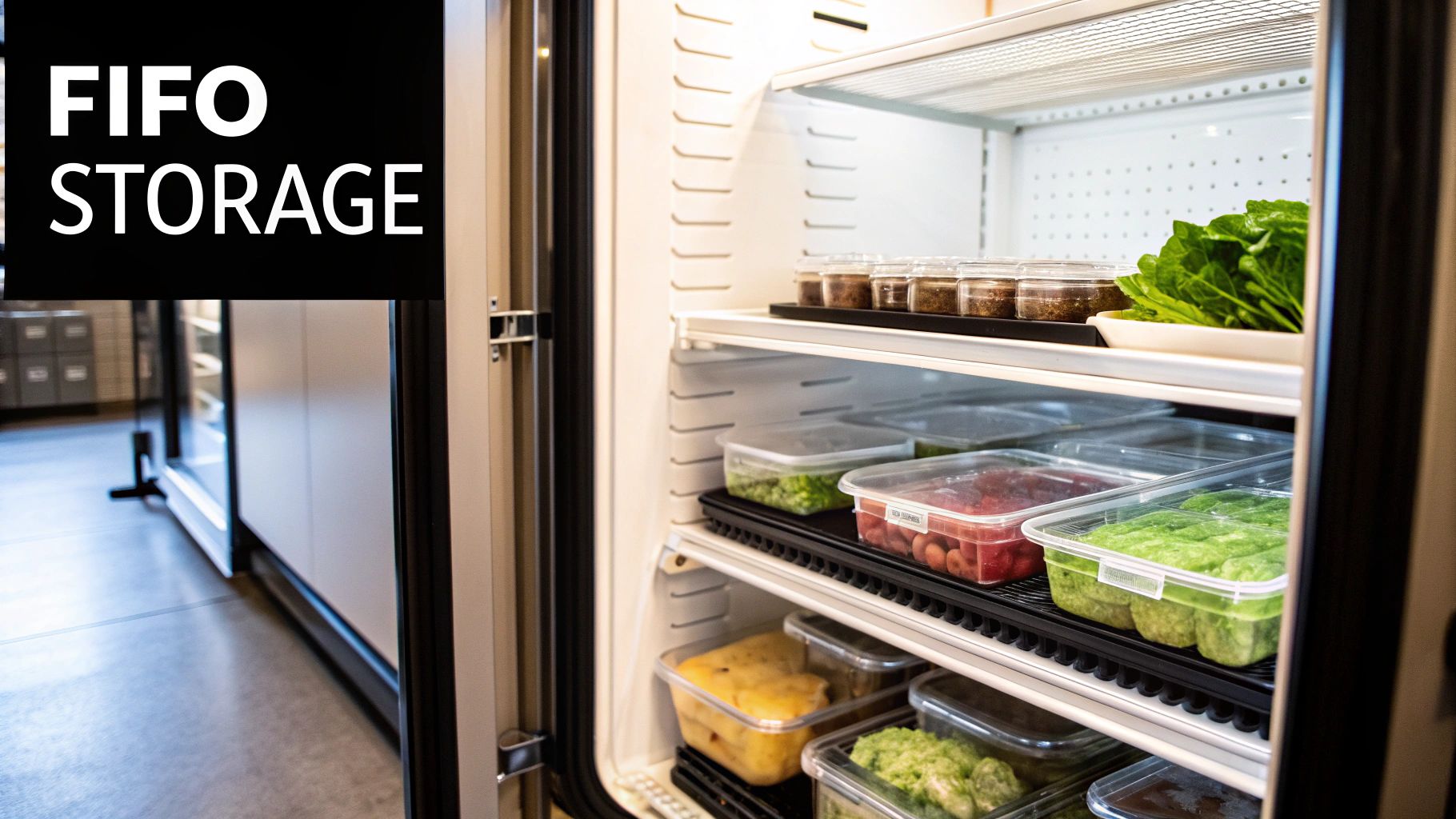
Smart storage is where it all begins. For any busy Southern California kitchen, whether you're running a food truck in LA or a full-service Mexican restaurant, the First-In, First-Out (FIFO) method has to be second nature. It’s a simple concept: older inventory gets used before new stock. This one habit alone can drastically cut down on spoilage from forgotten items that get pushed to the back of a shelf.
The Role of Reliable Restaurant Equipment
Now, the FIFO method is only as good as the restaurant equipment you have to back it up. I’ve seen it happen: a refrigeration unit starts failing, and suddenly hundreds of dollars in inventory are at risk overnight due to wonky temperatures. This is exactly why investing in reliable restaurant equipment is so critical for reducing food waste in restaurants.
Modern, warranty-backed units, like those from Atosa, are built to hold precise, consistent temperatures. That reliability is what protects your ingredients, extending their shelf life and giving your cooks the best possible product to work with. The right gear makes best practices the easy choice, not an extra chore. For more tips on getting the most out of your cold storage, you should check out our guide on how to organize a chest freezer.
Think of your walk-in cooler and undercounter freezers as vaults protecting your most valuable assets. An investment in quality refrigeration isn't just an equipment purchase; it's an insurance policy against spoilage.
A clean, organized kitchen doesn't just cut down on waste, either. It’s a huge part of maintaining hygiene and keeping pests out, a foundational practice for effective hotel pest control and restaurant management alike.
Smarter Prep Techniques to Slash Trim Waste
Once those pristine ingredients leave storage, the prep table is the next place where waste can pile up. Inefficient knife skills, aggressive trimming, and poor planning can send a shocking amount of perfectly good food straight to the trash. This is where smarter prep techniques can save you a ton of money.
Adopting a root-to-stem philosophy (or nose-to-tail for proteins) is a game-changer. It’s all about training your staff to see potential in every part of an ingredient.
Here are a few ideas to get you started:
- Vegetable Trimmings: Stop tossing broccoli stems, carrot peels, and onion ends. Collect them in the freezer to make rich, flavorful house-made vegetable stocks.
- Herb Stems: Those tough parsley or cilantro stems? Finely chop them and throw them into marinades, sauces, or pestos for an extra flavor kick.
- Citrus Peels: Zest your lemons and limes before juicing them. You can use that zest in desserts, dressings, or to infuse simple syrups for your bar program.
Batch prepping is another powerful tool in your arsenal. By prepping ingredients in controlled amounts based on your sales forecasts, you sidestep the classic mistake of over-prepping for a slow service. An organized prep table with built-in cooling wells keeps those prepped items fresh, safe, and ready for the dinner rush without risking spoilage.
To help you connect the dots, I’ve put together a quick table that shows how the right restaurant equipment can solve some of the most common waste issues I see in Southern California kitchens.
Matching Kitchen Equipment to Common Waste Problems
| Waste Problem | Equipment Solution | How It Helps Reduce Waste |
|---|---|---|
| Produce Spoilage | High-Quality Refrigeration (e.g., Atosa) | Maintains consistent temperatures, extending the shelf life of perishable items and making FIFO easier to manage. |
| Inconsistent Portions | Pizza Prep Stations & Chef Bases | Provide easy access to chilled ingredients, promoting standardized portioning and reducing over-serving during busy service. |
| Cross-Contamination | Organized Stainless Steel Prep Tables | Offer dedicated, easy-to-clean workspaces that help prevent spoilage caused by improper food handling. |
| Limited Freezer Space | Undercounter Freezers | Add accessible frozen storage at point-of-use, perfect for preserving batch-prepped items or high-value proteins. |
Ultimately, it comes down to creating an environment where doing the right thing is easy. When your kitchen is kitted out with reliable, well-organized tools, these best practices become a natural part of your team's daily flow, translating directly to a healthier bottom line.
Turn Your Staff into a Waste-Reduction Team
You can tweak your menu and streamline kitchen workflows all day long, but the mission to reduce food waste in restaurants isn't a one-person show. If you want to see real, lasting change, you need buy-in from your entire crew, from the prep cooks right down to the dishwashers.
Your staff are the ones with their hands on the ingredients every single day. Empowering them to be conscious of waste is one of the most powerful moves you can make.
It all starts with clear communication. Don't just say, "Hey, we need to waste less." Pull the team together and explain the why. Show them the actual numbers from your waste audit. When you connect the dots between food in the bin and the restaurant's bottom line, it clicks. Frame it as a team goal that impacts the business's success—and by extension, their own job security and potential for bonuses.
Build a Culture of Accountability
Getting your employees involved turns waste reduction from a top-down rule into a shared mission. When your team feels like they're part of the solution, they'll be far more invested in the results.
Here are a few practical ways to get everyone on board:
- Run a "Waste Jar" Contest: Stick a big, clear jar in the kitchen. Have the team guess the dollar value of the food that gets tossed in a single week. The person who guesses closest wins a small prize. It’s a simple, fun way to make the financial hit of food waste feel real.
- Ask for Ideas: Your team is on the front lines. A line cook might have a killer idea for using up vegetable trimmings, or a server might notice a side dish that constantly comes back to the kitchen untouched. Create a space where they feel comfortable sharing those insights.
- Give Credit Where It's Due: Publicly recognize staff members who are making a real effort. A quick shout-out during the pre-service meeting can do wonders for motivating the whole team.
Of course, training is key. Show your staff the right way to handle food, how to nail portion sizes every time, and some creative tricks for using leftovers. This doesn't just cut down on waste; it makes your entire kitchen more efficient. And as you fine-tune your operations, don't forget about your equipment. Keep your gear in prime condition with our guide to commercial kitchen equipment maintenance.
Forge Powerful Community Partnerships
Look, even the most buttoned-up kitchens will have some food surplus. Instead of just tossing it, you can turn that surplus into a serious win for your community and your brand. Partnering with local organizations to donate or compost food doesn't just save you on disposal fees—it builds an incredible reputation.
These days, customers care about more than what’s on their plate. They want to support businesses that share their values. A strong community partnership is a massive marketing asset that shows you're invested right here in Los Angeles and Orange County.
For perfectly good, edible surplus food, connecting with a local food bank is a no-brainer. Groups like the Second Harvest Food Bank of Orange County and the Los Angeles Regional Food Bank make it incredibly easy for restaurants to donate safe, quality food. They often handle the logistics, which is a huge help for busy owners.
For food scraps you can't donate, composting is the next best thing. Many cities across Southern California now have commercial composting services. All it takes is setting up a dedicated organics bin to divert a massive amount of waste from landfills, where it would just sit and produce harmful methane gas. It’s a simple move that reinforces your commitment to sustainability and can even help you attract eco-conscious customers and employees.
Common Questions on Restaurant Food Waste
Even with a solid game plan, I know a lot of restaurant owners have questions before jumping into a food waste program. It's smart to wonder what the real payoff is, how to get your team on board without causing chaos, and honestly, where to even begin. Let's dig into some of the most common concerns I hear from operators in Los Angeles and Orange County.
How Much Can I Realistically Save?
The savings can be huge—we're talking a direct hit to your bottom line. Industry studies consistently show that for every $1 you put into cutting down food waste, you can expect to save about $7 in operating costs. Think about that. For a typical Los Angeles Pizza place, food truck, or Mexican restaurant, that easily adds up to thousands of dollars a year.
Of course, the exact number depends on where you're starting from and your specific food costs. But here’s a pro tip: start by focusing on your high-cost, high-spoilage items. Your proteins and fresh produce. That’s where you’ll see the fastest and biggest impact on your profit margins.
How Do I Do This Without Overwhelming My Staff?
The secret is to start small and be crystal clear about the "why." Don't try to change everything overnight; that’s a recipe for disaster. Pick one thing. Maybe it’s just tracking spoilage in the walk-in or standardizing the portions for your most popular dish.
Bring up these new ideas in your regular team meetings, not during the middle of a Friday night rush. More importantly, explain how this makes the restaurant stronger for everyone. Show them how the right restaurant equipment, like well-organized prep tables or efficient chef bases, actually makes their jobs less stressful. Frame it as a team goal, not another task from management. And when you see a cook or server really embracing it, give them a shout-out.
Remember, the goal is gradual improvement, not instant perfection. Small, consistent changes build habits that deliver powerful results down the road.
Should I Buy New or Used Equipment to Help?
Look, I get it. The low price tag on used restaurant equipment is tempting. But it can quickly become a hidden liability that actively sabotages your efforts to reduce waste. That old, second-hand fridge might seem like a bargain, but if its temperature is all over the place, it's going to spoil your inventory and cost you money.
Investing in new commercial equipment with a warranty is a much smarter long-term play. Modern units, like the Atosa refrigerators we carry, are built for energy efficiency and give you the precise temperature control you need to keep ingredients fresh longer. With financing available, getting dependable new gear is a smart investment in preventing waste before it starts.
Where Do I Start If I Have a Tiny Kitchen, Like a Food Truck?
The same rules apply, you just have to be smarter about how you use them in a smaller space. For Los Angeles Food Trucks, it’s all about efficiency and planning.
- Trust Your Sales Data: Your POS system is your secret weapon. Use it to dial in your purchasing and daily prep so you’re not guessing.
- Make Every Inch Count: In a tight kitchen, you need restaurant equipment that pulls double duty. Think of an undercounter refrigerator that also serves as a prep station. That's smart.
- Go ‘Just-in-Time’ with Inventory: Don’t overstock. Order smaller amounts more often. This drastically cuts the risk of spoilage when you have limited storage.
- Design a Smart Menu: Build your menu around ingredients you can use in multiple dishes. This simple strategy ensures every item has a purpose, slashing the risk of being left with unsold product at the end of the day.
At LA Restaurant Equipment, we know the unique challenges you face as an independent owner in Southern California. We stock new, reliable commercial kitchen equipment—from Atosa refrigeration to complete cooking lines—that helps you cut waste and grow your profits. Check out our warehouse-direct pricing and fast, free shipping at https://larestaurantequipment.com.