

Let's talk about what "commercial kitchen equipment maintenance" really means. It's not just about fixing things when they break. It's about a smart, consistent routine of inspecting, cleaning, and servicing your appliances to stop those breakdowns from ever happening.
This is a proactive strategy. It means looking after everything from your walk-in cooler to your six-burner range on a set schedule. You’re shifting from expensive, panicked emergency repairs to planned, manageable upkeep that keeps your kitchen running smoothly and safely.
Why Proactive Maintenance Is Your Kitchen's Best Investment

In the chaos of a busy Los Angeles restaurant, a piece of broken equipment isn't just an annoyance—it's a direct hit to your profits. Think about your pizza oven going down during the Friday night rush at a popular Los Angeles Pizza spot. Or one of the many beloved Los Angeles Food Trucks having its griddle give up the ghost at a sold-out street fair.
These aren't just worst-case scenarios; they're expensive realities that good maintenance can prevent. Moving away from the old "fix-it-when-it-breaks" mentality to a strategic maintenance plan is a total game-changer for your profitability and your sanity.
And honestly, it goes way beyond just preventing disasters. A well-cared-for kitchen is the backbone of a great operation.
The True Cost of Neglect
If you wait for your equipment to fail, you’re guaranteeing two things: massive repair bills and lost sales while you're down.
For a bustling Mexican Food spot in LA, a busted walk-in cooler on a 90-degree day could mean thousands of dollars in spoiled product. A fryer that can’t hold its temperature slows down the entire line, frustrating your customers and killing your reputation.
Proactive maintenance isn't an expense—it's an investment in consistency, safety, and longevity. It’s the difference between controlling your kitchen's destiny and letting a faulty thermostat control your profits.
Investing in regular upkeep is just plain smarter and more cost-effective than calling for an emergency repair. This is more critical than ever, with the price of new equipment going through the roof. For example, the cost to replace a commercial refrigeration unit jumped by 24% between early 2022 and late 2024, and other appliances are right there with it.
These numbers make it crystal clear why getting more life out of your current gear is a top priority. You can dig deeper into the rising costs of restaurant equipment and see how it’s changing the game for maintenance strategies.
Beyond a Functioning Kitchen
The benefits of a solid maintenance plan ripple out across your entire business, affecting more than just the equipment itself.
- Ensures Food Safety: A refrigerator holding the right temp and a clean flattop are non-negotiable. It’s about passing health inspections and, more importantly, keeping your customers safe.
- Boosts Staff Morale: Nothing kills morale faster than tools that don't work. When your team has reliable equipment, they can do their jobs well without the added stress of constant workarounds.
- Improves Food Quality: A perfectly tuned oven bakes a better pizza crust. A clean fryer makes crispier fries. The performance of your equipment shows up on the plate, every single time.
- Extends Asset Lifespan: Your kitchen equipment is a huge capital investment. Taking care of it maximizes its service life, which means a much better return on your initial purchase.
At the end of the day, a proactive approach turns your equipment from a potential liability into a reliable asset. That frees you up to do what you do best: serve amazing food.
Daily vs Monthly Maintenance Task Overview
To keep things running smoothly, it's helpful to split tasks between what your daily staff can handle and what requires a more focused, in-depth check each month. The daily stuff is all about quick, preventative actions, while the monthly tasks are for catching bigger issues before they start.
| Equipment Category | Essential Daily Tasks (Staff) | Key Monthly Tasks (Specialist/Manager) |
|---|---|---|
| Refrigeration | Wipe down gaskets, check temps, clear vents. | Clean condenser coils, check refrigerant levels, inspect door seals for wear. |
| Cooking Line | Clean grates/burners, wipe down surfaces, empty grease traps. | Calibrate thermostats, inspect pilot lights/ignitors, check gas connections. |
| Food Prep | Sanitize slicers/mixers, check blades for sharpness. | Lubricate moving parts, inspect belts and motors, tighten loose hardware. |
| Dishwashers | Clean spray arms/filters, check chemical levels. | De-lime the machine, inspect pumps and hoses for leaks, calibrate water temp. |
| Ventilation | Wipe down hood surfaces. | Clean or replace hood filters, inspect exhaust fan and belts. |
This table gives you a basic framework. The daily checks by your crew are your first line of defense, creating a foundation of cleanliness and care that makes the deeper monthly inspections far more effective at extending the life of your equipment.
Your Guide to Refrigeration and Cold Storage Care
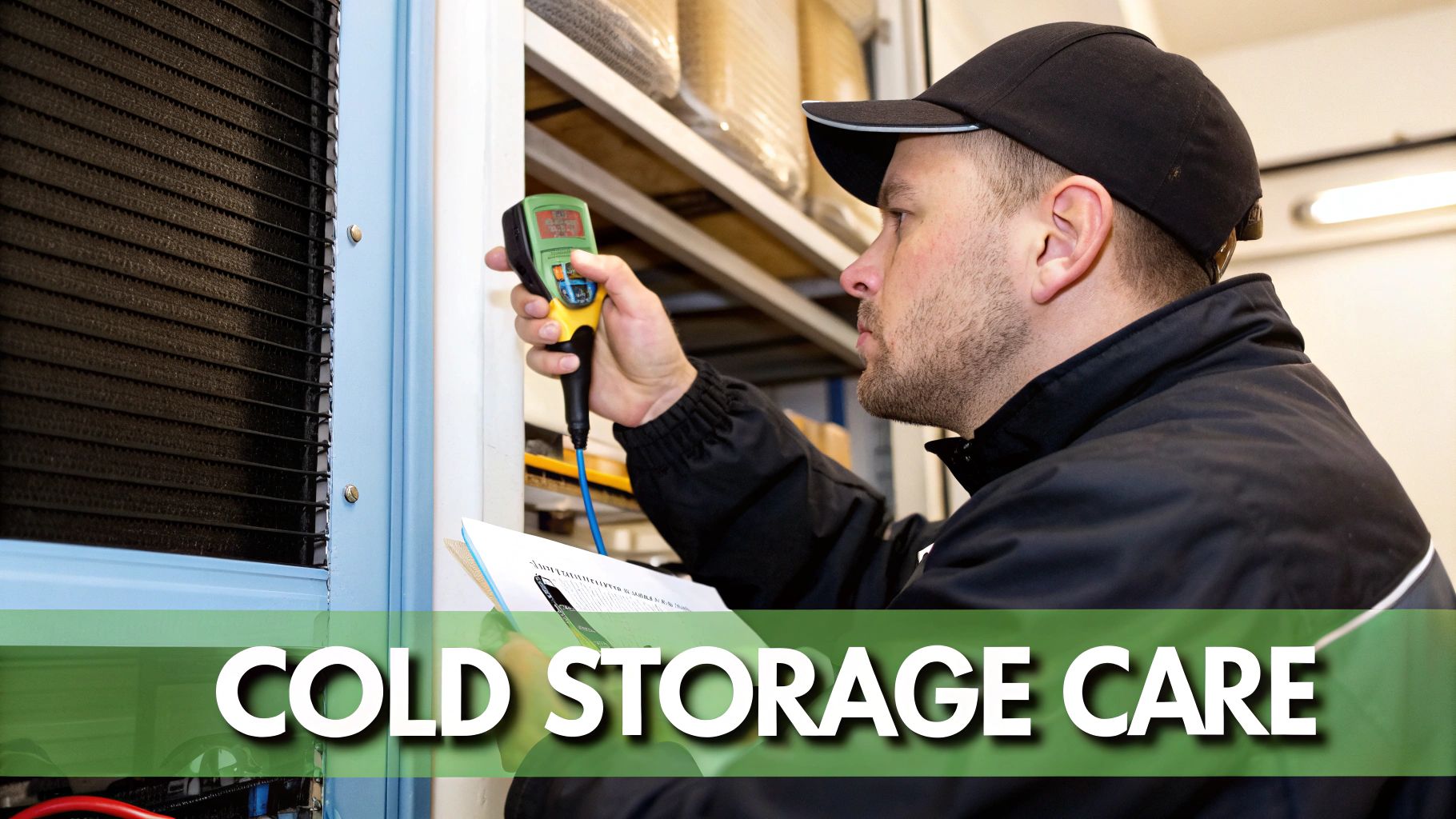
Your refrigeration units are the silent workhorses of your kitchen. Day and night, they keep thousands of dollars of your inventory safe and ready for service. Here in Southern California, the warm climate puts these machines under constant pressure, making proper commercial kitchen equipment maintenance absolutely essential. This isn't just about ticking a box; it's your best defense against spoilage and lost profits.
Think about a Los Angeles Pizza restaurant that’s famous for its 72-hour cold-fermented dough. If their walk-in cooler starts having temperature swings, that signature product is completely ruined. This isn't just a "what if" scenario—it's a real-world disaster that simple, consistent maintenance can prevent.
Let’s walk through the essential tasks for keeping your walk-in coolers, freezers, and reach-in units running like new. We’ll cover what your team can handle daily and when it’s time to call in a professional.
The Foundation: Daily and Weekly Staff Checks
The first line of defense is empowering your staff with a simple but effective checklist. These aren't complicated technical jobs, just routine observations and clean-ups that can spot small issues before they blow up into major emergencies.
Have your team build these checks right into their opening and closing routines:
- Temperature Checks: At the start of every shift, log the temps for every single unit. Walk-ins need to be at or below 40°F, and freezers must hold steady at 0°F. Any drift from these numbers is an early warning sign something is wrong.
- Wipe Down Gaskets: A quick wipe-down of all door gaskets with a warm, damp cloth does wonders. Food debris and grime make gaskets brittle, breaking the seal and forcing your compressor to work overtime.
- Check Airflow: Always leave a few inches of space around the interior vents. When you stack boxes right up against them, you block cold air circulation, which creates dangerous warm spots and stresses the whole system.
- Sweep the Floors: Spills in a walk-in can freeze into a nasty slip hazard or even start to corrode the floor panels. A quick daily sweep keeps the space safe and clean for everyone.
These daily habits are the bedrock of your maintenance plan. And if you're thinking about upgrading, exploring a range of modern, energy-efficient commercial refrigerators can give you a look at new options that make this kind of upkeep even easier.
Deeper Dives: Monthly and Quarterly Tasks
While daily checks are crucial, some maintenance needs a more focused effort. These monthly and quarterly jobs have a direct impact on your equipment’s efficiency and how long it will last.
The single most important monthly task is cleaning the condenser coils. These coils, usually found on the top or bottom of the unit, are how the machine gets rid of heat. In a busy kitchen, they get absolutely caked with dust, grease, and flour in no time.
Clogged condenser coils are the number one cause of premature compressor failure. A dirty coil forces the unit to run longer and harder, driving up your energy bills and leading to a breakdown. This is a task a manager or trained staff member can often handle with a stiff brush and a vacuum.
Quarterly checks need to be more thorough, zeroing in on the mechanical parts that keep your system humming along.
Your Quarterly Refrigeration Checklist
- Inspect Door Seals: Go beyond just wiping them. Really look at the gaskets for any cracks, tears, or stiff, brittle spots. An easy test is to close the door on a dollar bill—if you can pull it out without any resistance, that seal is shot and needs replacing.
- Check and Clean Drain Lines: Your evaporator coil creates condensation, which is supposed to drain away. These lines often get clogged with slime and debris, causing water to back up and freeze. This can completely destroy your evaporator fan.
- Calibrate Thermometers: Don't just trust the built-in display. Use a separate, calibrated thermometer to make sure it’s accurate. An incorrect reading can fool you into thinking food is at a safe temperature when it isn't.
- Listen for Strange Noises: Pay attention to what your units sound like. Any new grinding, squealing, or rattling noises can signal a problem with a fan motor or the compressor itself, and that means it's time to call a pro.
By splitting up these responsibilities, you create a powerful maintenance shield around your most valuable equipment. Your staff handles the day-to-day defense, while these deeper checks prevent long-term wear, ensuring your kitchen stays cool, compliant, and productive.
Keeping Your Cooking and Heating Equipment Firing
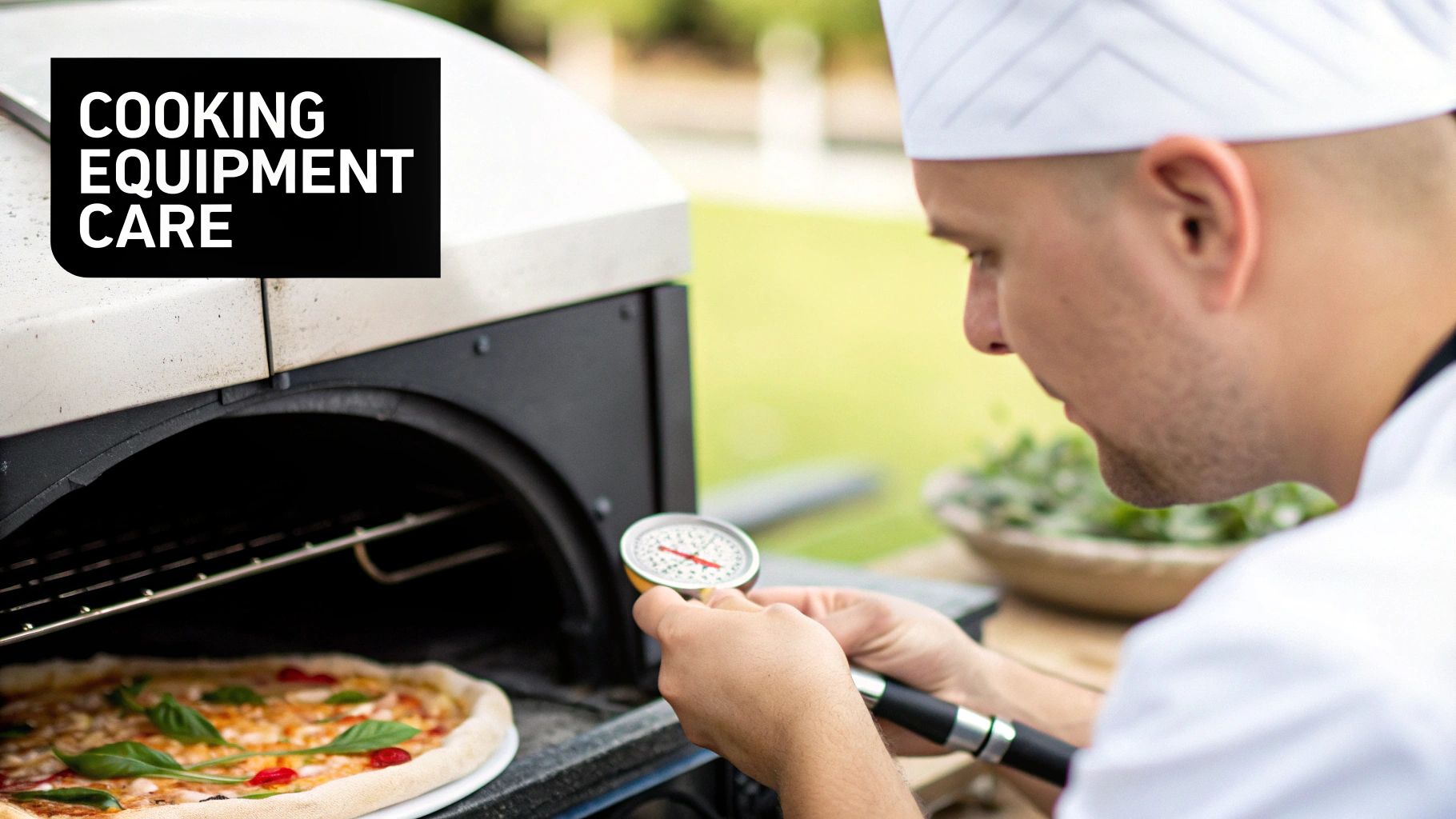
The cooking line is the absolute heart of your kitchen. It's where the magic happens, where raw ingredients become the signature dishes your customers crave. Your ranges, ovens, fryers, and griddles are the engines driving that service, and for any Los Angeles restaurant, keeping them in peak condition is non-negotiable.
This isn't about a simple wipe-down at the end of the night. True commercial kitchen equipment maintenance is about ensuring consistent performance and, most importantly, safety. A pizza oven that's not calibrated will burn one side of the pie while leaving the other doughy. A fryer with neglected oil makes food taste greasy and can quickly become a dangerous fire hazard. Let's walk through the crucial checks that will keep your cooking line firing on all cylinders, protecting your staff, food quality, and your bottom line.
Ranges and Ovens: The Workhorses of the Kitchen
Your commercial range and oven take the brunt of the workload day in and day out, which means they need consistent, focused attention. Daily cleaning is the foundation, but it’s the deeper monthly checks that prevent the kind of catastrophic failures that can shut down your whole operation.
- Daily Clean-Up: Your staff should be thoroughly cleaning grates, burners, and all surfaces at the end of every shift. Getting rid of grease and food particles prevents that nasty carbon buildup that messes with heat distribution and poses a real fire risk.
- Weekly Burner Check: Take a quick look at the flame on your gas range burners. You're looking for a steady, blue flame with small yellow tips. If you see a large, lazy yellow flame, or an uneven one, you've got a problem with the air-to-gas ratio that needs a professional to adjust it.
For ovens, calibration is everything. An inaccurate thermostat can ruin anything from a delicate pastry to a perfectly roasted prime rib. Once a month, stick a reliable oven thermometer inside and set your oven to a common temperature, like 350°F. If the thermometer's reading is off by more than 15 degrees, it’s time to call a technician for recalibration.
If these units are central to your kitchen, having high-quality, dependable gear is a must. You can find a whole host of durable commercial restaurant ranges built to handle the intensity of a high-volume kitchen.
Fryer Maintenance for Safety and Flavor
Deep fryers demand some of the most diligent maintenance in the entire kitchen. If you neglect them, you not only wreck the taste of your food but also create a serious safety hazard.
The most critical routine is the fryer "boil-out." This is a deep-cleaning process where you empty the old oil, fill the vat with a specialized cleaning solution and water, and bring it to a simmer. This dissolves that tough, polymerized grease that builds up over time. Doing a boil-out at least once a month—or even weekly for high-volume frying—can practically double the life of your cooking oil and gives you a clean, neutral flavor every time.
One of the top Los Angeles Food Trucks, specializing in loaded fries, was blowing through their budget on cooking oil and dealing with inconsistent quality. After they started a weekly boil-out and filtration schedule, they slashed their monthly oil costs by 40% and got rid of customer complaints about greasy food. Even better, they prevented a potential grease fire that a technician spotted on their heating element during a routine check.
This is a perfect real-world example of how a simple maintenance schedule can turn a major expense into a strategic advantage, boosting both safety and profitability.
Griddles and Charbroilers: Precision and Cleanliness
When it comes to flat-top griddles and charbroilers, the game is all about maintaining the cooking surface and managing the grease.
- Seasoning the Surface: After every cleaning, a thin layer of cooking oil should be applied to a warm griddle. This is key to maintaining its non-stick properties.
- Cleaning Grease Traps: This has to be done daily, no exceptions. An overflowing grease trap is a massive fire hazard and a magnet for pests.
- Checking Ignitors: For gas charbroilers, make a habit of periodically checking that all ignitors are firing correctly. A delayed ignition can cause a dangerous buildup of gas.
The growing pressure for operational efficiency and stricter food safety rules is pushing more kitchens to get serious about these practices. This isn't just a hunch; the market reflects it. The global commercial kitchen equipment maintenance service market was valued at around USD 7.91 billion in 2024 and is projected to hit USD 12.8 billion by 2035. The fact that monthly service is the most common frequency tells you that savvy operators know the value of regular check-ups.
Ultimately, a systematic approach to maintaining your cooking equipment pays off every single day. It makes sure every plate that leaves your kitchen meets your standards and keeps your most critical assets running safely and efficiently.
Keeping Your Ventilation and Warewashing Systems in Top Shape
Your ventilation and warewashing systems are the unsung heroes of a clean, safe, and compliant kitchen. They're often overlooked in favor of the flashy cooking line, but these systems handle critical tasks, from fire prevention to food safety. A greasy exhaust hood is a ticking time bomb, and a dishwasher that isn't working right can get you shut down by the health department in a heartbeat.
Here in Los Angeles, health codes are strict and a restaurant's reputation is everything. Maintaining these systems isn't just a good idea—it's essential for survival. Proper care for your ventilation and dish machines protects your staff, your customers, and your business. Let's walk through the practical steps to keep these vital systems running perfectly.
Ventilation Maintenance: Your First Line of Defense Against Fire
A kitchen's exhaust system does way more than just clear out smoke. Its main job is to pull out airborne grease particles that are incredibly flammable. When that grease builds up in the filters, ducts, and on the exhaust fan, you've got a serious fire hazard on your hands. Regular, thorough cleaning is your number one defense.
- Clean Hood Filters: This needs to happen weekly, no exceptions. Soak the filters in a good degreasing solution and scrub them until they’re spotless. Clogged filters kill your airflow, making the kitchen hotter and smokier, and create a direct path for flames to shoot straight into the ductwork.
- Wipe Down the Hood: A daily wipe-down of the hood's interior and exterior is crucial. This simple step prevents grease from dripping onto your cooking surfaces—a major food safety violation you can’t afford.
- Professional Duct Cleaning: At least every six months, you absolutely must have a certified professional clean the entire exhaust system, from the hood all the way to the rooftop fan. They have the specialized tools to get to the dangerous grease buildup you can't see or reach.
Skipping this is one of the costliest mistakes a restaurant can make. It’s not just about checking a box for compliance; it's a fundamental part of keeping your people and your property safe.
Warewashing Systems: The Heart of Your Sanitation Program
A commercial dishwasher is a sanitation powerhouse, but only when it's properly maintained. A machine that isn't hitting the right temperatures or dispensing chemicals correctly isn't just leaving spots on your glasses—it's failing to kill harmful bacteria.
We once worked with a high-volume Mexican Food restaurant in LA that failed a health inspection. The inspector found their dishes weren't being properly sanitized and traced the problem back to a dishwasher with heavily calcified spray arms and a faulty chemical dispenser. After we helped them implement a simple daily and weekly maintenance checklist, they passed their re-inspection with flying colors and saved their hard-earned reputation.
This story shows just how much small maintenance tasks can impact your entire operation. Keeping your machine clean and functional is the only way to guarantee your wares are truly sanitized.
Your Essential Dishwasher Checklist
Building these few tasks into your daily and weekly routine will keep your warewashing system effective and reliable, saving you headaches down the road.
- Daily Checks: At the end of every single day, have your staff remove and clean the filter screens and scrap baskets. They should also check the levels of detergent, rinse aid, and sanitizer, and make sure the spray arms are clear of food debris by giving them a quick spin.
- Weekly Deep Clean: Once a week, take the spray arms completely off and soak them to clear out any small blockages. While they're soaking, wipe down the interior of the machine, paying close attention to the corners and the door seal where gunk can build up.
- Monthly Descaling: Here in Southern California, hard water is a huge issue. That mineral buildup, or scale, will clog your machine's internal components and kill its performance. Run a deliming cycle every month to dissolve the scale and keep water flowing freely.
This kind of proactive maintenance is quickly becoming the industry standard. The global market for kitchen appliance repair is projected to grow from around USD 13 billion in 2024 to USD 22 billion by 2035. This jump is partly driven by a bigger focus on extending equipment life and a "right-to-repair" mindset, making regular service a much smarter financial choice than frequent replacement. You can read more about how sustainability and repair trends are shaping the market.
By dedicating just a few minutes each day to your dishwasher, you ensure compliance, protect your customers, and get more life out of a crucial piece of kitchen equipment.
Building Your Bulletproof Maintenance Schedule
Knowing what to do is just the first step. The real game-changer is turning that knowledge into a simple, repeatable system that your whole team can follow. Without a structured schedule, you're just reacting to problems. With one, you're in control.
This is where you build the foundation of your entire commercial kitchen equipment maintenance program. It doesn't matter if you're running a massive LA restaurant or a two-person food truck—the goal is the same. You need a way to track what gets done, when it happens, and who did it. Think of it less as paperwork and more as your secret weapon for spotting patterns, managing warranties, and acing those health inspections.
Make the Schedule Fit Your Kitchen
Let's be real: no two kitchens are the same. A one-size-fits-all checklist just won't cut it. The maintenance needs of a bustling Mexican Food spot with three deep fryers running all day are worlds apart from a quiet neighborhood café.
So, where do you start? Grab a clipboard and walk your line. List every single piece of equipment you rely on, from the walk-in freezer down to the prep station's stand mixer.
Once you have your list, pull out the manufacturer's manual for each piece. That's your starting point for what needs to be done and how often. Then, layer in the reality of your kitchen's daily grind.
- Your Workhorses: Think about your main range, fryer, and the walk-in fridge. These MVPs need daily and weekly love.
- The Supporting Cast: Things like your convection oven or prep tables might only need a good look-over once a month.
- Specialty Gear: That immersion circulator you only use for a few dishes? It can probably get by with a quarterly check-up.
This simple process turns a generic to-do list into a custom-built plan that actually works for your restaurant. For more ideas on how to organize these tasks, our commercial kitchen equipment checklist is a fantastic resource to get you going.
Good Records and Clear Roles
A schedule is useless if you don't track it. A simple log—whether it's a binder in the office or a shared spreadsheet—is non-negotiable. This history becomes gold when you're trying to figure out a recurring issue or prove you've been doing your due diligence.
A detailed maintenance log is your kitchen's memory. It remembers every repair, every part replaced, and every scheduled service, giving you the data you need to make smart decisions about future repairs or replacements.
Every entry in that log needs to be quick and clear. Anyone should be able to look at it and understand the equipment's history.
Here’s what a typical entry might look like.
Sample Weekly Maintenance Log Entry
| Date | Equipment ID | Task Performed | Performed By | Notes/Issues Found |
|---|---|---|---|---|
| 11/25/2024 | FRYER-01 | Filtered oil, boil-out procedure completed. | J. Rodriguez | Oil quality improved. Noticed slow ignition on burner 2. |
| 11/25/2024 | WALK-IN-01 | Cleaned condenser coils, checked door seals. | M. Chen | Coils were very dusty. Door seal has a small tear in the lower corner. |
See how that gives you a complete picture? A simple note like "slow ignition" is a heads-up for a potential bigger problem down the road.
This workflow is a great example of how different tasks connect.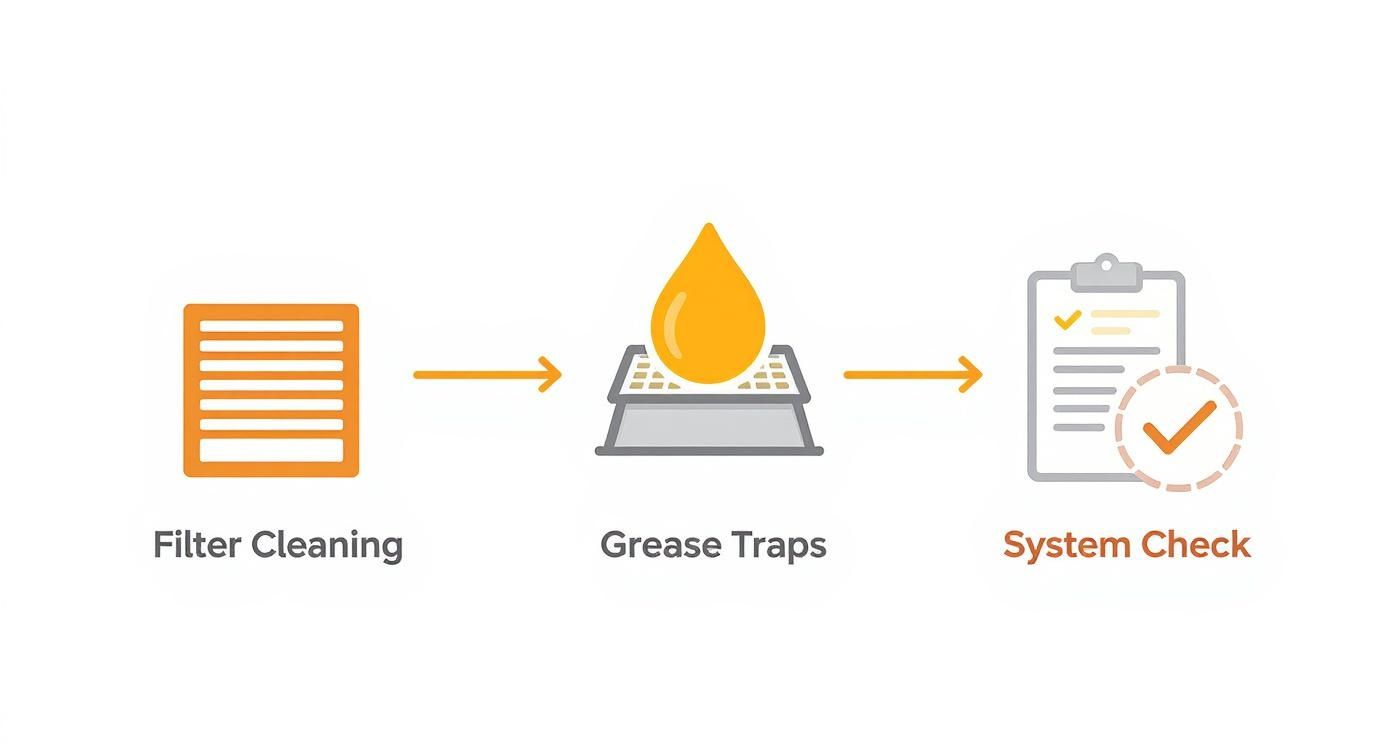
Starting with simple filter cleaning, moving to the grease trap, and then a full system check shows how basic daily tasks support the bigger, less frequent ones, keeping your whole ventilation system running right.
Finally, make sure everyone knows what they're responsible for. When the line cook knows they own checking the fryer oil and the manager knows they own inspecting freezer seals, things actually get done. This isn't about adding more work; it's about making maintenance a natural part of your kitchen's culture.
Your Commercial Kitchen Maintenance Questions Answered
Even the most buttoned-up maintenance schedule can't prevent every question or tough situation. Things happen. Knowing how to handle these common challenges is what separates a smooth, well-managed kitchen from one that’s constantly putting out fires.
Think of this as your quick-reference guide for the real-world issues Los Angeles restaurant owners face every day, from finding a technician you can trust to making the hard call on a piece of aging equipment.
How Often Should My Equipment Be Professionally Serviced?
While your crew’s daily checks are your first line of defense, professional service is what nips big problems in the bud. Honestly, how often you need it really depends on the specific piece of equipment and how hard you run it.
For your absolute workhorses—the cooking line and all your refrigeration—you should plan on having a certified tech come out at least twice a year. For anything that deals with a ton of grease, like the exhaust hoods over a charbroiler or a bank of deep fryers, you might even need professional cleanings quarterly to stay safe and up to code.
Always check the manufacturer's manual first. But let's be real, if you're running a busy Los Angeles Food Truck or a slammed Mexican Food restaurant, paying for more frequent service is cheap insurance against a complete meltdown during a Friday night dinner rush.
What Are the Most Common Maintenance Mistakes to Avoid?
The single biggest—and most expensive—mistake we see is being purely reactive. Only calling for help when something is already dead is a surefire way to pay emergency rates and lose a ton of revenue while you're down.
A few other common slip-ups include:
- Forgetting the "Hidden" Parts: It’s easy to overlook things you don't see every day. Clogged condenser coils on a reach-in or a dirty water filter on an ice machine are fast tracks to a major breakdown.
- Not Keeping Records: If you don't have a simple maintenance log, how can you track repair history, spot a recurring issue, or prove you've kept up your end of a warranty agreement? You can't.
- Skipping Staff Training: Not showing your team the right way to do simple daily tasks is a costly oversight. It just leads to premature wear and tear on equipment you’ve invested thousands in.
The most effective commercial kitchen equipment maintenance isn't about intensity; it's about consistency. A few simple tasks done right every single day will always beat a massive deep clean once every six months.
When Should I Repair an Appliance Versus Replace It?
Ah, the classic dilemma: fix it or ditch it? A great rule of thumb to start with is the 50% rule. If a single repair is going to cost more than half the price of a brand-new, comparable unit, it’s almost always smarter to replace it.
You also have to look at its history. Is the unit over 7-10 years old? Has it needed several big-ticket repairs in the last year? If so, its reliability is shot. Pouring more money into it is likely throwing good money after bad.
Finally, think about the long-term savings. Swapping out that ancient, energy-sucking walk-in cooler for a modern, high-efficiency model can make a serious dent in your utility bills. Those savings are part of the total cost and can make a new purchase the much smarter financial move.
How Do I Find a Reliable Maintenance Service in Southern California?
In a market as packed as Los Angeles, finding a good technician can feel like a shot in the dark. The best place to start is always by asking for referrals from other local restaurant owners or even your food suppliers—they know who’s good.
When you're checking out a service company, make sure their technicians are certified to work on your specific brands. You'd be surprised how many aren't. Always, always verify their license and insurance before they lay a hand on your gear.
A truly reputable provider will have experienced techs, offer 24/7 emergency service, and give you clear, upfront pricing. Don't just go for the cheapest quote you can find. Prioritize reliability and a fast response time. Your kitchen's uptime is way too valuable to trust to the lowest bidder.
For a partner dedicated to providing top-quality, warranty-backed equipment for the demanding Southern California culinary scene, trust LA Restaurant Equipment. Explore our full range of new commercial kitchen equipment at warehouse-direct prices by visiting our online store and discover how our fast, free shipping and flexible financing can help you build the kitchen of your dreams.