

So, you have the dream. The one where you’re running your own spot in Los Angeles, serving food you’re passionate about. But before that dream can become a reality, you need a clear concept and a rock-solid business plan. This is where you prove your idea is a viable business, not just a passion project.
Whether it’s a killer Los Angeles pizza joint, a nimble Los Angeles food truck, or an authentic Mexican food destination, this foundation is absolutely critical for attracting investors and guiding every single decision you'll make down the road.
Crafting Your Restaurant Concept And Business Plan

Every great restaurant I've ever seen started with a powerful idea. Long before you're scouting locations in Silver Lake or buying your first piece of kitchen equipment, you have to forge that initial spark into a concrete, fundable business plan. This is where your vision gets its reality check.
Your concept is so much more than just the food. It's the entire experience—your service style, the decor, the vibe, the price point. What's the story you want to tell? Are you a high-end Oaxacan spot with a curated mezcal list, or a fast-casual taco truck crushing the Westside lunch rush? Nail this down early, and the rest of your decisions become a whole lot easier.
Pinpointing Your Unique Culinary Niche
Let’s be honest, the L.A. food scene is a battlefield. To make it, your concept has to have a unique selling proposition (USP)—a clear, compelling reason why someone should choose you over the thousand other options.
Start by really digging into what makes your idea special. Maybe you’re planning a Neapolitan-style pizza place that uses only locally sourced California ingredients. Or perhaps your food truck will specialize in vegan al pastor tacos, tapping into a huge and growing market.
Your USP could be:
- A hyper-specific cuisine: Focusing on a particular regional Mexican food, like Yucatecan, can attract serious foodies looking for something authentic.
- A unique service model: A "build-your-own" pizza concept with seriously high-quality toppings offers a personalized experience that people love.
- An untapped location: Being the first real artisanal coffee and pastry shop in a developing neighborhood could make you an instant local hub.
Your concept is the soul of your restaurant. It needs to be authentic, compelling, and clearly communicated in every aspect of your business, from the menu design to the music you play.
Conducting Targeted Market Research
Once you have a concept, you have to validate it. Don't just assume you know what a neighborhood wants. Get out there and dig into the data. Look at demographics, scope out the competition, and confirm there’s a real demand for your idea.
For instance, if you want to open a family-friendly Mexican restaurant, you’d zero in on neighborhoods with a high density of families and schools. Then, you’d go eat at the existing restaurants in that area. See what they’re doing well and, more importantly, where the gaps are. Is everyone serving the same old Tex-Mex? That could be your opening to introduce more traditional, authentic dishes.
For entrepreneurs thinking on a smaller scale, a solid guide on how to start a small restaurant from scratch can offer some incredibly valuable, tailored advice.
Building Your Essential Business Plan
Think of your business plan as your restaurant’s roadmap. This is the document you’ll hand to potential investors and the guide you'll use to keep yourself on track when things get crazy. A strong plan forces you to think through every single detail, from startup costs to marketing.
Your plan needs to have a few key components:
- Executive Summary: This is a quick, punchy overview of your entire plan. Pro tip: Write this last, but put it first. It needs to hook the reader by summarizing your mission, concept, and the financial highlights.
- Company Description: Get into the details of your restaurant’s concept, service style, and that unique selling proposition we talked about. Explain why your Los Angeles pizza spot or food truck is going to be a success.
- Market Analysis: This is where you show your homework. Present your research on the target neighborhood, customer demographics, and a clear-eyed look at your direct and indirect competition.
- Operations Plan: How will the restaurant run day-to-day? Outline your staffing needs, supplier relationships, and the tech you'll use, like your Point of Sale (POS) system. This is also where you should touch on your initial restaurant equipment needs.
- Financial Projections: For investors, this is the main event. You need a detailed startup budget, a profit and loss statement, cash flow analysis, and a break-even analysis. Be realistic, and always show your work.
Securing Your Funding and Managing Startup Costs

You’ve got a killer concept and a solid business plan. Now for the hard part: turning that vision into a funded reality.
Capital is the fuel for your launch, and in a high-cost market like Southern California, securing enough of it—and managing it wisely—is non-negotiable. This is where you move from dreaming to doing. You’ll be navigating everything from lease deposits and licensing fees to your first big inventory purchase.
A detailed financial proposal isn't just a formality for banks; it's your personal roadmap. It proves you have a firm grasp on your numbers and a clear path to profitability. This document will be your north star as you start looking for money.
Exploring Your Funding Avenues
Getting the cash you need can come from a few different places. Each path has its own pros and cons, so you’ll want to figure out which one really aligns with your business model and where you want to be in five years.
Here are the most common funding sources I see new restaurateurs tap into:
- Traditional Bank Loans: These often have the most competitive interest rates, but they also come with a high bar. Lenders will expect a flawless business plan, strong personal credit, and usually some form of collateral.
- SBA-Backed Financing: Small Business Administration (SBA) loans are a popular choice because the government guarantees a chunk of the loan, which makes banks a little less nervous. This can make it easier to get a "yes," but be warned—the application process can be a real slog.
- Private Investors: Bringing on private or "angel" investors means trading a percentage of ownership for capital. The big upside is they often bring industry experience to the table, but you have to be ready to give up some control and a slice of your future profits.
- Crowdfunding: Platforms like Kickstarter can be a great way to raise funds and build a loyal customer base before you even open your doors. This works best for concepts with a unique story that can get the community genuinely excited.
I've seen it a hundred times. The top reason so many new restaurants fail isn't the food—it's running out of cash. Proper financial planning is your best defense against becoming another statistic, especially when profit margins are this thin.
Strategic Equipment Purchasing to Preserve Capital
One of the biggest line items in any new restaurant's budget is, without a doubt, restaurant equipment. A fully outfitted kitchen for a Los Angeles pizza spot or a new taqueria can drain your bank account in a hurry if you’re not strategic.
The temptation to buy used equipment to save a few bucks is strong, I get it. But it often comes with hidden costs—unexpected breakdowns, no warranty, and terrible energy efficiency. A smarter play is to invest in new, warranty-backed equipment. It protects your operation from the nightmare of costly downtime during a Friday night dinner rush.
Nailing your financial plan is everything. In a tough market like Los Angeles, pre-tax profit margins can hover around a razor-thin 5%. Insufficient capital is the killer, with a staggering 82% of closures linked directly to cash flow problems. Investing in reliable, new kitchen gear through a supplier with flexible financing helps you sidestep these issues. You can spread the costs into manageable payments, preserving your cash for things you absolutely can't finance, like payroll and inventory.
For a deeper dive into what you can expect, check out our guide on the typical restaurant startup costs breakdown.
Opting for a warehouse-direct supplier lets you get high-quality cooking lines, prep stations, and commercial refrigeration without the huge markup of a traditional showroom. Better yet, many of us offer financing partnerships, so you can get the gear you need now with monthly payments that don't gut your bank account. This keeps your precious startup capital free for the day-to-day expenses that keep your doors open and your team paid.
Choosing a Location and Navigating LA's Permit Maze
In Los Angeles, your address is way more than just a pin on a map—it can literally make or break your restaurant. The right spot puts you in front of thousands of potential customers every single day. The wrong one? You might as well be invisible, no matter how incredible your food is. This is where your concept meets the pavement, and you start the long dance with city and county regulations.
Whether you're opening a Los Angeles pizza shop, a casual Mexican food joint, or a commissary for your Los Angeles food truck, picking the location is a massive strategic decision. You need a space that not only fits your vibe but has the bones to support a successful business.
Scouting the Perfect Southern California Site
It’s easy to fall in love with a space for its charm, but you have to think like an investor. Look past the pretty facade and get into the data and the gritty details. Before you even think about signing a lease, put every potential location through its paces.
Here's what I always tell people to zero in on:
- Foot Traffic and Visibility: Is it on a busy street? Can people see your sign without trying? Being easily seen is free advertising, and you can't put a price on that.
- Parking and Accessibility: This is LA. Parking is everything. If customers have to circle the block for 20 minutes, they're just going to go somewhere else. Also, think about your deliveries and ADA compliance—it all has to work.
- Neighborhood Demographics: Who lives and works here? Does this crowd match your ideal customer? Trying to launch a high-end tasting menu in a college-heavy neighborhood is a recipe for a tough first year.
- Local Zoning Laws: This is a huge one. Make sure the spot is actually zoned for a restaurant. You’d be surprised. Check for any weird restrictions on hours, outdoor seating, or signage that could kill your concept before it even starts.
Finding the right spot is a blend of art and science. The "science" is the data—traffic counts, demographics, zoning. The "art" is feeling the neighborhood's vibe and knowing, instinctively, that your restaurant belongs there.
Unraveling LA's Notorious Permit Maze
Alright, you found the spot and signed the lease. Now the real "fun" begins: navigating LA's web of permits and licenses. This process can be painfully slow and frustrating. Start early and get organized, because any mistake here can lead to costly delays that bleed your startup cash dry.
Think of it as the pre-opening gauntlet. Every permit is a checkpoint you have to clear. While the fine print changes from city to city, there are a few non-negotiable permits every SoCal operator needs.
Here’s a practical look at the paperwork you'll be tackling:
- Business License and Seller's Permit: These are the basics. You’ll get your business license from the city where you’re located (Los Angeles, Santa Monica, Anaheim, etc.). The seller's permit comes from the state and lets you legally collect sales tax.
- Public Health Permit: This is the big one. The LA County Department of Public Health will go over your floor plans, your restaurant equipment, and your procedures with a fine-tooth comb. Expect multiple inspections before they give you the green light to open your doors.
- Liquor License: Planning to serve alcohol? Settle in, because this is a long and expensive journey. A liquor license from the California ABC can take months and a serious chunk of change, but the payoff from those drink margins can completely change your business's financial picture.
For my fellow mobile operators, the rules are just as tight, just different. Getting the right permits is critical, and our guide on the necessary equipment for food truck kitchens can help you prep for those specific health department inspections.
My best advice? Be proactive, be meticulous with your paperwork, and keep an open line of communication with the city officials. It’ll help you get through the maze and one giant step closer to your grand opening.
Designing Your Kitchen and Selecting the Right Equipment
Think of your kitchen as the engine of your restaurant. An efficient layout and dependable restaurant equipment are absolutely non-negotiable for consistent food quality, operational speed, and keeping your team sane during a dinner rush. This is where your whole concept comes to life, so getting the design right from the get-go is critical.
A well-designed commercial kitchen is all about workflow. It needs to follow a logical path, from receiving raw ingredients all the way to plating finished dishes. This minimizes wasted steps and, just as importantly, prevents cross-contamination. Thinking through this flow is the very first step in creating a space that’s both safe and hyper-productive.
As this map shows, the physical realities of your location—like traffic, zoning, and local permits—play a huge role in how you can set up your space.
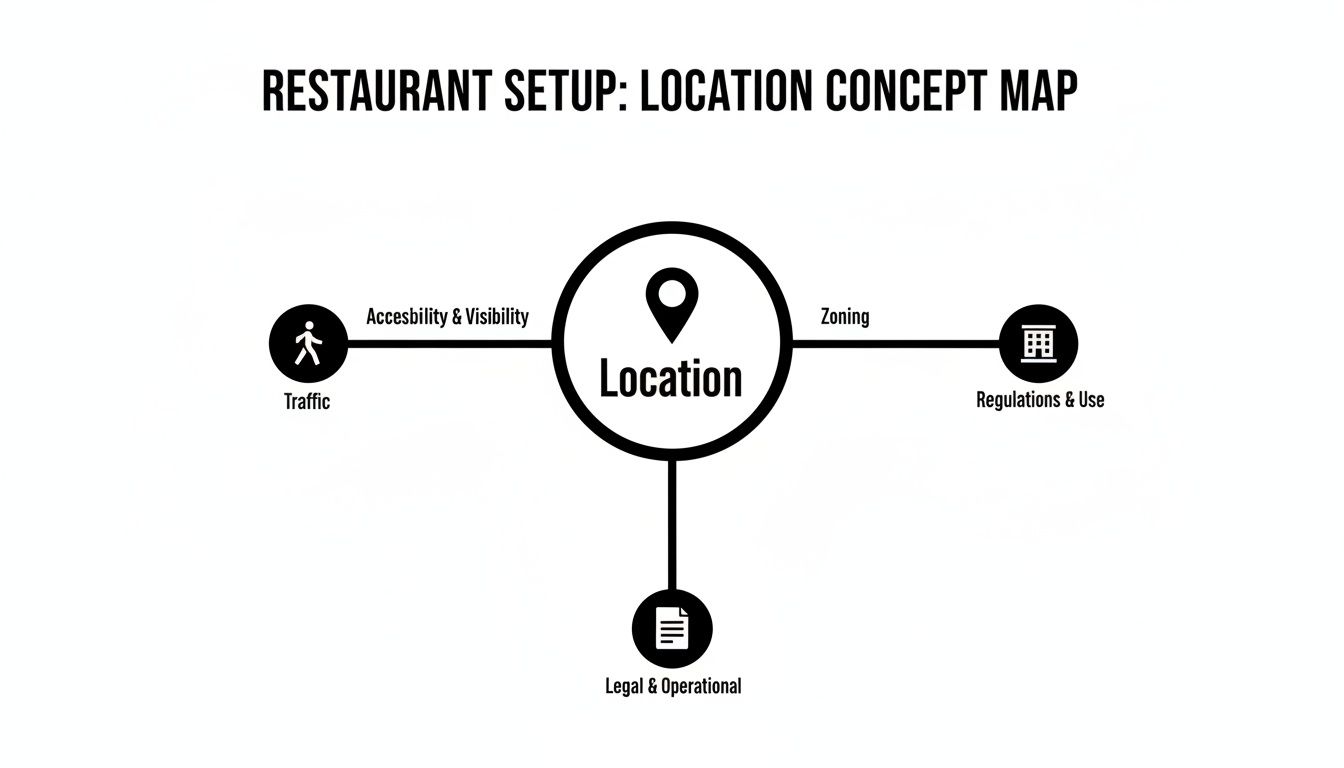
This just goes to show that your kitchen layout is directly tied to your location’s constraints and all the red tape that comes with it.
Optimizing Your Kitchen Stations for Workflow
Every commercial kitchen, big or small, has a few core stations. The real trick is arranging them in a way that makes sense for your specific menu and how you serve your customers. This linear progression helps your team work faster and, most importantly, safer.
Your primary stations will always include:
- Receiving and Storage: This is where ingredients arrive and get stored in dry storage, walk-in coolers, or freezers. It absolutely has to be near a back door for easy access.
- Prep Stations: The area for washing, chopping, and portioning ingredients. Having dedicated prep tables and its own refrigeration here is a must.
- Cooking Line (The Hot Line): The heart of the kitchen. This is where you’ll find your ranges, griddles, fryers, and ovens. The layout here is the most critical piece of the puzzle.
- Service Area: Where finished dishes are plated, garnished, and picked up by servers.
- Warewashing: The dish pit. You’ll need a three-compartment sink and a commercial dishwasher to keep everything clean and sanitized.
If you really want to dive deep into how to arrange these moving parts, our guide on commercial kitchen layout design offers some practical floor plans and expert tips.
Essential Equipment for LA Restaurant Concepts
The right equipment depends entirely on what you're cooking. What works for a Los Angeles food truck just won't cut it for a high-volume pizzeria.
To help you get started, here's a look at the essential equipment needs for a few popular LA restaurant concepts.
Essential Kitchen Equipment Checklist by Restaurant Type
| Equipment Category | Los Angeles Pizza | Food Truck (Tacos/Burgers) | Mexican Restaurant (Full-Service) |
|---|---|---|---|
| Refrigeration | Walk-In Cooler, Pizza Prep Table, Low-Boy Refrigerator | Undercounter Refrigeration, Sandwich/Salad Prep Table | Walk-In Cooler, Reach-In Refrigerator, Chef Base |
| Cooking Line | Pizza Deck Oven, Small Range | Flat-Top Griddle, Charbroiler, Deep Fryer (2-basket) | 6-Burner Range w/ Oven, Large Griddle (Plancha), Fryer |
| Prep Equipment | Commercial Dough Mixer, Food Processor, Slicer | Food Processor, Immersion Blender, Prep Sinks | Stand Mixer (for masa/sauces), Steam Table, Salsas Prep |
| Storage | Dunnage Racks, Ingredient Bins | Secure Shelving, Small Dry Storage Cabinet | Dunnage Racks, Extensive Shelving |
| Warewashing | 3-Compartment Sink, High-Temp Dishwasher | 3-Compartment Sink (compact), Sanitizer Sink | 3-Compartment Sink, Conveyor Dishwasher |
This table gives you a solid starting point, but always tailor your final list to the specific demands of your unique menu.
New vs. Used Equipment: A Smarter Investment
I get it. The temptation to buy used equipment to save a few bucks on startup costs is strong, but it’s a gamble that almost never pays off. Used gear comes with no warranty, an unknown service history, and a much higher risk of breaking down at the worst possible moment—like in the middle of a sold-out Saturday night.
Investing in new, warranty-backed equipment from a warehouse-direct supplier is a much smarter long-term play. You get reliable, energy-efficient machines that are less likely to fail, and if they do, you're covered. This protects your cash flow from those massive, unexpected repair bills that can sink a new business.
By skipping the expensive showrooms and sales commissions, warehouse-direct suppliers offer much better prices on brand-new equipment. Plus, with perks like fast, free shipping and flexible financing, you can outfit your whole kitchen without draining your precious startup capital. This lets you get the tools you need with manageable monthly payments.
And while you're designing your kitchen, don't forget the digital tools. Researching the best restaurant management software for small businesses can help connect your kitchen workflow with your front-of-house systems from day one. Making the right choices here really sets the foundation for a smooth, profitable operation.
Bringing Your Team and Your Buzz to Life
You’ve got the space. The kitchen is taking shape. Now comes the part that truly breathes life into a restaurant: the people. This means both the crew working behind the scenes and the customers you hope to welcome through the door.
A world-class kitchen is just a room full of stainless steel without a talented, motivated team to run it. And the most incredible food in the world doesn’t matter if no one knows you’re open for business. This final stretch is all about assembling your human engine and building the kind of excitement that packs the house from day one.
Building Your All-Star Restaurant Crew
Your staff is the heart and soul of your operation. From the head chef who translates your vision onto the plate to the servers who make every guest feel welcome, each person is a critical piece of the puzzle. Finding the right people in a market as competitive as Los Angeles requires more than just a simple job posting.
When you're launching a new spot, whether it's a hot new Los Angeles pizza joint or a bustling Mexican food concept, you’re not just filling roles—you're creating a culture from scratch. You need people who don’t just have the skills, but who buy into your vision and can hang tough when the dinner rush hits.
Craft job descriptions that sell the dream, not just the duties.
- For a Head Chef: Talk up the creative freedom they'll have with the menu and the chance to hand-pick their own kitchen brigade.
- For Line Cooks: Brag about the brand-new, top-of-the-line restaurant equipment they'll get to work with and the opportunity to hone their craft.
- For Servers: Paint a picture of the fun, high-energy vibe you're building and the killer tip potential of a hot new spot.
In the interview, pay just as much attention to attitude as you do to experience. You can teach someone how to plate a dish your way, but you can't teach hustle or a positive, team-first mindset.
That old line about 90% of restaurants failing in their first year? It’s a complete myth. The real numbers are way more encouraging. Studies show that only about 17% of restaurants close in year one—a better survival rate than the average for all other service businesses. It proves that with a smart plan, a great team, and solid decisions—like investing in reliable kitchen gear to dodge expensive breakdowns—your chances are actually pretty damn good. You can dig into the real business failure rates on CommerceInstitute.com.
Let that stat sink in. It should give you the confidence to invest in good people right from the jump. A solid, well-trained crew is your best insurance policy for beating the odds.
Building Pre-Launch Hype
Don't wait until opening day to start marketing. You want to build a groundswell of anticipation so that when you unlock the doors, you have a line of curious customers ready and waiting. This is non-negotiable, especially for something like a Los Angeles food truck, where your following is your business.
Get active on social media, especially Instagram. Start teasing the journey. Post slick photos of the renovation, sneak peeks of a dish your chef is testing, and short bios of your key players. This behind-the-scenes stuff makes people feel invested.
Reach out to local food bloggers and influencers. Invite them in for a private pre-opening taste. A single authentic post from a trusted local foodie can do more for you than a thousand dollars in traditional advertising.
Nailing the Opening
Your grand opening only happens once, but a "soft opening" is your secret weapon—it's the full-dress rehearsal you need. This is a smaller, invite-only event for friends, family, and maybe some neighboring business owners a few days before you go live. The point isn't to make a profit; it's to break things so you can fix them.
Here’s what a soft opening lets you do:
- Find Kitchen Bottlenecks: See where the line gets jammed up when tickets start flying.
- Train Your FOH Team: Let servers and bartenders get their sea legs in a more forgiving environment.
- Stress-Test the Tech: Make sure your POS system is firing orders to the kitchen correctly and that credit cards process without a hitch.
- Get Real Feedback: Ask for honest opinions on the food, the service, and the vibe before the paying public weighs in.
Once you’ve worked out the kinks, it's go time. Blast your grand opening date across all your channels. Maybe offer a small giveaway or a drink special to sweeten the deal and draw a crowd. The buzz and energy of a packed house on night one will create an unforgettable first impression that sets the stage for everything to come.
Common Questions About Opening a Restaurant in LA
Jumping into the Los Angeles restaurant world is a huge thrill, but it’s totally normal to have a ton of questions. Everyone from aspiring Los Angeles pizza shop owners to folks dreaming up a new Mexican food concept or a Los Angeles food truck needs clear, straight answers. Let’s tackle some of the most common questions we hear from soon-to-be restaurateurs in SoCal.
What Is a Realistic Startup Cost for a Small Restaurant in Los Angeles?
There’s no single answer here—the range is massive. You could get a lean food truck off the ground for around $50,000, while a full-service spot in a hot neighborhood could easily push past $750,000. The biggest factors that will swing your budget are always monthly rent, how much of a build-out you need, city and county licensing fees, and that first big equipment purchase.
A huge chunk of your startup cash will inevitably go to the kitchen. To get a handle on this, smart operators look at sourcing new, warranty-backed restaurant equipment from a warehouse-direct supplier. Their pricing is lower because they don't have a flashy showroom, and they often have financing. This can dramatically lower your upfront cash burn, leaving you more money for the important stuff, like payroll and inventory.
Should I Buy New or Used Restaurant Equipment?
I get it. The low price on a used walk-in cooler is tempting, especially when your budget is tight. But take it from someone who's seen this go wrong—it’s a massive gamble. Used gear usually has no warranty, a mysterious past, and a nasty habit of breaking down right in the middle of a Friday night dinner rush. A dead refrigerator can literally sink a new business overnight.
Investing in new equipment isn't just about getting shiny stuff; it's about buying reliability. You get energy efficiency, a solid warranty, and the peace of mind that your kitchen’s engine won’t die on you. It’s simply a smarter long-term play if you’re serious about building a stable, growing business.
What Are the Most Important Permits I Need in LA County?
The permit process in LA County is a beast, and you have to tackle it head-on. The core permits you can’t open without include:
- Business License: This comes from the city where your restaurant is located (e.g., Los Angeles, Santa Monica, Pasadena).
- Seller's Permit: You’ll need this from the state to legally collect sales tax.
- Employer Identification Number (EIN): A non-negotiable from the IRS if you plan on hiring anyone.
- Public Health Permit: This is the big one from the LA County Department of Public Health. It involves submitting your plans for review and passing multiple inspections.
And if you're serving booze? The Liquor License from the California Department of Alcoholic Beverage Control (ABC) is a whole other level of paperwork and expense. Start every single one of these applications as early as humanly possible. Waiting will only lead to expensive delays in opening your doors.
How Do I Create a Menu That Is Both Unique and Profitable?
A killer menu is where your creativity as a chef meets your shrewdness as a business owner. It all starts with the math. You absolutely have to cost out every single ingredient in every dish. This gives you your food cost percentage, and you need to keep that in the 28-35% sweet spot to make any money.
Check out what the competition is doing, but don't just copy them. Find an angle that makes you special. At the same time, be strategic. Design your menu so key ingredients show up in more than one dish. This is an old-school chef trick that keeps your inventory tight and your food waste way down.
Finally, never skip the soft opening. It's your chance to test-drive the menu with real customers, see what sells, and find out which dishes are your most profitable winners before you print the final version.
Ready to build a kitchen that works as hard as you do? LA Restaurant Equipment offers warehouse-direct pricing on everything from Atosa refrigeration to high-performance cooking lines. We’ve got fast, free shipping in Southern California and financing options to help you get started. See our full inventory at https://larestaurantequipment.com and equip your dream with confidence.