

So, you're dreaming of opening a restaurant. That's fantastic. But before you start sketching out menus for your new pizza joint or taco truck, we need to talk numbers. The honest, hard truth is that your startup budget is the foundation of your entire business—if that foundation is shaky, everything built on top of it is at risk.
The total cost to get a restaurant off the ground can swing wildly, but in a competitive market like Los Angeles or Orange County, you're typically looking at a range from $250,000 to over $750,000. This isn't just one big check you write; it's a massive puzzle of expenses. The biggest pieces are almost always your physical space and the kitchen build-out.
What Does It Really Cost to Open a Restaurant?
Launching a restaurant in Southern California isn't for the faint of heart. It demands a crystal-clear financial roadmap from day one. Thinking through your budget is the first real, critical step you'll take. It's what turns a daydream into a tangible, workable plan.
A realistic budget forces you to get granular. You have to account for every single line item, from the big-ticket commercial kitchen equipment down to the last box of marketing flyers. If you don't, it's incredibly easy to underestimate what you need, and that leads to cash flow nightmares before you've even had a chance to serve your first customer.

A High-Level Financial Snapshot
When you look at where the money goes, a few categories always eat up the biggest slice of the pie. For a full-service restaurant in a major city, that $250,000 to $500,000 average is a solid starting point.
The two heavyweights are leasehold improvements (construction) and your kitchen equipment. Together, they can easily account for over 40-50% of your total startup capital. The equipment alone—your ovens, refrigerators, and cook line—will often run you $80,000 to $120,000. For a deeper dive into industry trends and stats, the folks at BizPlanr.ai have some great insights.
To give you a better sense of how this breaks down, here's a look at how a typical restaurant startup budget is allocated. Think of this as a general guide to where your investment will likely flow.
Typical Restaurant Startup Budget Allocation
This table shows the estimated percentage of the total startup budget allocated to each major expense category.
| Expense Category | Average Budget Allocation (%) |
|---|---|
| Leasehold Improvements / Build-Out | 15% - 25% |
| Commercial Kitchen Equipment | 20% - 25% |
| Furniture, Fixtures, and Decor | 10% - 15% |
| Rent & Security Deposits | 5% - 10% |
| POS System & Technology | 2% - 5% |
| Permits & Licensing | 1% - 3% |
| Initial Food & Beverage Inventory | 5% - 7% |
| Pre-Opening Labor & Training | 3% - 5% |
| Marketing & Grand Opening | 3% - 5% |
| Contingency Fund (Cash Reserves) | 10% - 15% |
While every restaurant's DNA is unique, these percentages provide a reliable benchmark for divvying up your capital. Use this as your map to make sure you’re not over-investing in one area while short-changing another. That contingency fund, by the way? Absolutely non-negotiable.
This financial map helps you see the big picture. Whether you're planning a bustling L.A. bistro or a cozy neighborhood cafe, understanding these numbers is the key to starting smart. In the sections to come, we’ll dig into each of these categories, giving you real-world cost ranges and strategies to build a budget that sets you up for success.
Breaking Down Your One-Time Startup Expenses
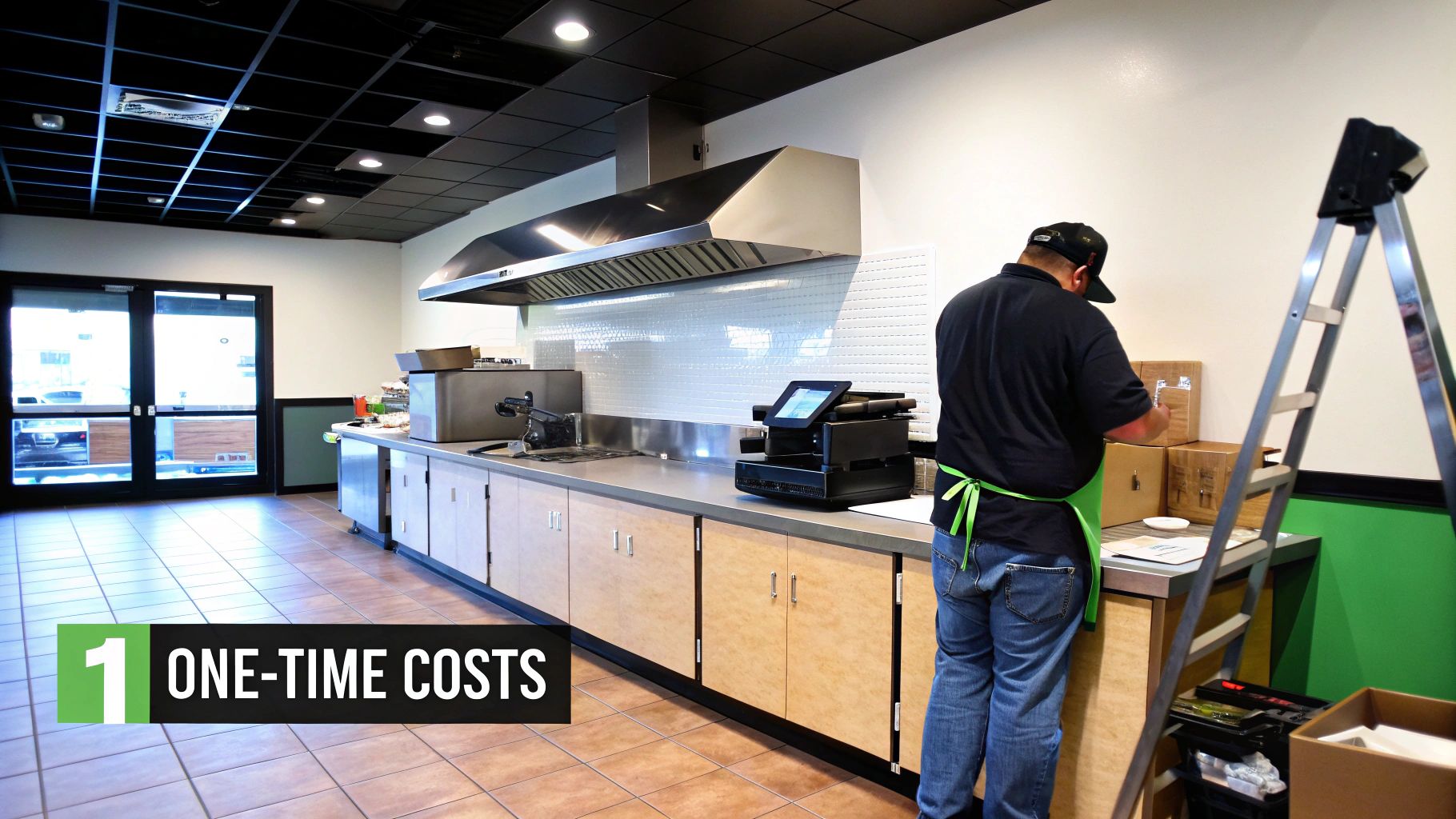
Think of your initial capital as the rocket fuel for your restaurant's launch. So, where does all that fuel get burned? These one-time expenses are the big, foundational investments that turn an empty shell of a building into a living, breathing restaurant that’s legal, functional, and inviting. Nailing these numbers is probably the most critical part of your entire startup budget.
Your biggest checks are going to be for the physical space itself and all the gear you need to actually make food. From architects and lawyers to the heart of the entire operation—the kitchen—every single dollar has to have a purpose. Let's walk through each major category, using realistic cost ranges for the hyper-competitive Los Angeles and Orange County markets.
Securing Your Location and Legal Foundation
Before you can even think about firing up a stove, you need a place to put it. Locking down a lease in Southern California is a huge first hurdle and comes with some hefty upfront costs. Landlords here will almost always require a security deposit, which can run anywhere from $2,000 to over $12,000, plus your first month's rent.
At the same time, you'll be hiring professionals to make sure your business is built on solid ground. This is absolutely not the place to try and save a few bucks.
- Legal Fees: Plan on spending $1,500 to $5,000 for an attorney. They’ll review your lease (a lifesaver that can prevent future disasters) and help you set up your business entity, like an LLC or S-Corp.
- Architectural and Design Fees: If you're doing any kind of real build-out, you need professional plans. Budget $5,000 to $20,000+ for architects and designers to draw up blueprints that the city will actually approve.
These first moves create the legal and physical framework for everything else. They are non-negotiable.
The Build-Out and Construction Phase
Once that lease is signed, the real work begins. This is where you transform a blank canvas into your restaurant, often called "leasehold improvements." The costs here can swing wildly depending on the space's previous life. Taking over a former restaurant is a world away from converting an old retail shop that needs a kitchen installed from scratch.
Here in SoCal, you can expect build-out costs to range from $75 to over $250 per square foot. So, for a typical 2,000-square-foot spot, you're looking at a massive investment of $150,000 to $500,000.
This is often the single largest—and most unpredictable—line item in any restaurant startup budget. It's everything from the pipes in the floor to the vents on the roof.
Key build-out costs always include:
- Plumbing: This means floor drains, grease traps, and sinks for handwashing, prep, and dishwashing.
- Electrical: Upgrading panels to handle the immense power draw of commercial kitchen equipment is a must.
- HVAC: Proper ventilation and A/C aren't just for comfort; they're for safety and code compliance.
- Hood and Fire Suppression System: This is a mandatory, big-ticket item. Expect to pay $20,000 to $50,000 just for this system.
Outfitting Your Commercial Kitchen
The kitchen is the engine of your restaurant. Period. You’ll be putting a huge chunk of your capital here, with a full kitchen build-out costing anywhere from $75,000 to over $200,000. The restaurant equipment you pick affects your speed, what you can put on your menu, and even your monthly utility bills.
You basically have two choices: new or used. Used gear can save you money upfront, but it’s a gamble—no warranty and a much higher chance of breaking down at the worst possible moment. A smarter play is to find a middle ground by buying new, warranty-backed equipment from a warehouse-direct supplier like LA Restaurant Equipment. You get the peace of mind of new gear without the crazy markups from traditional dealers.
The cooking line is the centerpiece of almost any kitchen. When you're looking at your options, you can find a huge variety of commercial restaurant ranges to fit your specific menu and workflow. This single purchase is fundamental to your entire operation.
Furniture, POS, and Essential Permits
With the back-of-house sorted, it's time to focus on the front-of-house and the systems that run the business. This is everything your customers interact with, from the chairs they sit in to how they pay the bill.
- Furniture and Fixtures: Tables, chairs, bar stools, and lighting will run you between $10,000 and $50,000. This is your restaurant's personality, so choose wisely.
- Point of Sale (POS) System: A good POS is your command center. The initial hardware setup can cost $600 to $3,000, with monthly software fees tacking on another $70 to $400.
- Permits and Licenses: To operate legally in California, you'll need a stack of paperwork. Budget $2,000 to $10,000 for your business license, health permit, fire permit, and seller's permit. If you want to serve alcohol, the liquor license is a whole separate beast—it can cost anywhere from $300 for a simple beer and wine license to over $300,000 for a full liquor license in a prime location.
Budgeting for these one-time costs carefully gives you a solid foundation, letting you move forward with confidence as you get ready to finally open your doors.
Your grand opening is a huge milestone, but it's the starting line, not the finish. As soon as the doors open, your focus has to shift from those big, one-time startup checks you’ve been writing to the recurring costs that will make or break your restaurant’s future. These operational costs are the engine that keeps the lights on and the food cooking, and getting a handle on them is the real secret to thriving.
Think of it this way: your startup budget built the car, but your operational budget is the gas, oil, and regular maintenance it needs to actually go anywhere. Without a rock-solid plan for these monthly expenses, even the most hyped-up new spot can run out of steam shockingly fast. Let's break down the big ones you'll be dealing with every single month.
The Power of Prime Cost
In the restaurant game, everything comes back to one number: prime cost. This is, without a doubt, the most important metric for understanding if you're actually making money. It’s simply the total of your two biggest expenses: what you spend on food and drinks (your Cost of Goods Sold, or COGS) and what you spend on your people (your total labor costs).
For most restaurants, you want your prime cost to land somewhere between 55% and 65% of your total sales. If that number starts creeping up, your profit margins are shrinking—fast. Watching this number like a hawk lets you make smart, quick decisions on everything from menu pricing and portion sizes to weekly staff schedules.
Mastering Food and Labor Costs
Food and labor are the two giants of your operational budget. They’re constantly changing and demand your full attention. The last few years have seen huge spikes in both, putting a ton of pressure on owners everywhere.
Since 2019, food and labor costs have each shot up by over 35% across the board. Labor, in particular, can now eat up 33-36% of a restaurant's total revenue—a massive jump from where it was. To keep up, full-service spots have been raising menu prices by about 4.6% each year. You can read the full analysis on restaurant inflation to get a deeper sense of these trends.
Managing these two is a constant balancing act. Cut labor too much, and your service goes down the drain. Start skimping on the quality of your ingredients, and your customers will notice immediately.
- Initial Inventory: Your first big operational hit will be stocking the kitchen, which usually takes 5% to 7% of your total startup budget. After opening day, this becomes a weekly expense that you'll need to manage tightly.
- Labor and Payroll: This isn't just about hourly wages. You have to account for payroll taxes, any benefits you offer, workers' comp insurance, and potential overtime. In a market like Los Angeles, labor will always be one of your top two expenses, guaranteed.
Budgeting for Other Monthly Essentials
Beyond the big two, a whole host of other bills will show up every month. They might seem small on their own, but they add up in a hurry and absolutely must be part of your restaurant startup costs breakdown.
The good news is that these are often more predictable, which makes them a bit easier to budget for.
- Rent and Utilities: Your lease payment is fixed, but things like electricity, gas, water, and internet will definitely fluctuate. All together, these usually account for 5% to 10% of your revenue.
- Insurance: This one is completely non-negotiable. You’ll need general liability, property insurance, and workers' compensation at a minimum. Plan on paying anywhere from $2,000 to $10,000 a year, which you'll pay in monthly premiums.
- Marketing and Advertising: You can’t just open your doors and expect people to show up forever. You have to keep the buzz going. A steady marketing budget, even a modest 1% to 3% of your sales, is crucial for bringing in new faces and keeping your regulars coming back. This could be anything from social media ads to sponsoring a local Little League team.
The All-Important Contingency Fund
No matter how perfectly you map everything out, things will go wrong. The walk-in freezer will die on a Friday night, a key chef will quit without notice, or a heatwave will keep everyone home for a week. This is where your contingency fund—your working capital—saves the day.
Most seasoned pros will tell you to have at least three to six months of your total operating expenses sitting in a separate bank account. This isn't just "extra" cash; it's a safety net woven directly into your budget. It’s the cash that absorbs the unexpected shocks and gives you the breathing room to solve problems without putting your entire business at risk.
Startup Budgets for Different LA Restaurant Concepts
Theory is great, but let's talk real numbers. Seeing the costs laid out in black and white is what makes this whole process tangible. To really get a feel for it, we're going to walk through three different scenarios you'll find all over the Los Angeles food scene.
After all, the financial blueprint for a nimble food truck is a world away from a trendy fast-casual pizza joint or a bustling full-service Mexican restaurant. Each one has its own unique price tag, driven by everything from its physical footprint and kitchen needs to how many people you need on payroll. By stacking them up side-by-side, you'll get a much clearer picture of where your own vision might land financially.
The Lean and Mobile LA Food Truck
A food truck is often seen as the most accessible way to break into the LA food world. While it's definitely less capital-intensive than a traditional restaurant, it’s still a serious investment. Your single biggest line item is the truck itself—it’s not just a vehicle, it’s your entire commercial kitchen on wheels.
The bulk of your cash will go into buying and customizing the truck, navigating permits across different cities, and sourcing specialized, compact restaurant equipment. The huge upside? Your overhead is drastically lower. No rent, no dining room to furnish, and a tiny team. This makes your day-to-day costs much easier to handle, but that upfront vehicle cost is a big hurdle to clear. For a deep dive into this model, exploring Los Angeles Food Trucks will give you a better sense of the unique opportunities and challenges in this mobile market.
The Trendy Fast-Casual Pizza Place
Next up, let's picture a fast-casual pizza spot in a busy neighborhood. This concept hits a sweet spot, needing a physical location but with a streamlined service model that keeps labor costs in check compared to a full-service operation. The build-out is a much bigger deal than a food truck, as you'll be dealing with plumbing, electrical, and creating a space that customers actually want to hang out in.
Here, the kitchen is everything. You'll be dropping serious cash on a high-quality pizza oven, plenty of refrigeration, and all the prep space you can get. You save money on servers and hosts, but you're investing heavily in your lease, construction, and a more robust set of stationary kitchen gear. Understanding the nuances of a successful Los Angeles Pizza joint can provide valuable insights into this competitive niche.
Once you're open, controlling your ongoing costs becomes the name of the game. As you can see below, your food and labor expenses will eat up the lion's share of your revenue.
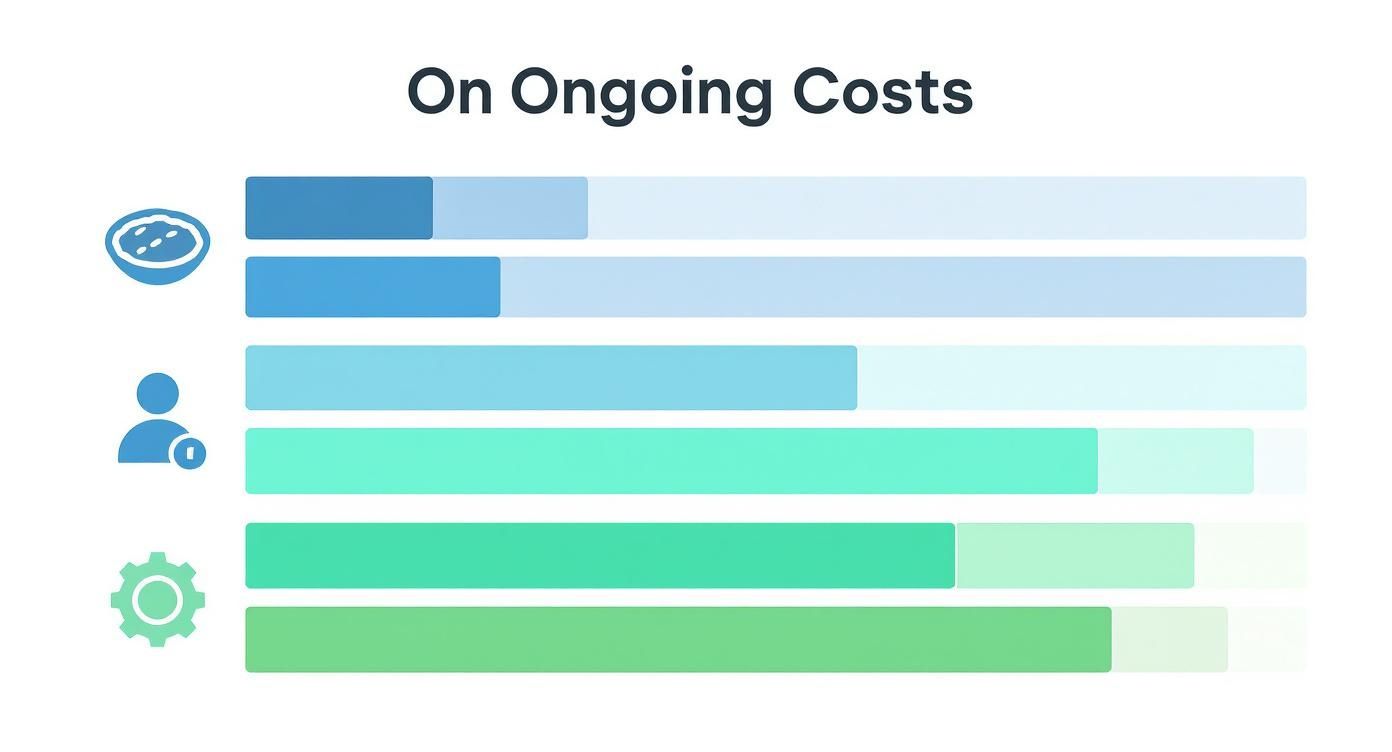
This chart is a powerful reminder of why managing your prime cost (the combo of food and labor) is absolutely critical to staying profitable, no matter what kind of restaurant you're running.
The Full-Service Mexican Restaurant
At the top of the investment scale, we have the full-service Mexican restaurant. This model carries the highest startup costs, period. It's complex and requires a much larger scale. You're not just building a kitchen; you're crafting an entire experience, which means a huge chunk of your budget goes toward decor, furniture, and locking down a much larger space.
This kind of restaurant demands a massive list of restaurant equipment to support a diverse menu, from high-volume tortilla presses to multi-station cooking ranges. You'll also need a full bar and a big team of servers, bartenders, hosts, and kitchen staff. Factor in pricey permits, a potential liquor license, and a major construction project, and you can see why this is the most capital-intensive option of the three. The world of Mexican food in LA is vibrant and competitive, requiring a significant investment to stand out.
LA Restaurant Startup Cost Comparison by Concept
To put it all together, here’s a side-by-side look at what you might expect to spend on these three very different restaurant models in the Los Angeles area.
| Cost Category | Food Truck (Estimate) | Fast-Casual Pizza (Estimate) | Full-Service Mexican Restaurant (Estimate) |
|---|---|---|---|
| Lease & Deposits | $0 | $10,000 - $25,000 | $15,000 - $40,000 |
| Build-Out / Construction | $0 (Included in truck) | $50,000 - $150,000 | $150,000 - $400,000+ |
| Vehicle & Wrap | $75,000 - $150,000 | $0 | $0 |
| Commercial Kitchen Equipment | $25,000 - $50,000 | $75,000 - $125,000 | $100,000 - $200,000 |
| Permits & Licenses | $5,000 - $15,000 | $8,000 - $20,000 | $15,000 - $50,000+ (Excludes full liquor license) |
| POS System & Technology | $1,000 - $2,500 | $2,000 - $5,000 | $3,000 - $7,000 |
| Initial Inventory | $3,000 - $5,000 | $7,000 - $15,000 | $15,000 - $25,000 |
| Pre-Opening Marketing | $2,000 - $5,000 | $5,000 - $10,000 | $10,000 - $20,000 |
| Contingency Fund (15%) | $16,000 - $34,000 | $23,500 - $53,000 | $46,000 - $111,000 |
| Total Estimated Startup Costs | $127,000 - $261,500 | $180,500 - $403,000 | $357,000 - $853,000+ |
These numbers are estimates, of course, but they paint a clear picture. Your concept dictates your budget, and understanding these ranges is the first step toward building a realistic financial plan for your own LA restaurant dream.
How to Fund Your Restaurant and Reduce Costs
Once you have a solid idea of your startup budget, the million-dollar question becomes: where is the money actually going to come from? For most aspiring restaurateurs, this is the biggest hurdle between a great idea and a grand opening.
Think of financing as the bridge that gets you from a detailed business plan to finally unlocking the front door. We'll walk through your funding options, from the old-school bank loan to clever ways to slash costs before you even spend a dime.
Exploring Your Financing Options
Not all money is the same. Each path to funding has its own set of rules, benefits, and trade-offs. What works perfectly for a food truck in Los Angeles might be a terrible fit for a full-service Mexican restaurant in Orange County.
- Traditional Bank Loans: This is the first place many people look. Banks can offer great interest rates, but they expect to see a stellar credit history, significant collateral, and a business plan that’s been polished to perfection.
- SBA Loans: Backed by the Small Business Administration, these loans are a bit easier to get because the government reduces the risk for the lender. The paperwork can be a grind, but they are a fantastic route for new restaurant owners who might not qualify for a conventional loan.
- Private Investors: This means selling a piece of your restaurant to an individual or group in exchange for cash. On the plus side, an investor might bring industry connections and expertise. The downside? You’re giving up some ownership and control.
- Crowdfunding: Platforms like Kickstarter let you raise money in small chunks from a lot of people. You typically offer rewards like free meals or cool merchandise. It’s a great way to test your concept and build a loyal following before you even open.
The Smart Approach to Restaurant Equipment Financing
A massive slice of your restaurant startup costs breakdown is tied up in your kitchen. Instead of draining your cash to buy everything at once, equipment financing gives you a much smarter alternative. It’s a way to get all the gear you need by making manageable monthly payments.
Financing lets you spread out the cost of big-ticket items—like your commercial ovens and walk-in coolers—over several years. This keeps your cash free for day-to-day essentials like payroll, marketing, and your first big food order. Investing in the right restaurant equipment is critical, and financing makes it possible to acquire high-quality, reliable gear without compromising your initial operating capital.
Think of equipment financing like a car payment. You get to drive the car off the lot today without emptying your savings, freeing up your cash for gas (inventory) and oil changes (operations).
This strategy also makes it much easier to get brand-new, reliable equipment that comes with a warranty, helping you dodge the headaches and surprise repair bills that often come with used gear.
Actionable Strategies to Reduce Startup Costs
Getting the funding is one thing; spending it wisely is another. Every single dollar you can save during the startup phase is a dollar that can go into your emergency fund or help cover costs during those crucial first few months.
Here are a few real-world ways to trim the budget without cutting corners on quality:
- Negotiate Your Lease: Your lease is one of the few big-ticket items you can actually negotiate. Don’t be shy about asking for a few months of free rent while you're in the construction phase. You can also ask for a "tenant improvement allowance," where the landlord pitches in to help pay for the build-out.
- Buy Smart: You don't need every single piece of equipment to be brand new. Focus on buying the most critical, heavy-use items—like your cooking line and refrigeration—new from a warehouse-direct supplier. This gets you the reliability and warranty coverage you need without the retail markup. For less critical items like prep tables and shelving, you can often find great deals on the used market.
- Lean on Technology: A modern POS system is so much more than a cash register. It can track your inventory, manage labor costs, and give you priceless data on what’s selling. This helps you make smarter buying decisions, reduce food waste, and save a ton of money over time.
- Do a Phased Opening: Before the big grand opening, host a "soft opening" for friends and family. This gives your team a chance to work out all the kinks and fix mistakes with a friendly, forgiving crowd before you have to do it in front of paying customers.
Burning Questions About Restaurant Startup Costs
Even after you’ve mapped out every last expense, a few big questions can still keep you up at night. Crunching the numbers for your restaurant startup costs breakdown is a huge undertaking, and it's completely normal to have some lingering what-ifs. Let's tackle some of the most common—and most critical—questions we hear from aspiring restaurateurs in the Los Angeles market.
Getting solid answers to these questions will give you the financial clarity you need to handle the road ahead, whether you’re opening a pizza joint, a food truck, or a full-service restaurant.
What Is the Biggest Hidden Cost When Opening a Restaurant?
While a surprise construction nightmare is always a possibility, the most common hidden cost is usually underestimating your pre-opening cash burn. So many new owners budget meticulously for every piece of equipment and all the construction costs, but they forget just how much money flies out the door in the weeks before the first customer ever walks in.
Think about it—these are all expenses you have to cover before you make a single dollar:
- Pre-opening Payroll: You can't just hire your team on opening day. You’ll need your key staff on board for at least two to four weeks of training, menu tasting, and system run-throughs. That’s a full payroll with zero revenue to offset it.
- Initial Marketing Blitz: That grand opening buzz doesn't just happen. You need to budget for the initial marketing push, from social media ads to local PR events. This can easily run you $5,000 to $20,000.
- Utility Deposits and Hookups: It can be a real shock for first-timers. Getting the gas, electricity, and water services started often requires hefty security deposits that can really throw a wrench in your cash flow.
How Much Working Capital Do I Truly Need?
You'll hear people say you need three to six months of operating expenses in the bank. In a market as competitive as Los Angeles, I’d tell you to forget three months—six months is a much safer bet. Your working capital, or contingency fund, isn't just for a burst pipe. It’s the cash that keeps the lights on while you build your business.
A restaurant rarely turns a profit from day one. It often takes six months to a year to build a steady customer base and stabilize cash flow. Your working capital is the bridge that gets you from opening day to profitability.
So, if you have a mid-sized spot with monthly operating costs around $60,000, that means you need $360,000 sitting in a bank account after you’ve already paid for the build-out and all your restaurant equipment.
Is It Cheaper to Buy an Existing Restaurant?
On paper? Sure. Buying a restaurant that’s already up and running can definitely seem cheaper. You're getting a space that’s already built, permitted, and usually comes with equipment. This can dramatically lower your upfront cash needs compared to building from the ground up, which is a huge plus for popular concepts like a Los Angeles pizza place or a Mexican food spot.
But hold on. "Cheaper" doesn't always mean "better," and it certainly doesn't always mean less expensive in the long run.
- The Cons: You’re inheriting someone else’s problems. The kitchen layout might be a disaster, the equipment could be on its last legs, and you could be walking into a terrible lease or a location with a bad reputation to overcome. Sometimes, the cost to renovate and fix an existing space can creep dangerously close to what it would have cost to start fresh.
- The Pros: The single biggest advantage is speed. You can often be open for business in a fraction of the time it takes to build from scratch. This is a massive benefit for concepts like Los Angeles food trucks, where buying a fully permitted, kitted-out truck is a very common and smart way to get rolling quickly.
Ultimately, there’s no single right answer. It all comes down to your concept, how much risk you're willing to take, and the quality of the opportunities on the market.
Navigating your startup budget is the most critical first step in your journey. For reliable, warranty-backed restaurant equipment at warehouse-direct prices, trust LA Restaurant Equipment to outfit your kitchen for success without breaking the bank. Get the gear you need with fast, free shipping in California and flexible financing options. Explore our inventory online or contact our team for a personalized quote today at https://larestaurantequipment.com.