

Keeping your stainless steel grill grates clean is pretty straightforward: heat 'em up to burn off the gunk, give them a good scrub with a quality grill brush, and for the heavy-duty jobs, break out a food-safe degreaser or a paste of baking soda and vinegar. It’s a simple routine, but for any Los Angeles restaurant—whether you're a top-rated Mexican food spot, a busy pizza place, or one of the city's iconic food trucks—it's the key to getting those perfect sear marks and pure flavor in every single dish.
Why Pristine Grates Are Your Restaurant's Secret Weapon
In the cutthroat Los Angeles food scene, consistency is everything. It doesn't matter if you're a popular Mexican Food restaurant famous for its carne asada, one of the many Los Angeles Food Trucks slinging gourmet burgers, or a Los Angeles Pizza joint grilling vegetables for toppings—the quality of your grilled food can make or break your reputation. This is where cleaning your grill grates stops being a chore and becomes a critical part of your business.
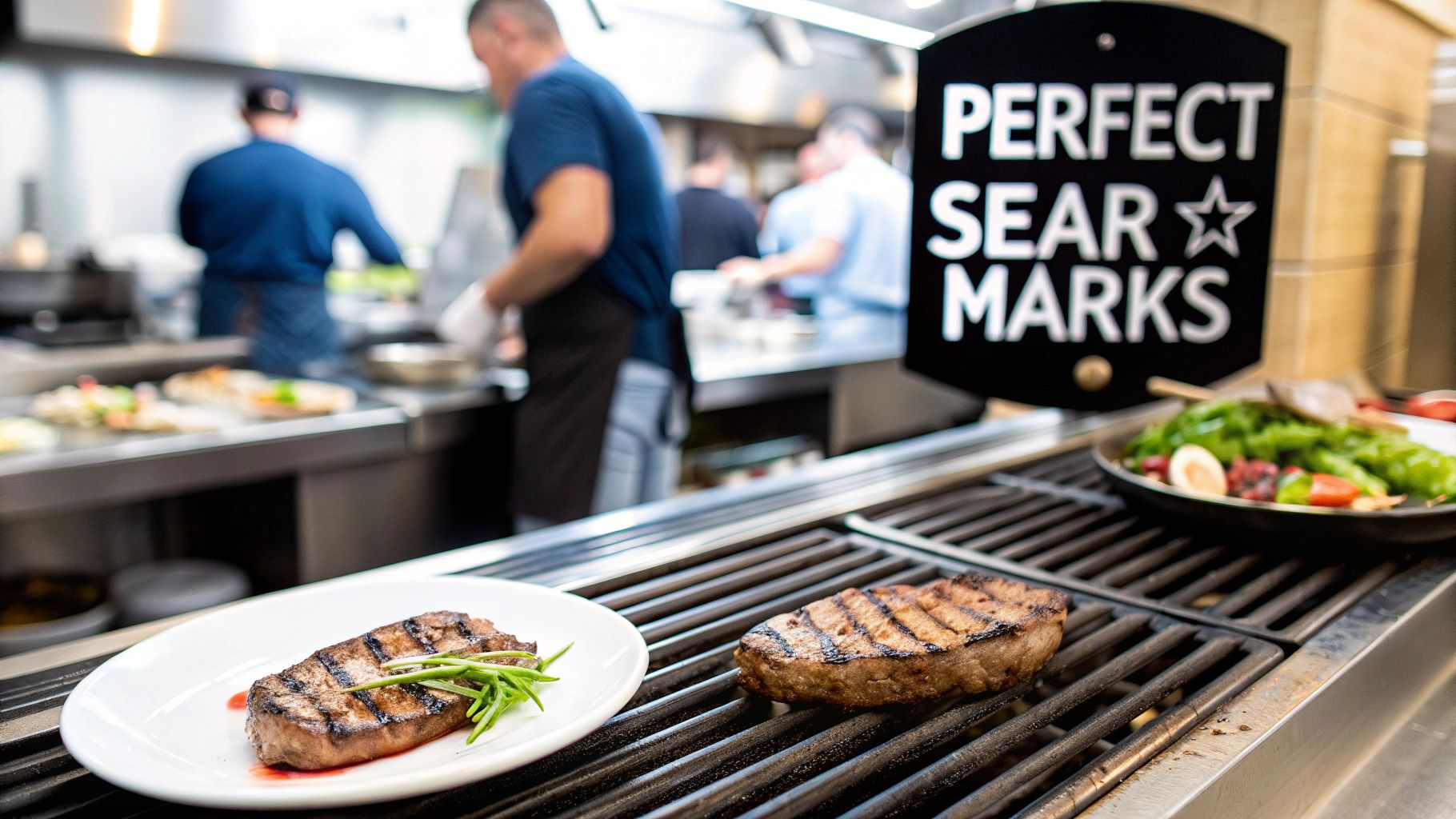
Let's be honest, dirty grates just look bad. But worse than that, they transfer bitter, burnt flavors from old carbon buildup onto fresh food. For a kitchen pushing out high volume, that can completely compromise the taste profile you've worked so hard to perfect. Clean grates, on the other hand, guarantee that pure flavor shines through and deliver those sharp, professional sear marks that scream quality to your customers.
Protecting Your Restaurant Equipment Investment
There's a reason stainless steel is the go-to material for commercial restaurant equipment. It’s built for the abuse, standing up to intense heat and constant use way better than cast iron or chrome-plated grates. Its resistance to corrosion and how easy it is to maintain has made it the top choice for approximately 65-70% of new commercial grill installations in the U.S. since 2020. If you want to dive deeper, there are some great insights on professional grate cleaning over at grillrost.com.
Proper care is the only way to protect this essential piece of equipment. A consistent cleaning schedule stops corrosive grease and carbon from building up, which can lead to pitting and damage over time. Ignore it, and you’ll be facing an expensive replacement sooner than you think.
Think of daily grate maintenance not as a cost, but as an insurance policy on your restaurant equipment. A few minutes of cleaning each day protects a significant financial investment and upholds the quality your brand promises.
At the end of the day, knowing how to properly clean stainless steel grill grates is fundamental to running a tight ship. It directly impacts:
- Food Quality: No flavor contamination and perfect, envy-inducing grill marks.
- Equipment Longevity: Protecting your grill from the rust and wear that sideline kitchen gear.
- Operational Efficiency: Slashing the time you spend on deep cleans by staying on top of daily maintenance.
This guide is for the busy restaurant and food truck operators in Los Angeles who know that excellence is built by mastering the details.
Assembling Your Grill Cleaning Toolkit
Before you even think about tackling that baked-on grease and char, you need the right tools for the job. This is non-negotiable. For any busy Los Angeles restaurant or food truck, your cleaning arsenal directly impacts how efficiently you can maintain your restaurant equipment. The right setup can turn a dreaded end-of-night chore into a quick, effective routine.
I’ve always found it best to split the toolkit into two camps: one for daily maintenance and another for those less frequent, more intensive deep cleans. This keeps you from turning a minor daily wipe-down into a full-blown project.
Daily Upkeep Essentials
For the day-to-day grind, your absolute best friend is a high-quality grill brush. It’s critical to get one with either stainless steel or brass bristles. These are tough enough to scrape off fresh debris without gouging or scratching the grate’s surface. A long handle is another must-have for safety—it keeps your hands well away from the blistering heat of a commercial grill.
Working alongside your brush, a sturdy metal scraper is invaluable. It’s perfect for popping off those stubborn, carbonized bits that a brush just skates over, especially in the corners. Think of it as the heavy lifter that clears the big stuff before the brush comes in for the detail work.
Critical Warning: Whatever you do, never, ever use steel wool on your stainless steel grates. Tiny particles can break off, get stuck in the grate’s surface, and start to rust. That rust will then contaminate the stainless steel itself, and you can end up with permanent damage to your restaurant equipment from one simple mistake.
Deep Cleaning Supplies
When it’s time for that necessary weekly or monthly deep clean, your toolkit needs a few more heavy hitters. This is where you really get into the serious grease and grime that builds up in any high-volume kitchen. Having a dedicated, well-stocked station is key; you need the right tools and chemicals ready to go. Make sure you understand what makes for safe and compliant essential cleaning supplies for business before you start buying.
Your deep-clean kit should include:
- A large soaking tub: It has to be big enough to completely submerge your grates. No shortcuts here.
- Non-abrasive scouring pads: For scrubbing away loosened gunk after a good soak without causing scratches.
- Heavy-duty rubber gloves: Protect your hands. You'll be dealing with very hot water and potent degreasers.
- A commercial-grade, food-safe degreaser: I always look for products specifically formulated for stainless steel. The last thing you want are caustic chemicals that can cause pitting and damage.
To make things easier, here's a quick reference table to help you build out the perfect toolkit for keeping those grates in prime condition.
Grill Grate Cleaning Toolkit Comparison
| Tool | Best For | Pro Tip |
|---|---|---|
| Stainless/Brass Grill Brush | Daily scraping of hot grates | Choose a brush with a replaceable head to save money and reduce waste over time. |
| Metal Scraper | Removing stubborn, carbonized food | Always use the scraper before the brush. It breaks up large deposits, making the brush more effective. |
| Food-Safe Degreaser | Weekly or monthly deep soaks | After using any chemical cleaner, always rinse the grates thoroughly with clean, hot water. No exceptions. |
| Soaking Tub & Scouring Pads | Full submersion deep cleaning | Use the hottest water your setup can safely handle for the soak. It dramatically speeds up the degreasing process. |
Getting these items organized and ready to go is honestly half the battle. A well-prepared station means the job gets done right, every time. If you’re just starting to build out your kitchen, our comprehensive commercial kitchen equipment checklist is a great resource to make sure you have all your bases covered.
Mastering the Three Tiers of Grill Grate Cleaning
Knowing how to clean stainless steel grill grates isn't a one-size-fits-all job, especially when you're in the heat of a busy Los Angeles kitchen. The secret is to match your cleaning intensity to the situation. A solid maintenance routine really breaks down into three distinct levels: the daily scrape, the weekly scrub, and the monthly deep soak.
Think of it this way: you wouldn't pull out a pressure washer to clean up a small spill. In the same way, a quick scrape isn't going to fix weeks of caked-on gunk. Adopting this tiered approach will save your crew time, protect your expensive restaurant equipment, and guarantee your grates are always ready for service.
Tier 1: The End-of-Service Heat and Scrape
This is your non-negotiable, end-of-every-single-shift routine. It's the most critical habit you can build to prevent the kind of stubborn, carbonized buildup that demands serious elbow grease down the line. The goal here isn't a mirror shine; it's about getting the day's debris off before it becomes a permanent resident.
The process is dead simple but incredibly effective. After the last order goes out, crank the grill to its highest setting for 10-15 minutes. This blast of heat incinerates any leftover food bits and grease, turning them into a dry, brittle ash that's way easier to brush off.
Once the grill is roaring hot, grab your heavy-duty stainless steel or brass brush and give the grates a thorough scrub. Always work in line with the grate rods to avoid scratching, and make sure you hit every single surface. A sturdy metal scraper is your best friend here, perfect for knocking off any larger, more stubborn pieces that the brush can't handle.
This simple process shows the three core steps of grill cleaning: scrape, brush, and degrease.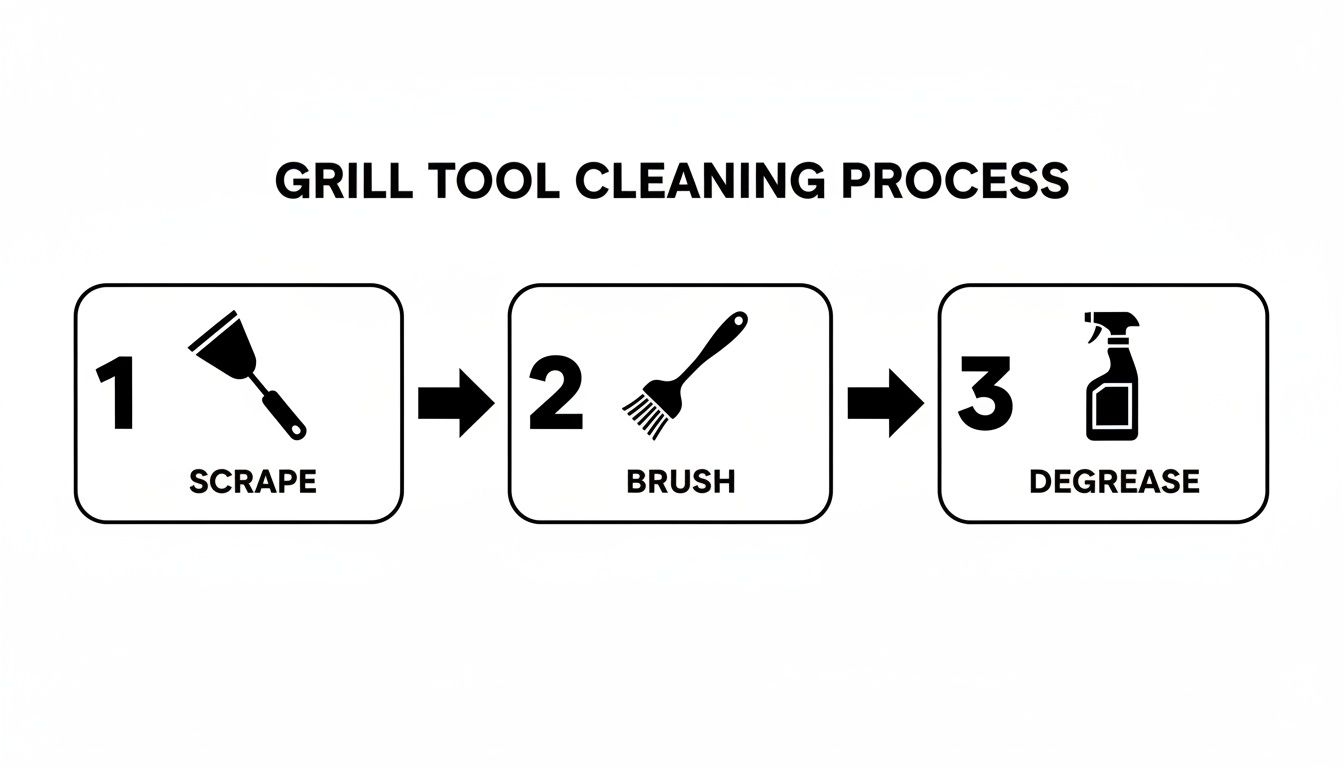
This visual flow really highlights how each tool has a specific job in the cleaning hierarchy, from getting the big stuff off first to breaking down deep grease.
Tier 2: The Weekly Scrub-Down and Re-Season
Once a week, your grates need a bit more love. This goes beyond the daily scrape to tackle any of that lingering grease that heat alone can't touch. It's especially crucial for kitchens dealing with heavy marinades or fatty proteins, like a Mexican Food spot serving saucy al pastor or one of the Los Angeles Food Trucks grilling up hundreds of burgers a day. Even a top Los Angeles Pizza restaurant needs clean grates for grilling toppings to perfection.
For this tier, start with the heat-and-scrape method just like you do every day. Afterward, kill the heat and let the grates cool down until they are warm but safe to handle. Now, it's time to use a non-abrasive scouring pad with hot, soapy water to scrub them down. This is the step that removes that slick film of grease a wire brush often just pushes around.
Expert Tip: Any time you use soap or degreasers, it's absolutely crucial to re-season your grates. Just wipe a thin layer of a high-smoke-point oil (like canola or grapeseed) over the entire surface with a paper towel. This creates a protective, non-stick barrier that helps prevent rust and makes all your future cleaning that much easier.
This weekly ritual is also the perfect time to give the grates a good inspection. Look for any signs of damage or rust, so you can deal with small issues before they turn into big problems. If you're working with a flat top instead of grates, the principles are pretty similar, and you might find our guide on how to clean a commercial griddle useful.
Tier 3: The Monthly Deep Soak
Consider this the full reset button for your grill grates. About once a month—or more often for extremely high-volume kitchens—a deep soak is needed to dissolve the toughest, baked-on carbon and grease that build up over time. There are two fantastic, food-safe methods for getting this done.
Method One: Commercial Degreaser
- First, pull the cooled grates off the grill.
- Submerge them completely in a large tub filled with hot water and a commercial-grade, food-safe degreaser that's formulated for stainless steel.
- Let them soak for at least an hour. For really nasty grates, leaving them overnight is the way to go.
- After the soak, scrub them with a soft brush or non-abrasive pad, rinse thoroughly with clean water, and dry them completely before re-seasoning.
Method Two: Baking Soda and Vinegar
- Place the grates inside a large, heavy-duty trash bag or a deep tub.
- Coat them generously with baking soda, then slowly pour in white vinegar. You'll get that classic fizzing and foaming reaction—that’s the combination working to break down all the grime.
- Seal the bag or cover the tub and just let the grates sit overnight.
- The next day, all that caked-on residue should be loosened up. Give the grates a good scrub and rinse them thoroughly. This natural method is surprisingly effective without any harsh chemicals.
Preventing Rust and Protecting Your Investment
Cleaning your grates is one thing, but if you want to protect your restaurant equipment investment for the long haul, you have to be proactive. For any high-volume Los Angeles food truck or restaurant, figuring out how to stop rust before it even starts is a massive cost-saving strategy. It really all boils down to preserving that natural protective layer on the stainless steel.
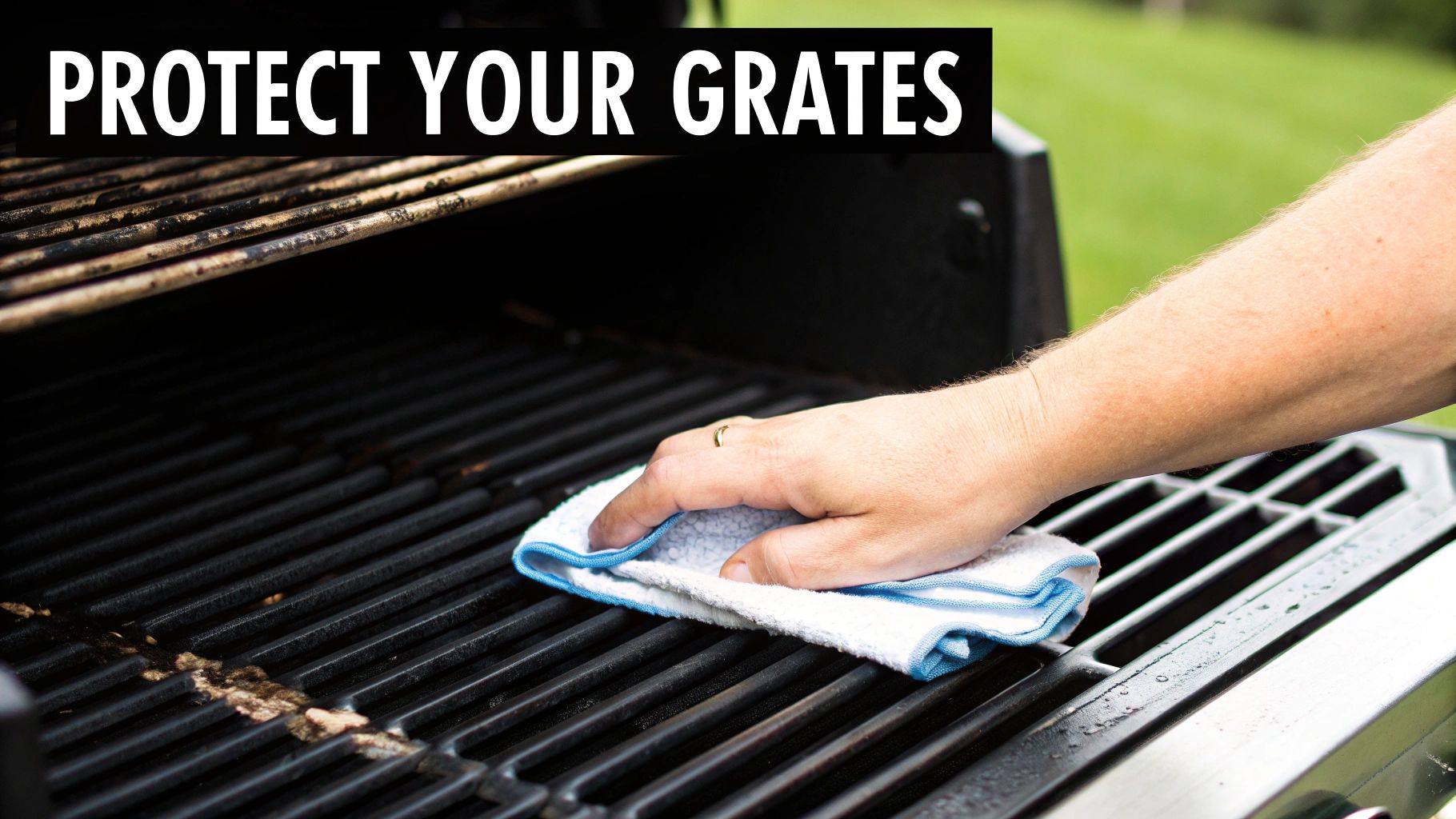
What makes stainless steel "stainless" is a super thin, invisible layer of chromium oxide that forms right on the surface. This layer actually self-heals when it's exposed to oxygen. The problem is, harsh chemicals, abrasive scrubbers like steel wool, or even just letting acidic food sit for too long can break it down. Once that barrier is gone, rust is quick to move in.
The Art of Seasoning and Oiling
One of the best ways to reinforce that protective layer is by seasoning your grates after a deep clean. And no, this isn't just for cast iron. A good seasoning creates a non-stick, rust-resistant barrier on your stainless steel, too.
Here's how we do it:
- After a thorough cleaning, make sure the grates are completely dry.
- Grab a paper towel and apply a very thin coat of a high-smoke-point oil. Canola, grapeseed, or basic vegetable oil all work great.
- Wipe off any extra oil. You want a slight sheen, but the grates shouldn't feel greasy or slick.
- Fire up the grill to a medium-high heat for about 15-20 minutes—or just until you see the oil start to smoke a little.
- Let the grates cool down. The heat will have polymerized the oil, basically baking it on to form a durable, protective coating.
This simple process should be a cornerstone of any good commercial kitchen equipment maintenance routine.
By making seasoning a standard procedure after every deep soak, you’re not just cleaning—you’re actively fortifying your restaurant equipment against the daily rigors of a commercial kitchen, significantly extending its operational life.
Special Considerations for Food Trucks and Coastal Kitchens
If you're running a mobile operation or your kitchen is anywhere near the Southern California coast, the environment itself is working against you. That salty ocean air is incredibly corrosive and will speed up rust on even the best stainless steel. This is where regular oiling becomes absolutely critical.
Industry standards are clear: your maintenance schedule has to match your environment. For kitchens in coastal areas, a weekly application of an oil-based polish provides vital protection. In fact, restaurants that stick to consistent cleaning protocols see 35-45% fewer premature grate replacements.
A quick, light wipe-down with oil at the end of every single shift creates a barrier against overnight moisture and salt. If you want to keep that shine and add another layer of defense, think about using a quality marine metal polish for stainless steel. A few extra minutes of care can save you the massive headache—and cost—of replacing rusted-out grates down the line.
The Bottom-Line Benefits of Proper Grate Care
Look, for any restaurant or food truck in Los Angeles, every single piece of kitchen gear is an investment. Treating your restaurant equipment right isn't just about passing a health inspection—it's a straight-up financial decision that hits your profitability. The few bucks you spend on cleaning supplies and the couple of minutes of labor are nothing compared to the huge bills you’ll face from neglect. This is the real business case for keeping your grates pristine.
Let's talk real-world numbers for a second. A neglected stainless steel grill doesn't just look grimy; it actively costs you money in ways you might not even realize. The most obvious expense is having to replace it way too soon, but trust me, the financial bleeding starts long before that.
The True Cost of Neglect
When you let grates get caked with thick layers of carbon, that buildup acts like an insulator. It forces your grill to work much harder and burn more gas just to hit the right cooking temperature. On top of that, your kitchen crew is wasting precious time and energy scrubbing equipment that could have been maintained with a simple daily wipe-down.
These hidden costs add up fast, but the biggest gut punch is replacement. Commercial kitchen analysts have crunched the numbers, and they found that operators who stick to a preventive cleaning routine can slash their replacement costs by about 50% over two decades. With a new set of commercial grill grates running anywhere from $400-$800 a pop, that’s a massive saving. You can dig into more data on maintaining stainless steel grills at bbqguys.com.
Investing in a consistent cleaning routine is one of the highest-return activities you can do in your kitchen. It turns a recurring liability—the cost of replacement—into a long-term, reliable asset that cranks out consistent results for your business.
At the end of the day, mastering how to clean stainless steel grill grates is a powerful financial move. It directly cuts down on:
- Replacement Costs: This is the big one, and it's easily avoided with just a little bit of care.
- Wasted Labor: Your staff can spend less time on punishing deep cleans and more time on actual prep and service.
- Energy Consumption: A clean grill heats up faster and holds its temp better, which means lower utility bills.
- Food Waste: Food cooked on clean grates cooks evenly. That means fewer mistakes, fewer redos, and better-protected margins.
When you start looking at grate maintenance through this financial lens, it becomes crystal clear. A little proactive care doesn't just protect your equipment—it directly boosts your restaurant's bottom line.
Common Questions About Grill Grate Cleaning
Even with a solid cleaning routine, you’re always going to run into specific problems in a fast-paced kitchen. Knowing how to clean stainless steel grill grates is one thing, but dealing with real-world kitchen chaos is another. Here are some quick, no-nonsense answers to the questions we hear most from Los Angeles restaurant and food truck operators.
How Often Should a Food Truck Clean Its Grates?
For one of the high-volume Los Angeles Food Trucks, cleaning isn't a weekly task—it's pretty much constant. A good "heat and scrape" is non-negotiable after every single service period to knock off fresh debris before it gets a chance to set.
At the end of the day, you need to do a more intensive hot-clean with a quality brush to get ahead of that grease buildup. Because food trucks are constantly in use and exposed to the elements, we recommend a full deep soak at least once a week. This aggressive schedule is what it takes to maintain top-tier hygiene and stop stubborn carbon from messing with your food quality.
Can You Use Oven Cleaner on Stainless Steel Grates?
This is a big one. It's strongly recommended to avoid standard oven cleaners on your commercial stainless steel grates. The temptation is there, but many of these products are loaded with extremely harsh chemicals that aren't food-safe and can do real damage to the steel.
Those caustic agents can strip away the passive chromium oxide layer that protects stainless steel from corrosion. The result? Permanent discoloration, pitting, and—ironically—rust. You'll end up causing the very problem you're trying to prevent. Always stick to designated stainless steel cleaners or the proven baking soda and vinegar method for your deep soaks.
Removing Stubborn Burnt-On Food
We've all been there. You've got that tough, carbonized gunk that looks like it's been welded right onto the metal. Your first line of attack should always be the basic "heat and scrape" method.
If that doesn't cut it, the next move is to make a thick paste with baking soda and a little water. Slather this paste directly onto the problem spots and just let it sit for at least 30 minutes. The alkaline nature of the baking soda will get to work breaking down that burnt-on mess.
Once it's had time to work its magic, grab a brass brush or a non-abrasive scouring pad and scrub the area vigorously. For a complete grate reset, nothing beats an overnight soak in a hot water and baking soda solution. It will loosen even the most baked-on grime, making it easy to scrub everything clean the next morning.
For all the essential LA Restaurant Equipment your kitchen needs to stay ahead in the competitive Southern California food scene, from high-performance charbroilers to the cleaning supplies that keep them running, visit us at https://larestaurantequipment.com.