

That sudden grinding, buzzing, or rattling from your commercial fridge isn't just background noise—it's an alarm bell. For any bustling Los Angeles kitchen, from a Los Angeles Pizza joint to a busy Los Angeles Food Truck, a fridge making loud noise can mean spoiled inventory and a screeching halt to service. Figuring out what those sounds mean is your first, most critical step to getting things back on track with your restaurant equipment.
Why Is Your Commercial Fridge Suddenly So Loud?
Let's be real, a quiet kitchen is a rare thing, and commercial refrigeration units are never completely silent. The real skill is learning to tell the difference between the normal hum of operation and a sound that's screaming for your attention. A faint buzz is probably just the compressor kicking on, but a sudden, sharp, or grinding noise? That's almost always a sign that something's wrong and needs a closer look.
Ignoring these warning signs during a busy dinner rush is a recipe for disaster. Before you panic, it helps to get a handle on what's normal by understanding normal refrigerator sounds and noises. This will help you distinguish between the everyday gurgles of refrigerant and the death rattle of a failing part.
To help you quickly diagnose the issue in your LA kitchen, here's a quick-reference chart for your restaurant equipment.
Common Fridge Noises and What They Mean
| Type of Noise | Potential Cause | Urgency Level |
|---|---|---|
| Grinding or Whirring | Evaporator fan hitting ice buildup, or a failing fan motor. | High - Can lead to cooling failure. |
| Loud Buzzing/Vibrating | Obstructed condenser fan, failing fan motor, or compressor issue. | High - Overheating can cause major damage. |
| Rattling or Clanking | Loose drain pan, fridge vibrating against a wall, or loose parts. | Low to Medium - Often a simple fix, but investigate. |
| Loud, Persistent Humming | Compressor is working too hard or is about to fail. | High - This is the heart of your unit; don't ignore it. |
| Clicking | Compressor relay trying to start, but failing. | High - Your fridge isn't cooling if the compressor can't run. |
This table should give you a solid starting point, but let's dive deeper into the usual suspects.
Common Sources of Loud Refrigerator Noises
I've seen it all over the years, and when a unit starts making a racket, the problem usually traces back to one of a few key components. Knowing what to look for can save you a ton of time.
- The Condenser Fan: This is a big one. The fan cools the condenser coils, and if it gets clogged with kitchen grease and dust (a common problem), or the motor is dying, you'll hear a loud buzzing or vibrating.
- The Evaporator Fan: This one is inside the freezer, circulating the cold air. If you've got ice building up, the fan blades can start hitting it, which makes a terrible grinding or whirring sound.
- The Compressor: This is the heart of your whole system. A compressor on its last legs can make a very loud, constant hum. You might also hear a sharp clicking noise as it struggles—and fails—to turn on.
- Loose Components: Sometimes, you get lucky and the fix is simple. A rattling noise could be nothing more than a drain pan that’s shifted out of place, or the whole unit vibrating against another piece of equipment.
Quick tip: Don't forget the basics. The size and placement of your unit can absolutely contribute to noise. An under-counter fridge that isn't perfectly level or is crammed in without enough airflow will vibrate and run louder. We cover this in more detail in our guide to selecting the right under counter fridge size.
How to Pinpoint the Source of the Noise
When your commercial fridge starts making a racket, your first job is to play detective. Before you can even think about a fix, you have to get in there and find out exactly where that sound is coming from. Rushing this step almost always leads to wasted time chasing the wrong part.
First things first: safely unplug the unit. This is non-negotiable. With the power cut, just listen as the sounds die down. Sometimes, the component that makes the last peep is your culprit. Once it's quiet, get close and listen to a few key zones—the back, down near the floor, and inside the main compartment.
Listening to Key Components
Different parts of a fridge make very distinct sounds when they’re in trouble. The goal here is to isolate the noise to one specific area, which drastically narrows down what could be wrong.
- Inside the Fridge (Evaporator Fan): Pop the door open and have a listen. If you hear a grinding or a whirring that gets louder, especially when you open the freezer door, it's often the evaporator fan. Usually, this just means the fan blades are smacking against a chunk of ice buildup.
- At the Back/Bottom (Condenser Fan & Compressor): This is where the heavy machinery lives. A buzzing or heavy vibration from this area could be the condenser fan, which is in charge of cooling the compressor. In a busy kitchen serving Mexican Food, this fan can get caked with dust and grease in no time, forcing it to work way too hard.
- A Loud Hum or Click: If you hear a loud, persistent hum or a sharp click followed by silence, that often points to the compressor itself. That's a more serious issue.
- General Rattling: Sometimes, the problem is much simpler. A rattling sound might just be a loose drain pan at the bottom of the unit. I've also seen it be nothing more than the whole fridge vibrating against a wall or another piece of kitchen equipment.
Take the popular Atosa undercounter units, which you see all over LA's Los Angeles Food Trucks and Los Angeles Pizza shops. Their entire cooling system is crammed into a small side or bottom compartment. This means the compressor and condenser fan are right next to each other, so you’ll need to listen really carefully to tell which one is making the noise.
In the high-stakes world of Southern California restaurants, a fridge making loud noises isn't just an annoyance—it's a potential disaster for your bottom line. Interestingly, the raw decibel level isn't always what matters most. For many high-end refrigerators, even low-intensity sounds like a 'whiney' compressor hum can be highly objectionable, leading to the development of complex sound preference algorithms to better predict customer satisfaction. You can discover more insights on refrigerator sound quality.
This flowchart breaks down the process for figuring out what common fridge noises like grinding, buzzing, and rattling really mean.
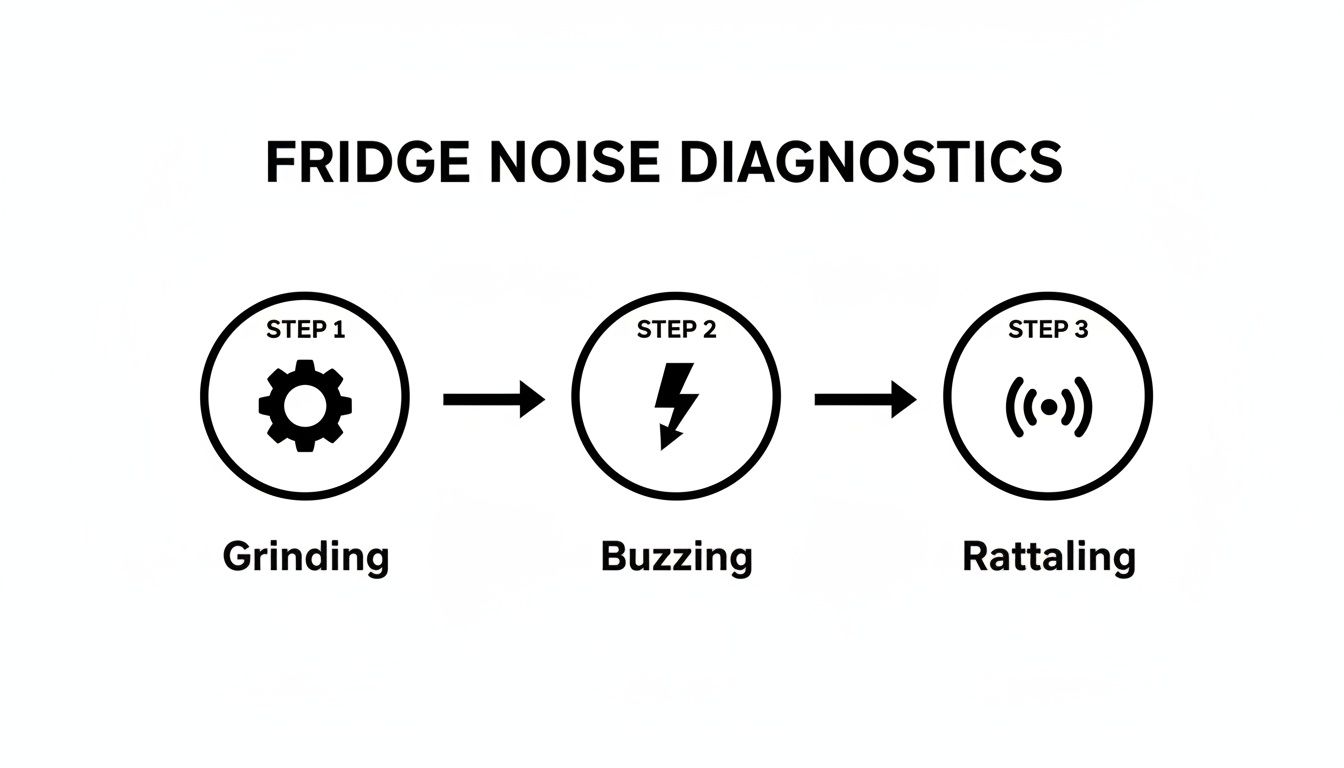
By following a logical flow, you can quickly move from hearing a sound to pinpointing the mechanical source. This kind of systematic approach saves a ton of valuable time in the middle of a busy service.
Alright, you’ve done the sleuthing and have a good hunch about what’s making all that racket. Now it's time to roll up your sleeves and get to work. The good news is, a lot of the reasons a fridge is making loud noise don't mean a huge repair bill is coming your way. Often, it just takes a bit of elbow grease and knowing where to look.
Let's dive into some of the most common fixes we see in busy Los Angeles restaurant kitchens.
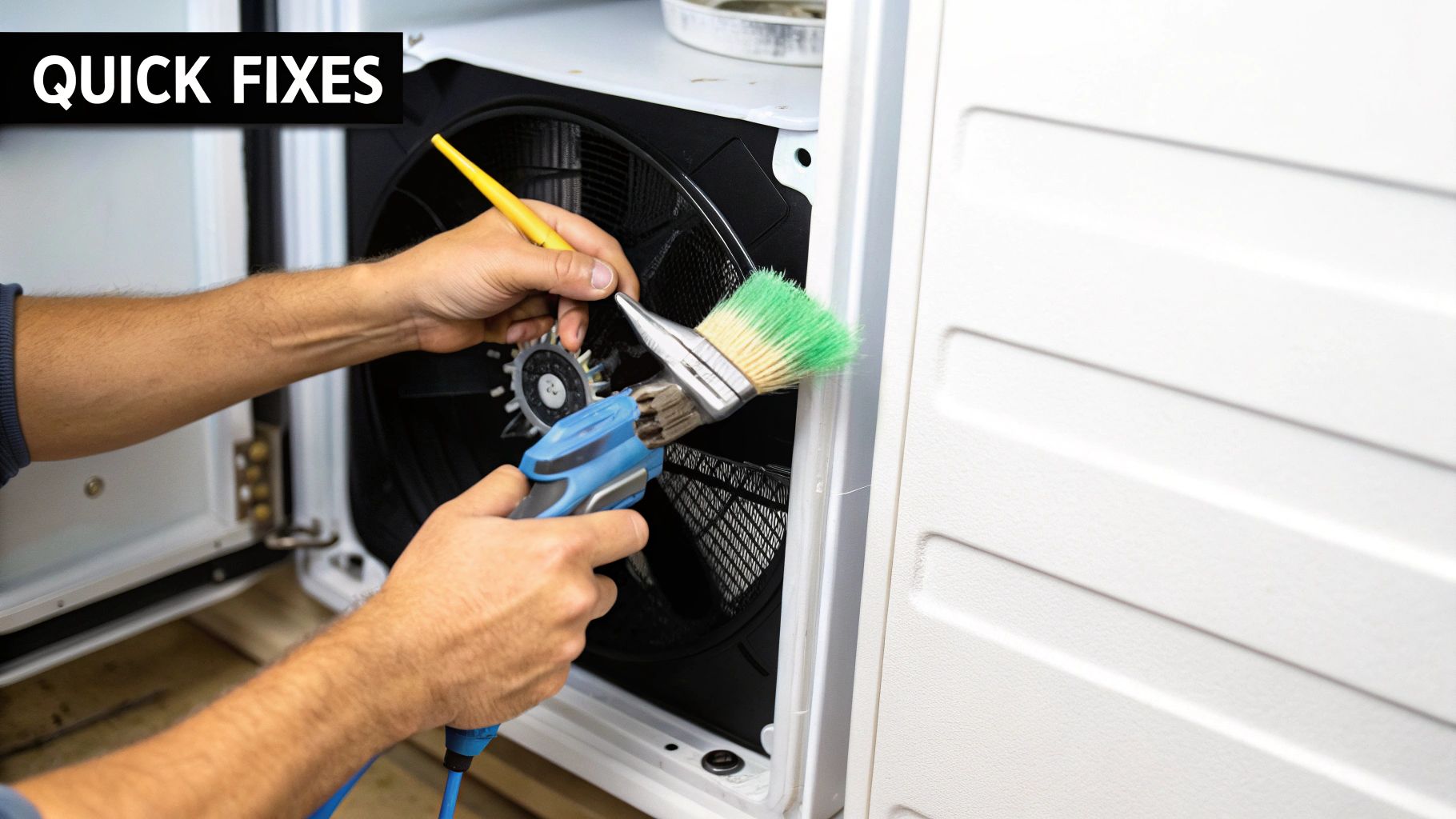
Most of these fixes are surprisingly simple—think tightening a loose screw or clearing out some built-up gunk. You can usually get the job done with basic tools like a screwdriver and a brush.
Silencing Rattles and Vibrations
Rattling is probably the number one noise complaint we hear, and thankfully, it’s often the easiest to solve. Before you start thinking the worst, check these simple things first.
A very common culprit is the drain pan, which is supposed to sit quietly under the unit and catch condensation. Over time, it can wiggle out of place and start vibrating against the compressor or the fridge's frame. A quick nudge back into position can stop the noise in its tracks.
We see this all the time with food trucks. A Mexican Food truck operator in LA might pull up to a spot, and suddenly their prep table fridge starts rattling like crazy. More often than not, it's just parked on a slight incline. Shimming the legs to get it level or sliding a small rubber mat underneath is usually all it takes to quiet it down.
Tackling Fan Noises
If you've pinned the noise on a fan, the next step is figuring out why it's so loud. Is it an ice jam or just a mechanical issue?
- Ice Buildup on the Evaporator Fan: Hearing a grinding or scraping sound from deep inside the freezer? The fan blades are probably smacking against a chunk of ice. The immediate fix is to unplug the unit and let everything thaw out completely. If that ice comes back fast, you might have a problem with the defrost system, which is a trickier repair.
- Dirty Condenser Fan: This fan is usually at the back or bottom of your fridge, pulling air over the condenser coils. In a commercial kitchen, it’s a magnet for grease, dust, and all sorts of grime. Unplug the fridge, get that back panel off, and give the fan blades a thorough cleaning with a stiff brush and a vacuum. A clean fan isn't just quieter—it's way more efficient.
A buzzing fan might not seem like a big deal, but it's a warning sign that your equipment is overworking. Ignoring it doesn't just mean a louder kitchen; it can cause the compressor to overheat, putting you at risk for a much more expensive breakdown.
If you're trying to pinpoint specific sounds and want more detailed DIY steps, you can check out this comprehensive guide on fridge freezer noise for some extra insights.
Addressing Compressor and Component Issues
While a totally failed compressor is a job for a pro, you can handle some of the noises that come from that area. A loud, persistent hum or buzz from the back of the unit often points to dirty condenser coils.
Just like the fan, these coils get caked with grime, which makes the compressor work way too hard to cool the refrigerant. A good cleaning can take a huge load off the system and quiet things down significantly. For most restaurants, we recommend cleaning these coils every 90 days.
One last thing to check: take a look at the compressor's mounting bolts. The constant vibration of the unit can work them loose over time, causing the whole component to rattle. Grab a wrench and tighten those bolts down—it’s a simple fix that can make a huge difference.
Preventative Maintenance to Keep Your Kitchen Quiet
Fixing a noisy fridge is one thing, but making sure the racket never starts in the first place? That’s the real win. The smartest strategy for keeping your commercial refrigeration running quietly and efficiently is proactive maintenance. It’s the secret weapon that helps your Los Angeles restaurant avoid those disruptive, mood-killing equipment failures.
Think of it as a small investment of time that pays off big. You're not just dodging annoying noises; you're boosting energy efficiency and trimming down your utility bills. A well-maintained unit simply doesn't have to work as hard, which means a quieter kitchen and more money staying in your pocket.
Build a Simple Maintenance Schedule
You don't need some complex, multi-page plan to keep your Atosa freezers or chef bases in prime condition. A simple, consistent routine is what gets the job done. Sticking to a schedule is what prevents that slow, sneaky buildup of dust and grime that so often leads to a fridge making loud noise.
Here are the essential tasks to get on your calendar:
- Quarterly Condenser Coil Cleaning: Honestly, this is the most important thing you can do. These coils, usually at the back or bottom, are responsible for releasing heat. In a busy kitchen, they become magnets for grease and dust, forcing the compressor to overwork and create that familiar loud hum. A solid cleaning every 90 days is non-negotiable.
- Monthly Door Seal Inspection: Take a minute to check the gaskets around the doors. Are they cracked, torn, or brittle? A bad seal lets cold air pour out, forcing the unit to run constantly just to stay cool. That means more noise and higher energy bills.
- Weekly Ventilation Check: Make sure your refrigerator can breathe. It needs at least a few inches of clear space on all sides and the back. When boxes or other equipment block airflow, you're just trapping heat and making the whole system strain.
For a deeper dive into these tasks and more, we've laid it all out in our complete guide on commercial kitchen equipment maintenance.
The noise level in a commercial kitchen really matters. While your fridge at home might hum along at a quiet 50 dBA, units in busy LA restaurants can easily hit 55-70 dBA, creating a pretty stressful environment. In contrast, modern, energy-efficient Atosa freezers can operate at a much quieter 38-42 dBA. That's a 25-35% drop in operational noise and a big cut in yearly power use. Considering millions of U.S. workers are exposed to hazardous noise levels, investing in quieter, well-maintained equipment is a huge plus for your team's well-being.
The Long-Term Benefits of Quiet Operation
Staying on top of maintenance does way more than just stop a buzzing fan or a rattling panel. It has a direct, positive impact on your kitchen's productivity and, ultimately, your bottom line.
A quiet, efficient kitchen is simply a less stressful place to work. It allows your staff to focus on turning out incredible food instead of being distracted by a loud, groaning freezer in the corner. By following these simple preventative steps, you're not just solving a problem—you're investing in a more peaceful and productive workspace for your Los Angeles Food Truck or restaurant.
Knowing When to Call a Pro or Upgrade Your Equipment
Look, I'm all for rolling up your sleeves and fixing things yourself. A lot of the time, a fridge making loud noise is a pretty straightforward fix. But you have to know when to throw in the towel. Pushing a failing unit too far can lead to a complete meltdown right in the middle of a dinner rush, and that's a nightmare nobody wants.
Knowing when to step back and call for professional help—or even start shopping for new restaurant equipment—is a critical call for any restaurant owner.
There are certain sounds that are basically screaming, "This is not a DIY job!" If you hear a loud, relentless buzzing that just won't quit, or a sharp click from the compressor followed by dead silence, that's a huge red flag. It almost always points to a failing compressor, and that’s a job for a certified technician who can handle refrigerants and complex electrical work. Don't mess with that yourself.
Weighing the Cost of Repair vs. Replacement
When a technician hands you a hefty repair quote, it's the perfect time to pause and really think about your next move. Is sinking more money into an old, inefficient unit that's already been patched up a few times the smart play? It might be costing you more than you realize in high energy bills and the constant stress of waiting for the next breakdown.
Think about the noise level in your business. A back bar cooler in your Orange County bar groaning away at 70 dBA is louder than freeway traffic. That's a surefire way to kill the mood and get complaints.
A typical refrigerator should hum along at about 50 dBA, but a bad fan or a malfunctioning ice maker can easily spike that noise from 60-85 dBA. Research has even shown that the sound of a refrigerator starting up becomes annoying to most people at just 33 dBA—a level that gets blown past in a busy kitchen. You can learn more about common noise level impacts to see how it might be affecting your space.
An upgrade might feel like a big expense, but it solves the noise problem for good.
Investing in a new, modern refrigerator isn't just about getting a quieter kitchen. It's about reliability. You eliminate the constant stress of wondering if your old unit will make it through another Friday night rush, protecting your valuable inventory and your peace of mind.
The Financial Sense of Upgrading
A new commercial refrigerator isn’t just an expense; it’s an investment in your whole operation. Modern units are engineered to be way quieter and much more energy-efficient, which means you'll see savings on your utility bills right away.
Here’s a quick breakdown to help you decide:
| Factor | Repairing an Old Unit | Upgrading to a New Unit |
|---|---|---|
| Upfront Cost | Lower (for a single repair) | Higher |
| Long-Term Costs | High energy bills, risk of future breakdowns | Lower energy bills, full warranty coverage |
| Noise Level | Often remains high | Significantly quieter operation |
| Reliability | Uncertain, especially with older parts | High, with new components and technology |
By choosing to upgrade, you’re buying operational stability. You're not just kicking the can down the road; you're solving the problem. To see just how much modern units can affect your expenses, check out our guide on energy-efficient commercial refrigerators. It’s a move that prevents future headaches and sets you up for a smoother, quieter, and more profitable business.
Your Questions About Noisy Refrigerators, Answered
The kitchen in a busy Los Angeles restaurant is a symphony of controlled chaos, but certain sounds just don't belong. When your commercial fridge starts making a racket, you need straight answers, and you need them fast. Let's tackle the most common questions we hear from restaurant and food truck owners about a fridge making a loud noise.
Is a Brand New Commercial Fridge Supposed to Be Loud?
Honestly, a brand-new unit, especially a solid one from a brand like Atosa, should be pretty quiet. You'll hear the normal stuff—the compressor kicking on with a low hum, the gentle whir of fans, maybe some gurgling as the refrigerant does its thing. These sounds usually hover around 40-50 dBA, which is surprisingly quiet for a piece of commercial-grade machinery.
What you shouldn't hear is loud banging, grinding, or a high-pitched squeal right out of the box. That’s a major red flag. It could mean it was damaged during shipping or something went wrong with the installation, like the unit isn't sitting level. Before you pick up the phone, do a quick check to make sure all the shipping materials and zip ties were removed from the fans and that the fridge is stable.
If the noise continues after that, don't hesitate. Call your supplier right away and get that warranty claim started.
How Can I Temporarily Quiet a Loud Fridge During Service Hours?
Picture this: it's the middle of the dinner rush, and your fridge suddenly sounds like a freight train. You don't have time for a full diagnostic, but you need that noise to stop now. A quick fix can be a real lifesaver.
First, check for simple vibration. Gently push on the sides of the unit. Does the noise change or stop? If it does, you can often wedge a sturdy piece of cardboard between the fridge and a wall or another piece of equipment. It’s not a permanent solution, but it’ll dampen the noise.
Also, take a quick look around the unit. Make sure no pans, boxes, or other items are leaning against it. If you hear a rattling from the back, it might just be the drain pan has jiggled out of place—an easy fix you can handle in seconds.
Just remember, these are band-aids. They’ll get you through a shift, but you absolutely have to find and fix the real problem once service is over. Ignoring it is just asking for a bigger, more expensive headache down the line.
Can a Dirty Condenser Coil Really Make a Fridge That Loud?
One hundred percent, yes. This is easily one of the most common—and overlooked—reasons for a noisy commercial fridge. Your condenser coil’s whole job is to get rid of heat. In a busy L.A. kitchen, it doesn't take long for it to get caked in grease, dust, and general grime.
When that coil is clogged, the system can't release heat efficiently. This puts your compressor into overdrive, forcing it to work much harder and run longer just to maintain temperature. That intense strain is exactly what creates that loud, non-stop humming or buzzing you're hearing.
Not only is it loud, but it's also driving up your energy bill. Making sure those condenser coils get cleaned regularly is probably the single best piece of maintenance you can do to keep your fridge running quietly and efficiently.
If your equipment issues go beyond a simple fix, LA Restaurant Equipment provides Southern California restaurants with reliable, warranty-backed commercial refrigeration at warehouse-direct prices. From Atosa freezers to pizza prep tables, we offer fast, free shipping and flexible financing to keep your kitchen running smoothly. https://larestaurantequipment.com