

Choosing the right under counter fridge size is the first step to unlocking your kitchen's true potential, especially for any Los Angeles business, from a booming pizza spot to a nimble food truck. Most of these units are smartly designed to slide right under a standard 36-inch countertop, but nailing the fit is about more than just one number. It’s a delicate balance of height, width, and depth that guarantees a perfect, built-in look.
For any Los Angeles restaurant, from a packed pizza joint in the Valley to a nimble food truck serving Orange County, getting this right from the start is non-negotiable. Every square inch is prime real estate. This guide will cover everything from standard dimensions for restaurant equipment to the specific needs of LA's diverse food scene, including Mexican food hotspots, pizza kitchens, and food trucks.
Getting the Measure of Standard Undercounter Fridge Dimensions
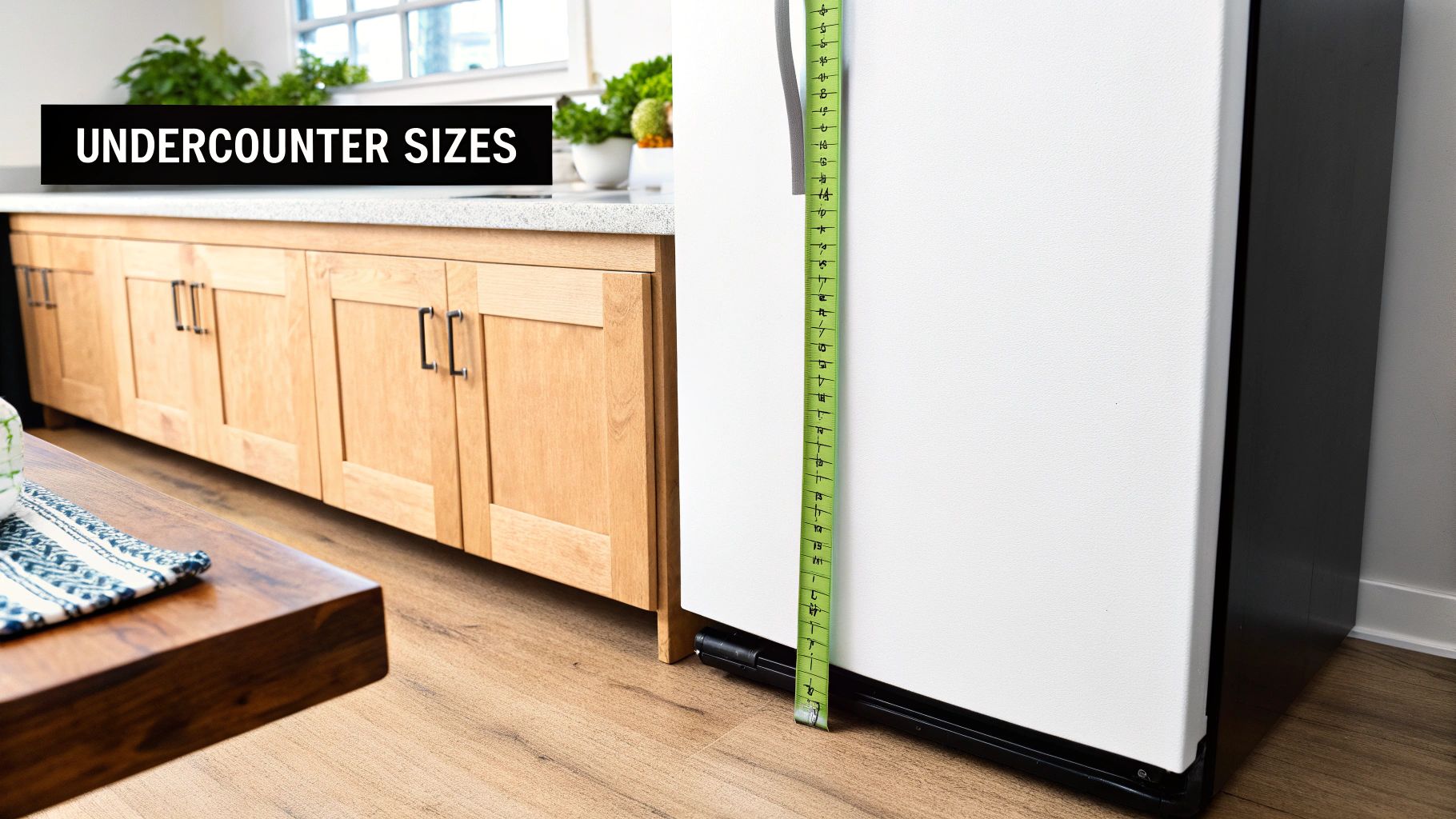
Think of picking an undercounter fridge like finding the last piece of a puzzle for your commercial kitchen. For it to slot in perfectly, all three dimensions—height, width, and depth—have to match the space you’ve carved out. Get this right, and you'll sidestep costly installation headaches and ensure your new gear runs like a dream from day one.
These workhorse units are all about space efficiency, which is why they’re a go-to for modern kitchens and demanding commercial spots all over Southern California. They let you pop in extra refrigeration exactly where you need it most, whether that's at a prep station in a Mexican kitchen or tucked behind the bar at a bustling LA nightclub. For LA's iconic food trucks, this kind of efficient restaurant equipment is not just helpful—it's essential.
The Three Key Measurements That Matter
To make a smart buy, you first have to understand the typical size ranges. Each dimension plays a specific role in how the unit fits into your space and, just as importantly, your daily workflow.
- Height: This is the make-or-break measurement for achieving that clean, built-in look. Most units are crafted to slip under standard counters for a flush, professional appearance.
- Width: This number defines the unit's footprint and is a good indicator of its internal storage capacity. A wider fridge holds more, but it also eats up more floor space.
- Depth: This dimension is all about making sure the fridge lines up with your cabinetry. A counter-depth model will sit perfectly flush, keeping it from jutting out and snagging foot traffic—an absolute must in tight quarters like a food truck.
For a quick overview, here's a look at the typical dimensions you'll encounter when shopping for a commercial undercounter refrigerator.
Standard Undercounter Refrigerator Size Ranges
| Dimension | Common Range (Inches) | Common Range (Centimeters) | Purpose |
|---|---|---|---|
| Height | 32" – 36" | 81 – 91 cm | Designed to fit snugly under standard-height commercial counters for a seamless look. |
| Width | 18" – 24" | 46 – 61 cm | Offers a balance between storage capacity and a compact footprint. |
| Depth | 22" – 24" | 56 – 61 cm | Allows the unit to sit flush with surrounding cabinetry, preventing obstruction. |
These standard sizes weren't picked at random; they were developed to meet the real-world demands of the foodservice industry. As you can see, most models hover between 32 to 36 inches tall, with widths from 18 to 24 inches and depths around 22 to 24 inches.
For any Los Angeles restaurant owner, mastering these dimensions is the key to unlocking hidden efficiency. A properly sized undercounter fridge doesn’t just store ingredients; it optimizes your entire kitchen layout, putting essential items right where your staff needs them.
Ultimately, taking the time to measure your space before you start browsing will pay off. A clear idea of these dimensions will empower you to confidently explore the vast world of undercounter refrigerator options and pick the one that’s a perfect match for your business.
How to Measure Your Space for a Perfect Fit
There's nothing worse than the thud of a new undercounter refrigerator arriving, only to find it won't slide into place. It’s a costly, frustrating mistake that can bring your entire kitchen workflow to a screeching halt. A perfect fit is about more than just the basic under counter fridge size; it’s about seeing the little details that can trip up an installation.
Think of this as mapping out your new unit's home, not just taking a few quick measurements. A few extra minutes with a tape measure now will save you from the logistical nightmare of a return and the financial hit of downtime later. Let's walk through how the pros get it right every time.
The Foundational Three Measurements
Before you get bogged down in the details, start with the three core numbers. Grab a reliable tape measure and get a feel for the space.
- Measure the Height: Get three height readings—one on the left, one in the middle, and one on the right. Floors in busy Los Angeles kitchens are almost never perfectly level. Always, and I mean always, use the shortest measurement. That's your true height.
- Measure the Width: Do the same for the width. Measure across the top, middle, and bottom of the opening. Again, you’ll want to use the narrowest measurement to guarantee the unit will slide in smoothly.
- Measure the Depth: Check the depth from the back wall out to the front edge of the countertops next to it. This is key to making sure your new fridge sits flush and doesn't stick out, creating a snag point in a busy walkway.
These numbers give you the basic lay of the land. But to really nail the installation, you need to look closer.
Accounting for Real-World Obstructions
A tape measure can’t see everything. Your eyes need to spot the little things that can steal precious inches from your opening and turn a simple install into a full-blown crisis.
- Baseboards and Trim: Those decorative bits of wood along the floor? They reduce your usable width. Make sure you’re measuring from the trim, not the wall behind it.
- Plumbing and Electrical Outlets: Take a peek in the back. Note exactly where any pipes or outlets are located. You need to be sure the fridge's depth won't clash with them and that the power cord can actually reach the socket.
- Uneven Walls and Floors: Like we said, always trust the smallest measurement. An older building in downtown LA might have settled in ways you can't see, creating subtle tapers in the walls or dips in the floor.
The golden rule of measurement is simple: Always measure twice and order once. Double-checking your numbers before you click "buy" is the best insurance against a massive operational headache.
The Critical Role of Ventilation Space
This is the step everyone forgets. Your refrigerator's compressor is the heart of the unit, and it generates a lot of heat keeping everything cool. Without proper airflow, that heat gets trapped, forcing the compressor to work overtime. The result? Higher energy bills and a much shorter lifespan for your equipment.
Think of it as giving your fridge "room to breathe." Squeezing a unit into a tight cabinet without ventilation is like asking a marathon runner to sprint while holding their breath—it's a recipe for burnout.
Most manufacturers call for at least 1-2 inches of clearance at the back and on the sides for proper airflow. Front-venting models are the exception, built for true zero-clearance installs. But for anything else, you absolutely must factor these extra inches into your initial measurements. It’s a non-negotiable part of a functional setup, much like the principles we cover in our guide to commercial kitchen layout and design.
Connecting Fridge Size to Your Menu Needs
An undercounter fridge's outer dimensions tell you if it will physically fit in your kitchen, but its internal capacity—that’s the cubic footage—tells you how hard it can work for you. This is where the abstract idea of under counter fridge size gets real. The goal is to perfectly match that internal volume to the non-stop demands of your menu, whether you're serving Mexican food, pizza, or street tacos from a food truck.
Think of it this way: the fridge's metal shell is the parking spot, but the cubic footage is how many delivery trucks you can cram inside. For any busy LA restaurant, picking the right capacity is the difference between a seamless, profitable service and a chaotic scramble for ingredients mid-rush.
First things first, you have to measure your actual space. It's a simple but crucial step to make sure your new unit has a home. This flowchart breaks it down into the three essential measurements: height, width, and depth.
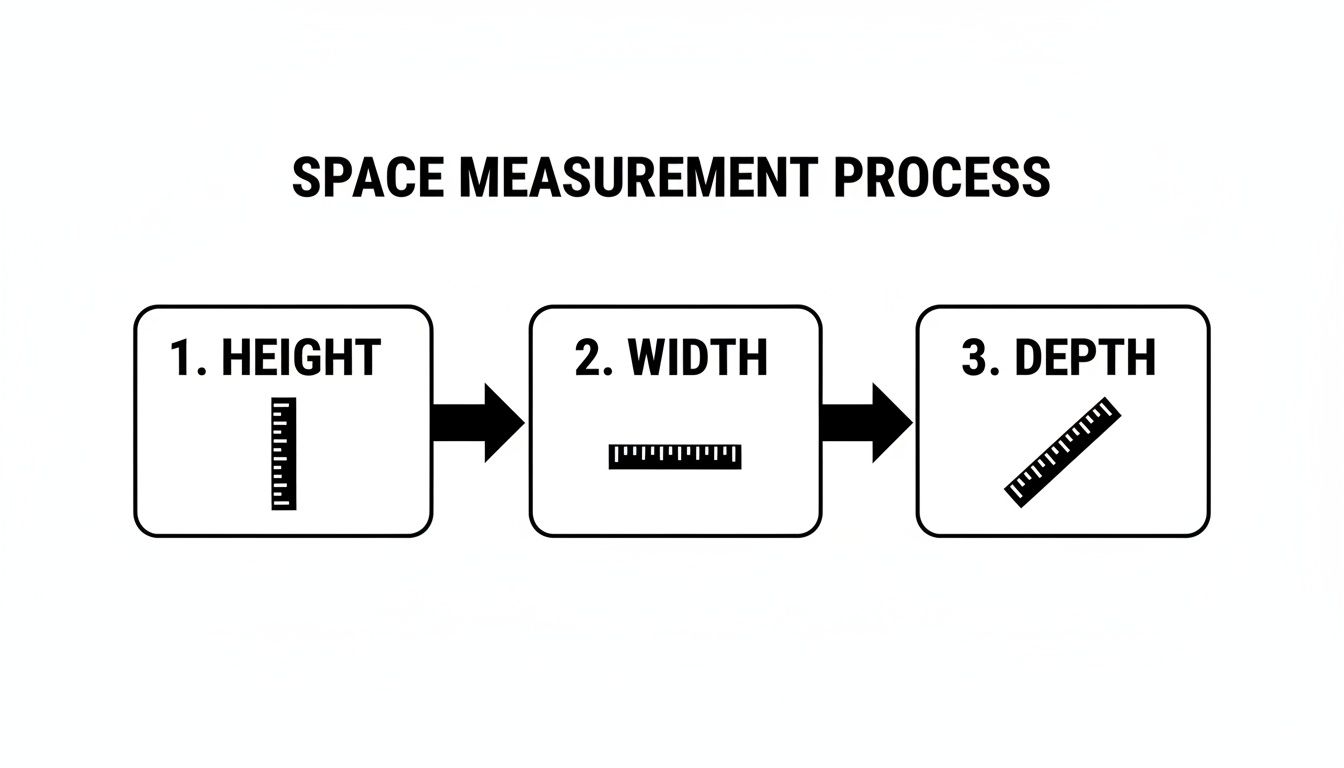
This really drives home that a perfect installation starts with a tape measure. Once you have those numbers, you can start thinking about how much you need to store. Let's look at how this plays out for different businesses here in Southern California.
Sizing for a Bustling Mexican Restaurant
Picture a slammed Mexican restaurant in East LA, known for its fresh guacamole, salsas, and marinated meats. When the dinner rush hits, the line cooks need constant, easy access to all their prepped ingredients. A small fridge would be a total bottleneck, forcing staff to run to the walk-in every five minutes and slowing ticket times to a crawl.
In this kitchen, a larger capacity unit is a must-have. A model with 8 to 12 cubic feet of space would be perfect. It can hold multiple third-pans of pico de gallo, tubs of crema, and trays of carne asada, all organized and right where you need them. It’s the kind of capacity that supports a high-volume Mexican food menu without taking up the real estate of a full-sized fridge.
Capacity Needs for a Los Angeles Pizza Kitchen
Now, let's head over to a gourmet pizza joint in Downtown Los Angeles. Their cold storage is all about bulky items: huge blocks of mozzarella, pans of proofing dough, and big containers of tomato sauce. They might not have as many different ingredients as the Mexican restaurant, but what they have is large.
For an operation like this, shelf depth and how you can adjust them are just as critical as the total cubic footage. A 24-inch wide undercounter model packing 6 to 9 cubic feet of space with strong, adjustable shelves would be a game-changer. It lets the kitchen lay full-size dough trays flat and stack cheese blocks without wasting an inch, keeping the pizza station humming.
The Los Angeles Food Truck Equation: Every Inch Counts
Out on the streets of Orange County, a Los Angeles food truck lives and dies by its use of space. Every single inch is prime real estate. The under counter fridge size has to deliver maximum storage in the absolute smallest footprint. Efficiency isn't just a nice-to-have; it's a survival tactic.
A compact, high-efficiency unit is the only real option here. Food truck pros almost always go for models in the 4 to 7 cubic feet range. This is just right for holding the day's essentials—drinks, sauces, pre-portioned meats, and produce—without eating up precious prep or standing room. It's all about just-in-time inventory, restocking daily to make that limited capacity work.
Your menu is the blueprint for your kitchen's needs. Analyze your top-selling items and their core ingredients to determine the ideal refrigeration capacity. This menu-first approach ensures your restaurant equipment actively supports your profitability.
The market data backs this up, showing a clear preference for models that hit that sweet spot between storage and space. The 5-10 cubic feet (cu. ft.) range owns the largest market share at around 50%, because it’s the perfect balance for everything from small commercial kitchens to busy bars. The smaller units under 5 cu. ft. fill niche, space-critical roles, while anything over 10 cu. ft. is for serious high-volume work. You can discover more insights about undercounter refrigerator market trends.
Ultimately, picking the right size is all about visualizing your daily grind. When you connect the dots between your menu, your prep flow, and a unit’s cubic capacity, you can choose an undercounter refrigerator that doesn’t just fit your space—it elevates your entire operation.
Essential Installation and Ventilation Insights
Picking out the right size for your undercounter fridge is really just the first step. If you want that investment to pay off for years to come, you have to nail the installation and ventilation. This is where so many operators in Los Angeles go wrong, leading to equipment dying an early death and those dreaded emergency service calls.
The absolute biggest piece of the puzzle is ventilation. Think of your refrigerator’s compressor like a car engine—it works hard and throws off a ton of heat. An engine needs a radiator and airflow to keep from overheating, and your fridge needs room to breathe for the same reason. Suffocate it, and the compressor will be forced to work overtime, sending your energy bills through the roof before it eventually burns out.
Front-Venting vs. Rear-Venting Models
You absolutely have to know the difference between front-venting and rear-venting models before you install anything. This one detail dictates exactly where and how you can place the unit.
-
Front-Venting Refrigerators: These are the champions of tight spaces. They pull in cool air and push out hot exhaust through grilles right on the front, usually near the floor. This design is what allows for a true, seamless "built-in" look with zero clearance needed on the sides or back. They are perfect for squeezing into a packed food truck or creating a fully integrated back bar.
-
Rear-Venting Refrigerators: These units, often found in freestanding designs, get rid of heat from the back panel. They absolutely must have clearance space to work right. Boxing one of these into a tight cabinet without any airflow is like putting it in a chokehold; it’s going to struggle, overheat, and fail.
Enclosing a rear-venting unit is easily one of the most common and damaging mistakes we see. Always, always check the manufacturer’s spec sheet to confirm the ventilation type before you lock in your kitchen layout.
Nailing Your Clearance and Electrical Needs
Once you know how your unit breathes, you can plan for the space it needs. Proper clearance isn't just a friendly suggestion; it's a non-negotiable requirement for the health of your equipment.
For most rear-venting models, a good rule of thumb is to leave at least 2-4 inches of clearance at the back and another 1-2 inches on each side. This creates a natural channel for cool air to be drawn in and hot air to escape, keeping the compressor from melting down. When you’re measuring your spot, make sure to account for these gaps.
Just as critical is the electrical setup. Commercial refrigerators are powerful machines that need a stable, clean source of power to protect their internal components.
Never, ever plug a commercial undercounter refrigerator into a shared power strip or an overloaded outlet. It must be connected to a dedicated electrical circuit. This prevents the voltage drops that can fry a compressor and guarantees the unit gets the consistent power it needs to last.
This simple step is a must for any professional kitchen, whether it's a high-end Mexican restaurant in Los Angeles or a small pizza joint down in Orange County.
Getting ventilation and power right has a direct impact on your bottom line. A unit that runs efficiently uses less electricity, which is something every business owner can appreciate. For more tips on cutting down operational costs, check out our guide on how to select energy-efficient commercial refrigerators. By following these essential installation rules, you’ll set your equipment up for success from day one.
Choosing the Right Model for Your LA Business
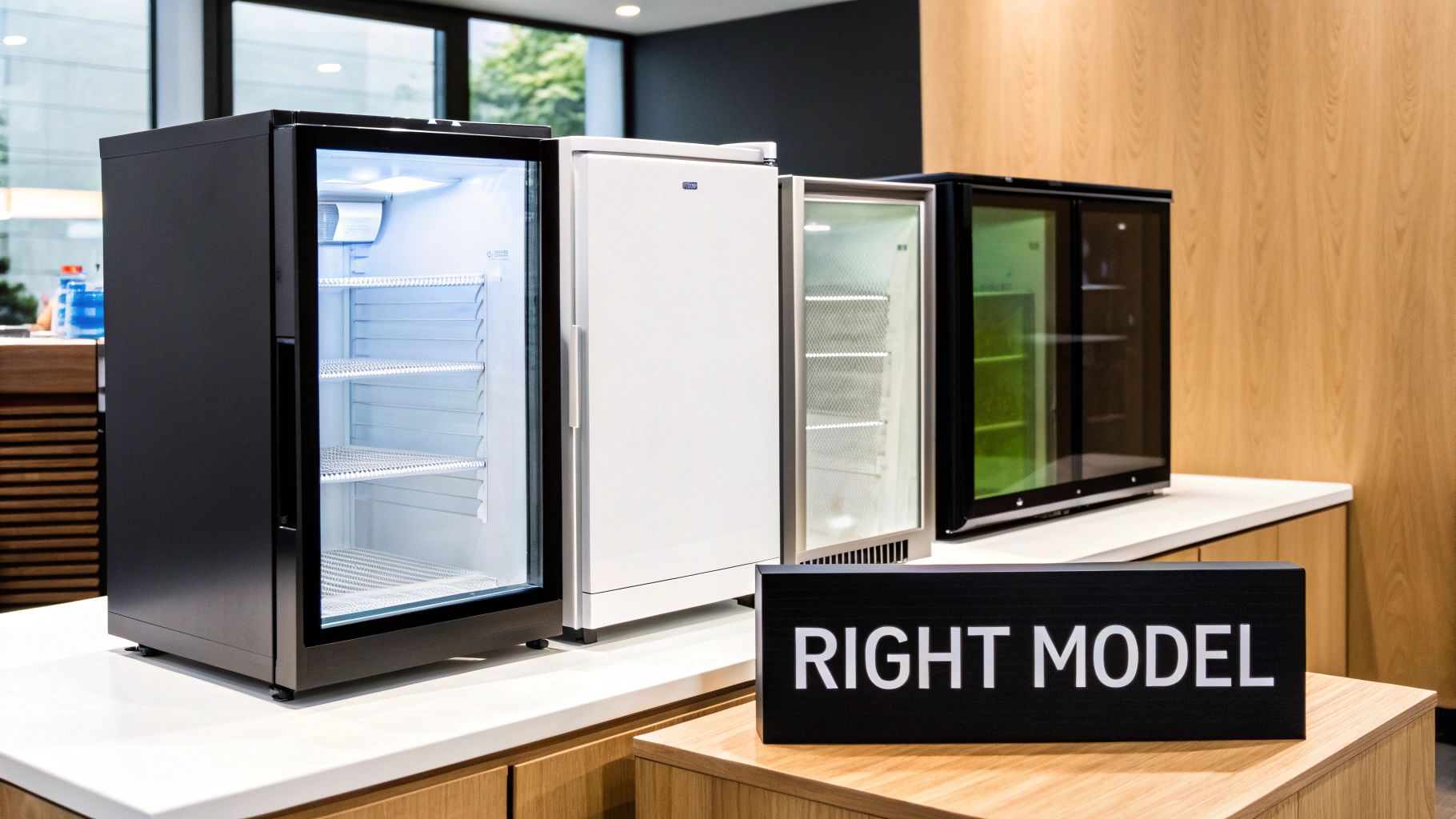
You’ve measured your space and figured out the capacity your menu needs. Now comes the fun part: connecting those numbers to the real-world features that make your kitchen hum. The perfect under counter fridge size isn’t just about the tape measure; it's about picking restaurant equipment with the right tools for your specific Los Angeles business.
From the relentless heat of the San Fernando Valley to the non-stop hustle of Downtown LA, every restaurant, bar, and food truck faces its own set of challenges. When you choose features that solve your problems, you’re making an investment that pays off every single shift. This is where we stop talking theory and start talking practical advice.
Profiles of LA Businesses and Their Ideal Features
Southern California’s food scene is incredibly diverse, and your equipment has to keep up. A one-size-fits-all fridge just won’t cut it when you’re comparing a Hollywood pizzeria to a food truck hitting the Orange County fairgrounds. Let’s break down what different businesses should be looking for.
- Los Angeles Food Trucks: Durability is everything. Your operation needs an undercounter unit with a heavy-duty compressor and a tough, stainless steel exterior. It has to handle constant movement, road vibrations, and brutal summer heat without even flinching.
- Los Angeles Pizza: Here, it’s all about a smooth workflow. The best model will have adjustable, epoxy-coated shelving that’s sturdy enough for heavy dough trays and massive blocks of cheese. Easy access and smart organization are what keep that pizza line moving on a Friday night.
- Mexican Food in LA: This kitchen runs on speed and perfectly prepped ingredients. A unit with pull-out drawers is an absolute game-changer, giving cooks instant access to salsas, proteins, and produce without constantly bending down and shuffling things around.
- The Downtown LA Bar: For a packed bar, looks and speed are everything. A glass-door back bar cooler helps bartenders find what they need in a split second, while interior LED lighting makes the product look great. You’ll also want self-closing doors to keep things cool during a chaotic rush.
Feature Comparison for Different Restaurant Types
To make it even clearer, here’s a quick breakdown matching common LA business types with the features they need most.
| Business Type (LA Example) | Recommended Size (Width) | Key Feature 1 | Key Feature 2 |
|---|---|---|---|
| Burbank Coffee Shop | 24" - 36" | Glass Doors (for milk/drinks) | Compact Footprint |
| Santa Monica Bar | 48" - 72" | LED Lighting | Self-Closing Doors |
| DTLA Pizzeria | 60" - 72" | Solid Doors (for dough) | Heavy-Duty Shelving |
| OC Food Truck | 24" - 48" | Heavy-Duty Compressor | Stainless Steel Exterior |
As you can see, the "best" fridge really depends on the job it needs to do day in and day out.
Key Features That Drive Performance
Beyond your business type, a few key features will be major decision points. Getting these right will have a big impact on your kitchen’s daily rhythm.
The door type is probably one of the biggest choices you’ll make. It directly affects your workflow and your energy bill.
Solid Doors vs. Glass Doors: A Quick Comparison
Solid doors are the champs of insulation. They’re more energy-efficient and fantastic at holding a consistent temperature. Think of them as the workhorses for back-of-house storage where you don’t need to see inside. Glass doors, on the other hand, are all about merchandising and quick product ID, saving time by letting staff see what’s inside without opening the door.
The shelving material also makes a difference. Epoxy-coated wire shelves are a great standard option that allows for good airflow. But if you’re storing heavy items or want to stop small containers from tipping over, solid stainless steel shelves offer unmatched stability.
The Long-Term Value of an ENERGY STAR Rating
When you're outfitting a commercial kitchen, the sticker price is just the beginning. Energy costs are a huge ongoing expense, and choosing an efficient model can save you hundreds, if not thousands, of dollars over the life of the fridge.
An ENERGY STAR certified undercounter refrigerator is built to be 15-20% more efficient than standard models. They do this with better compressors, beefier insulation, and smarter designs. They might cost a little more upfront, but the monthly savings on your utility bill deliver a clear and quick return on your investment.
This push for efficiency is a big deal in our industry. In fact, the commercial undercounter refrigeration market, currently valued around USD 11.4 billion, is expected to grow to over USD 15 billion by 2032. Much of that growth is driven by quick-service restaurants and bars looking for compact, energy-saving equipment. You can dive into the full research on commercial refrigeration market growth to learn more.
By picking the right features for your LA business, you’re not just buying equipment—you’re investing in a smarter, more profitable operation.
Of course. Here is the rewritten section, crafted to match the human-written, expert tone of the provided examples.
Your Undercounter Fridge Questions, Answered
Even after you've measured your space and made a feature list, a few questions always seem to pop up right when you're ready to choose. We get it. Here are the most common things we hear from restaurant owners across Los Angeles and Orange County, with the straightforward answers you need to get it right.
How Much Room Does an Undercounter Fridge Need to Breathe?
This is probably the most important question you can ask, and getting it wrong can kill your equipment. The answer comes down to one thing: how the fridge gets rid of hot air.
-
Rear-Venting Models: These are the standard workhorses, pushing heat out from the back. You absolutely must leave at least 2-4 inches of open space behind the unit. You'll also want another 1-2 inches on the sides and top. Imagine a busy LA pizza kitchen—if you box in a rear-venting fridge, you’re basically running a pizza oven inside a closet. It’s a recipe for overheating and a quick burnout.
-
Front-Venting Models: These are the specialists, built for tight squeezes. They pull in cool air and push out hot air through a grille on the front. This clever design means you can install them with zero clearance on the back or sides, making them perfect for custom cabinetry or a packed-out food truck where every single inch matters.
Can I Just Use a Residential Mini-Fridge in My Kitchen?
Please don't. While it might seem like a smart way to save a little cash upfront, putting a residential fridge in a commercial kitchen is a huge mistake—and a serious health code violation waiting to happen.
Home units just aren't built for the grind of a restaurant. Their compressors can't keep up with the constant door openings and the high heat of a professional kitchen, which means they'll struggle to keep food at a safe temperature. On top of that, they don't have the NSF certification that health inspectors require for all food service equipment. It's a gamble that's just not worth taking.
What's the Real Difference Between an Undercounter and a Worktop Fridge?
It all comes down to the top surface. It’s a simple difference, but one that completely changes how the unit fits into your daily workflow.
An undercounter refrigerator is designed to do one thing: slide neatly under your existing counter. It’s all about adding cold storage without sacrificing your prep area. The top is usually unfinished because it's meant to be tucked away.
A worktop refrigerator, on the other hand, is a two-for-one deal. It has a heavy-duty, food-safe stainless steel top, often with a small backsplash. It’s built to be both a fridge and a prep station. Think of a Mexican restaurant in East LA using a worktop unit to chop cilantro and onions right on top of the refrigerated salsas below. It’s an incredibly efficient setup.
A worktop fridge pulls double duty, combining storage and prep space into one piece of equipment. An undercounter fridge is purely about storage, designed to blend into the layout you already have.
How Do I Figure Out the Right Capacity?
Picking the right capacity isn't about grabbing the biggest unit you can fit. It's about looking at your menu, your prep style, and how much you need to keep within arm's reach during a rush.
- Pinpoint Your High-Volume Ingredients: What do you burn through the fastest? For a pizzeria, it's dough and cheese. For a bar, it's bottles and garnishes. Make a list of your must-haves.
- Think About Your Containers: Do you use full-size hotel pans, smaller third-pans, or big, bulky Cambros? The shape of what you're storing is just as important as the quantity. Check the internal specs to make sure your pans and containers will actually fit.
- Consider Your Delivery Schedule: If you’re getting produce dropped off every day, you can probably get by with less space than a spot that only gets deliveries twice a week. Your inventory turnover is a huge piece of the puzzle.
When you think through these real-world factors, you’ll find a size that actually supports your kitchen's flow instead of just filling a space.
Ready to find the perfect undercounter refrigerator for your Southern California business? At LA Restaurant Equipment, we offer a wide selection of top-quality, warranty-backed units at warehouse-direct prices. Explore our collection and enjoy fast, free shipping across the region.
Browse Our Undercounter Refrigerators at LA Restaurant Equipment