

So, you’re dreaming of launching a food truck in the killer Los Angeles food scene. That's a fantastic goal, but let's be real: your success hinges on what's inside that truck. The right food truck equipment list isn't just a shopping list; it’s the blueprint for your entire business. Your gear is the engine that drives everything—your menu, how fast you serve, and, ultimately, how much money you make. Whether you're planning a Mexican food truck, a mobile pizza oven, or another concept, getting the restaurant equipment right is step one.
Building Your Kitchen on Wheels in Los Angeles
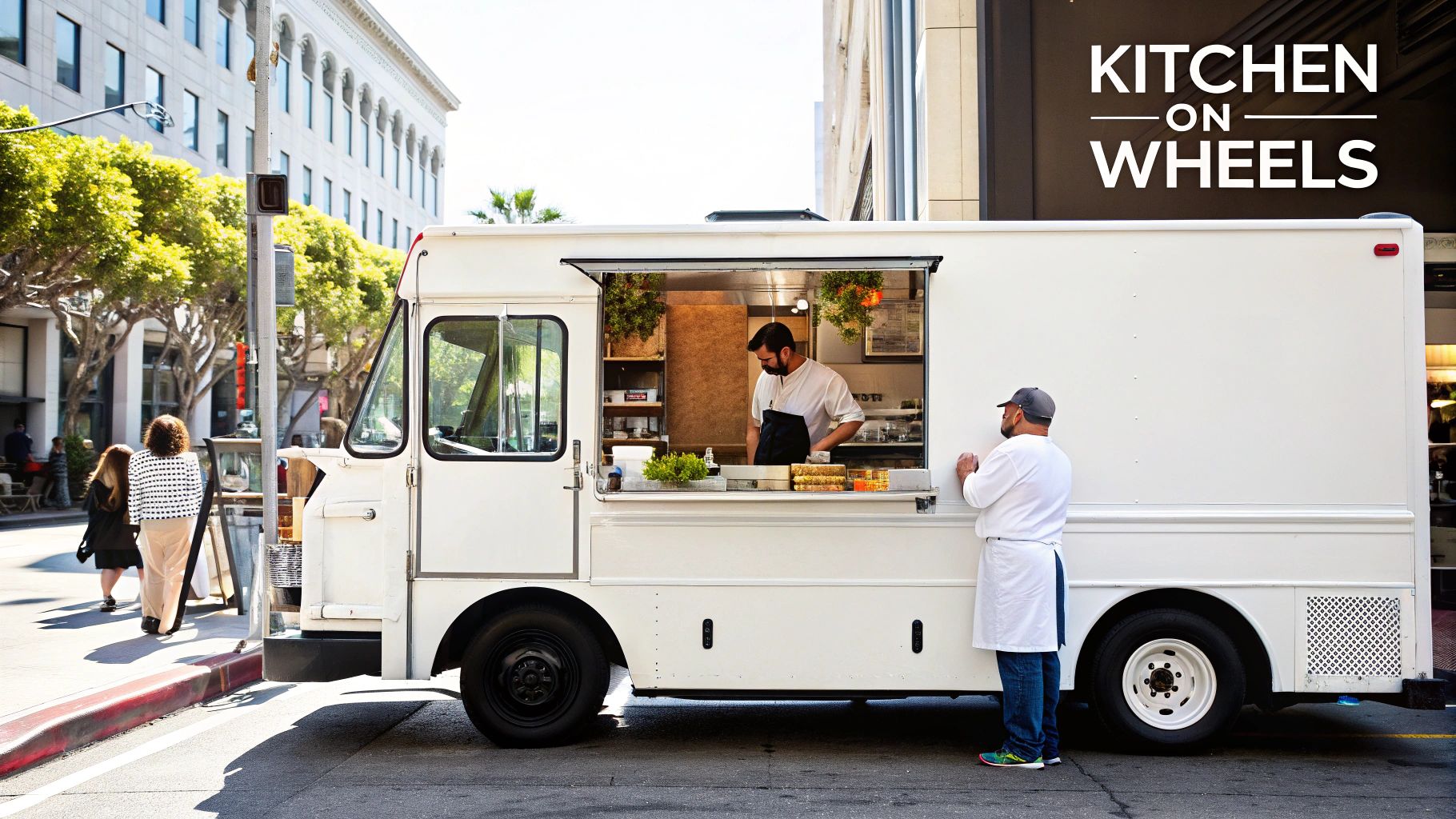
Turning an empty truck into a high-powered mobile kitchen is a completely different ballgame than setting up a brick-and-mortar spot. You don't have the luxury of space. Instead, it's like a high-stakes game of Tetris where every single piece of equipment has to fit and function perfectly. Your entire operation depends on a smart layout and durable gear that can handle the bumps in the road and the intense pace of LA's foodies. The Los Angeles food truck scene is iconic, and the right restaurant equipment is what separates the contenders from the stalls.
This guide is here to cut through the noise. We'll walk you through how to build a mobile kitchen that’s not just a powerhouse of efficiency but also keeps the health department happy. From the heart of your operation—the cooking line—to the sinks you’ll be using constantly, every item is critical. A well-planned setup means your crew can pump out orders safely and without tripping over each other, even when the line is wrapped around the block.
Planning Your Essential Equipment
Before you even think about swiping a credit card, you need a plan. And that plan starts with your menu. Are you slinging burgers, folding authentic Mexican food like tacos, or firing up gourmet Los Angeles pizza? What you cook dictates the gear you absolutely must have. Think through your whole process, from grabbing ingredients out of the fridge to handing the final product to a customer.
- Cooking Line: This is where the magic happens. Do you need a big flat-top griddle, a charbroiler for those perfect grill marks, a deep fryer, or all of the above?
- Refrigeration: In the California heat, this is non-negotiable. Undercounter coolers and refrigerated prep tables are your best friends for keeping everything fresh and safe.
- Prep and Sanitation: Stainless steel work tables and a multi-compartment sink aren’t just nice to have; they're required by the health code.
- Service Window: This is your customer's first impression. A solid POS system, a clear menu board, and a tidy condiment station make for a smooth, professional experience.
Look, a well-equipped truck isn't about having the shiniest, most expensive toys. It’s about having the right tools for the job—gear that maximizes your tiny footprint and supports your specific menu. That strategic thinking is what separates a profitable food truck from one that sputters out in a competitive market like LA.
Getting a handle on the money side of things is just as important. Your equipment is a major line item, but it's only one part of your startup budget. To see the full picture, you should check out a detailed guide on https://larestaurantequipment.com/blogs/los-angeles-restaurants/restaurant-startup-costs-breakdown, which covers everything from permits to your first food order. As you plan, it's also smart to look into providers offering comprehensive food truck solutions to make the whole process a bit easier. Let's dive in and build the ultimate food truck equipment list to get your dream rolling.
The Engine Room: Cooking and Refrigeration Gear
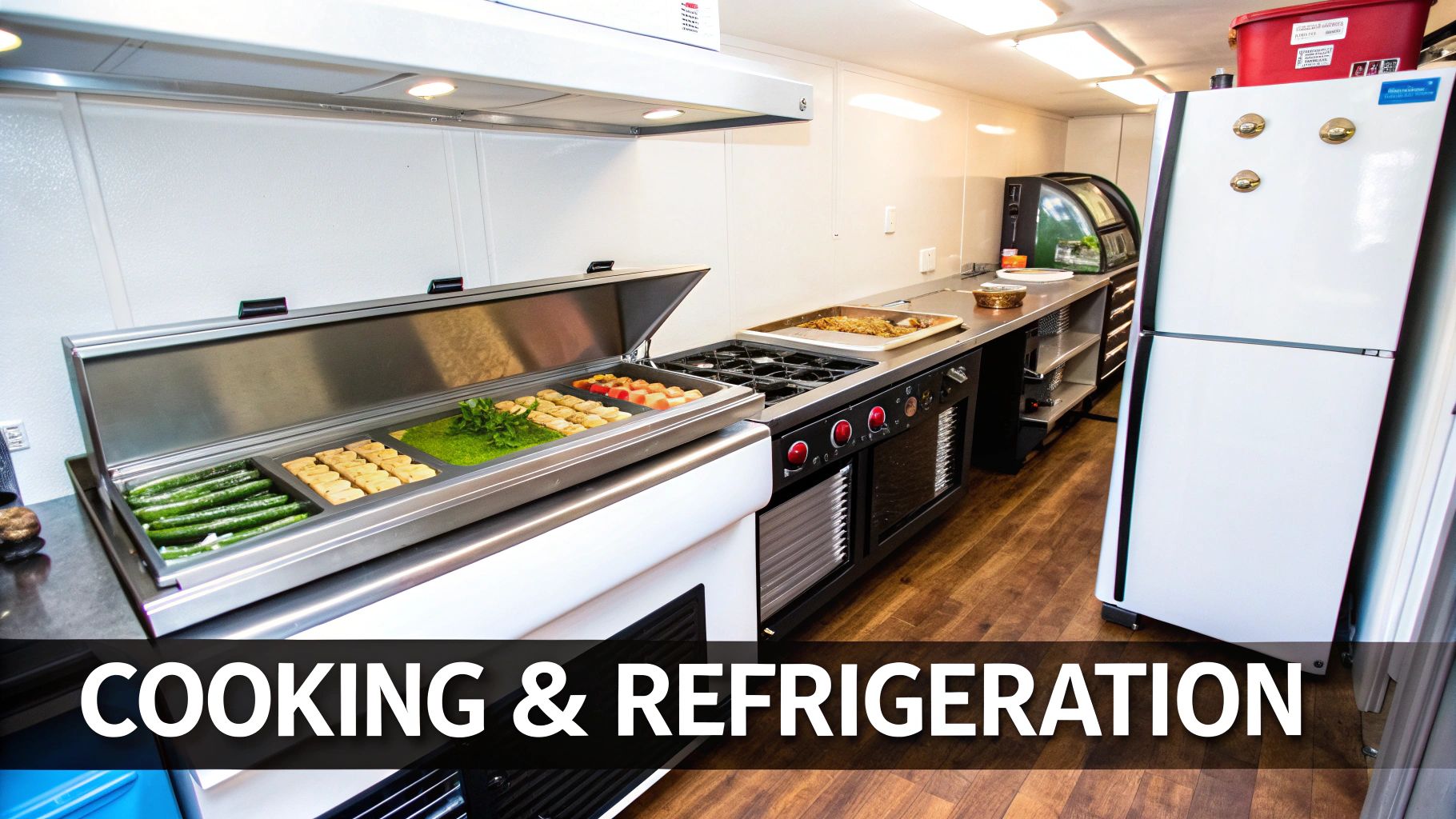
If you think of your food truck as a business on wheels, then the cooking and refrigeration equipment is its engine. This is the heart of your entire operation, where you’ll transform raw ingredients into the kind of Los Angeles street food that gets people talking. The choices you make here directly impact your speed, quality, and ultimately, your profits.
Let's break down the gear that will form the backbone of your mobile kitchen.
Matching Cooking Equipment to Your Menu
Your cooking line is where the magic happens. It’s the powerhouse that determines how many customers you can serve during a packed lunch rush, and the specific pieces you’ll need depend entirely on your menu. Are you flipping smash burgers and frying up crispy fries? A griddle and a deep fryer are non-negotiable. Building a Mexican food brand around authentic carne asada tacos? A charbroiler is the only way to get that perfect smoky flavor.
This isn't just about buying appliances; it’s about building a system that works in sync. A commercial griddle is a versatile workhorse for everything from breakfast burritos to quesadillas. A charbroiler delivers those coveted grill marks and a flavor you just can't fake. And a reliable deep fryer is essential for turning out consistently golden sides that complete the meal. For a mobile Los Angeles pizza operation, a specialized pizza oven is the star of the show.
Choosing the right equipment is like casting the perfect actors for your culinary show—each one needs to nail its role. A poorly chosen appliance creates bottlenecks, slows down service, and costs you money.
To help you get it right, here’s a look at how different cooking equipment lines up with popular food truck concepts.
Essential Cooking Equipment by Menu Type
| Menu Concept | Primary Cooking Equipment | Secondary Equipment | Best For |
|---|---|---|---|
| Mexican Food Truck | Flat-top griddle, charbroiler | 2-well steam table, countertop fryer | Searing meats, warming tortillas, and keeping fillings hot. |
| Burger Joint | Commercial griddle | Commercial deep fryer, cheese melter | Cooking perfectly seared patties, toasting buns, and serving fries. |
| Los Angeles Pizza Truck | Gas or electric pizza oven | Dough sheeter, refrigerated prep table | Baking pizzas quickly and consistently with fresh ingredients. |
| Breakfast & Coffee | Large griddle, commercial coffee brewer | Espresso machine, panini press | Handling high-volume pancakes, eggs, bacon, and coffee orders. |
This table shows how your menu directly dictates your major equipment purchases. Don’t invest in a charbroiler if you’re only serving grilled cheese; focus on getting the best griddle you can afford.
Selecting Reliable Refrigeration
Just as critical as your cooking line is your refrigeration system. In the relentless Southern California heat, your fridge isn't just a convenience—it's the lifeline that guarantees food safety and protects thousands of dollars in inventory. A failure here doesn't just mean a bad day; it can shut you down completely.
This is where compact, powerful units are absolute game-changers. Undercounter refrigerators and chef bases slide right under your prep counters, keeping key ingredients within arm's reach while saving precious floor space. For anyone making salads, sandwiches, or pizzas, a refrigerated prep table with cold wells on top is indispensable for fast, fresh assembly.
The food truck scene has absolutely exploded, and it’s easy to see why. According to IBISWorld, the U.S. food truck market is projected to hit $2.8 billion in revenue by 2025, riding a wave of 13.2% annualized growth over the last five years. Here in Southern California, where we serve operators across Los Angeles and Orange County, chefs tell us that reliable undercounter fridges and prep stations from brands like Atosa are essential for keeping ingredients fresh in LA's demanding climate.
In a food truck, your refrigerator is working overtime. It’s battling cramped quarters, frequent door openings, and ambient heat from the cooking line. Investing in a new, warranty-backed unit isn't a luxury; it's a critical decision that protects you from the nightmare scenario of a full-scale meltdown during a packed event.
Look for models with tough stainless steel construction for durability and easy cleaning. Digital temperature controls are a must for maintaining precise, food-safe temperatures—something the health inspector will be checking every single time.
Prioritizing energy efficiency will also pay huge dividends by keeping your generator's fuel costs down. Our guide on energy-efficient commercial refrigerators has some great tips on this. By choosing robust, dependable gear, you’re building a resilient foundation for success on the competitive streets of Los Angeles.
Designing Your Workflow for Speed and Safety
Beyond the shiny cooking line and humming refrigerators lies the real secret to a successful food truck: its workflow. A great mobile kitchen moves like a well-oiled assembly line, and that kind of precision only comes from a smart layout designed for prep, cleaning, and storage. This part of your food truck equipment list is all about the supporting cast that lets your star dishes shine.
Think of your truck's interior as a dance floor. Every step, from chopping onions to scrubbing a pan, needs its own dedicated, logical space. Without that natural flow, even the most talented chefs will find themselves in chaos during a lunch rush, which means slower service and, worse, potential safety hazards.
The Non-Negotiable Sink Setup
Before we get into anything else, let's talk about the single most critical component for passing your health inspection: the sinks. Just about every health department in the country, including our own Los Angeles County Department of Public Health, has iron-clad rules for washing and sanitation. Getting this wrong will shut you down before you even sell your first taco.
Your truck must have two completely separate sink systems. No exceptions.
- A Three-Compartment Sink: This is the workhorse for all your dishes. Each basin has a specific job: one for washing with hot, soapy water, a second for a clean water rinse, and a third for sanitizing with a chemical solution. This setup is mandatory for properly cleaning every utensil, pot, and pan.
- A Separate Handwashing Sink: This sink is only for staff to wash their hands. It needs hot and cold running water, soap, and a way to dry hands hygienically (like paper towels). You’ll want to place it right near your prep and cooking stations to make good hygiene a seamless part of the routine.
The sink setup is the very first thing a health inspector will check. It's not a place to get creative or cut corners. Nailing this from day one shows you're serious about food safety and is a cornerstone of a professional, compliant operation.
Creating an Efficient Prep Zone
Once your sanitation station is squared away, it’s time to focus on where the magic happens—the prep zone. This area has to be organized, tough as nails, and a breeze to wipe down. The undisputed champion here is stainless steel, the industry standard for being non-porous and rust-proof.
Your prep area will be built around a couple of key pieces:
- Stainless Steel Work Tables: These are the versatile surfaces where you'll be doing most of the chopping, mixing, and plating. Look for tables with a lower gauge number, like 14 or 16-gauge, which means the steel is thicker and more durable. Many models also come with an undershelf, giving you some much-needed extra storage for containers or small appliances.
- Refrigerated Prep Tables: If your menu is heavy on salads, sandwiches, or tacos, these units are an absolute game-changer. They give you a refrigerated base cabinet combined with a top rail of cold wells to hold all your ingredients. Everything stays fresh, chilled, and right at your fingertips, which seriously cuts down on wasted steps and speeds up your assembly line.
The way you arrange these surfaces is crucial for a smooth workflow. To get a better handle on creating a logical and efficient arrangement, checking out some expert insights on a proper commercial kitchen layout design can give you some great ideas for your mobile setup.
Smart Storage for a Small Space
Finally, smart storage is the glue that holds your whole operation together. In a food truck, every single inch is prime real estate. Clutter is your number one enemy. A disorganized truck isn't just inefficient; it’s unsafe. Your goal is to keep everything you need within easy reach but neatly out of the way.
Here are a few essential storage solutions to consider:
- Wall-Mounted Shelving: Don't forget to use your vertical space! Stainless steel wall shelves mounted above your prep tables are perfect for storing spices, frequently used ingredients, or small tools.
- Holding Cabinets: If you prep large batches of food ahead of a rush, an insulated holding cabinet is a lifesaver. It keeps food at a safe, consistent temperature until you're ready to serve, helping you manage those busy peaks without a hitch.
- Airtight Food Containers: You can never have too many. Invest in a good set of clear, stackable, and labeled containers. Not only do they keep ingredients fresh and safe from cross-contamination, but they also let you see exactly what you have with a quick glance.
To make sure your entire operation is up to code and ready for inspection, it’s a great idea to review a detailed food truck health inspection checklist. By thoughtfully designing these supporting stations, you’re building a kitchen where your team can work quickly, safely, and efficiently—turning out incredible food, even when the pressure is on.
Powering Your Operation: Generators, Gas, and Ventilation
Beyond the shiny stainless steel of your cookline and refrigerators are the systems that truly bring your food truck to life: power, gas, and ventilation. You can think of these as your truck's circulatory system, its lungs, and its central nervous system. Without them, even the most impressive food truck equipment list is just a collection of very expensive metal.
Getting these technical guts of your operation right is non-negotiable for running a smooth, safe, and legal food truck on the streets of Los Angeles.
Sizing Your Generator for Peak Performance
A reliable power source is the absolute foundation of your mobile kitchen. A cheap, underpowered generator that sputters out mid-lunch rush is every owner's nightmare. It means spoiled food, angry customers, and a huge loss of revenue. This isn't a place to guess; you need to do the math.
To nail down the right generator size, you have to become a temporary energy accountant. Your job is to calculate the total electrical draw of every single piece of equipment you'll be running at the exact same time during your absolute busiest moments.
- List Everything: Make a complete list of every electric appliance—refrigerators, food warmers, your POS system, even the lights.
- Find the Wattage: Look at the manufacturer's label or spec sheet for each item. You're looking for two numbers: starting wattage (the surge of power it needs to turn on) and running wattage (what it uses continuously).
- Do the Math: Add up the running wattage for all your equipment. Then, find the single highest starting wattage from your list and add that number to your total. That final sum is your peak power demand.
As a solid rule of thumb, you'll want to choose a generator that provides at least 20-25% more wattage than your calculated peak demand. This buffer is your safety net—it handles unexpected power surges and keeps the generator from constantly redlining, which will drastically shorten its life.
Managing Propane Safely
For all your gas-powered workhorses like griddles, ranges, and deep fryers, propane is your fuel. It's incredibly efficient, but it demands your full respect and strict adherence to safety rules. Propane tanks must be securely mounted in a dedicated, well-ventilated compartment, safely away from any potential source of ignition.
Daily inspections are not optional. Before you start service every single day, you need to check your tanks, lines, and all the connections for any sign of a leak, wear, or damage. A quick spray of soapy water on the connections is an easy way to spot a leak—if you see bubbles, you have a problem.
Your truck’s workflow is also a key part of keeping things safe and efficient, as you can see in this process flow.
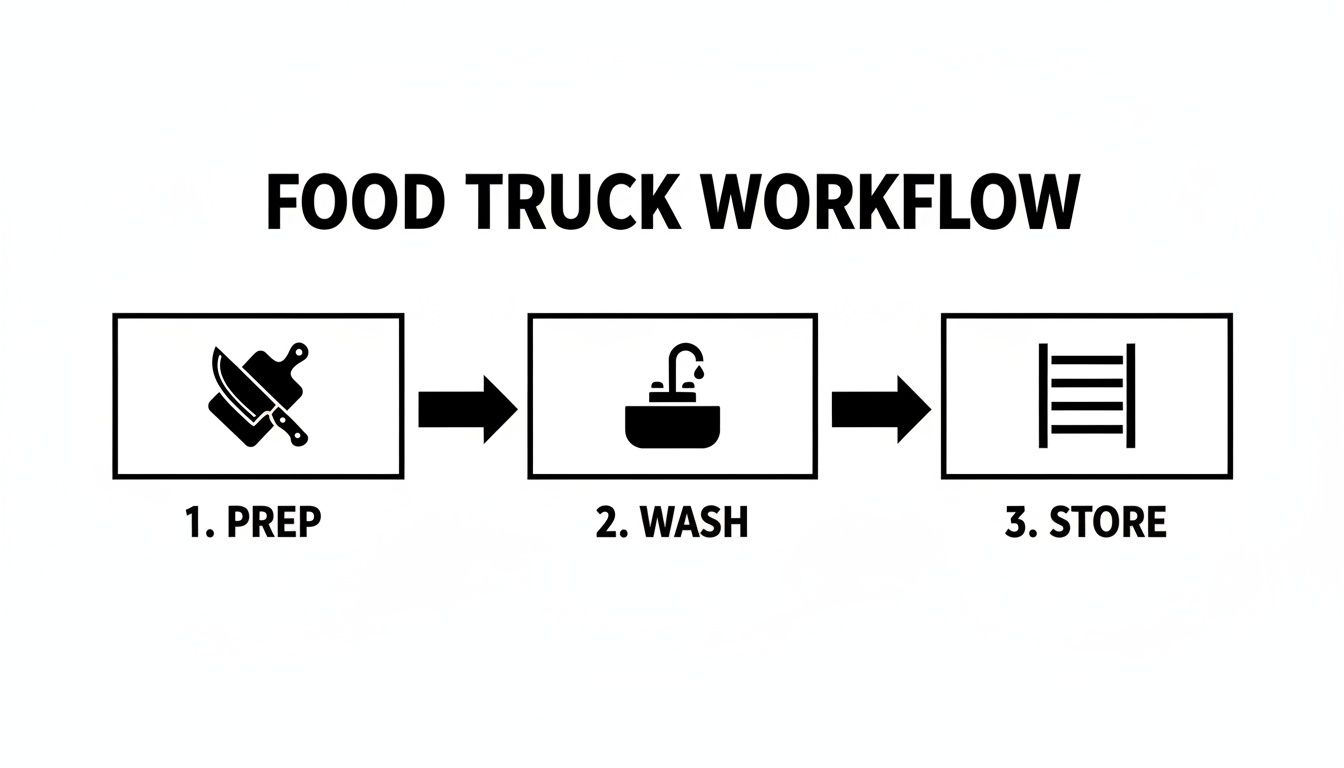
This just reinforces how every station—from prep to washing and storage—has to work together, all supported by utility systems that are both reliable and, above all, safe.
The Critical Role of Commercial Ventilation
Finally, let's talk about what is arguably the most critical safety system in your entire truck: ventilation. The combination of intense heat, smoke, grease, and cooking fumes inside such a tiny, enclosed space is a serious hazard. A commercial-grade vent hood and exhaust fan isn't a nice-to-have; it's a mandatory requirement from both the health and fire departments.
This system is your truck's respiratory system, pulling all that contaminated air out and keeping the environment safe and breathable for you and your staff. A proper setup has to include a powerful exhaust fan and a series of grease filters designed to trap flammable residue, which dramatically reduces the risk of a catastrophic fire.
Making sure your system is installed to meet NFPA 96 standards and all local Los Angeles codes will save you from crippling fines and shutdowns, keeping your business where it belongs: on the road.
Mastering the Customer Experience: Service and POS Essentials
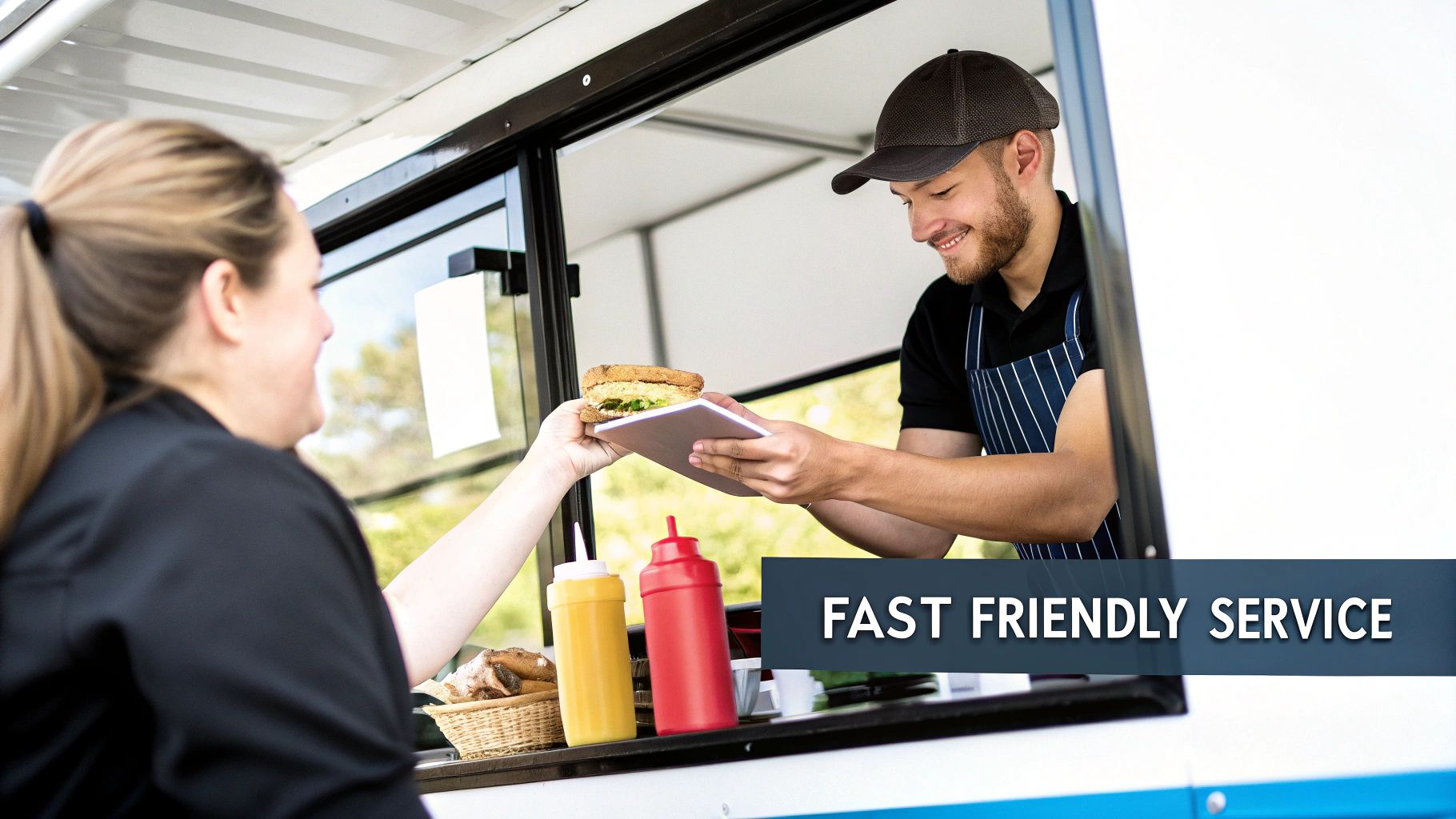
Amazing food gets people to walk up to your window, but a smooth, professional experience is what brings them back again and again. This final part of your food truck equipment list is all about the tools that connect your kitchen to your customers. Don't underestimate them—they're just as vital as your griddle or fryer.
Think of your service window as your truck's front door and your Point of Sale (POS) system as its brain. Getting this setup right is the secret to taming the chaos of a lunch rush, cutting down on errors, and creating a fast, friendly transaction that leaves a great impression.
Choosing Your Point of Sale System
The days of clunky cash registers and messy handwritten tickets are long gone. Modern food trucks run on sleek, tablet-based POS systems that do way more than just take money. A good system is your command center, handling everything from taking an order to analyzing your sales.
Look for a system that delivers:
- Flexible Payments: It has to take everything—credit cards, debit, and mobile payments like Apple Pay and Google Pay. The easier you make it for people to pay, the faster your line will move.
- Intuitive Interface: Your crew needs to be able to pick it up and go with almost no training. A clean, simple layout means fewer mistakes and quicker service.
- Sales Reporting: Modern POS systems give you incredible data. You can see which dishes are your bestsellers, pinpoint your busiest hours, and even keep an eye on inventory levels.
Your POS system isn't just a cash register; it's a powerful business management tool packed into a tablet. It provides the data you need to make smarter decisions about your menu, staffing, and purchasing, directly impacting your profitability.
Equipping the Service Window
Beyond the POS, the physical setup of your service window is what shapes the entire customer interaction. It has to be organized, welcoming, and built for speed. Every little thing should be designed to make ordering and grabbing food as painless as possible.
Here are the must-haves:
- Menu Boards: Your menu needs to be big, easy to read from a distance, and look good. Whether it's a digital screen or a well-designed chalkboard, clarity is everything.
- Condiment Station: A tidy, well-stocked spot with napkins, forks, and sauces lets customers help themselves, which frees up your staff to focus on orders.
- Waste and Recycling Bins: Putting out clearly labeled bins keeps your area clean and shows you're a responsible business.
- Lighting and Signage: Good lighting makes your truck look inviting and professional, especially for dinner service. Great branding helps you stand out in a crowd of trucks.
The global food truck market is set to hit $10.9 billion by 2035, and getting ahead in this booming industry means making smart equipment choices. In the U.S. alone, the market is expected to grow by $2.27 billion between 2024-2029, a trend powered by the popularity of fast, quality food. For operators in Los Angeles, this means investing in durable, warranty-backed gear like a reliable Atosa freezer to prevent costly spoilage during those long, hot park-and-serve days. You can read more about these food truck market trends to see what's coming. By mastering the customer experience, you're not just selling food—you're building a brand that people trust and come back to.
Your Top Food Truck Questions, Answered
Starting a food truck is an amazing ride, but once you start digging into the details, a ton of questions pop up that go way beyond a simple checklist. Finalizing your food truck equipment list is a huge milestone, but it’s also where you’ll face critical decisions that can save you thousands of dollars and a world of hurt down the road. This section tackles the most common and crucial questions new operators face, giving you direct, practical answers to move forward with confidence.
Think of this as the final tune-up before you hit the streets. We're getting into the nitty-gritty of your budget, the real-world constraints of your mobile kitchen, and the specific legal hoops you'll need to jump through right here in Los Angeles.
Should I Buy New or Used Equipment for My Food Truck?
This is one of the first big money decisions you’ll make, and it really boils down to short-term savings versus long-term security. The low upfront cost of used equipment is tempting, I get it. But it’s a massive gamble, especially for a mobile business where a breakdown isn't just an inconvenience—it's a disaster.
Used gear comes with a history you'll never know. You have no idea how the previous owner maintained it, if it was serviced regularly, or if it has a hidden problem just waiting to blow up. In a brick-and-mortar restaurant, a broken fridge is a problem. In a food truck, a broken fridge during a sold-out festival can wipe out your entire week's profit in a single afternoon.
Let's break down the real-world differences:
- Warranty Protection: New equipment comes with a manufacturer's warranty. If something goes wrong, you have a direct line for repairs or a replacement, often at no cost to you. Used equipment? You’re on your own. When it breaks, that repair bill is 100% yours.
- Energy Efficiency: Today's commercial appliances are built to be way more energy-efficient than older models. A new refrigerator or griddle will pull less power from your generator, which means real savings on fuel costs every single day you're open for business.
- Health Code Compliance: When you buy new, you know it's NSF-certified and meets all current health and safety standards. With used gear, you run the risk of buying an outdated piece that a health inspector will flag, forcing you into a costly, last-minute replacement.
Investing in new, reliable gear is one of the smartest things you can do. You’re not just buying an appliance; you're buying peace of mind and protecting your business from the crippling cost of unexpected downtime.
How Do I Choose the Right Size Equipment for My Truck?
In a food truck, every single inch is prime real estate. Choosing the right size equipment isn’t like regular shopping—it’s more like a high-stakes game of Tetris. The goal is to pack in as much cooking and prep power as you can without making the workspace so tight it becomes unsafe and slow.
The whole process starts with a measuring tape and a detailed floor plan. Before you even look at a single piece of equipment, you need to know the exact dimensions of your truck's interior. Get in there and map out where your essential stations will go: cooking, refrigeration, prep, and sinks.
Here are a few pro tips for getting the sizing right:
- Start with Your Core: Your main cooking appliances (like your griddle or fryer) and your primary refrigerator are the heart of your kitchen. Figure out what your menu absolutely requires and choose those pieces first.
- Go Vertical and Undercounter: Think in three dimensions to maximize every bit of space. Wall-mounted shelving is non-negotiable for storage. Undercounter refrigerators and chef bases (a refrigerated unit with a worktop) are game-changers, combining cold storage and prep space into one footprint.
- Always Check the Spec Sheet: Never, ever buy a piece of equipment based on a photo. Always download the manufacturer's specification sheet to get the exact width, depth, and height.
- Don't Forget Clearance Space: This is a big one. Health codes require you to leave clearance space around equipment for proper ventilation and cleaning. A griddle might be 36 inches wide, but the spec sheet might tell you it needs an extra 6 inches of clearance on each side.
What Are the Key Permits for a Los Angeles Food Truck?
Operating a food truck legally in Los Angeles County is a journey that involves getting permits from a few different agencies. The key thing to remember is that having all your equipment in order is a non-negotiable prerequisite for passing the inspections these permits require.
Your trip through LA's regulatory world will have a few main stops:
- LA County Public Health Permit: This is the big one. It starts with a detailed plan check where you submit your truck's layout and your complete food truck equipment list for approval. After that comes a physical vehicle inspection to make sure your actual setup matches the plans and meets every health code.
- Business License: You'll need a separate business license for each city you plan to operate in. If you want to sell in Santa Monica and Downtown LA, you'll need two different licenses.
- California Seller's Permit: This comes from the state and is what allows you to collect sales tax.
- Mobile Food Vending License: On top of the county health permit, many cities—including the City of Los Angeles—require their own specific vending permit.
Navigating all of this can feel complicated, especially since rules can change slightly from one city to the next. The best approach is to start with the LA County Department of Public Health, because their approval is the foundation for everything else. Making sure your equipment is compliant from day one will make this whole process a lot less painful.
You've got the know-how, and now you need the gear. At LA Restaurant Equipment, we specialize in providing new, warranty-backed commercial kitchen equipment that's perfect for Southern California's amazing food truck scene. We offer durable, energy-efficient units from trusted brands like Atosa at warehouse-direct prices, with fast, free shipping from our Brea, CA location. Let us help you build a reliable mobile kitchen with flexible financing options that work for your budget. Explore your options and get a quote today at https://larestaurantequipment.com.