

Welcome to the wild, competitive world of Los Angeles food trucks. Out here, your vehicle isn't just a way to get from A to B—it's your restaurant on wheels, your brand, and your moneymaker all rolled into one. A smart food truck design is the engine that drives your success, dictating how fast you can serve, how efficient your team is, and ultimately, how profitable you can be on these bustling SoCal streets, whether you're serving Mexican food or Los Angeles pizza.
Your Blueprint for a Profitable Mobile Kitchen
Jumping into the LA food scene is a big move. A thoughtful design isn't just about looking good; it's the blueprint that turns a metal box into a cash-generating machine, ensuring every single inch of space is working for you. This is what separates the Los Angeles food trucks that thrive from the ones that just can't keep up with the lunch rush.
The U.S. food truck market is booming, currently valued at $4.52 billion and on track to hit $7.89 billion by 2033. Getting started isn't cheap—a new truck can run you around $108,500 on average, and that's before you even start buying the essential kitchen gear to get operational. For a deeper look at the numbers, check out this restaurant startup costs breakdown.
Defining Your Concept and Brand
Before you even think about layouts or equipment, you need to have your concept nailed down. Are you slinging classic LA-style Mexican food, gourmet Los Angeles pizza, or something totally new? Your menu is the foundation for every other decision, from the type of grill you need to how much fridge space you'll have to cram in.
Your concept is also your identity. As you figure out your menu, you also need to build a brand that people will remember. This means your logo, the truck wrap, and the whole vibe—all the things that make you stand out in a sea of other trucks. You can learn more about creating a compelling brand identity to make sure you get noticed.
A well-planned food truck design is your most powerful tool. It optimizes workflow, ensures compliance with LA's strict health codes, and maximizes your ability to serve customers quickly, which is the key to profitability during peak hours.
Mastering the Essentials from the Start
This guide will walk you through all the critical pieces you need to get right. We’re covering everything from laying out your kitchen for maximum speed to picking the right commercial restaurant equipment and, of course, navigating the maze of LA's health codes and regulations. Planning smart from day one is the difference between just surviving and actually thriving. Let's build a mobile kitchen that’s set up for speed, safety, and long-term success.
Designing a High-Speed Kitchen Workflow
Think of your food truck’s interior as a manufacturing line, but instead of widgets, you're cranking out delicious food—fast. An efficient workflow isn't just a nice-to-have; it's essential for surviving a lunch rush in Downtown LA or a dinner crowd in Venice. A smart food truck design is what separates a smooth service from a chaotic one, directly impacting how much money you make each day.
The whole idea is to map out a logical flow that cuts down on wasted movement and pushes up your output. Every extra step your staff takes costs precious seconds. During a peak service window, those seconds add up to lost sales and unhappy customers who probably won't be back.
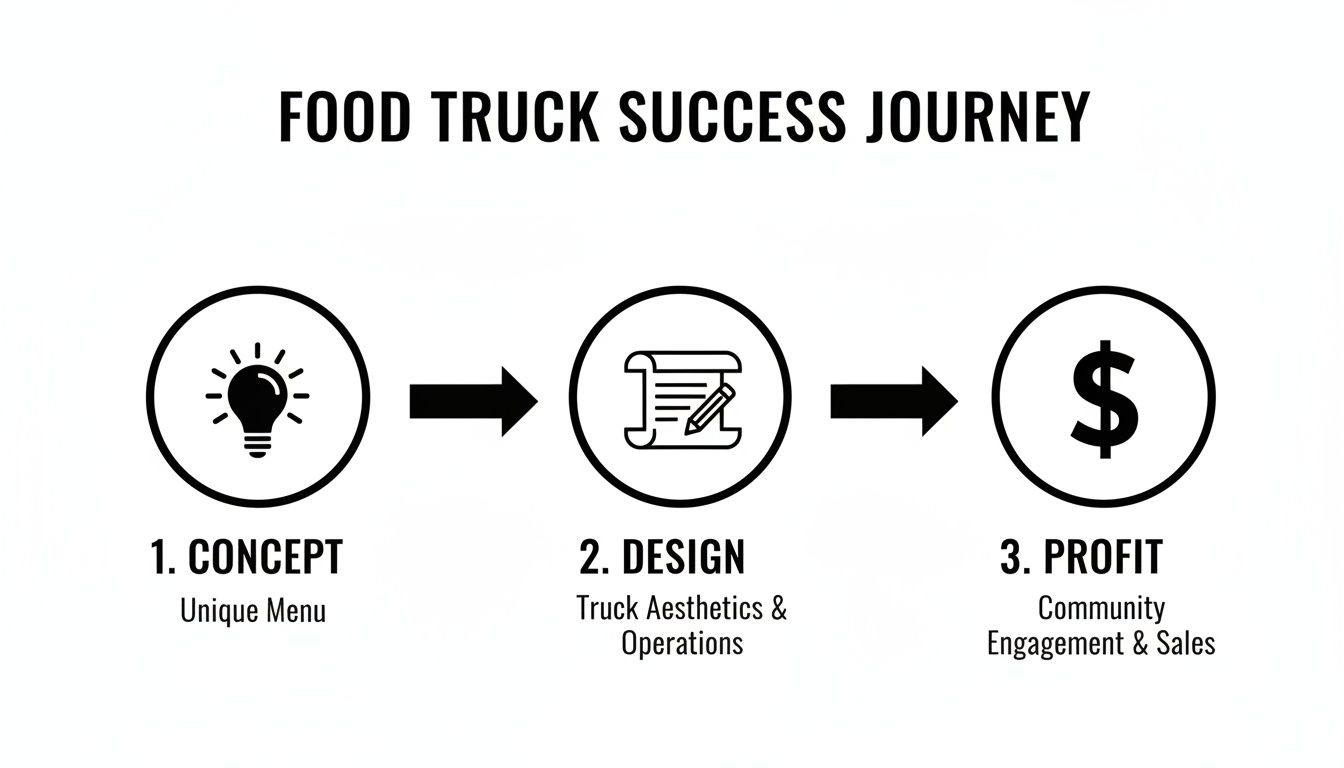
As you can see, a solid design is the bridge that connects your great idea to a profitable business. Without that well-planned layout, even the most amazing menu can buckle under pressure.
The Three Critical Workflow Zones
To get that assembly-line speed, your layout needs to be broken down into three distinct zones. This creates a clear path from raw ingredients to a finished order, killing bottlenecks and preventing cross-contamination before they start.
- Cold Storage and Prep Zone: This is mission control, where every order kicks off. It's home to your refrigerators, freezers, and prep tables. Ingredients get pulled from storage, washed, chopped, and portioned right here before they head down the line.
- Hot Cooking Line: This is the heart of the beast. It’s where you’ll find all your main cooking gear—grills, fryers, ranges—all lined up for peak efficiency. The setup should mirror your menu, keeping the most-used equipment within easy reach.
- Service and Finishing Zone: The final stop. This is where meals are plated, garnished, and passed through the service window to a hungry customer. This zone is also where you'll have your point-of-sale (POS) system and any beverage stations.
Arranging these zones in a logical order creates a straight path for your team to follow without tripping over each other or doubling back. This clear separation of duties is a cornerstone of any good kitchen design. For a deeper dive into making the most of your space, check out our guide on commercial kitchen layout design.
Popular Layouts for LA Food Trucks
That three-zone principle is universal, but how you actually arrange them comes down to your truck’s size and your specific menu. Two layouts are king on the LA scene, and each has its own strengths.
An optimized workflow can boost your order output by as much as 20-30% during a peak hours. That efficiency turns directly into higher sales and a reputation for lightning-fast service.
First, let's look at some common configurations and see which might be the best fit for your concept.
Comparing Common Food Truck Layouts
| Layout Style | Best For | Pros | Cons |
|---|---|---|---|
| Assembly Line | Sequential builds (Mexican food like burritos, sandwiches, pizza) | - Incredibly fast and efficient - Minimizes staff movement - Easy to train new employees |
- Less flexible for complex menus - Can feel cramped |
| Galley Style | Varied menus requiring access to multiple stations | - Very versatile - Good for teams of 2-3 - Maximizes wall space |
- Central aisle can become a bottleneck - Requires careful equipment placement |
The Assembly Line Layout is probably the most efficient setup you can have. It arranges the three zones in a straight shot from the back of the truck to the front. It’s absolutely perfect for menus where you build an item in stages, like gourmet sandwiches, Los Angeles pizza, or Mexican food like burritos. Your staff can specialize in one station and just pass the order down the line.
On the other hand, the Galley Layout puts your equipment and workspaces along both long walls of the truck. This creates a central aisle for staff to move through. This design is much more versatile and works well for more complex menus where one person might need to jump between the grill and the fryer. The big catch? You have to plan it carefully to avoid a traffic jam in the aisle, especially if you have more than two people working.
Your choice of layout is one of the biggest decisions you'll make in the food truck design process. It sets the stage not only for your workflow but also for the type and size of restaurant equipment you can even fit inside.
Choosing the Right Commercial Kitchen Equipment
The restaurant equipment you choose is the heart and soul of your mobile kitchen. Inside a food truck, every single square inch is prime real estate. This isn't like a traditional restaurant kitchen where you might have a little extra room to play with; each appliance has to be compact, tough as nails, and brutally efficient. Your entire food truck design hinges on making smart, strategic equipment choices from day one.
Think of your restaurant equipment as your kitchen's core team. A reliable refrigerator is just as critical as a skilled prep cook, and a high-performance fryer is your best friend during the lunch rush. Investing wisely here is key to managing startup costs while making sure your kitchen can handle the frantic pace of a busy Los Angeles route.
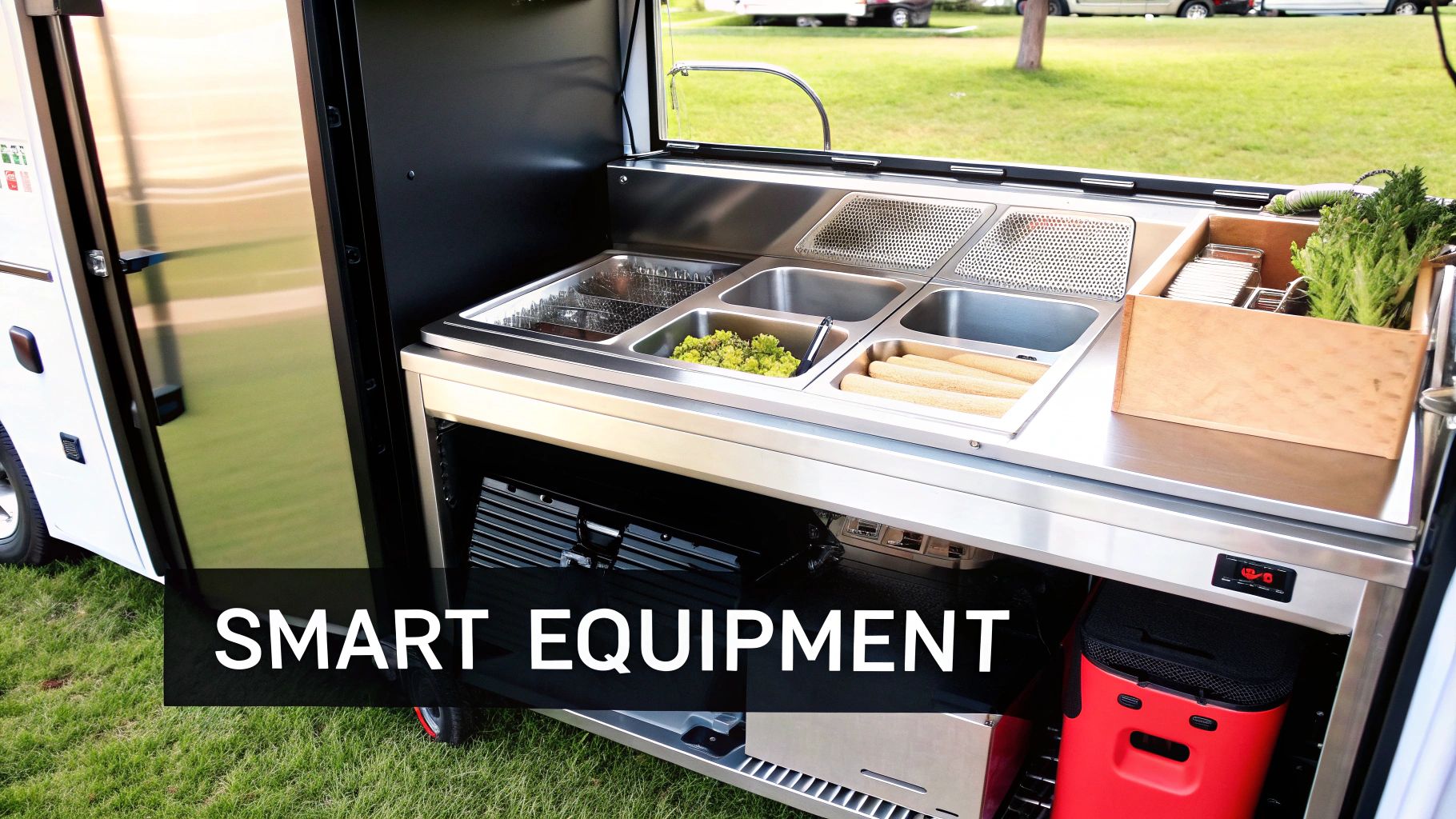
Core Equipment Categories for Your Truck
Every food truck, regardless of the menu, needs to cover three fundamental bases: refrigeration to keep food safe, cooking equipment to bring your dishes to life, and sanitation gear to meet strict health codes. A Los Angeles pizza truck's needs are wildly different from a Mexican food truck's, of course, but these categories are universal.
- Refrigeration: This is where undercounter refrigerators and freezers really shine, as they save precious vertical space. For any kind of assembly-line menu, sandwich and pizza prep tables with built-in refrigerated wells are absolute game-changers.
- Cooking Line: Your menu is the boss here. The most common workhorses are compact gas griddles for tacos (a Mexican food staple), high-efficiency deep fryers for fries and wings, and versatile ranges for sautéing. For a pizza concept, a compact deck oven is essential.
- Sanitation and Prep: This part is completely non-negotiable. The LA County Health Department demands a multi-compartment sink for washing, rinsing, and sanitizing, plus a totally separate handwashing sink. Durable stainless steel prep tables are also a must for a clean and sturdy workspace.
The mobile food industry has absolutely exploded, and that growth underscores just how important this infrastructure is. The sector now employs 44,119 workers, which is a massive 907 percent jump from just 4,383 back in 2000. For anyone operating in Southern California, this proves you’re in a thriving market, but it also means the competition for reliable, code-compliant restaurant equipment is fiercer than ever.
New vs. Used: The Great Debate
One of the first big decisions you'll make is whether to buy new or used restaurant equipment. Used gear can look tempting with its lower price tag, but it’s a gamble. There’s no warranty, you have no idea what it's been through, and an unexpected breakdown during a festival can cost you thousands in lost sales and emergency repairs.
For a food truck, equipment reliability is everything. A single faulty refrigerator or broken fryer can shut down your entire operation for the day, wiping out profits and damaging your reputation.
New restaurant equipment, on the other hand, buys you peace of mind. It comes with a manufacturer's warranty, it’s guaranteed to be in perfect working condition, and it's often more energy-efficient—which saves you money on generator fuel down the road. While the initial investment is higher, the reliability is almost always worth it. You can explore a wide range of reliable, warrantied options in our complete guide on equipment for food truck kitchens.
Making Smart Investments for Long-Term Success
Your equipment isn't just a random collection of appliances; it's an integrated system that has to work together flawlessly in the tight confines of your truck. The goal is to build a kitchen that can take the vibrations of the road and the intense pressure of back-to-back service without skipping a beat.
Here are a few final tips for making smart buys:
- Prioritize NSF Certification: The National Sanitation Foundation (NSF) mark means the equipment is designed for commercial use and is easy to clean. Health inspectors will be looking for this, so don’t skip it.
- Measure Twice, Buy Once: Get precise measurements of your truck’s interior before you even think about buying. Sketch out a to-scale floor plan to make sure everything fits while leaving enough room to actually work safely.
- Consider Multi-Function Equipment: Look for appliances that can pull double or triple duty. A combination oven, for example, can roast, steam, and bake, saving you the space and cost of three separate units.
- Factor in Power Consumption: Your generator has its limits. Add up the electrical requirements of all your potential equipment to make sure your power source can handle the load without constantly tripping breakers.
Choosing the right restaurant equipment is a foundational step in your food truck design journey. By investing in reliable, compact, and efficient gear, you're setting your business up for smoother operations and a much clearer path to profitability on the competitive streets of Los Angeles.
Powering Your Truck and Staying Compliant
Let's get into the guts of your truck—the power, water, and safety systems that form its technical backbone. A slick food truck design is completely worthless if the health inspector won't sign off on it. These systems are governed by some seriously strict Los Angeles County regulations that can shut you down before you even serve your first customer.
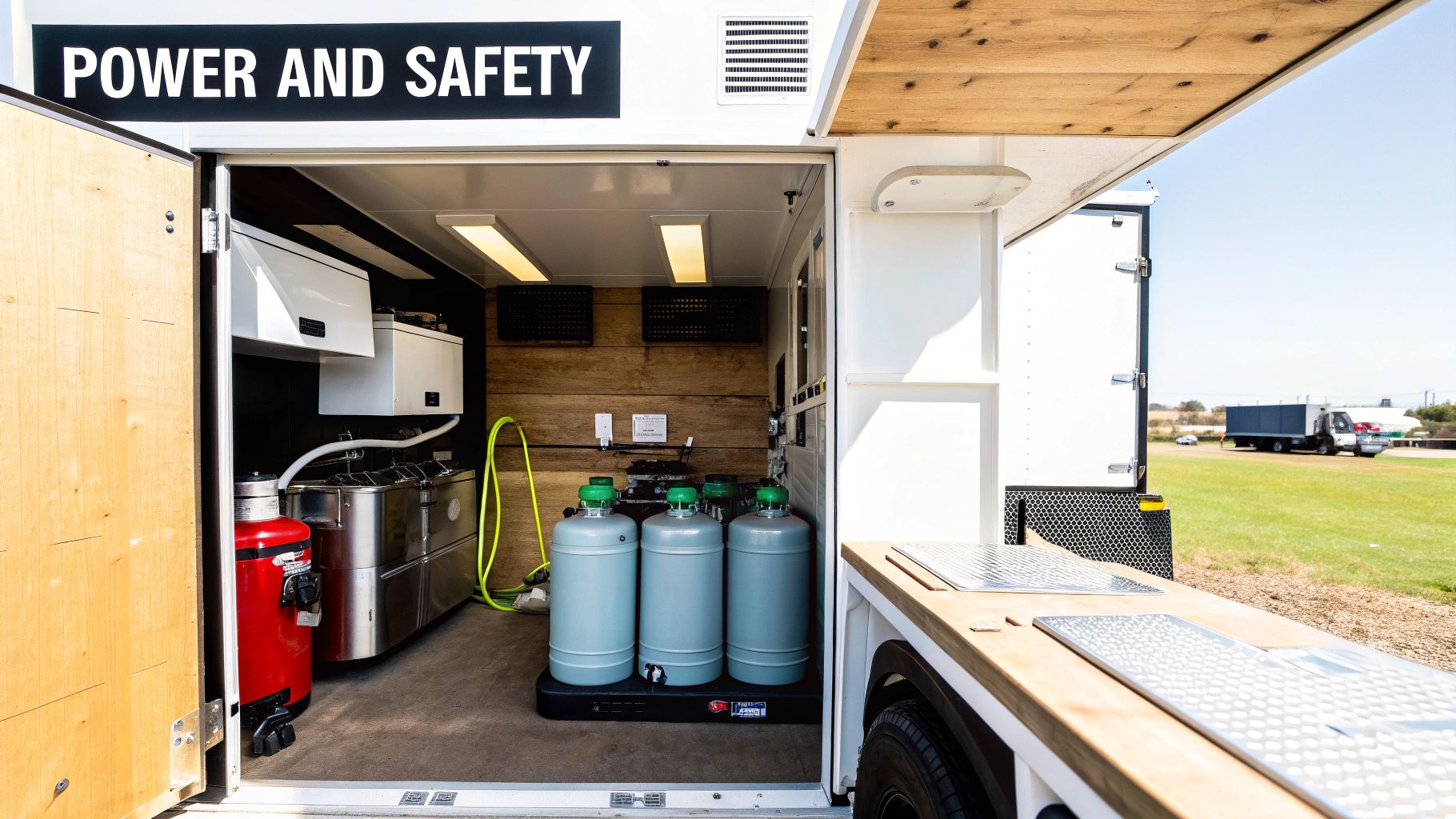
Think of this section as your roadmap. We're going to make sure your mobile kitchen is not just a great place to cook, but also 100% compliant with every single rule. Getting this part right is absolutely non-negotiable.
Choosing Your Power Source
Your truck's electrical system is its lifeblood. It runs everything from the refrigerators keeping your food safe to the POS system taking orders. You’ve basically got two ways to keep the lights on, and each has its pros and cons.
- Onboard Generators: This is the go-to for most operators, giving you total freedom to operate anywhere. A quiet, commercial-grade generator means you can set up shop on a busy downtown street or at a remote festival without a problem. The trade-off? They need fuel, regular maintenance, and a pretty big upfront investment.
- Shore Power: This just means plugging your truck into an external power source, like at your commissary or an event with hookups. It's a fantastic option—quiet, zero emissions, and cheap to run. The obvious downside is that it tethers you to one spot, so your mobility is limited.
Honestly, the most successful LA trucks use a mix of both. They rely on the generator for their daily routes and plug into shore power whenever they can to save on fuel and keep the noise down.
Calculating Your Power Needs
Figuring out the right size generator is one of the most important technical decisions you'll make for your food truck design. If it’s too small, it will constantly trip breakers and shut down your equipment right in the middle of a lunch rush. If it’s too big, you'll just be burning extra fuel and money for no reason.
To nail it, you have to add up the total wattage of every single piece of electrical gear you plan on running at the same time. If you want a good starting point, looking into how to size a generator for an RV is surprisingly helpful, since the basic principles are the same.
Pro Tip: Whatever your final wattage number is, add a 20-25% buffer on top of it. This extra juice handles that initial power surge when big equipment like fridges and fryers kick on, preventing a total system overload.
Water Systems and LA Health Codes
Los Angeles County has some of the toughest water and plumbing rules in the entire country. The health department is incredibly specific about tank sizes to make sure you can operate safely and hygienically all day long.
- Fresh Water Tank: This holds all your clean, potable water for handwashing, dishwashing, and cooking. The absolute minimum is usually 30 gallons, but that number goes up depending on how many sinks and faucets you have.
- Grey Water Tank: This is where all the dirty water from your sinks goes. Here’s the critical part: its capacity must be at least 15% larger than your freshwater tank to prevent a disgusting overflow. So, for a 30-gallon fresh tank, a 50-gallon grey water tank is a smart and safe bet.
You’re also required to have a sink dedicated only for handwashing, which has to be separate from your three-compartment sink for washing dishes. They don't play around with these rules—they’re all about preventing foodborne illness and are strictly enforced. If you fail to meet these standards, your truck stays parked. Period.
Navigating LA Permits and Financing Your Build
A brilliant food truck design is only half the battle; the other half is fought in the world of permits and spreadsheets. Getting on the road legally and financially is directly tied to the choices you make during the design phase.
This final stage is where your blueprint meets reality. We'll walk through the key permits you'll need and explain how your layout and equipment choices directly impact your inspection results. Then, we’ll shift gears to your financial strategy and explore how smart financing can help you build a more dependable, profitable truck from day one.
The Los Angeles Permitting Gauntlet
Getting your food truck permitted in Los Angeles involves several agencies, but the main gatekeeper is the LA County Department of Public Health. Their inspectors are meticulous, and your truck's design must meet their exacting standards before you can ever serve a single customer.
Your design plans are the very first thing they’ll scrutinize. An inspector will check if your layout, equipment placement, and utility systems all align with the California Health and Safety Code. They pay very close attention to a few key areas:
- Workflow and Cross-Contamination: They will verify that your layout absolutely prevents raw food from coming into contact with cooked food.
- Sanitation Systems: Your three-compartment sink, separate handwashing sink, and water tank capacities will be measured against strict county requirements.
- Equipment Certification: All your restaurant equipment must be NSF-certified or equivalent, proving it's designed for commercial use and is easy to clean.
- Ventilation and Fire Safety: They'll make sure your ventilation hood and fire suppression system are properly installed and meet every last safety code.
Passing the plan check is just the first hurdle. Once your truck is actually built, it has to pass a final, in-person inspection where they confirm everything was constructed exactly as approved on paper.
Financing Your Build The Smart Way
Building out a food truck is a significant investment, and how you manage your startup capital is absolutely crucial. While it might be tempting to pay for everything in cash to avoid debt, this can leave you dangerously low on funds for other essentials like inventory, marketing, and those hefty permit fees.
This is where restaurant equipment financing becomes a powerful tool. Instead of draining your bank account on a $5,000 griddle or a $10,000 refrigeration unit, financing lets you get reliable, brand-new commercial equipment for a manageable monthly payment.
By financing major equipment, you free up vital startup cash for the operational expenses that keep your business running. This strategy enables you to afford better, more reliable gear from the start, reducing the risk of costly breakdowns.
This approach lets you build a top-tier mobile kitchen without putting your financial stability at risk. You get the peace of mind that comes with new, warrantied equipment and keep your cash reserves intact for the unpredictable challenges of your first year in business.
The Path to Profitability
This careful planning really pays off. Believe it or not, more than 60% of food truck owners achieve profitability within their first year of operation. That early success provides the confidence and capital needed to expand, whether that means adding a second truck or even opening a brick-and-mortar spot down the road.
This kind of financial success is built on a foundation of smart design and strategic investment. By understanding the permit requirements upfront and using financing to build a reliable kitchen, you set a clear course for success. You build a machine designed not just to cook great food, but to generate profit from day one on the competitive streets of Los Angeles.
Your Top Food Truck Design Questions, Answered
Jumping into the Los Angeles food truck scene is exciting, but let's be real—the practical side of building out your mobile kitchen can feel like a huge hurdle. Beyond the menu and the cool truck wrap, you've got some big decisions to make.
This is where we cut through the noise. We'll give you clear, straight-up answers to the most common questions we hear from new food truck entrepreneurs. Getting this stuff right from day one will save you a world of headaches, time, and money down the line.
Should I Go with a New or Used Food Truck?
This is the first big crossroads every new owner hits, and it's a classic battle: upfront cost versus long-term risk. A used truck looks mighty tempting on paper, potentially saving you tens of thousands of dollars right out of the gate. But that sticker price can be deceiving.
A used truck is a total mystery box. You have no idea how the previous owner treated the engine, the transmission, or the kitchen equipment inside. One bad breakdown can take you off the road for days or even weeks, killing your profits and your reputation before you’ve even built it.
A new, custom-built truck is an investment in reliability and your own peace of mind. Sure, the initial cost is higher, but every single component—from the chassis to the fryer—is brand new, under warranty, and built exactly how you need it. That means you’ll fly through your first LA County health inspection.
At the end of the day, a new build is just a smarter, safer bet. It takes the guesswork out of the equation and lets you design a kitchen that’s perfectly dialed in for your specific menu and workflow—and that’s a massive advantage on the street.
How Do I Find a Good Food Truck Builder in Los Angeles?
Finding a builder you can trust is absolutely critical. A cheap, shoddy build will haunt you with failed inspections, safety issues, and constant operational problems. LA has plenty of builders, so you've got to do your homework.
Start by looking for shops that specialize in mobile kitchens and have a solid portfolio to back it up. Ask them for references, and actually call those other food truck owners to hear about their experience. A pro builder will be completely transparent, give you a detailed quote, and know the LA County Department of Public Health code book inside and out.
Here are a few non-negotiables to look for:
- A Proven Track Record: They need to show you photos, videos, and testimonials from past clients.
- Knowledge of Local Codes: They must be experts in LA's specific health, fire, and safety regulations. No exceptions.
- Transparent Communication: You should get regular updates and have one person you can call with questions throughout the build.
Never, ever pick a builder based on price alone. Think of it this way: a quality build isn't an expense; it's an investment in your business's future.
How Can I Design My Truck for Future Menu Changes?
The food world never stands still, and your menu is bound to change over time. A smart food truck owner plans for this from the very beginning, building in flexibility so you can adapt without tearing everything apart. The secret? Versatile restaurant equipment.
For instance, instead of locking yourself into a super-specialized piece of gear, think about multi-functional workhorses. A combination oven or a flat-top griddle with a charbroiler section gives you the freedom to cook a much wider range of dishes down the road.
You should also think about creating an open and adaptable prep area. Use modular shelving and prep tables on wheels that you can easily move around or reconfigure as your needs shift. By planning for flexibility now, you’re making sure your truck can evolve right along with your culinary vision, keeping you relevant on the competitive streets of Los Angeles.
For a reliable kitchen that can handle the demands of any menu, you need restaurant equipment that’s built to last. At LA Restaurant Equipment, we provide top-tier, warranty-backed commercial appliances at warehouse-direct prices, helping you build a dependable and profitable food truck from day one. Explore our full inventory and flexible financing options at https://larestaurantequipment.com.