

The best commercial fridge isn't some universal, top-of-the-line model. It's the one that fits your kitchen's daily grind like a glove. For a slammed Los Angeles pizza joint, that might mean a sprawling, low-boy prep table. For a Los Angeles food truck squeezing into a tight spot at a festival, it's a hyper-efficient undercounter unit. The whole game is about matching your restaurant equipment to your workflow, your menu, and your space.
Choosing the Right Fridge for Your SoCal Business
Trying to find the perfect commercial fridge in a market as wild as Los Angeles can feel like a huge task. But this piece of equipment is so much more than a simple appliance. It’s the heart of your food safety program, the quiet guardian of your expensive inventory, and a make-or-break piece of your daily efficiency. It's the silent workhorse that keeps the ingredients for your modern Mexican food menu perfectly fresh or your food truck prepped and ready for a brutal lunch rush.
This guide is here to cut through all the noise. We'll help you pick a unit that’s not just reliable and up to health code, but also a smart, cost-effective investment for your Southern California business. You're not just buying a fridge; you're investing in a solution that solves your kitchen's unique problems.
A dependable commercial refrigerator does more than just keep food cold. It protects thousands of dollars in inventory, ensures you pass health inspections, and prevents the kind of catastrophic failure that can shut down a kitchen for days.
Why Your Business Type Dictates Your Choice
The ideal fridge for a high-volume restaurant slinging Los Angeles pizza is worlds apart from what a small coffee shop or bar needs. A big kitchen might be looking at a massive walk-in cooler or a whole battery of reach-in units. A Los Angeles food truck operator, on the other hand, has to make every single square inch count with clever undercounter models.
To make it simple, let's break down what different LA-area businesses should be looking for.
Matching Your LA Business to the Right Fridge
This quick guide should help you pinpoint the best type of commercial refrigerator for your specific operation.
| Your Business Type | What You Need It For | Your Best Fridge Match |
|---|---|---|
| Full-Service Restaurant (e.g., Mexican Food) | Bulk ingredient storage and prep line access | A mix of Walk-In/Reach-In Coolers and Refrigerated Prep Tables |
| Bar or Brewery | Storing bottles, cans, and kegs for quick service | Back Bar Coolers and Keg Refrigerators (Kegerators) |
| Café or Bakery | Displaying pastries and storing milk/dairy | Glass Door Merchandisers and Undercounter Fridges |
| Pizza Shop (Los Angeles Pizza) | Holding toppings and dough at the make-line | Pizza Prep Tables with deep wells and refrigerated bases |
| Food Truck or Pop-Up (Los Angeles Food Trucks) | Compact, mobile, and durable cold storage | Undercounter/Worktop Refrigerators and Countertop Models |
| Catering Company | Transporting and holding food at temperature | Reach-In Refrigerators at the home base and insulated transport boxes |
Choosing the right tool for the job makes all the difference in a busy kitchen environment.
Beyond just the initial cost and model type, think bigger. Selecting the right commercial fridge is a huge part of your restaurant's long-term health and profitability. It's a key piece in building effective strategies for reducing food waste.
The good news? The market for restaurant equipment is booming, which is great for you. The global commercial refrigeration equipment market was valued at a staggering USD 85.6 billion in 2024 and is on track to nearly double by 2034, all thanks to the push for more energy-efficient cooling. For Southern California operators like you, this trend means better technology, sharper pricing, and fantastic access to warehouse-direct suppliers right in your backyard.
Decoding the Different Types of Commercial Refrigerators
Choosing the right commercial fridge isn't about picking one single "best" model. It's more like building a toolkit of restaurant equipment. Every kitchen has different needs, and each type of refrigerator is a specific tool designed for a specific job. You wouldn't use a sledgehammer to hang a picture, right? Same logic applies here. You don't want a massive reach-in where a compact undercounter unit will do the job perfectly.
The trick is to match the equipment to your actual workflow. Let's look at these different "tools" through the eyes of real Los Angeles food businesses. This way, you can see how each type solves a real-world problem and helps a business run smoother.
This flowchart can help you visualize the process, starting with your business type and drilling down to your specific needs to find the ideal refrigerator.
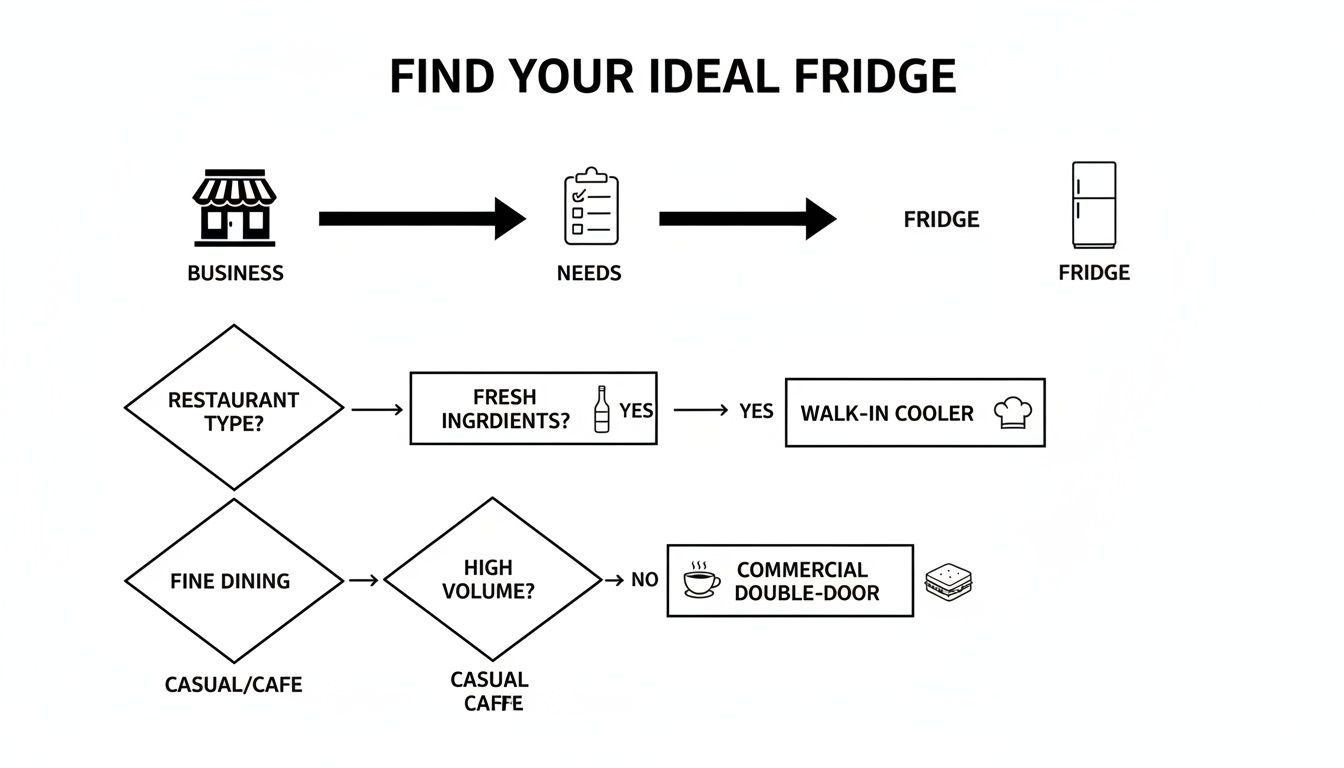
As you can see, it's a logical path, not just a shot in the dark. It all begins with what kind of operation you're running.
Reach-In Refrigerators and Freezers
Picture a busy Mexican food spot in East LA. They're flying through hundreds of pounds of produce, meat, and cheese every single week. For them, a reach-in refrigerator is the kitchen's walk-in closet—it’s the workhorse for bulk storage. These are the tall, vertical units you see with one, two, or even three solid doors, built to hold a ton of ingredients at a safe, consistent temperature.
Their main job is simple: keep a large inventory cold and easy to grab. The compressors on these things are powerful enough to handle the constant opening and closing in a fast-paced kitchen, keeping food safe even during a chaotic dinner service. That’s why they're non-negotiable for almost any full-service restaurant.
Undercounter and Worktop Refrigerators
Now, think about a gourmet Los Angeles food truck parked along the coast in Santa Monica. Space is everything. This is where undercounter refrigerators are the true MVPs. Think of them as organized drawers that fit perfectly under your countertops, making the most of every last square inch. They put cold storage right where the prep happens, which saves your staff countless steps and a whole lot of time.
These little units are the unsung heroes of smart kitchen design. For any spot with a tight footprint—food trucks, cafes, bars—they provide essential cold storage without eating up precious counter space. To really nail your layout, it's worth checking out all the different options in this complete guide to under counter fridge sizes.
Refrigerated Prep Tables
Let's head over to a Los Angeles pizza joint that's known for its loaded-up pies. Their command center is the refrigerated prep table. These are brilliant all-in-one workstations. They have a refrigerated base for storage, plus a top rail full of cold pans that keeps every topping—from pepperoni to bell peppers—chilled and right at the cook's fingertips.
The genius of a prep table is that it eliminates the need for a chef to constantly walk back and forth to a main refrigerator. This streamlined workflow can shave minutes off every order, which adds up to significant gains in efficiency and customer satisfaction over a shift.
Whether you're running a sandwich shop, a salad bar, or a pizzeria, these tables are engineered for speed. They are the cornerstone of any assembly-line style of food prep.
Glass Door Merchandisers and Bar Coolers
Finally, let's pop into a trendy cafe in Silver Lake or a packed bar downtown. Here, what customers see is just as important as keeping things cold. Glass door merchandisers are basically silent salespeople. They show off bottled drinks, grab-and-go sandwiches, and desserts in the best possible light, tempting customers to make that impulse buy.
In the same vein, back bar coolers are built specifically for bars and breweries. They keep beers, wines, and mixers perfectly chilled and ready for service, all while fitting neatly under the bar. Both merchandisers and bar coolers are absolutely critical for any business that depends on quick, customer-facing service and visual appeal to boost sales. Each type has its place, and finding the best commercial fridge for your spot means picking the right tool for your menu and your space.
Understanding the Features That Actually Matter
When you're staring at a row of stainless steel refrigerators, it's easy to think they're all the same. But beneath that sleek exterior is where the real action happens. The difference between a reliable kitchen workhorse and a constant, expensive headache often boils down to a few key engineering choices.
It’s about way more than just size. A cheap unit might look good on paper, but if it can't keep up during a busy dinner rush, you're looking at inconsistent food temps, sky-high energy bills, and eventual breakdown. Getting this decision right from the start saves you a world of hurt—and lost inventory—down the road.
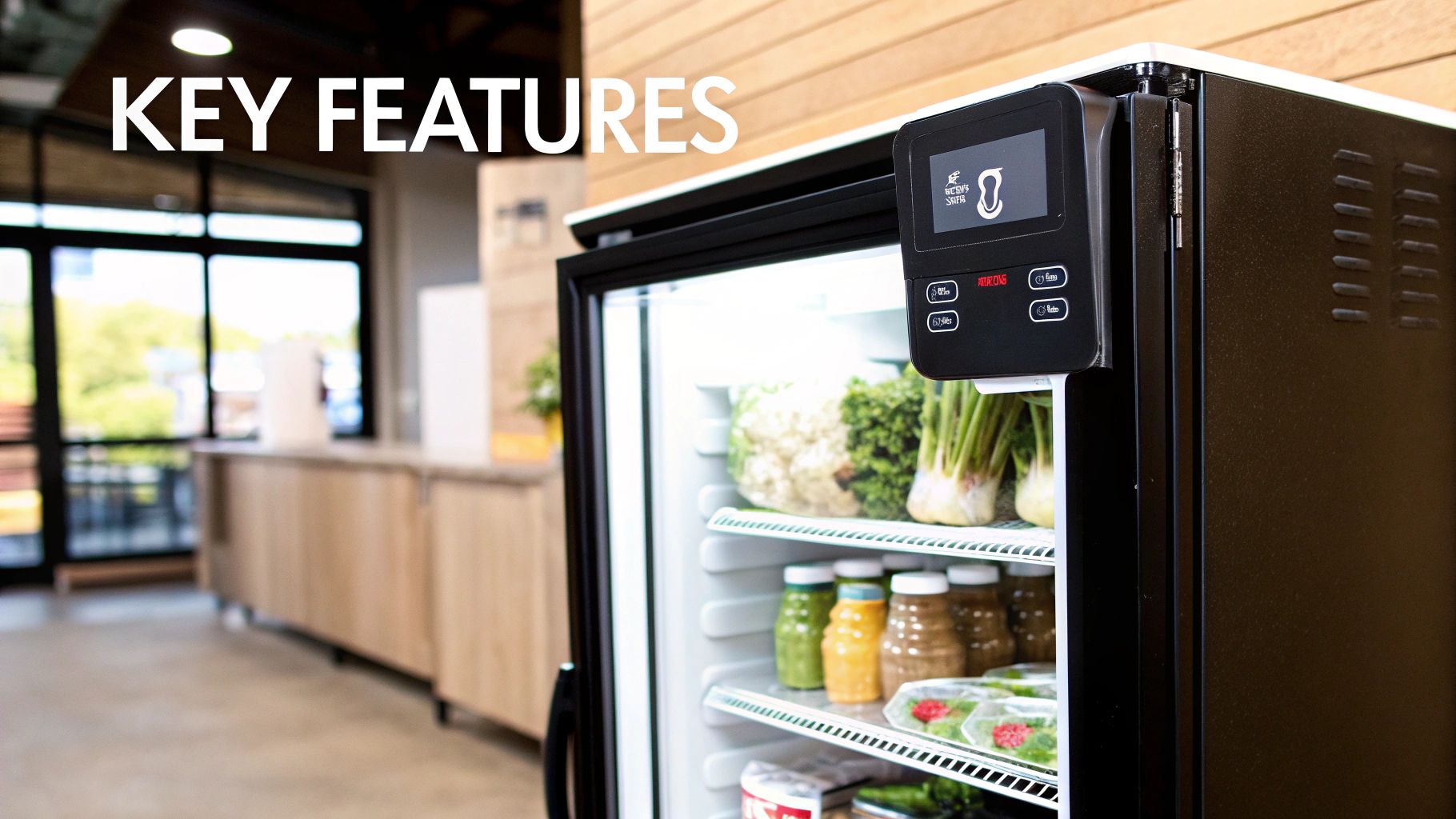
Compressor Location: A Critical Choice
One of the most important—and most overlooked—details is where the compressor is located. This single choice dramatically affects your fridge's efficiency, maintenance needs, and lifespan, especially in a hot Southern California kitchen.
-
Top-Mount Compressors: These units have their "engine" on top. This is a brilliant design for kitchens with a lot of floor dust, like a bakery or a pizzeria. By pulling in cleaner air from above, the coils are less likely to get clogged with flour and other debris.
-
Bottom-Mount Compressors: With the compressor at the bottom, these units are often easier to work with. The lowest shelf is raised off the floor, saving your back. In a hot kitchen, they can also run a bit more efficiently because they're pulling in the cooler air that naturally sinks to the floor.
So, which is for you? Think about your specific setup. A hot, greasy cookline might be better off with a bottom-mount, while a prep area with lots of dry ingredients is a perfect match for a top-mount.
Let's break down the key technical differences to help you decide.
Comparing Key Commercial Fridge Features
Here's a side-by-side look at the two main compressor configurations to help you pinpoint the right fit for your kitchen's unique environment.
| Feature | Top-Mount Compressor | Bottom-Mount Compressor | Best For... |
|---|---|---|---|
| Air Intake | Pulls in warmer, cleaner air from the ceiling. | Pulls in cooler air from near the floor. | Top: Bakeries, LA pizza spots, prep areas. Bottom: Hot kitchens, high-traffic lines. |
| Ergonomics | Bottom shelf is on the floor, requiring bending. | Bottom shelf is raised for easier access. | Bottom-mount is generally easier on your staff's backs. |
| Maintenance | Coils are less likely to clog with floor debris. | Coils may require more frequent cleaning. | Top-mount is a win for low-maintenance in dusty spots. |
| Efficiency | Can work harder in hot kitchens as heat rises. | Can be more energy-efficient by using cooler air. | Bottom-mount often has a slight edge in hot environments. |
Ultimately, both are solid choices. The best one really depends on where the unit will live and what kind of work it'll be doing day in and day out.
Precision Temperature Control for Food Safety
Forget those old-school dial thermostats. Modern commercial fridges use digital controls for one simple reason: accuracy. When you're dealing with food safety and expensive inventory, "close enough" just doesn't cut it.
A digital thermostat lets you set and monitor the exact temperature, ensuring your ingredients always stay in the safe zone (typically below 40°F). This consistency is your best defense against the temperature swings that cause food to spoil and put you at risk for a health code violation. It’s the difference between guessing and knowing your food is safe.
An accurate, easily readable digital thermostat is your first line of defense against foodborne illness. It provides the peace of mind that comes from knowing your equipment is holding a precise, safe temperature, even during the busiest dinner rush.
This level of precision also helps manage your utility bills. By holding a steady temperature without making the compressor overwork, you get optimized performance. For a deeper look at this, you can learn more about how to choose from the most energy-efficient commercial refrigerators on the market.
Build Quality Features That Signal Durability
Finally, let's talk about the small details that tell you if a fridge is built to last. A commercial kitchen is a brutal environment, and you need a unit that can take a beating day after day.
Here are a few things to look for that signal a tough, long-lasting machine:
- Durable Shelving: Look for heavy-duty, coated wire shelves. They should feel solid and capable of holding significant weight without bowing. Adjustable shelves are a must for storing everything from stock pots to prep containers.
- Self-Closing Doors: This is a simple but huge energy saver. When your staff is in a hurry, doors get left ajar. Self-closing doors prevent all that precious cold air from escaping.
- High-Quality Gaskets: The rubber seals around the door are your cold-air gatekeepers. Make sure they are thick, flexible, and create a tight seal. A leaky gasket makes your compressor work overtime.
These features aren't just nice-to-haves; they directly impact the fridge's efficiency and how long it'll be a productive member of your kitchen. A well-built unit is an investment that pays you back in lower energy costs and fewer service calls.
Calculating Your Total Cost of Ownership
When you’re outfitting your kitchen, it’s so easy to focus on the sticker price of a new commercial fridge. But that upfront cost? It’s just the first chapter in a much longer story. The real expense—the number that actually hits your bottom line—is the Total Cost of Ownership (TCO).
Think about it like buying a delivery van for your Mexican food business. One van might be cheaper off the lot, but if it’s a gas-guzzler that’s always in the shop, it's going to cost you way more over five years than a slightly pricier, more reliable model. Your refrigeration works the exact same way.
The purchase price just gets the unit through your door. The TCO, on the other hand, is that price plus every single dollar you'll spend on electricity and maintenance over its entire life. Just looking at the initial cost is a rookie mistake that can slowly and silently drain your profits, month after month.
Energy Efficiency and Your Utility Bill
For any restaurant in Southern California, that monthly bill from SoCal Edison or LADWP is a big deal. Commercial refrigerators are the marathon runners of your kitchen—they operate 24 hours a day, 365 days a year. This makes them one of your biggest energy hogs.
This is where a smart buying decision can literally pad your bank account.
An ENERGY STAR certified commercial refrigerator is built from the ground up to be more efficient, typically using 20% to 40% less energy than a standard model. That’s not just a nice-to-have stat; it’s a direct, measurable cut to your monthly operating costs. Over the 10-15 year lifespan of a quality fridge, those savings can easily add up to more than the initial price difference.
So, how do they do it?
- High-Efficiency Compressors: The heart of the unit is simply better, designed to cool things down faster while sipping, not gulping, power.
- Advanced Insulation: Superior foam insulation in the walls and doors acts like a fortress, keeping the cold in so the compressor doesn't have to work as hard.
- Eco-Friendly Refrigerants: Modern refrigerants like R290 (propane) are not only gentler on the planet but are also more efficient at transferring heat, which cuts down on energy use.
Choosing an efficient model isn't an expense; it's a strategic investment that pays you back every single month.
New vs. Used: The Hidden Costs of a "Bargain"
The lure of a used refrigerator is powerful, especially if you’re launching a new Los Angeles food truck or an independent café and trying to watch every penny. While that low upfront price tag looks like a massive win, a used unit often drags a whole bunch of hidden costs along with it.
A used fridge is a total wild card. You have no clue how it was treated, if it has lurking mechanical problems, or how much life is even left in its compressor. What seems like a steal can quickly become a financial nightmare.
A cheap, used commercial fridge can be the most expensive piece of equipment you ever buy. Between sky-high energy bills, unexpected repair calls, and the catastrophic cost of lost inventory from a sudden failure, the initial savings are wiped out almost immediately.
On the flip side, buying a new, warranty-backed unit from a trusted supplier gives you predictability and peace of mind. You’re getting a brand-new, energy-efficient machine covered by a manufacturer's warranty. This protects your investment and ensures you won't get slammed with a surprise four-figure repair bill a few months down the road.
A new unit isn't just a machine; it's a reliable, cost-controlled asset for your business.
7. Solving Local Installation and Service Challenges
Buying the perfect commercial fridge is just the first step. Getting that beast from the delivery truck into your kitchen and humming along? That’s a whole different ballgame, especially in a place as packed as Los Angeles.
The journey is full of little traps that can cause big delays, damage your shiny new restaurant equipment, and give you a massive headache. One small oversight can turn what should be an exciting upgrade into a logistical nightmare.
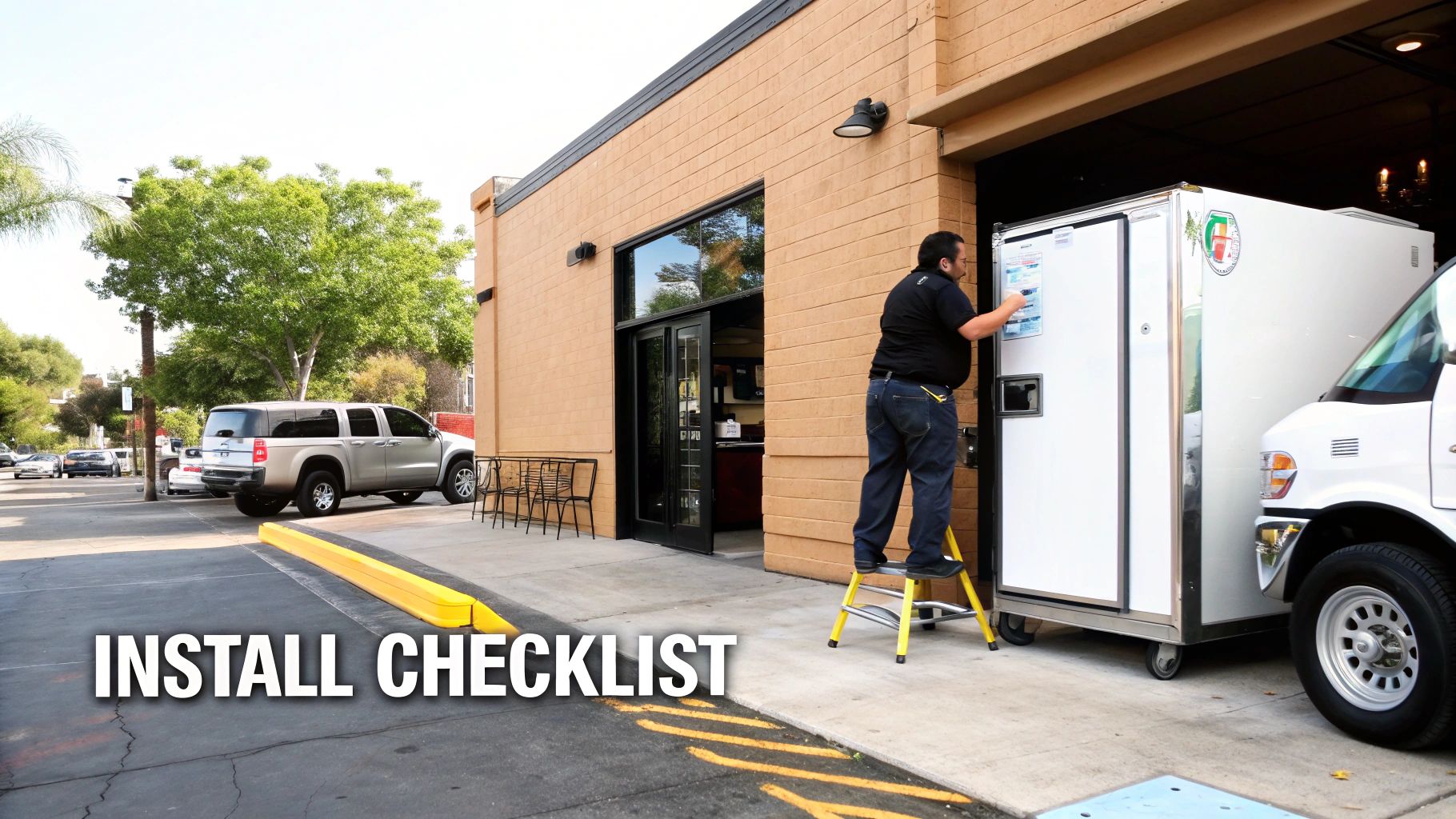
Before that unit even leaves the warehouse, you need a solid game plan. It’s time to grab a tape measure and think like a mover. Are your doorways wide enough? Can you make that tight corner in the hallway? Rushing this part is a classic mistake that leads to scuffed walls, dented equipment, or the awful moment you realize it just won't fit.
Your Pre-Installation Checklist
To make sure delivery day goes smoothly for your LA business, run through this quick and practical checklist. These are the details people often forget in the excitement of getting new gear.
- Confirm Electrical Requirements: Does the fridge need a standard 115V outlet, or are you looking at a dedicated 220V circuit? An electrical mismatch is one of the most common—and expensive—reasons for installation delays.
- Verify Ventilation Space: These refrigerators kick out a lot of heat and need room to breathe. Make sure you have at least 3-4 inches of clear space around the back and sides for proper airflow. If you don't, you risk overheating the compressor.
- Plan the Delivery Path: Seriously, measure every single doorway, corner, and staircase on the route. Don’t forget to factor in the extra width of dollies and moving equipment.
Thinking through these logistics saves you from day-of disasters and gets your new equipment installed safely and quickly. This planning is every bit as important as picking the right model.
The Value of Local Supply and Service
When you’re running a restaurant, food truck, or bar in Southern California, downtime is your worst enemy. Waiting weeks for a fridge to ship from some national retailer on the other side of the country is a luxury most of us can't afford. This is where having a local supplier with a nearby warehouse gives you a massive advantage.
Choosing a supplier with a local warehouse, like the one in Brea, CA, completely changes the game. What could be a multi-week wait with a big-box chain turns into a 1-2 business day delivery. You’re back up and running almost immediately.
Speed is critical, but it’s only half the story. A strong warranty paired with accessible local service is your real safety net. When something goes wrong, you need a team that can show up fast, not a 1-800 number that puts you on hold for an hour. A good warranty isn't just a piece of paper; it’s your shield against spoiled inventory and lost revenue. If you ever hear strange sounds, you can learn more about how to figure out a fridge making a loud noise while you wait for a pro to arrive.
Keeping your business safe also means planning for the unexpected. Things like a major leak or flood can throw a wrench in your operations and damage equipment. Understanding what’s involved in commercial water damage restoration is a smart part of any restaurant owner’s emergency plan.
Financing: A Smarter Way to Invest in Your Kitchen
For most independent restaurant owners and Los Angeles food truck operators, the price tag on a new commercial fridge can be a real gut punch. Cash flow is everything. Tying up thousands of dollars in one piece of equipment can seriously hamstring your budget for payroll, inventory, and getting the word out.
But what if you could get the exact right fridge for your business without emptying your bank account?
This is where smart financing completely changes the game. Instead of seeing a top-of-the-line refrigerator as a huge, one-time expense, you can think of it as a predictable monthly operating cost. This single shift frees up your cash, letting you put it where it’s needed most—like stocking up for that big festival weekend or rolling out a brand-new menu for your cafe.
Stop Thinking "Cost," Start Thinking "Investment"
Financing takes a big, scary number and turns it into a manageable line item in your monthly budget. A brand-new, energy-efficient fridge isn't just a metal box; it's a direct investment in the health of your business. A reliable unit protects your food inventory, keeps the health department happy, and lets you sleep at night without worrying about a sudden, catastrophic breakdown.
Looking at new equipment as a small monthly payment instead of a massive upfront cost is a total mindset shift. It lets you get the high-quality tools you need to grow right now, instead of waiting months or years to save up, which just puts you behind.
The Real Price of a "Cheap" Used Fridge
Going for a used refrigerator might feel like a savvy move to save a few bucks, but it's more like a roll of the dice. You’re buying a machine with a completely unknown history, zero warranty, and a very real risk that it’s on its last legs. That initial "deal" can vanish in a flash with one eye-watering repair bill or, worse, a total meltdown that costs you thousands in spoiled product.
Let's just break down the two options:
- New, Financed Fridge: You get a dependable, warranty-backed machine with a predictable monthly payment. It's an efficient workhorse that starts saving you money on your utility bills from day one.
- Used, "Bargain" Fridge: You’re stuck with an unknown service history, no warranty, higher energy bills, and the constant threat of expensive downtime.
By working with a local supplier that offers good financing options, you can upgrade your kitchen with total confidence. It’s a strategic decision to invest in reliability and peace of mind, so you can get back to what you actually love doing—running your business.
Your Top Questions About Commercial Fridges
Running a busy kitchen in Southern California means you've got questions, and when it comes to refrigeration, you need straight answers. Let's tackle some of the most common things we hear from restaurant, bar, and food truck owners just like you.
What’s the Big Deal? Commercial vs. Residential Fridges
So, what really separates a commercial fridge from the one in your home kitchen? Think of it like comparing a heavy-duty work truck to a family minivan. They both get you around, but only one is built to haul a ton of bricks every single day.
A commercial refrigerator is that work truck. It’s a powerhouse, engineered with a beefy compressor that can handle the door being thrown open dozens of times an hour while holding a rock-solid, food-safe temperature. It's also built with tough, easy-to-sanitize stainless steel to meet strict health department codes and get that all-important NSF certification. Your home fridge would simply burn out under that kind of pressure, putting your inventory—and your customers—at risk.
Keeping Your Fridge Healthy for the Long Haul
How often do I really need to clean those condenser coils? For most places in SoCal, giving them a good cleaning every 90 days is a solid plan. But if you’re running a kitchen with a lot of airborne grease—think fryers at a Mexican food joint or the grill in a packed Los Angeles food truck—you absolutely need to do it monthly.
Seriously, this is the single most important thing you can do for your fridge. Clean coils mean your unit runs efficiently, which saves you real money on your SoCal Edison bill. More importantly, it’s your best defense against a catastrophic failure that could have been easily prevented.
Can I just stick a fridge in my hot, stuffy back room? Please don't. That's a recipe for a very expensive disaster. Commercial units are designed to work their best in spaces under 90°F. When you shove one into a hot, unventilated closet, you force its compressor to run 24/7 just to keep up. Your energy costs will skyrocket, the unit will die an early death, and you can kiss that warranty goodbye. Always give it plenty of breathing room.
Top-Mount vs. Bottom-Mount Compressors
Should I get a fridge with the compressor on the top or the bottom? This really boils down to your specific kitchen layout and what you’re cooking.
- Top-mount units are fantastic for bakeries and Los Angeles pizza spots. Why? Because they pull in cleaner air from up high, far away from all the flour and dust that settles on the floor.
- Bottom-mount units are often a smarter choice for hot kitchens. They draw in the cooler air that sinks to the floor, making them a bit more efficient. Plus, they're easier on your back since the bottom shelf is higher up, so you don't have to bend down as far.
Ready to find the perfect workhorse for your kitchen? The team at LA Restaurant Equipment is here to help you select the ideal Atosa unit with a full warranty. Explore our warehouse-direct inventory and enjoy fast, free shipping across Southern California from our Brea location. Visit us at https://larestaurantequipment.com to get started.