

In the high-stakes culinary world of Los Angeles, from a bustling Los Angeles food truck slinging tacos to a cozy pizzeria serving authentic Los Angeles pizza, space is a luxury, but performance is a necessity. This is exactly where the commercial 2 burner gas cooktop proves its worth, delivering serious, precise heat without hogging your precious counter space. This key piece of restaurant equipment lets chefs pull off demanding menus without giving up an inch of valuable kitchen real estate.
Why Compact Power Is Essential for SoCal Kitchens
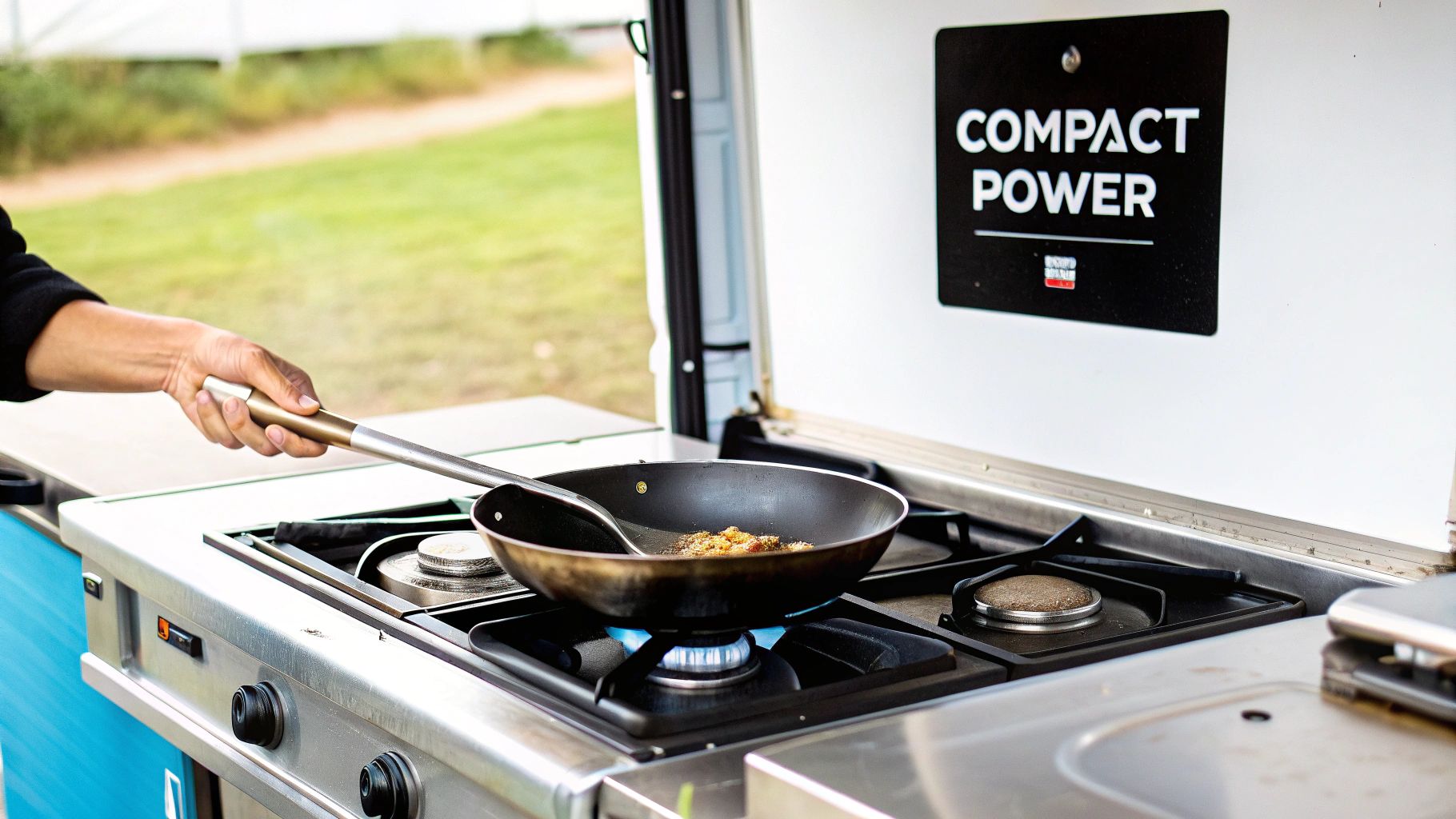
Here in Southern California's fast-moving foodservice scene, every square inch of a kitchen has to earn its keep. For a lot of independent restaurants, ghost kitchens, and pop-up vendors, a massive multi-burner range is just overkill and a waste of space. The smarter play is a dedicated, high-performance cooktop that gives you power and flexibility without the bulky frame.
Think of it like the difference between a sports car and a sedan. Sure, both get you from A to B, but the sports car is built for one thing: performance in a tight package. Your 2 burner gas cooktop is the sports car of the cooking line—it’s all about agility and speed.
Maximizing Efficiency in Tight Spaces
For businesses like food trucks, the number one challenge is always space. Every piece of equipment has to pull its weight. A compact gas cooktop lets an operator build out a versatile menu, from simmering sauces for a pizza joint to searing carne asada for authentic Mexican food, all within a few square feet. That kind of agility is what separates the winners from the losers on the streets of LA.
Understanding how smart equipment choices impact your entire workflow is a game-changer. For a closer look at the big picture, a guide to running a thriving food truck business can offer some valuable perspective. The principles in there don't just apply to mobile kitchens; they're gold for any spot with a limited prep area.
The Power Behind the Flame
The real value of a commercial 2 burner gas cooktop isn’t just about its small size. This restaurant equipment is built from the ground up for the relentless grind of a professional kitchen. Unlike the ones you'd find at a home appliance store, they bring serious heat.
- Higher BTU Output: Commercial burners pump out way more heat. This means faster cooking, better sears, and keeping the line moving during a crazy dinner rush.
- Superior Durability: Built with heavy-duty stainless steel and cast iron grates, they're made to take a beating from constant use, high temps, and the clanging of heavy pots and pans.
- Precise Heat Control: Good commercial models give you incredible control over the flame. You can go from a delicate simmer for a complex sauce to a roaring fire for wok cooking, all with a simple turn of the knob.
If you're mapping out a mobile kitchen, check out our guide on essential equipment for food truck kitchens. It’s designed for operators who need to make every inch count without cutting corners on quality or compliance.
Decoding the Features of a Commercial Cooktop
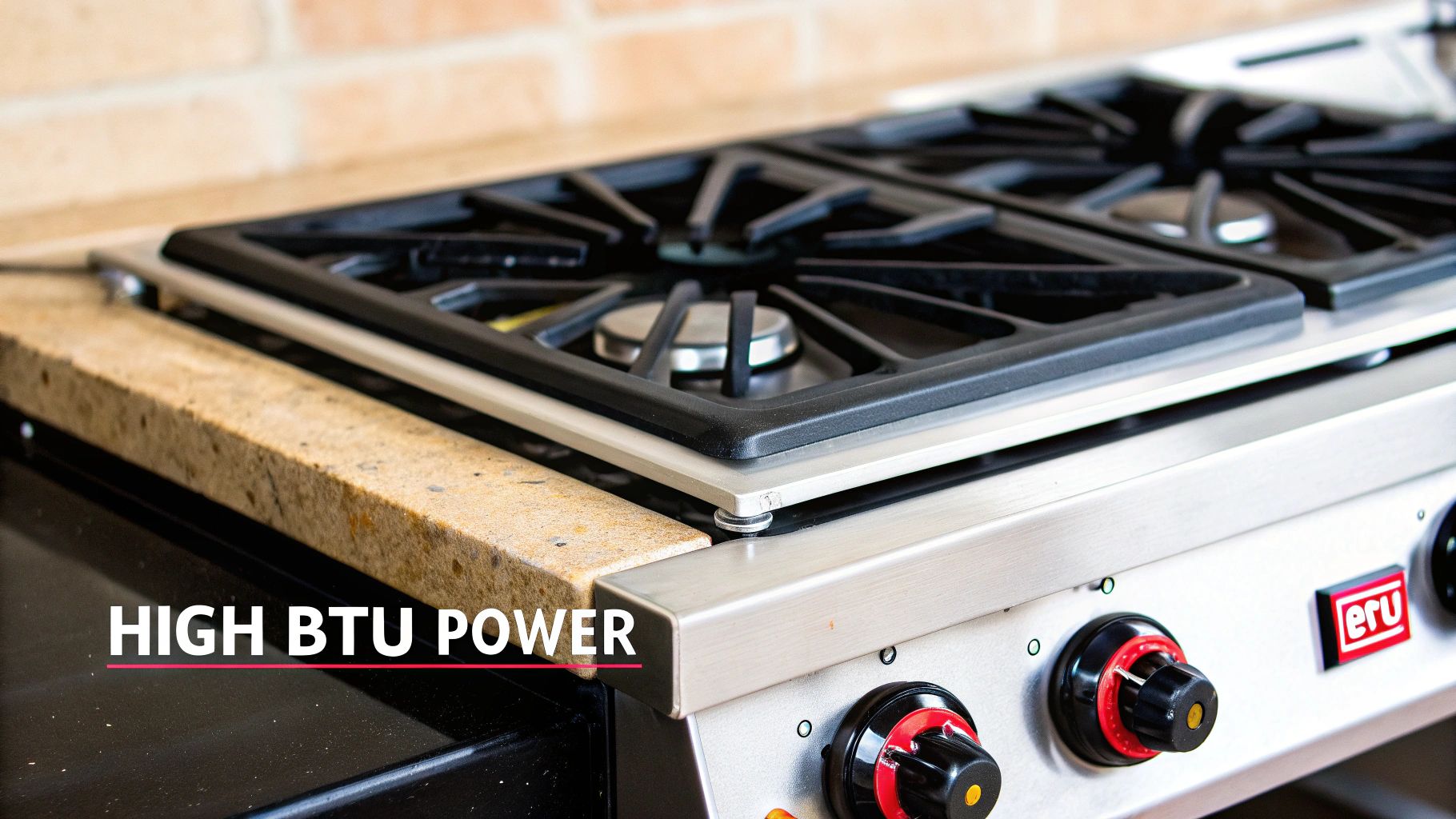
When you look past the spec sheet, you find the real engine of a professional kitchen. The features packed into a commercial 2 burner gas cooktop are what truly separate a high-performance workhorse from something you'd find in a home kitchen. Getting these details right is how you make a smart investment that pays off every single service.
The first thing you have to look at is the BTU (British Thermal Unit) rating. Think of BTUs as the horsepower for your cooktop. A higher BTU rating means more raw power, which translates directly to faster boiling, a better sear on a steak, and quicker recovery when you're firing off orders back-to-back. For any busy L.A. kitchen, high BTUs aren't a luxury—they're essential for keeping up.
Your typical home stove might push out 12,000 BTUs on a good day. In the commercial world, burners usually start at 25,000 BTUs and climb from there. This is the kind of power a Los Angeles food truck needs to serve a long line quickly or a Mexican food restaurant relies on to keep tortillas coming off the line during a dinner rush.
Built for the Grind: Construction and Materials
Power is only half the story. Durability is just as critical. A commercial kitchen is a battlefield of heavy pots, constant splatters, and intense, relentless heat. This is where your choice of materials makes all the difference.
Commercial cooktops are engineered for non-stop use. They’re built for longevity and safety above all else, ensuring they can take the daily abuse of a professional kitchen without breaking a sweat.
Always look for units built with heavy-duty stainless steel. It's the industry standard for a reason—it fights off corrosion, it's a breeze to sanitize, and it can handle the bumps and dings of a fast-paced environment.
Just as important are the grates. You need heavy-duty cast iron grates, period. They hold onto heat like nothing else, giving you a stable, even cooking surface, and they're tough enough to support a massive stockpot without ever warping. These aren't just details; they're fundamental to performance and long-term value. If you're weighing your options, you might find our guide on the best gas stoves and ovens helpful for a wider view.
Essential Features of Commercial 2 Burner Gas Cooktops
Choosing the right cooktop often comes down to understanding how specific features impact your daily kitchen workflow. This table breaks down what you should be looking for and why it matters in a real-world setting.
| Feature | Why It Matters for Your Kitchen | What to Look For |
|---|---|---|
| High BTU Burners | Delivers intense heat for faster cooking, better searing, and quick temperature recovery, keeping your ticket times down. | At least 25,000 BTUs per burner for general use; higher for specialized tasks like wok cooking. |
| Cast Iron Grates | Provides superior heat retention and a stable surface for heavy pots. They're built to last, preventing warping over time. | Heavy, thick, and easily removable grates that sit securely without wobbling. |
| Stainless Steel Body | Resists rust, corrosion, and dents. It's also non-porous, making it simple to clean and sanitize for food safety. | Look for Type 304 stainless steel for the best durability and corrosion resistance. |
| Standing Pilot Light | Ensures instant, reliable ignition every time. No clicking, no waiting—just turn the knob and you have a flame. | A protected pilot system that won't easily get clogged by spills. |
| Removable Crumb Tray | Catches drips and food particles, making end-of-day cleanup drastically faster and more thorough. | A full-width, slide-out tray that's easy to remove and deep enough to be effective. |
| Manual Controls | Simple, durable knobs give you precise, tactile control over the flame. No complex electronics to fail in a hot kitchen. | Sturdy metal knobs with clear temperature markings. Avoid flimsy plastic. |
By focusing on these core elements, you can select a cooktop that not only meets your performance needs but also stands up to the rigors of a professional kitchen for years to come.
Features That Improve Workflow and Safety
Beyond the core construction, a few other features make a huge difference in your day-to-day operations and safety. These are the details that elevate a good cooktop to a great one.
- Ignition Systems: Most commercial units rely on a standing pilot light. This ensures the burner is always ready to go at a moment's notice, which is a lifesaver during a busy service when you don't have time to mess with a faulty igniter.
- Crumb Trays: It sounds simple, but a removable, full-width crumb tray is a game-changer. It sits under the burners to catch everything that falls, making daily cleanup significantly faster and easier while keeping your station more sanitary.
- Dual-Ring Burners: Some high-end models feature dual-ring burners, which offer incredible flame control. You can use the small inner ring for a low, gentle simmer or fire up both rings for maximum, wok-searing heat—all from one burner.
The demand for this kind of robust restaurant equipment is always strong. The global market for gas stoves, with two-burner units being a major segment, was valued at USD 104.46 billion in 2025 and is projected to keep growing. This shows a steady need from professional kitchens all over the world. Choosing a unit with these professional-grade features is how you equip your kitchen for success.
Navigating Installation: Gas and Ventilation Needs
Getting your new 2 burner gas cooktop installed is about more than just hooking up a gas line. Think of it as the foundation of your cooking line—get it right, and everything runs smoothly. Get it wrong, and you're looking at safety hazards, failed inspections, and major operational headaches down the road.
When it comes to commercial kitchens in Southern California, two things are absolutely non-negotiable: your gas supply and your ventilation system. Let’s walk through what you need to know to keep your kitchen safe, compliant, and efficient from day one.
Choosing Your Fuel: Natural Gas vs. Propane
The first fork in the road is deciding on your fuel source. Every commercial cooktop is built at the factory for one of two types: natural gas (NG) or liquid propane (LPG). You can't just switch between them; they're designed differently and using the wrong one is a serious safety risk.
-
Natural Gas (NG) is what flows through the utility pipes directly into most brick-and-mortar restaurants in Los Angeles. If your building is already hooked up to a gas main, this is your most straightforward and cost-effective option. It's convenient, reliable, and what most permanent kitchens run on.
-
Liquid Propane (LPG) is your go-to for any kitchen on the move. Stored in portable tanks, it’s the lifeblood of food trucks, catering setups, and pop-up kitchens. Propane delivers that same powerful, high-heat performance but with the freedom to cook anywhere.
It's critical you order the right version for your operation. Hooking an NG unit up to a propane tank (or vice versa) won't just cook poorly—it's downright dangerous. If you ever need to switch fuel types, you’ll want to understand the process of converting from natural gas to propane, a job that always, always requires a certified professional.
A classic rookie mistake is grabbing a cooktop without first checking the gas supply on-site. Always confirm what you have before you buy. This simple check ensures the unit you get is ready to install safely right out of the box.
The Non-Negotiable Need for Commercial Ventilation
In a commercial kitchen, managing fire risk and air quality is everything. Any piece of equipment that kicks up grease-laden vapor—and your 2 burner gas cooktop definitely does—must be installed under a Type 1 commercial hood. This isn't just a friendly suggestion; it's a hard-and-fast rule from the Los Angeles County Department of Public Health and the fire marshal.
A Type 1 hood, often called a grease hood, is an engineered system doing much more than just venting steam. Its job is to capture and get rid of:
- Heat: It yanks the intense heat rising off the burners away from your line cooks, making the kitchen a whole lot more bearable and safer.
- Grease: The baffle filters inside are designed to trap airborne grease, stopping it from building up inside your ductwork where it becomes a massive fire hazard.
- Smoke and Fumes: It pulls out smoke, steam, and dangerous combustion gases like carbon monoxide, keeping the air your team breathes clean and safe.
Trying to run a gas cooktop without a proper hood is a surefire way to fail an inspection and create a dangerous fire risk. And on a related safety note, make sure you and your staff always know the location of your gas shut-off valves. Being able to kill the gas supply in an emergency is a fundamental part of running a professional kitchen.
Planning for these gas and ventilation needs isn't just busywork. It's the most critical step in setting up your new cooktop for success. When you nail the fuel source and install a compliant hood system, you’re not just following the rules—you’re building a safer and more effective kitchen.
Matching a Cooktop to Your Business Needs
Picking the perfect 2 burner gas cooktop isn't a one-size-fits-all deal. What works for a slammed food truck pumping out tacos is totally different from what a small cafe needs to gently simmer its signature sauces. The best way to get it right is to look at real-world Los Angeles kitchen scenarios and see how certain features solve their unique problems.
Think of it like casting an actor for a movie role. You have to match the cooktop’s specific talents to the "script"—your menu. This way, you’re not just buying a piece of equipment; you're bringing on a reliable partner that fits perfectly into your kitchen's flow.
The High-Volume Los Angeles Food Truck
Picture a Los Angeles food truck parked on a busy downtown street during that chaotic lunch rush. What do they need most? Speed, power, and durability. Every single second counts, and the gear has to take the constant bumps and rattles of being on the road.
- Top Priority: High BTU output is everything. You need a cooktop with 30,000 BTUs or more per burner to get a hard sear on carne asada, flash-sauté veggies, and keep those ticket times down.
- Must-Have Feature: Heavy-duty, all-stainless steel construction. This is non-negotiable. The frame has to be tough enough to handle the abuse of the road without warping or breaking down.
- Operational Demand: A standing pilot light means instant fire. When a line is forming, you don't have time to mess around with a finicky electronic starter that won't light.
For a busy Mexican food truck, this kind of brawny, compact setup is the heart of the whole operation. It provides that intense, immediate heat needed to keep up with an endless stream of orders.
The Neighborhood Pizzeria and Bistro
Now, let's head over to a cozy spot making delicious Los Angeles pizza, known for its amazing soups and scratch-made pasta sauces. Here, the game isn't about raw power—it's about precision and finesse. The kitchen needs a cooktop that can hold a super-low, steady temperature for hours without burning anything.
- Top Priority: Pinpoint flame control is the most important thing. A cooktop with sensitive manual knobs that can achieve a true, low simmer is way more valuable than one with massive BTUs.
- Must-Have Feature: Dual-ring burners can be a total game-changer. Being able to use just the small inner ring gives you that gentle, consistent heat you need for delicate sauces or for melting chocolate without a worry.
- Operational Demand: An easy-to-clean design is a lifesaver. Things like removable cast iron grates and a deep crumb tray make it simple to keep the station sanitary, especially in a smaller kitchen with a small crew.
This whole process—balancing what you need with your physical setup—is the key to getting your kitchen right. This little flowchart breaks down the first big gas and ventilation decisions every operator has to make.
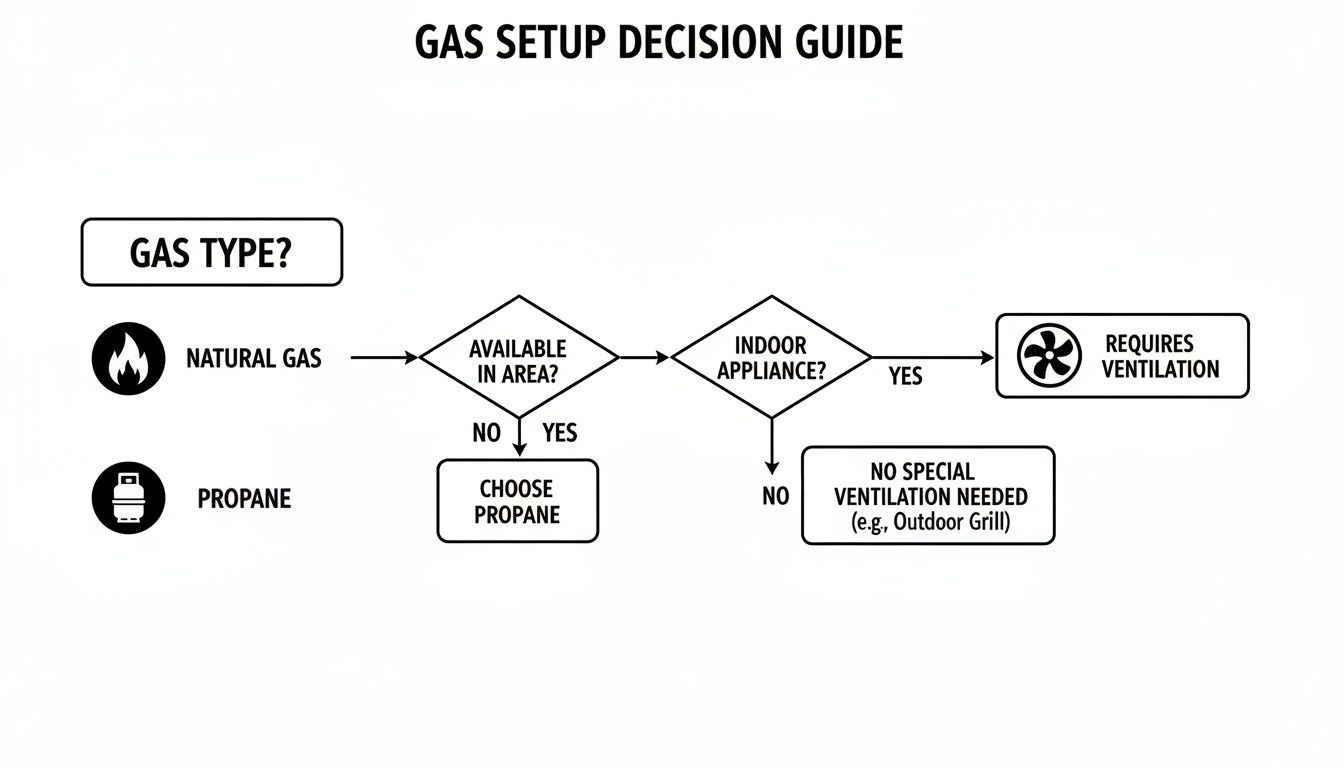
As you can see, whether you're in a permanent building or a food truck, proper, professional ventilation is an absolute must.
The Small Bar Appetizer Station
Last up, think about a bar that's just starting to offer a small appetizer menu—blistered shishito peppers, seared halloumi, maybe some garlic shrimp. The cooktop here is a supporting actor, not the main star. The most important things are reliability and a small footprint.
For an operation like this, the cooktop must be a low-maintenance workhorse. It needs to perform reliably night after night with minimal fuss, fitting seamlessly into a space that wasn't originally designed as a full kitchen.
The demand for this kind of flexible restaurant equipment is huge. In fact, North America's gas stove market was valued at a whopping USD 40.2 billion in 2024, which just shows how critical these appliances are in the commercial food world. And with a projected 7.2% annual growth rate, it's clear that kitchens are continuing to invest in solid gas cooking solutions. If you want to dive into the numbers, you can learn more about the gas stove market analysis.
By seeing your own operation in one of these scenarios—the fast-paced truck, the precise cafe, or the dependable bar—you can start to narrow down the features that will actually make a difference for your business. This focused thinking helps you pick a 2 burner gas cooktop that will be a solid part of your team for years.
Mastering Long-Term Maintenance and Safety
Think of your 2 burner gas cooktop as a long-term investment. Protecting it goes way beyond just keeping it shiny. Real, consistent care is what guarantees its longevity, its performance, and most importantly, the safety of your entire kitchen. This is how you keep your cooktop running like a champ day after day—and pass those health inspections with flying colors.
A clean cooktop is a safe cooktop, plain and simple. Grease buildup is one of the biggest fire hazards in any commercial kitchen, and your cook line is ground zero. Your first line of defense is setting up simple, non-negotiable cleaning routines for your staff.
Daily and Weekly Cleaning Routines
Consistency is everything. A few minutes of cleaning at the end of a shift will save you hours of painful scrubbing later and keep your equipment in prime condition. The whole point is to stop grease and food bits from getting baked on and carbonizing, which makes them a nightmare to get off.
Here’s a practical cleaning schedule you can put in place right away:
- End of Every Shift: Wipe down all the stainless steel surfaces with a food-safe degreaser. Pull out the cast iron grates and the crumb tray, dump any debris, and give them a good wash with hot, soapy water.
- Weekly Deep Clean: Once a week, take the time to remove the burner heads (after the unit is cool and the gas is off, of course) and clean them out. A stiff brush or even an unbent paperclip works great for clearing out any clogged ports. This is key to getting an even, efficient flame.
This routine isn't just for looks. Clogged burner ports waste fuel and can even produce dangerous levels of carbon monoxide. Keeping them clear is a critical safety task.
Think of daily maintenance as preventative medicine for your equipment. A chef sharpens their knives to prevent accidents and get a clean cut. In the same way, cleaning your cooktop daily prevents dangerous grease buildup and maintains its raw cooking power.
Essential Safety Checks and Compliance
Beyond cleaning, you've got to do regular safety checks on any gas appliance. It's a must. These quick inspections can help you catch a small problem before it turns into a catastrophe. Train your team to keep an eye out and report anything that seems off immediately.
Your safety checklist should include these three things:
- Checking for Gas Leaks: The easiest way is the old "soap test." Mix some soap and water in a spray bottle and spray it on the gas fittings and connections. If you see bubbles forming, you have a leak. Shut the gas off right away and call a certified technician. No exceptions.
- Inspecting the Pilot Light: The pilot light should burn with a steady, blue flame. If it’s yellow, flickering, or looks weak, you’ve got a problem with the gas mixture or a dirty pilot assembly. This is a job for a professional.
- Ensuring Grates are Secure: Give the cast iron grates a little push. They should sit flat and not wobble at all. An unstable cooking surface is an accident waiting to happen, especially when you’re dealing with heavy, scalding hot pots.
Understanding NSF and ETL Certifications
When you see an NSF (National Sanitation Foundation) or ETL (Intertek Testing Services) sticker on a 2 burner gas cooktop, it means that piece of equipment has been through the wringer. These certifications are proof that the unit meets tough standards for public safety and sanitation.
Here in Los Angeles, health inspectors are trained to look for these marks. They tell the inspector that your cooktop is built with food-safe materials, designed to be cleaned properly, and has passed all the necessary electrical and gas safety tests. Buying uncertified equipment is a huge gamble that can lead to failed inspections, hefty fines, or even getting shut down. When you combine consistent maintenance with certified equipment, you create a safe, compliant kitchen that you can run with total confidence.
Alright, you’ve got the intel on what makes a great commercial 2 burner gas cooktop. You know what to look for, how to get it installed, and which features will make a real difference in your kitchen. So what's next?
Picking the right equipment partner. This is the last, and maybe most important, piece of the puzzle. It’s not just about a transaction; it's about finding a local supplier who gets the grind of the LA restaurant world and is genuinely invested in your success.
Why New Equipment Outperforms Used
When you're watching every penny, a used cooktop can look mighty tempting. I get it. But more often than not, it's a classic case of being penny-wise and pound-foolish. That "deal" on a used unit comes with a whole lot of baggage—no warranty, a mysterious service history, and the constant risk of a breakdown right in the middle of a Friday night rush.
Investing in new, warranty-backed equipment is just plain smarter. You’re getting a reliable, high-performance workhorse straight from the factory. That peace of mind is priceless, and with warehouse-direct pricing, you don’t have to empty your bank account to get it.
Finding a local partner who truly understands the breakneck speed of the LA market means you get more than just a box. You get a resource, someone in your corner who’s dedicated to keeping your kitchen humming, from the day you order to years down the road.
Seamless Ordering and Expert Guidance
Buying a critical piece of kitchen gear shouldn't feel like pulling teeth. A top-notch supplier makes the whole process a breeze, whether you're a point-and-click online shopper or someone who'd rather talk it through with an expert. You need to be able to get a personalized quote without jumping through hoops.
This is especially true for busy operators who don't have a minute to spare. You should look for a partner who delivers on:
- Online Convenience: A clean, simple website that makes it easy to browse and buy.
- Personalized Support: Real people you can actually talk to on the phone, via email, or chat for advice and custom quotes.
- Local Expertise: A team that knows Southern California’s health codes and kitchen challenges inside and out.
Fast Delivery and Flexible Financing
Once you’ve made your decision, you can't afford to wait around. For any restaurant in Los Angeles, having a local supplier with a warehouse right here in Brea, California is a game-changer. It means your new cooktop can be on your doorstep in just one to two business days, and often with free shipping. That kind of speed is a massive advantage, whether you’re launching a new spot or scrambling to replace a dead unit.
On top of that, look for flexible financing. It makes getting brand-new equipment totally manageable. You get the cooktop you need right now and can spread the cost over time with simple monthly payments. This keeps your cash flow healthy for all the other things your business needs. That one-two punch of speed and smart financing makes a local partner an absolute asset for any LA restaurant, food truck, or bar.
Your Top Questions Answered
When you're looking to invest in new gear for your kitchen, especially something as fundamental as a 2-burner gas cooktop, you're going to have questions. It's smart. Getting the right answers is what turns a purchase into a long-term asset for your Los Angeles restaurant, food truck, or bar. We get these questions all the time, so let's tackle the most common ones we hear from chefs and owners just like you.
What’s the Right BTU Count for My Menu?
This all comes down to what you're cooking. The perfect BTU rating is a direct reflection of your menu's needs.
For a cafe doing mostly general-purpose work—think simmering a house marinara for a pizza place, melting butter, or a light sauté—a cooktop in the 25,000 to 30,000 BTUs per burner range has all the muscle you need.
But if you're running a high-heat operation, like a busy taco spot that's constantly searing carne asada or a food truck with a wok station, you’ll want to push higher. Look for units that deliver 30,000 BTUs or more per burner. That extra firepower is what gets you through a lunch rush without a hitch. Just be sure your ventilation can keep up with the heat you're putting out.
Can I Just Use a Home Cooktop in My Food Truck?
That's a hard no. It's not just a bad idea; it's a code violation waiting to happen. Residential units just aren't built for the grind of a commercial kitchen. They’ll fail.
Professional-grade cooktops are made from heavy-gauge stainless steel and thick, durable cast iron for a reason—they're designed to take a beating, shift after shift.
The most critical difference? Commercial cooktops are NSF/ETL certified. This isn't optional; it's a must-have for passing health inspections in Los Angeles. A residential unit won't have this certification, will break down under constant use, and is a serious safety risk that will get you shut down.
How Do I Convert a Cooktop from Natural Gas to Propane?
Most commercial 2-burner gas cooktops ship from the factory configured for either natural gas (NG) or liquid propane (LP). Some models might include a conversion kit, but this is absolutely a job for the pros—it must be done by a qualified gas technician.
Converting involves swapping out the burner orifices to handle the different pressure of propane gas. Trying to DIY this is incredibly dangerous. You could damage the unit, create a gas leak, and you'll definitely void your warranty. The smartest, safest move is to simply tell us what gas type you use when you place your order. We’ll make sure it arrives ready to go.
Is a Commercial Hood Really Necessary for a Small 2-Burner?
Yes, 100%. In Los Angeles County, any piece of gas-fueled cooking equipment in a commercial kitchen—no matter the size—is required by law to be under a Type 1 commercial ventilation hood.
This isn't a suggestion; it's a non-negotiable fire safety standard. The hood is there to pull out intense heat, smoke, and grease-filled vapors that are a major fire hazard. Firing up any gas appliance without a compliant hood is a fast track to a failed inspection.
Ready to find the perfect compact powerhouse for your kitchen? LA Restaurant Equipment carries a hand-picked selection of new, warranty-backed 2-burner gas cooktops tough enough for Southern California's demanding kitchens. We offer fast, free shipping from our local warehouse and have financing options that work for you. Let's get your business equipped for success.