

Let’s get one thing straight: most under counter refrigerator sizes are built to slide right under a standard 36-inch high commercial counter. They’ll typically range from a slim 24 inches to a wide-body 72 inches, with a depth of around 30-32 inches. This consistency in height makes it way easier to find a unit that slots into almost any kitchen layout, whether you’re outfitting a tiny Los Angeles food truck, a busy Mexican food spot, or a sprawling pizza restaurant prep line.
Your Quick Guide to Standard Undercounter Refrigerator Sizes
Picking the right undercounter refrigerator is a lot like choosing the right knife for a specific task. The best size isn't just about what fits—it's about what makes your kitchen work smarter. The decision you make on restaurant equipment impacts everything from how fast your line cooks can plate a dish to your monthly energy bill.
Whether you're running a slammed Los Angeles pizza joint, a chill neighborhood cafe, or a bar that's three-deep on a Friday night, nailing the dimensions is the first step to a smoother operation.
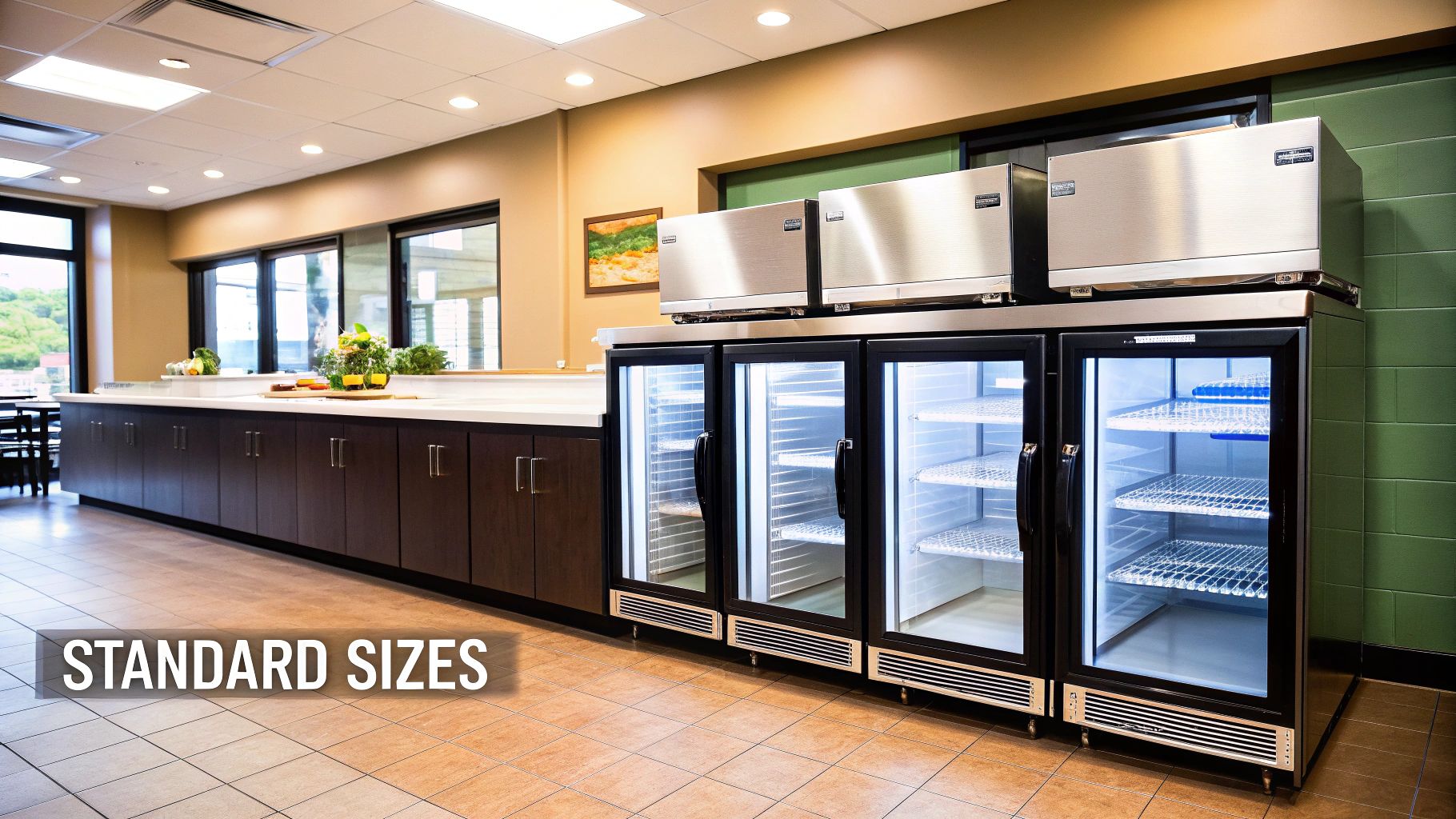
Think of the following table as your cheat sheet. It’s a quick overview of the most common sizes and where they shine, setting you up for the deeper dive we’ll take later on.
The perfect refrigerator does more than just fit; it enhances your entire operational flow, saving time and reducing unnecessary steps for your staff during a busy service.
Standard Undercounter Refrigerator Sizes at a Glance
To cut through the noise, here’s a breakdown of the most common under counter refrigerator sizes you’ll find on the market. This table is designed to be a quick reference, helping you immediately connect a unit’s width to your kitchen’s real-world needs.
| Width Range (Inches) | Door/Drawer Count | Typical Capacity (Cu. Ft.) | Best For |
|---|---|---|---|
| 24" - 36" | 1 Door/Drawer | 5 - 10 Cu. Ft. | Compact cafes, small prep stations, food trucks, bar back-ups |
| 48" - 60" | 2 Doors/Drawers | 10 - 18 Cu. Ft. | Mid-sized restaurant lines, busy bars, sandwich shops |
| 72" and Up | 3+ Doors/Drawers | 18+ Cu. Ft. | High-volume kitchens, large pizzerias, institutional settings |
From single-door workhorses for tight spots to massive three-door units that can anchor an entire prep line, this gives you a solid starting point for figuring out what your space can handle and what your volume demands.
Why the Right Size Is a Game Changer for Kitchen Workflow
Choosing the right under counter refrigerator sizes is about way more than just getting it to fit under the counter. It's a make-or-break decision that ripples through your kitchen’s efficiency, your staff’s sanity, and even your food safety compliance.
Think of it like setting up a professional dance. When the unit is the right size and in the right place, your cooks move smoothly, almost without thinking. Every ingredient is an easy grab away, turning a chaotic rush into a fluid, efficient service. We’ve seen a busy Los Angeles pizza restaurant shave precious seconds off every order just by getting their restaurant equipment right—that’s the power of smart sizing.
Now, imagine the flip side. A fridge that’s too small forces staff to overstuff it, blocking airflow and creating dangerous temperature inconsistencies. That’s a health code violation waiting to happen. On the other hand, a unit that’s too big is just a space hog, sucking up electricity and occupying prime real estate that could be used for something far more important.
The Financial Impact of Sizing
In the cutthroat Los Angeles food scene, every square inch of your kitchen has to earn its keep. Wasted space is literally wasted money. An inefficient workflow means slower ticket times, which leads to higher labor costs and frustrated customers.
The demand for these workhorse units is exploding for a reason. The global undercounter refrigerator market hit a massive USD 3.42 billion in 2024 and is expected to jump to USD 6.27 billion by 2033. For independent restaurant owners in Los Angeles and Orange County, this growth is great news—it means more competition and better, more energy-efficient models that can put a serious dent in your utility bills.
In a high-volume kitchen, a few saved seconds on every order can add up to hours of saved labor costs each week. The right size undercounter unit is an investment in speed and consistency.
Connecting Size to Operational Success
The link between your equipment size and your kitchen’s performance is direct and undeniable. A perfectly sized, well-placed unit can turn a frantic, clumsy service line into a well-oiled machine.
- Reduces Staff Movement: Placing ingredients exactly where they’re needed cuts down on wasted steps. Less running around means less fatigue and more focus on making great food.
- Improves Food Safety: A properly sized unit prevents over-stuffing. This ensures cold air circulates the way it’s supposed to, keeping every item safely chilled.
- Maximizes Space: In a tight kitchen, every inch is gold. The right unit frees up valuable floor space for other essential equipment or gives your team more room to work.
Ultimately, you want to build a workspace where the layout serves the workflow, not the other way around. If you’re planning a new kitchen or a redesign, our guide on commercial kitchen layout design is packed with insights for creating a truly productive environment. By taking the time to nail down your under counter refrigerator sizes, you’re not just buying a box to keep things cold—you’re investing in a smoother, safer, and more profitable operation.
Your Pre-Installation Measurement Checklist
Picking out the right undercounter refrigerator is only half the job. The real test comes on delivery day, and that’s where a little planning goes a long way. Think of it like a pilot’s pre-flight check—missing one tiny step can cause a major headache, like realizing your brand-new unit won’t even fit through the back door.
A solid measurement checklist is your best defense against costly surprises and installation-day chaos. This isn’t just about the final spot for the fridge. You have to think about its entire journey, from the delivery truck all the way to its new home under your counter.
Mapping the Delivery Path
Before you do anything else, grab a tape measure and walk the path your refrigerator will take. It’s a classic rookie mistake to only measure the final installation space. A 72-inch unit isn’t going to magically teleport into your kitchen if it can’t squeeze through a 34-inch doorway first.
- Doorway and Hallway Width: Measure the absolute narrowest points. Don't forget to account for door jambs, hinges, or any random pipes that stick out.
- Corner Clearances: Can you actually pivot the unit around that tight corner in the hallway? Make sure there’s enough room to turn without gouging the walls or scratching your new equipment.
- Stairs and Ramps: If you have them, are they wide enough? More importantly, are they strong enough to handle the weight of the unit plus the dolly and the person moving it?
Getting the size right from the start isn’t just about fitting in a space; it’s about creating a smooth, efficient workflow.
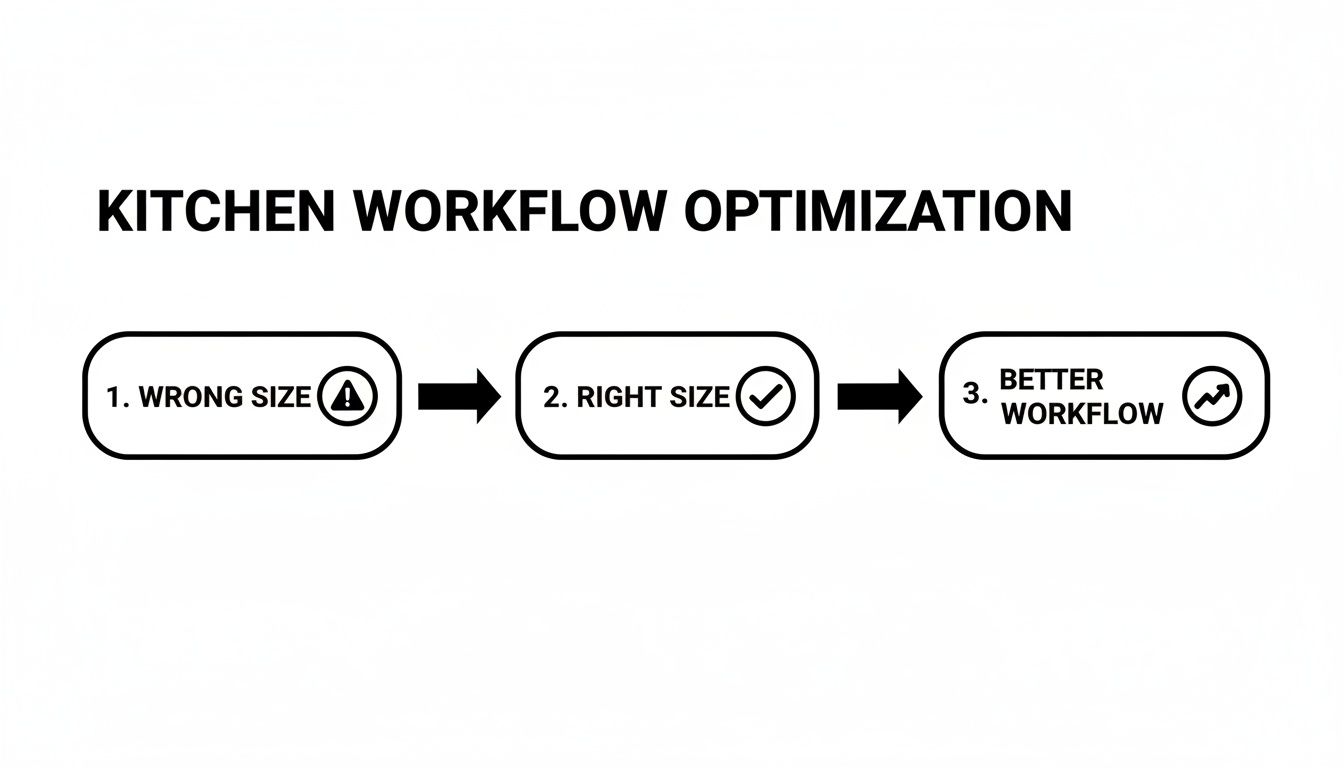
As you can see, the right fit is the foundation for a kitchen that just works.
Final Placement and Essential Clearances
Okay, so you’ve confirmed the unit can actually get inside. Now, let's focus on its final destination. The floor needs to be perfectly level and strong enough to support a fully stocked fridge, which can easily top 500 pounds. You’ll also need to locate the nearest dedicated electrical outlet—the cord needs to reach without an extension cord, as that’s a common health code violation.
But the most critical measurement of all? Ventilation. Your refrigerator needs to breathe to get rid of the heat its compressor generates.
A common mistake is failing to account for proper airflow, leading to an overworked compressor, higher energy bills, and a shorter lifespan for your equipment.
How much space you need depends entirely on the model. Rear-breathing units need a few inches of clearance at the back and on the sides, so you can’t box them in completely. On the other hand, front-breathing models pull and push air through a grille right on the front, letting you install them flush with walls or other equipment.
Always, always check the manufacturer's spec sheet for the exact clearance requirements. Once you’ve got all your numbers, you'll be well-prepared for the setup, though a professional refrigerator installation can make the process even smoother. Taking these steps ensures your investment starts paying for itself from day one.
Matching Refrigerator Size to Your Business
Let's be honest, choosing the right undercounter refrigerator isn't a one-size-fits-all deal. The workhorse unit that keeps a high-volume Los Angeles pizza restaurant humming would be total overkill for a cozy Orange County coffee shop. Your business model, how many customers you serve daily, and the complexity of your menu are what really dictate the best under counter refrigerator sizes for your space.
Think of it like picking out a delivery vehicle. A food truck needs a nimble, tough van that can handle city streets, while a central kitchen supplying multiple locations needs a big, refrigerated truck. The goal is the same—get the goods from A to B—but the tool has to match the scale of the job. Your restaurant equipment is no different; it needs to be perfectly suited to your kitchen's unique rhythm.
Taking the time to match the unit to your operation means you're not just buying a cold box. You're investing in a piece of equipment that will genuinely support your workflow, make the most of your precious square footage, and ultimately, help your bottom line.
High-Volume Los Angeles Restaurants
For any bustling restaurant in the heart of L.A., like a popular Mexican food spot, speed and efficiency on the prep line are everything. This is where wide, multi-door undercounter units really shine. A 72-inch, three-door model is the undisputed champ, giving your chefs tons of organized storage right where they need it most. It dramatically cuts down on those time-wasting trips to the walk-in cooler.
These larger units are built to be workhorses, designed for the chaos of a busy service. They have enough capacity to hold all your prepped ingredients—from sauces and proteins to chopped veggies—ensuring the line never misses a beat during a dinner rush.
Los Angeles Food Trucks and Pop-Ups
In Southern California's killer food truck scene, it's all about being mobile and tough. Space is the ultimate luxury, which makes a compact and rugged 27-inch single-door undercounter refrigerator the perfect fit. These units are small enough to squeeze into tight layouts but built strong enough to handle the bumps, rattles, and vibrations of life on the road.
When you're shopping for a Los Angeles food truck unit, look for restaurant equipment with reinforced construction and heavy-duty, secure door latches. You need a reliable fridge that keeps ingredients perfectly chilled, whether you’re parked at a brewery in Long Beach or serving hundreds at a festival in DTLA.
Bars and Breweries
For bars, breweries, and nightclubs, it's a game of quick access and great presentation. Glass-door back bar coolers, usually in 48-inch or 60-inch widths, are the industry standard for a reason. They let bartenders see and grab a specific craft beer, bottle of wine, or mixer in a split second, all while showing off your selection to customers.
The right back bar cooler does more than just chill drinks; it acts as a silent salesperson, showcasing your beverage selection and encouraging impulse purchases during a busy service.
The demand for this kind of specialized gear is growing fast. The commercial undercounter and worktop refrigeration market is a massive industry, valued at USD 11.4 billion in 2024 and projected to climb to USD 15 billion by 2032. For bar managers across Southern California, this means more efficient and tech-forward options are hitting the market to help streamline operations in tight spaces.
Los Angeles Pizza Restaurants & Cafes
Cafes, bakeries, and especially Los Angeles pizza restaurants live and die by freshness and speed. A smaller 27-inch or 48-inch unit is often the perfect size for keeping milk, cream, and pastries chilled. If your team is building sandwiches or prepping pizzas to order, a 48-inch refrigerated prep table is a game-changer, combining cold storage with a handy workspace to make assembly a breeze.
These businesses don't need the colossal capacity of a full-scale restaurant, but they absolutely require dependable cooling in a compact footprint. Before you make a final call, it’s always a good idea to check out what the best commercial refrigerator brands have to offer to make sure you get the reliability and features you need.
To make things a bit easier, here’s a quick rundown of what we typically recommend for different types of SoCal businesses.
Recommended Undercounter Sizes by Business Type
| Business Type | Recommended Width | Key Feature | Example Use Case |
|---|---|---|---|
| High-Volume Mexican Restaurant | 72-inch | Multiple doors, large capacity | Storing prepped salsas, meats, and produce for a busy dinner service. |
| Los Angeles Food Truck | 27-inch | Durable construction, secure latch | Keeping sauces and proteins chilled in a mobile, high-vibration environment. |
| Los Angeles Pizza Parlor | 48-inch to 60-inch | Refrigerated prep top | Holding pizza toppings like cheese, pepperoni, and veggies for quick assembly. |
| Cafe / Sandwich Shop | 27-inch to 48-inch | Compact size, glass door option | Holding sandwich ingredients and milk for lattes in a small footprint. |
Ultimately, picking the right size comes down to knowing your own operation inside and out. By matching the equipment to your menu, volume, and workflow, you set your business up for smoother service and greater success.
Looking Beyond Dimensions to Essential Features
Okay, so you’ve got your measurements down and know the under counter refrigerator sizes that will fit your space. Now comes the fun part—looking at the features that really make or break a unit in the day-to-day chaos of a commercial kitchen.
Think of it like buying a chef's knife. Two knives might be the same length, but the quality of the steel, the feel of the handle, and the balance are what separates a workhorse from a headache. The spec sheet for a fridge tells a similar story about its long-term value and performance.
This stuff matters. The commercial refrigeration market is massive, valued at USD 30.5 billion in 2024, and under-counter units are a huge piece of that pie. Why? Because they pack a ton of storage into a tiny footprint, boosting prep efficiency by 25-30% in cramped kitchens. You can dig into more stats about this space-saving restaurant equipment over at imarcgroup.com.
Doors, Drawers, and Material Matters
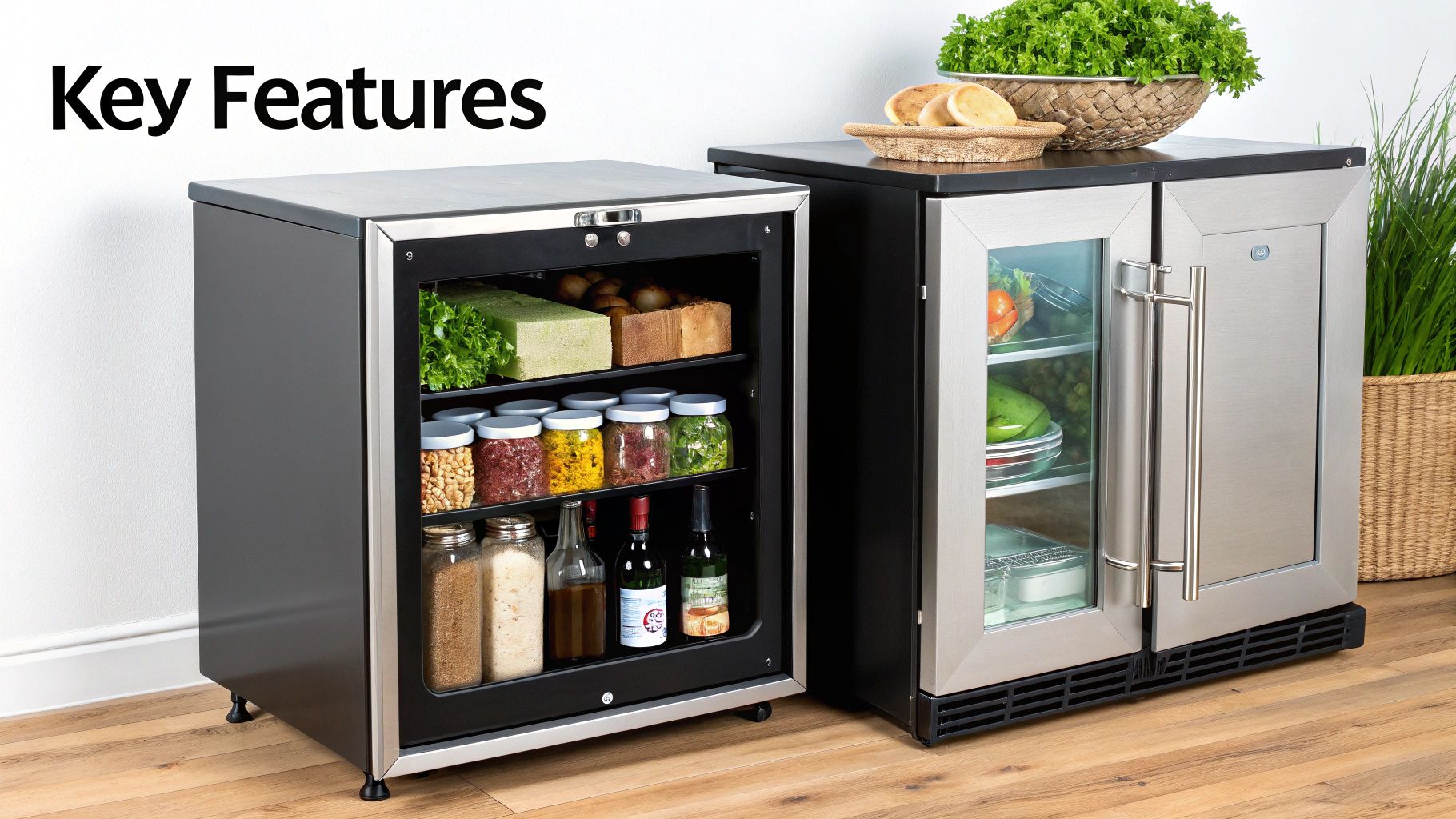
How you set up your unit is going to directly impact your kitchen’s rhythm. Picking between doors and drawers isn't just about looks; it's a strategic move based on what you're storing and how fast you need to grab it.
- Solid Doors: These are your insulation champions. A solid, stainless steel door is much better at holding in the cold, making it the perfect choice for back-of-house units that aren’t being opened every five seconds. They’re built tough and keep your energy bills down.
- Glass Doors: A no-brainer for bars, cafes, or any customer-facing spot. Glass doors let your staff see exactly what’s inside before they even open it. This saves precious seconds and stops cold air from escaping every time someone is looking for something.
- Drawers: For a prep station, drawers are a total game-changer. They offer incredible organization for pre-portioned ingredients like cheese, proteins, and chopped veggies, letting your line cooks grab what they need in a flash during a frantic dinner rush.
Don't forget about what the unit is made of. In a commercial kitchen, a durable, stainless steel exterior is non-negotiable. It fights off rust, handles the inevitable bumps and dings, and is a breeze to sanitize—exactly what you need to survive the daily grind of a busy Los Angeles kitchen.
Compressor Location and Energy Savings
Finally, let's talk about two technical details that can seriously affect your maintenance schedule and your utility bills: the compressor and energy efficiency.
The compressor is the heart of your refrigerator, and its location is important. Bottom-mount compressors are the most common, but they tend to suck in all the dust and grease from the floor, meaning they need more frequent cleaning to avoid a breakdown. Side-mount units, on the other hand, often run a bit cooler and are usually easier for technicians to access and service.
You should also keep an eye out for the ENERGY STAR logo. Certified models are designed to be way more efficient, often cutting energy use by 15-20% compared to standard units. For any owner watching their budget, those savings add up fast. To see just how much you can save, check out our guide on energy-efficient commercial refrigerators.
Finding Your Commercial Refrigeration Partner in Los Angeles
Nailing down the right undercounter refrigerator size is a huge first step, but finding a reliable partner to source that restaurant equipment is just as important. For restaurant owners in Los Angeles and Orange County, the game is all about getting the best value without ever compromising on quality or service.
Once you’ve carefully measured your space, matched the unit to what your business actually needs—whether you're a Los Angeles pizza joint, a bustling food truck, or a popular Mexican food spot—and considered the must-have features, the next move is getting your hands on the equipment. The right local supplier can make all the difference, helping you find that perfect fit for your operation.
Why a Local Warehouse-Direct Partner Matters
Working with a local supplier like LA Restaurant Equipment gives you a serious edge. By cutting out the expensive showrooms and sales commissions, we can offer warehouse-direct pricing on brand-new, warranty-backed equipment. This approach means you get top-tier brands like Atosa without the inflated price tag, ensuring your investment goes further.
Investing in new, warrantied restaurant equipment from a trusted supplier eliminates the gamble of buying used. It provides peace of mind, knowing your unit is reliable, energy-efficient, and backed by support if anything goes wrong.
Buying new also means you benefit from the latest in energy efficiency and performance. For businesses ranging from Mexican food restaurants to high-volume bars, this translates directly to lower utility bills and more dependable daily operations. We get the financial pressures of the food service industry, which is why we also offer flexible financing options to make getting essential equipment more manageable.
Ultimately, getting the right equipment is about more than just dimensions; it’s about building a solid foundation for your success. Whether you need a quote, some expert guidance on under counter refrigerator sizes, or help processing an order, our team is here to provide responsive, knowledgeable service that’s built for Southern California's dynamic culinary scene.
Got Questions About Undercounter Refrigerators? We've Got Answers.
When you're outfitting a kitchen in Los Angeles, every inch of space counts. It's no surprise that we get a lot of questions about undercounter refrigerators. Here are the most common ones we hear from restaurant, bar, and food truck owners just like you, with straight-to-the-point answers to help you choose wisely.
What’s the Standard Height for an Undercounter Refrigerator?
Most commercial undercounter refrigerators stand between 34 and 36 inches tall, casters included. This isn't a random number—it’s specifically designed so the unit slides right under a standard 36-inch high commercial countertop. The result is a clean, built-in look that makes your prep line feel seamless.
How Much Breathing Room Does My Undercounter Fridge Need?
Ventilation is everything for keeping your refrigerator running efficiently and avoiding burnout. A good rule of thumb is to leave at least 1-2 inches of open space on the sides and back to let the air circulate.
But what if you're working in a super tight spot, like a classic Los Angeles food truck? Look for a front-breathing model. These units pull in and push out air through a grille on the front, so they can be installed flush against walls without any issue.
Doors or Drawers: Which One Is Right for Me?
This really comes down to how your kitchen crew operates. Doors with shelves inside are incredibly versatile, perfect for stashing larger prep containers, bottles, and a mix of bulk ingredients.
Drawers, on the other hand, are all about organization and speed. They're a game-changer for high-volume prep lines, letting you organize pre-portioned items like sliced cheeses, meats, or produce for quick grab-and-go access during a busy service, common in Mexican food or pizza restaurants.
Can I Actually Put an Undercounter Refrigerator in a Food Truck?
Absolutely. In fact, they’re practically made for it. When you're picking one for a mobile kitchen, just make sure it’s built for the road.
Look for a heavy-duty stainless steel build, door latches that lock securely, and a tough compressor that won’t quit when you're driving over bumpy city streets. The most popular sizes for Los Angeles food trucks are the compact 27-inch or 48-inch models—they give you the cold storage you need without eating up precious floor space.
Ready to find the perfect undercounter refrigerator to streamline your kitchen's workflow? At LA Restaurant Equipment, we stock a huge selection of new, warranty-backed units at warehouse-direct prices. Plus, we offer fast, free shipping across Southern California. Explore our collection online and set your business up for success.