

Knowing how long to thaw meat is a non-negotiable skill in any kitchen, professional or otherwise. The right technique is what stands between a perfectly cooked dish and a food safety nightmare. From the busiest Los Angeles pizza joints to the most popular food trucks, mastering this basic skill is essential.
As a quick rule of thumb, you're looking at about 24 hours in the fridge for every 4-5 pounds of meat. If you're in a hurry, cold water thawing takes roughly 30 minutes per pound. Microwaving is your last resort—it takes minutes, but you absolutely have to cook the meat immediately after.
Your Quick Guide to Safe Meat Thawing Times
In a slammed Los Angeles restaurant, prep time is everything. Nailing your defrosting plan isn't just about kitchen flow; it's a core food safety principle that protects your guests and your good name. Getting it wrong can lead to unevenly cooked food, a rubbery texture, and a serious risk of foodborne illness.
There are three approved ways to thaw meat, and each has its place depending on your timeline and what you're cooking.
- Refrigerator Thawing: This is the gold standard for a reason. It’s slow, steady, and keeps the meat safely below 40°F, which is critical for preserving flavor and texture.
- Cold Water Thawing: Need something faster? This is your go-to. It requires a bit more hands-on attention, but it's a safe way to get meat ready for the line when you're in a pinch.
- Microwave Thawing: Think of this as the emergency button. It's the fastest method by a long shot, but it can start to cook the edges of the meat. If you use it, that meat needs to hit the pan or grill the second it comes out of the microwave.
This quick visual guide really drives home the time difference between the three main methods.
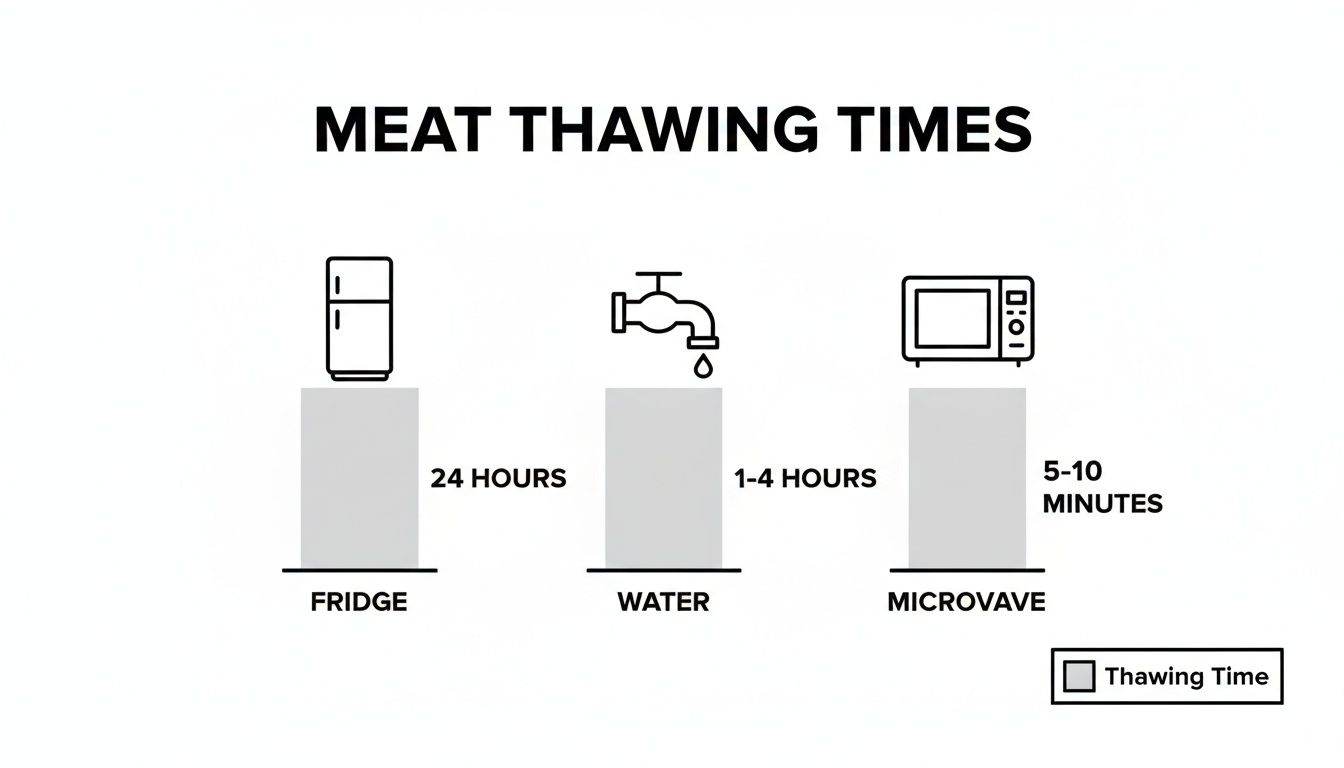
As you can see, the fridge method is a marathon, not a sprint, but it's the safest bet. The microwave gives you pure speed, but it comes with the strict rule of immediate cooking.
To make things even easier, here's a cheat sheet you can reference.
Meat Thawing Time Cheat Sheet
This table breaks down the estimated times for common cuts using the three safe methods. Just remember, these are estimates—thicker cuts will always take longer than thinner ones of the same weight.
| Meat Cut and Weight | Refrigerator (at 40°F) | Cold Water (change every 30 min) | Microwave (on 'defrost') |
|---|---|---|---|
| Ground Meat (1 lb) | 24 hours | 1 hour | 3-5 minutes |
| Steaks (1-inch thick, 1 lb) | 12-24 hours | 1 hour | 4-6 minutes |
| Boneless Chicken Breasts (1 lb) | 24 hours | 1 hour | 5-8 minutes |
| Whole Chicken (4-5 lbs) | 2-3 days | 2-3 hours | 20-30 minutes |
| Large Roast (5-7 lbs) | 3-4 days | 3-4 hours | Not Recommended |
| Whole Turkey (12-15 lbs) | 3-4 days | 6-8 hours | Not Recommended |
Microwaving large items like a whole turkey is a bad idea because the outside will start cooking long before the inside is thawed, creating a major food safety risk. Always stick to the refrigerator or cold water for your big roasts and birds.
Balancing Speed and Safety
In the high-pressure kitchens of Southern California, every minute is precious. Knowing these thaw times can make or break your service. For LA restaurant owners buying in bulk, that cold-water method is a game-changer compared to waiting a full day for a 4- to 5-pound cut to thaw in the fridge.
A top-notch commercial refrigerator is your first line of defense. It’s what keeps your meat out of the temperature “danger zone” (40°F to 140°F), where bacteria can multiply like crazy.
Keeping that cold chain intact from the freezer to the prep station is absolutely essential. If you want to make sure your restaurant equipment is up to the task, check out our guide on the best commercial refrigerators for any professional kitchen.
And remember, thawing is just the first step. To round out your food safety knowledge, you need to understand the final internal temperatures for everything you cook. Take a look at this guide on safe cooking temperatures for meat to make sure every dish you send out is perfect.
The Refrigerator Method: Slow, Steady, and Safe
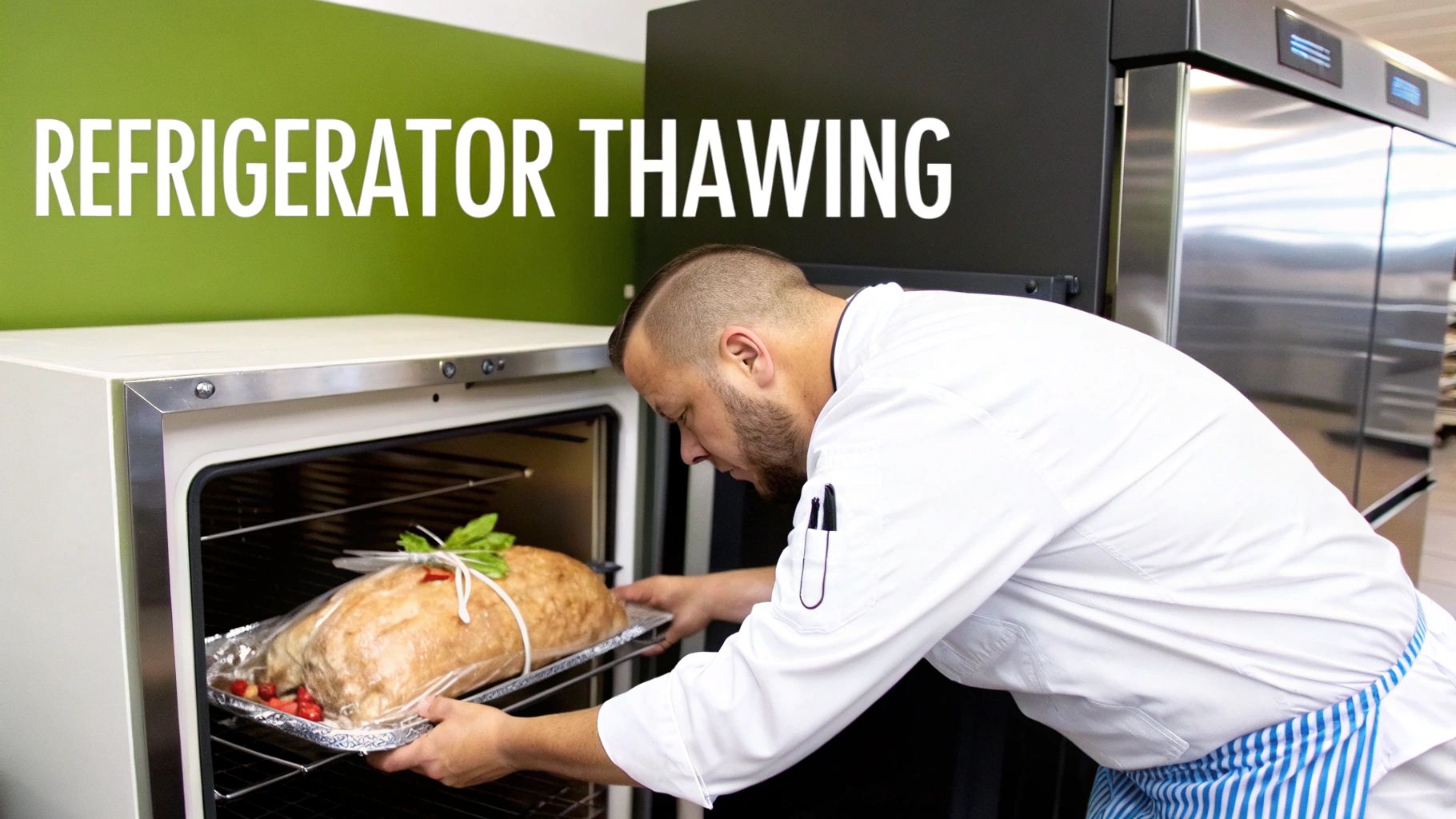
When you’re running a high-end kitchen in Los Angeles, whether it’s a fine-dining spot in Beverly Hills or a packed-out gourmet taco truck, there's really only one way to thaw meat properly: in the refrigerator. This is the undisputed champion for a reason.
It’s a slow, deliberate approach that absolutely guarantees the best results. The science behind it is simple. By keeping meat at a consistent, cold temperature (always below 40°F), you preserve its texture, moisture, and all that hard-earned flavor without ever letting it creep into the bacterial danger zone.
This method isn’t about a quick turnaround; it’s about smart planning and quality control. In fact, building refrigerator thawing into your weekly prep schedule is one of the clearest signs of a well-oiled kitchen. Got a large prime rib slated for Saturday’s special? That needs to come out of the freezer and go into the walk-in by Tuesday, maybe Wednesday at the latest. Same goes for the bulk chicken you’ll need for a busy weekend brunch service.
Nailing Your Thaw Times
Figuring out how long to thaw meat in the fridge is a straightforward calculation. The universal rule of thumb I’ve always followed is to allow about 24 hours for every 4-5 pounds of meat. This ensures the entire cut, from the surface right down to the core, defrosts evenly and safely.
Let’s look at some real-world examples you’d see in any professional kitchen:
- Large Roasts (15-20 lbs): You need to plan for at least 3 to 4 days. For pricey cuts where quality is everything, this slow thaw is non-negotiable.
- Whole Chickens or Turkeys (10-15 lbs): These need a similar timeframe, usually 2 to 3 days, to make absolutely sure the cavity is fully defrosted.
- Steaks or Pork Chops (1-inch thick): A single layer spread out on a tray will typically thaw overnight, somewhere in the 12 to 24-hour range.
- Ground Meat (5-10 lb chubs): Give it a full day for every 5 pounds. And remember, stacking packages on top of each other will slow things down considerably.
Best Practices Straight from the Line
Seasoned chefs live by strict protocols to keep things safe and efficient. The most critical rule? Always thaw meat on the bottom shelf of your commercial refrigerator. It’s a simple move that prevents any raw meat juices from dripping down and contaminating other foods.
For independent restaurant owners in L.A.'s intense food scene, this method is the gold standard, and the data backs it up. University guidelines are clear: allow 24 hours per 4-5 pounds. A 16-pound turkey for a catering gig needs about 4 days in a fridge set to 40°F or colder.
Once it's thawed, the clock starts ticking. You’ve got a tight window—ground meat should be used within 1-2 days, while roasts and chops can hold for 3-5 days. Sticking to this process pays off, as studies have shown beef thawed in the fridge keeps its superior texture and color compared to faster methods.
A pro tip I learned the hard way: always place meat on a lipped sheet pan or in a container before it goes in the fridge. This will catch any unexpected leaks from the packaging, which makes cleanup a breeze and prevents cross-contamination.
Finally, never fully trust the built-in thermostat on your unit. A separate, calibrated appliance thermometer placed inside is a tiny investment that pays off big in food safety. If your storage is constantly packed, it might be time to rethink how to organize a chest freezer to make your whole system run smoother. It’s all part of the process that guarantees quality from the freezer all the way to the plate.
Using Cold Water When You're Short on Time
It happens to the best of us. You forgot to pull the chicken for the lunch rush, and now you’re in a serious bind. When the slow-and-steady refrigerator method isn't an option, cold water thawing is your next best move. It’s much faster than the fridge but still keeps food safety front and center—if you do it right.
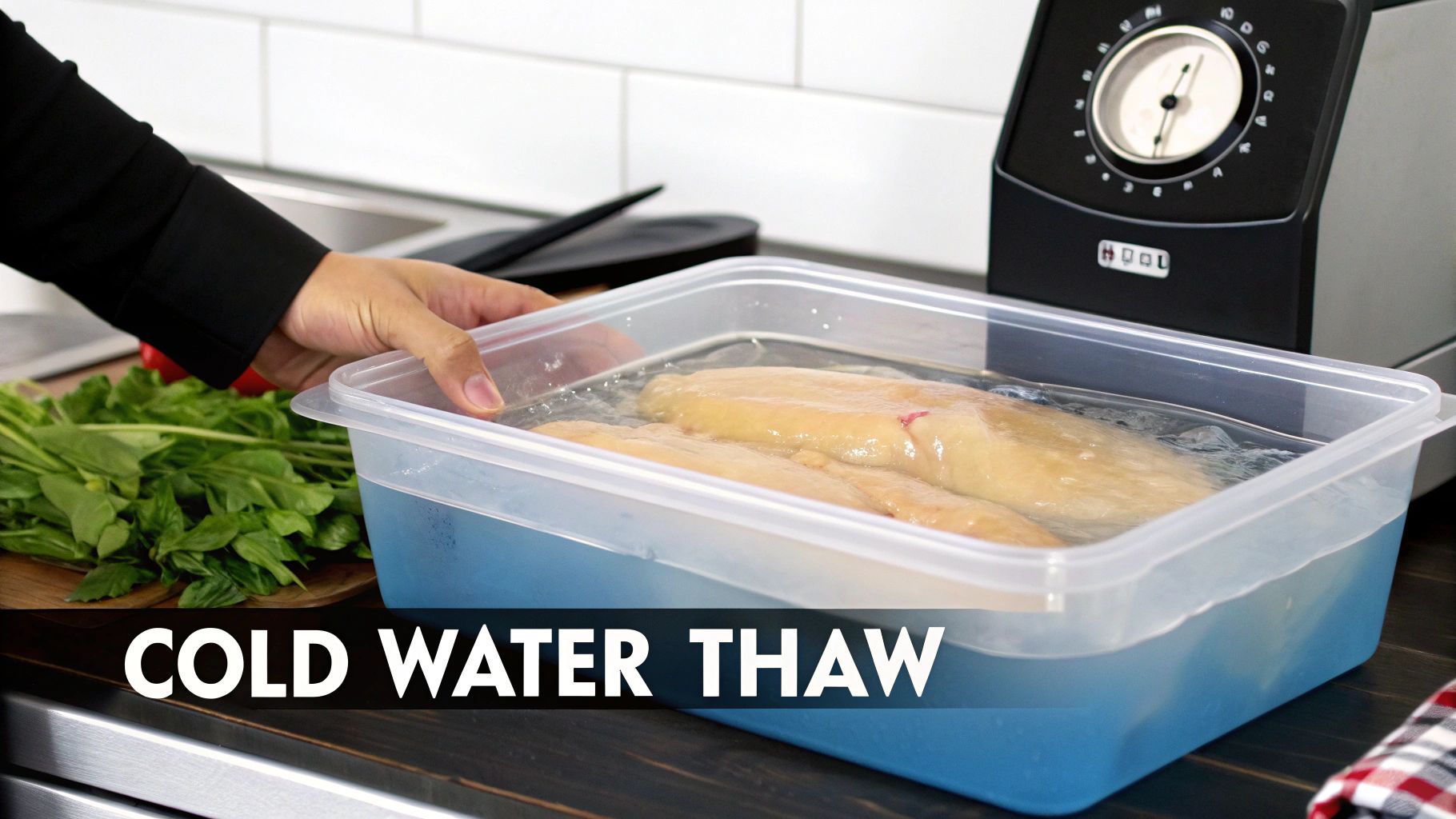
You can't just toss a frozen block of meat into a sink and hope for the best. The whole point is to thaw it quickly without letting any part of it hang out in the temperature danger zone.
The Essential Steps for Cold Water Thawing
First things first: your meat needs to be in a leak-proof bag. If the original packaging is torn or flimsy, re-bag it in something sturdy and completely sealed. This step is critical. It stops water from seeping in, which ruins the texture and, more importantly, prevents bacteria from the sink from getting all over your product.
Next, submerge the sealed package in cold tap water. Here’s the most important part: you absolutely must change the water every 30 minutes. This is non-negotiable. The frozen meat will quickly cool the water around it, slowing everything down. Fresh, cold water keeps the thawing process active and ensures the surface of the meat stays safely chilled.
A word of caution: a common shortcut is to use warm or hot water. Never do this. Hot water will cook the outside of the meat and push it right into the 'danger zone' (anything above 40°F), turning it into a playground for bacteria while the center is still frozen solid.
Calculating Thaw Time for Your Kitchen
So, how long will this actually take? A reliable kitchen rule of thumb is about 30 minutes per pound. Let’s walk through a real-world scenario you might face in a busy Los Angeles kitchen.
Say you're running a popular Mexican food spot and need to get a 10-pound pork shoulder ready for carnitas. A quick calculation gives you a solid estimate:
- 10 pounds x 30 minutes/pound = 300 minutes
That pork shoulder will take about 5 hours to thaw completely. That also means you'll be changing the water a total of 10 times. It’s a bit of work, but it’s safe and effective.
For smaller cuts, the timeline is obviously much shorter:
- 1 pound of ground beef: About 1 hour.
- 3-4 pounds of chicken thighs: Roughly 2 hours.
This method requires you to be hands-on, but it's a lifesaver when you're against the clock. Just remember, anything thawed in cold water needs to be cooked immediately. Unlike refrigerator-thawed meat, you can’t stick it back in the cooler for later or refreeze it until it's been fully cooked.
Microwave Thawing for Last-Minute Emergencies
Think of this as your absolute last resort. Microwave thawing is lightning fast, but it’s a method that comes with serious trade-offs in meat quality and demands you follow food safety rules to the letter. A commercial microwave should only be an option for true kitchen emergencies, like when a single order comes in for an item you thought was already prepped.
The most critical rule here is non-negotiable: meat thawed in the microwave must be cooked immediately. No exceptions. The process creates hot spots, and parts of the meat will inevitably enter the temperature danger zone—40°F to 140°F—where bacteria can multiply in a heartbeat.
The Right Way to Use Your Microwave
To pull this off as safely as possible, get the meat out of its original packaging. This is especially true if it’s on a foam tray or wrapped in plastic film, which can melt. Place it on a microwave-safe plate to catch any juices that run off.
Use your commercial microwave’s defrost setting. This feature typically cycles power on and off to thaw the meat more gently than just blasting it on full power. If your unit is older and doesn't have a dedicated setting, drop the power to 30-50% and work in short bursts.
A common mistake is just setting the timer and walking away. You have to be hands-on to get even halfway decent results.
- Rotate and Flip: Every few minutes, stop the microwave, rotate the plate, and flip the meat over. This helps spread the energy around and stops the edges from cooking while the center is still an ice block.
- Separate Pieces: As soon as smaller items like ground beef or chicken strips start to loosen up, gently pull them apart. This exposes more surface area to the microwaves for a more even thaw.
When to Use (and Avoid) This Method
This technique has a very, very specific place. It might save you on a single portion of ground beef for a last-minute burger order at a small Los Angeles cafe. However, it’s completely impractical and far too risky for thawing anything in bulk for a busy service.
Imagine trying to microwave-thaw 20 pounds of carne asada for a Mexican food truck’s dinner rush. The meat would end up tough and rubbery, and the food safety risk would be off the charts. For anything in bulk, you have to stick to the refrigerator or cold water methods.
Ultimately, while the microwave offers speed nobody can argue with, it’s a tool that requires serious caution. The risk of ruining the texture and creating a food safety hazard is incredibly high, making it a method best saved for single-portion, cook-to-order emergencies where you can move the item directly from the microwave to the grill.
Thawing Mistakes That Put Your Kitchen at Risk
Even the most meticulous chefs in a bustling Los Angeles kitchen can slip into bad habits. When service gets hectic and tickets are flying, thawing shortcuts look mighty tempting. But let's be clear: these common mistakes are a direct threat to food safety, product quality, and your restaurant's hard-earned reputation.
Knowing what not to do is every bit as important as knowing the right way to thaw your proteins.
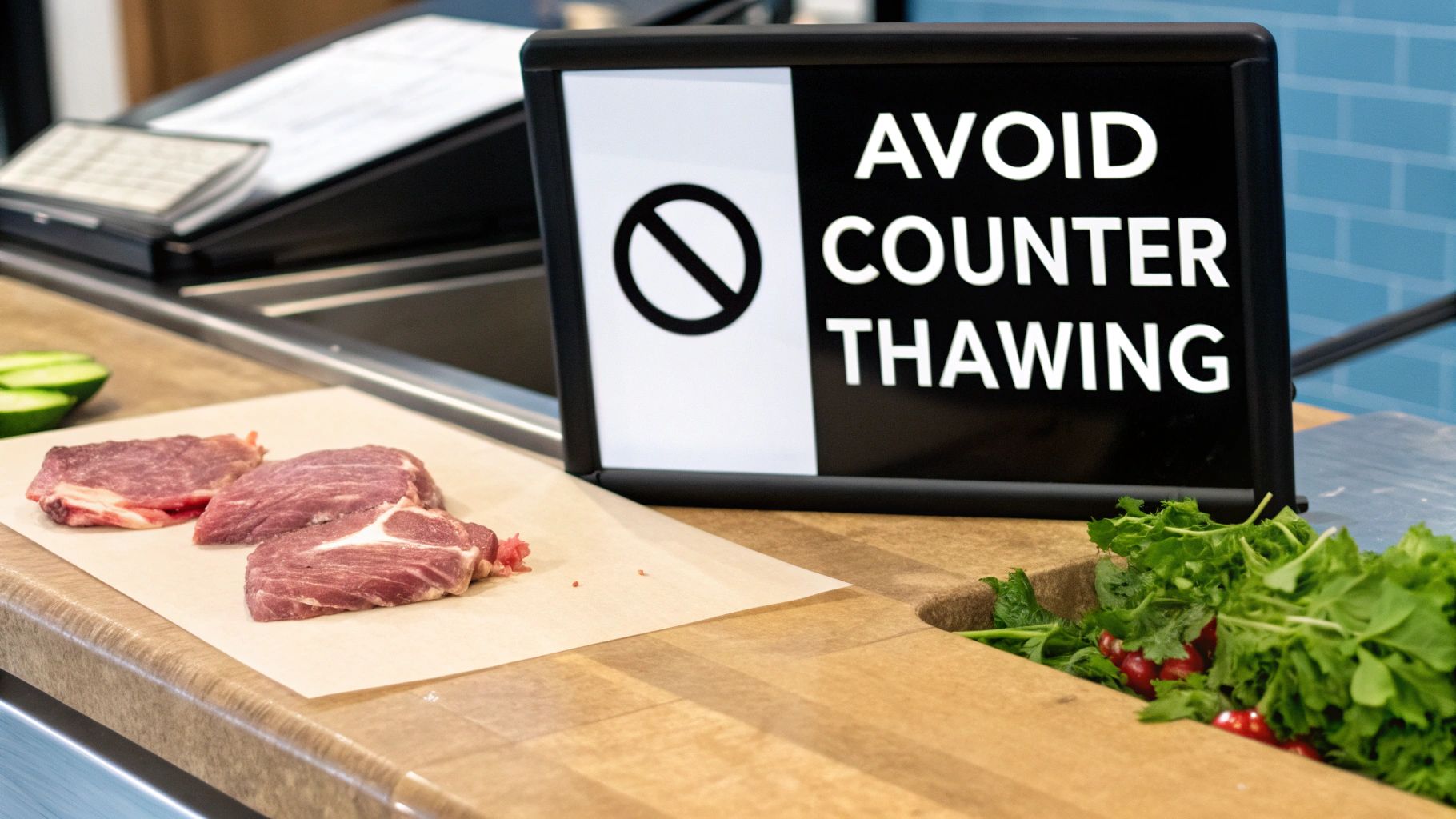
The single most dangerous mistake? Leaving meat out on the counter to thaw overnight. It might seem like an easy, hands-off solution, but room temperature is a five-star resort for harmful bacteria. The surface of the meat can hit the temperature danger zone—that's 40°F to 140°F—in just a couple of hours, long before the inside even starts to soften.
The Counter Thaw: A Recipe for Disaster
I've seen it happen. A Los Angeles food truck operator, exhausted after a long day, leaves a case of ground beef on a prep table for the next day's service. While they're sleeping, bacteria like Salmonella and E. coli are having a party, multiplying to dangerous levels. By morning, that meat is a serious foodborne illness risk, even if it looks and smells perfectly fine.
This isn't just a safety nightmare. It wrecks the quality of your product, too. When meat thaws unevenly like that, it loses moisture and you end up with a dry, tough final dish that no customer will enjoy.
The Hot Water "Shortcut"
Another all-too-common error is blasting frozen meat with hot water to speed things up. Please, don't do this. Using hot water is a huge mistake that does more than just invite bacteria; it actually starts cooking the outside of the meat while the inside is still a block of ice.
This creates a cascade of problems:
- Uneven Cooking: That partially cooked exterior is guaranteed to be tough and overdone by the time the center is cooked through.
- Terrible Texture: You’re damaging the delicate proteins, which leads to a rubbery, unappetizing mouthfeel.
- Major Safety Risks: The warm surface becomes the perfect environment for bacteria to grow at an alarming rate.
The only liquid you should ever use for a quick thaw is cold running tap water, or by submerging it in cold water that you change out every 30 minutes. This is fast enough for a busy service without ever letting the meat enter the danger zone.
Improper Storage After Thawing
Your work isn't finished once the meat is thawed. How you store it is just as critical. A classic rookie move is placing uncovered, thawed meat on a top shelf in the walk-in. This is just asking for raw juices to drip down and contaminate your ready-to-eat produce, sauces, and other prepped items below. That's cross-contamination 101.
Always store thawed meat on the bottom shelf of your commercial refrigerator. Make sure it's inside a lipped pan or container deep enough to catch any potential leaks.
For any professional kitchen, reliable cold storage is the foundation of food safety. If you're looking to upgrade, check out our guide on the best commercial freezers that can support a safe and efficient workflow.
Ultimately, a well-trained team is your best defense against these failures. Investing in ongoing food handler certificate training for your staff is one of the smartest things you can do to keep your kitchen safe and your customers happy.
Common Questions on Thawing Meat in the Kitchen
Even with the best training, certain questions always pop up during the daily grind of a busy kitchen. Getting straight answers is the key to keeping your food safety protocols tight and ensuring every plate that goes out is perfect. Here are some of the most common things we get asked about thawing meat.
Can I Refreeze Meat After It's Been Thawed?
This is a big one for any Los Angeles pizza place or food truck managing a tight inventory. The answer really depends on how you thawed the meat in the first place.
If you defrosted it the right way—in a commercial refrigerator holding steady at 40°F or below—you can absolutely refreeze it without cooking. You might lose a little quality from the moisture loss during the second thaw, but it’s completely safe.
But if you used the cold water or microwave method, that's a different story. Meat thawed with these faster techniques must be cooked to its safe internal temperature before you even think about putting it back in the freezer. Those methods can easily push parts of the meat into the "danger zone," making it unsafe to refreeze raw.
Is It Ever Okay to Thaw Meat on the Counter?
Let's make this simple: No. Never. Thawing meat on the counter is one of the biggest food safety mistakes you can make in any kitchen, pro or otherwise.
Room temperature is prime real estate for the 'danger zone'—that temperature range between 40°F and 140°F where nasty bacteria can multiply like crazy. In as little as two hours, you can have a real problem on your hands. For a bustling Southern California restaurant, the risk of getting someone sick just isn't worth the shortcut.
Stick to the three approved, safe methods we’ve talked about. Your customers’ health and your restaurant's reputation are riding on it.
How Do I Know My Commercial Refrigerator is at the Right Temperature?
Keeping your cold storage at the right temp is the foundation of food safety. Your commercial refrigerator needs to stay at 40°F or colder, but don't just blindly trust the dial on the unit.
The best way to be sure is to place a separate appliance thermometer inside. Make it a habit to check it at the start of every single shift. This gives you a true reading of the air temperature right where your food is stored. For any business in the warm climates of Los Angeles or Orange County, a solid commercial unit that can hold its temp—even when the door is constantly opening—is a non-negotiable piece of restaurant equipment.
Can I Just Cook Meat Straight from the Freezer?
Yes, you absolutely can! For many cuts and cooking methods, this is a perfectly safe and efficient way to go. It’s a great trick for things like burger patties hitting the charbroiler, thin-cut steaks, or ground meat going straight into a sauce.
You just have to adjust your cooking time. A good rule of thumb is to plan on it taking about 50% longer than if it were thawed. The most important part is using a food thermometer to make sure the meat reaches its required safe internal temperature all the way through. This technique isn't great for big items like a whole turkey or a large roast, though, because the outside will overcook before the inside is safe.
At LA Restaurant Equipment, we know that reliable, warranty-backed equipment is the backbone of any successful Southern California kitchen. From high-performance commercial refrigeration to powerful cooking lines, we provide the tools you need to operate safely and efficiently at warehouse-direct prices. Explore our full inventory and see how we can equip your business for success at https://larestaurantequipment.com.