

If you’re dreaming of launching a food truck in Southern California, you’ve probably spent more time perfecting your menu than thinking about logistics. But here's a crucial piece of the puzzle you can't ignore: your food truck commissary. Whether you're planning a classic Los Angeles food truck slingin' tacos, a gourmet pizza truck, or authentic Mexican food on wheels, a commissary is your legal and operational backbone.
Put simply, a commissary is a licensed commercial kitchen that serves as your food truck’s home base. It's not just a good idea—in places like Los Angeles and Orange County, it's a legal must-have. You won't get your permits without a signed commissary agreement.
Why Your Food Truck Needs a Home Base
It helps to think of your truck as the mobile storefront, not the entire restaurant. You might be serving customers on the street, but all the real work—prepping ingredients for your signature Mexican food, storing supplies, and power-washing restaurant equipment—has to happen in a facility that meets strict health codes. That’s where the commissary comes in.
The California Health and Safety Code is very clear: all mobile food facilities need to operate out of an approved commercial kitchen. This isn't just red tape. It’s a rule designed to protect the public by ensuring your food is prepped and stored in a clean, controlled environment. For any serious food truck owner in Los Angeles, this isn't a hurdle; it’s the foundation of a legitimate, sustainable business.
Core Functions of a Food Truck Commissary
A commissary provides the essential backbone that your truck just can't fit. It handles several non-negotiable functions that health inspectors will absolutely check for.
These places offer way more than just a parking spot. They are the operational heart of your business, providing the critical services that keep you compliant and running smoothly. The right one will support your daily grind, whether you're a Los Angeles pizza truck needing massive ovens for prep or a taco truck that requires a walk-in cooler for fresh ingredients.
A commissary is your anchor in the fast-paced food truck world. It’s the licensed, controlled environment that legitimizes your mobile operation, ensuring you meet the same food safety standards as a traditional brick-and-mortar restaurant.
What to Expect from a Commissary Partnership
When you partner with a commissary, you're gaining access to all the resources required for your mobile food facility permit. It’s a one-stop-shop for compliance.
Typically, here's what you get:
- Fresh Water Supply: A place to fill up your truck’s potable water tanks.
- Wastewater Disposal: Designated, approved stations to dump greywater and used cooking oil.
- Food Preparation Areas: Commercial-grade kitchen space with the restaurant equipment you need for safe food handling.
- Secure Storage: Dedicated spots for your dry goods, refrigerated items, and frozen products.
By locking down a spot at a good commissary, you’re not just checking a box for the health department. You're setting your Los Angeles food truck up for success from day one.
Why Your Food Truck Needs a Commissary: Decoding the Legal Rules
In the red-hot food truck scenes of Los Angeles and Orange County, a commissary isn't just a nice-to-have—it's a legal must. Health departments look at commissaries as the home base for every mobile food business, and they are the backbone of public safety.
Think of your food truck like a high-performance race car: it's quick, nimble, and delivers a fantastic product to your fans. Your commissary is the mandatory pit stop. It’s the only place you can legally refuel, perform essential maintenance like deep cleaning, and get the green light to stay in the race. Los Angeles food trucks, especially those serving popular Mexican food or pizza, must adhere to these rules strictly.
This whole system boils down to one thing: public health. Without a fixed, regulated commercial kitchen to operate from, it would be almost impossible for health officials to ensure food is being prepped, stored, and handled safely. These rules are in place to prevent foodborne illnesses, making sure your mobile kitchen meets the same tough standards as any brick-and-mortar restaurant.
Your Commissary Agreement: The Golden Ticket
The single most important document you'll handle is the Commissary Letter of Agreement. This isn't just a piece of paper; it's a binding contract between your truck and a licensed commissary that you must show the health department. Without it, your application for a Mobile Food Facility Permit is dead on arrival.
This letter is your official proof that you have regular, legal access to all the essential services a food truck needs. It shows inspectors that your operation is anchored to a real, professional facility that supports your day-to-day needs, from food prep all the way to sanitation.
Health inspectors see this agreement as your commitment to food safety. It confirms you have a designated, approved location for all behind-the-scenes work that can't safely or legally be done on the truck itself, ensuring a clean and professional operation from start to finish.
This whole process creates a clean, repeatable operational loop. Your commissary is the hub for prepping, storing, and disposing of waste, as this flow shows.
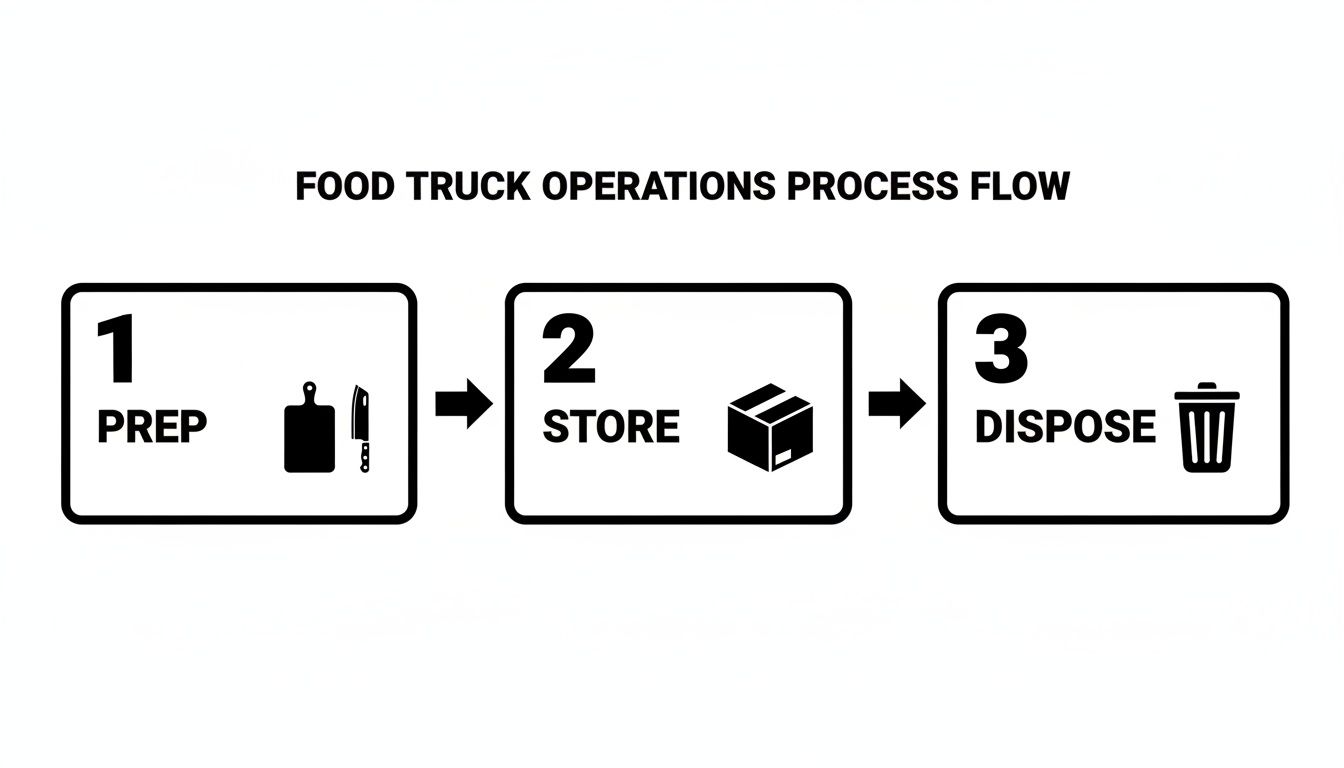
As you can see, every single stage of your mobile food business really depends on the certified infrastructure that only a commissary can provide.
The Non-Negotiable Rules Health Departments Enforce
To get your permit and keep it, you have to play by a very specific set of rules. These aren't suggestions—they're strict mandates designed to ensure every truck is safe and accountable.
Here are a few of the big ones:
- Daily Check-Ins: Many health departments, including LA County's, require trucks to return to their commissary at least once every 24 hours. This guarantees regular cleaning, safe restocking, and proper waste disposal.
- Access to Potable Water: Your truck needs a reliable, approved source to fill its freshwater tanks. This is a core service every commissary provides.
- Proper Waste Disposal: You can't just dump your waste anywhere. Commissaries have specialized systems for handling greywater (from your sinks) and getting rid of used cooking oil and grease, which are illegal to pour into standard sewers.
To help you keep track, here’s a quick-glance checklist of the core requirements you'll face in Southern California.
Key Commissary Requirements Checklist for Southern California
| Requirement Category | Specific Mandate | Why It's Required |
|---|---|---|
| Legal Documentation | A signed Commissary Letter of Agreement must be on file with the county health department. | Proves you have legal access to a licensed facility for all off-truck operations. |
| Facility Licensing | The commissary itself must hold a valid health permit and a Certificate of Occupancy. | Ensures the base of operations is a legally compliant, inspected, and safe commercial kitchen. |
| Daily Operations | Trucks must return to the commissary daily (every 24 hours) for servicing. | Guarantees regular sanitation, waste disposal, and restocking to prevent contamination. |
| Water & Utilities | The facility must provide access to potable water for tank refills and a dedicated station for greywater disposal. | Prevents cross-contamination and ensures clean water for food prep and handwashing. |
| Waste Management | Approved disposal systems for trash, food scraps, and used cooking oil/grease must be available and used. | Protects public sanitation systems from illegal dumping and hazardous materials. |
| Food Storage | The commissary must offer NSF-rated dry, cold, and frozen storage facilities for all food and single-use supplies. | Ensures food is held at safe temperatures to prevent spoilage and foodborne illness. |
| Sanitation & Equipment | Access to a commercial-grade, approved 3-compartment sink is mandatory for warewashing. | Provides the necessary equipment for properly washing, rinsing, and sanitizing all utensils and smallwares. |
This checklist covers the absolute must-haves. Getting these right isn't just about compliance; it's about setting your business up for long-term success.
Remember, the kitchen that supports your truck is just as regulated as your truck itself. The restaurant equipment inside has to meet strict standards—for instance, our guide on the requirements for a https://larestaurantequipment.com/blogs/los-angeles-restaurants/3-compartment-sink shows just how detailed sanitation rules can get.
At the end of the day, following these legal mandates isn’t just about dodging fines. It’s about building a brand that customers trust and a sustainable business they can count on for safe, incredible food.
The Real Cost of Commissary Compliance
While the legal stuff sets the rules of the game, the financial side of commissary requirements is where the rubber really meets the road for food truck owners. Meeting these standards isn't just about a single payment; it's an ongoing hit to your operational budget that directly squeezes your profit margins. Getting a handle on these expenses is step one to building a successful mobile kitchen, especially in a competitive market like Los Angeles.
Your biggest and most consistent expense will be the commissary membership fee. In Southern California, these monthly dues can run anywhere from a few hundred bucks for basic access to well over $1,000 for a full-service facility with perks like 24/7 access, dedicated cold storage, and a prime parking spot. Think of this fee as your ticket to operate legally—it's a non-negotiable line item in your budget.
On top of that, you'll almost certainly need to put down a security deposit, which can be equal to one or two months' rent. Then you have the daily grind of travel. Since regulations usually demand your truck returns to its home base every 24 hours, fuel costs can sneak up on you, particularly with Southern California's notoriously high gas prices.
Breaking Down the Numbers
This financial pressure isn't just a local problem; it's a nationwide headache for food truck operators. When you add up all the compliance costs from health, fire safety, zoning, and vehicle rules, the national average hits a staggering $28,276 per year.
And in cities with the tightest regulations—think Boston, San Francisco, and Seattle—some operators have to shell out up to $17,066 just for zoning permits before they even serve their first customer. These numbers really drive home why you need a sharp financial game plan.
Every dollar spent on compliance is a dollar you can't put toward marketing, better ingredients, or your crew. That’s why optimizing your expenses, especially anything related to your commissary, has to be a top priority if you want to survive and grow.
A Proactive Financial Strategy
Instead of just accepting these costs as a burden you have to bear, the most successful operators get strategic. They find ways to chip away at them by investing in their own mobile assets. The goal is to make your truck as self-sufficient as possible, which in turn reduces how much you have to lean on expensive commissary services.
Investing in quality on-board restaurant equipment is a proactive measure against spiraling commissary costs. It's not just about buying a freezer; it's about buying operational independence and long-term financial stability.
By choosing reliable, high-capacity restaurant equipment, you're essentially buying back control over your operating costs. For example:
- Atosa Undercounter Refrigerators: By installing a top-notch refrigeration unit, you can safely store more prepped ingredients and inventory right on your truck. This cuts down on daily trips to restock and might let you choose a cheaper commissary plan that doesn't include a lot of cold storage space.
- Smart Prep Tables: A well-designed pizza or sandwich prep table is a game-changer, combining refrigerated storage with a sanitary workspace. It allows you to get more prep work done efficiently on the truck, so you don't have to pay for as much time in the commissary kitchen.
When you invest wisely in restaurant equipment from a supplier like LA Restaurant Equipment, you're directly tackling the financial pressures of compliance. It’s a smart, forward-thinking approach that turns your truck from a simple mobile kitchen into a more self-reliant business hub.
Beyond these costs, you also need to protect your investment with things like product liability insurance. For a deeper look at the numbers, check out our guide on the full restaurant startup costs breakdown. This kind of proactive financial management is what separates the thriving food trucks from the ones that stall out.
Equipping Your Truck to Pass Health Inspections
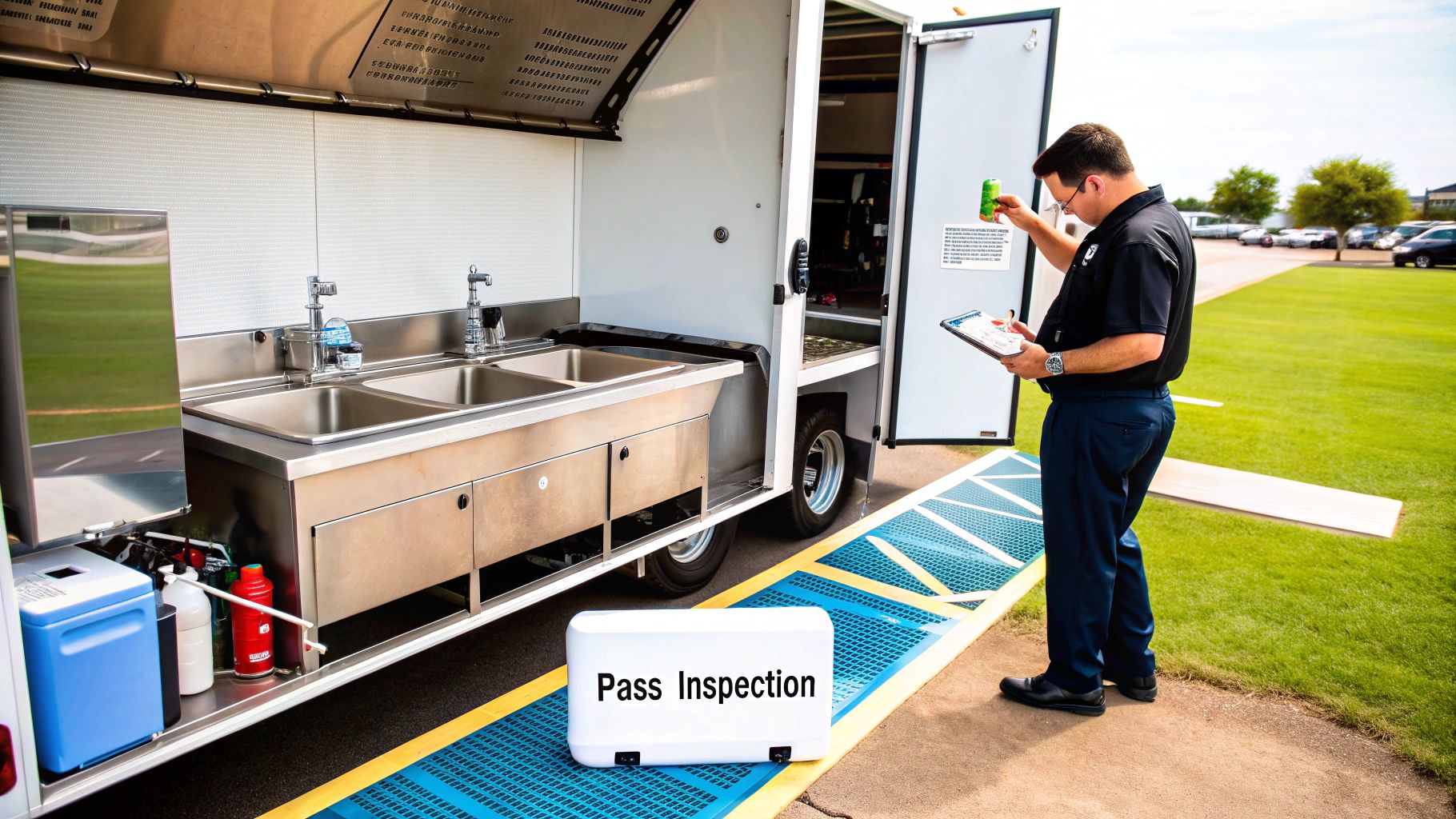
The gear inside your food truck is more than just a way to cook—it's your ticket to passing the health inspection that stands between you and your very first sale. Health inspectors in Los Angeles and Orange County have a hawk's eye for detail, and having the right restaurant equipment can mean the difference between getting a green light and a costly, frustrating failure.
This isn't just about having a grill and a fridge. We're talking about commercial-grade, NSF-certified restaurant equipment that meets rigorous sanitation and safety standards. Think of your truck's kitchen as a miniature restaurant; it's got to play by the same tough rules, just in a much tighter space. Every single piece, from your prep tables to your sinks, is going under the microscope.
The Holy Trinity of Food Truck Sanitation
When that inspector steps on board, they've got a mental checklist, and you can bet sanitation is right at the top. To meet the health code and keep things hygienic, three pieces of equipment are absolutely non-negotiable.
- Three-Compartment Sink: This is a must-have for proper warewashing. It lets your crew follow the critical wash, rinse, and sanitize process for every utensil, pot, and pan.
- Handwashing Station: You need a totally separate sink just for washing hands. It has to have hot and cold running water, soap, and paper towels, and it must be easy for your staff to get to at all times.
- NSF-Certified Surfaces: Any surface that touches food, like countertops and prep tables, has to be made from a non-porous material like stainless steel. This prevents bacteria from hiding in tiny cracks and ensures your cleaning and sanitizing efforts actually work.
These three items are the bedrock of a clean, compliant mobile kitchen. Trying to cut corners on any of them is a surefire way to fail your inspection and put your grand opening on hold.
Health inspectors see your restaurant equipment as a direct reflection of your commitment to food safety. Brand new, NSF-certified gear sends a message of professionalism and low risk. Old, residential-grade stuff? That’s an immediate red flag.
Refrigeration That Holds the Line
Temperature control is one of the most critical parts of your inspection. Health codes are incredibly specific about the temperature ranges for holding cold and hot foods to stop harmful bacteria from growing. Your refrigerators and freezers are your first line of defense.
Inspectors will be checking to make sure your refrigeration units can reliably hold a temperature at or below 41°F. A mini-fridge from a big-box store isn't going to cut it. You need powerful, commercial-grade units built for the demanding environment of a food truck, where outside temperatures can skyrocket.
For instance, Atosa undercounter freezers and refrigerators are engineered to maintain precise temperatures, even when you're slammed with orders during a Southern California heatwave. These units are built to commercial specs, keeping you safely out of the temperature danger zone and helping you pass your inspection with confidence.
New vs. Used: The Smart Investment
It's tempting to hunt for used restaurant equipment to trim those startup costs, but trust me, it's a gamble that almost never pays off. Used gear often comes with hidden issues, no warranty, and might not even be up to current health codes. An old freezer that can't hold its temp or a prep table covered in microscopic scratches can get you an instant "fail" from an inspector.
Investing in new, warrantied restaurant equipment from a trusted supplier is the smarter play for the long run. Here’s why:
- Guaranteed Compliance: New equipment is manufactured to meet the latest NSF and health department standards, period.
- Reliability: You get to skip the headaches of breakdowns and expensive repairs that are so common with used gear.
- Warranty Protection: A manufacturer's warranty gives you peace of mind and protects your investment.
Suppliers like LA Restaurant Equipment offer warehouse-direct pricing on new equipment, making it more affordable than you might think. With financing options available, you can outfit your truck to be fully compliant without wiping out your startup capital. It turns a huge expense into a manageable, strategic investment in your truck's success. To see how it all comes together, check out this complete overview of the essential equipment for food truck kitchens and how each piece plays a role in a compliant layout.
How to Choose the Right Commissary Partner
Picking a commissary is one of the biggest decisions you'll make, right up there with nailing down your menu and buying the truck itself. They aren't all created equal. The right partner can be a genuine asset to your growth, while the wrong one can turn into a daily operational nightmare. This choice isn't just about checking a box for the health department; it's about defining your entire workflow, hitting your profit margins, and giving your business room to grow.
Your first move is to get a handle on the two main types of commissaries you’ll find around Los Angeles and Orange County. Each one is built for a different style of food truck operation, and figuring out which one you need is the key to avoiding a bad fit from the start.
Service Depots vs. Shared Kitchens
A service depot is the most basic, no-frills option you'll find. Think of it as your truck’s pit stop. These spots provide the absolute essentials required by law: a legal parking spot, fresh water hookups, and a place to properly dump your greywater and grease. They're usually the cheapest route, making them a great choice for self-sufficient trucks that do most of their simple prep work right on board.
On the flip side, a full-service shared kitchen (often called an incubator kitchen) is your all-in-one operational base. These facilities offer everything a depot does, plus access to a full-blown commercial kitchen you can rent by the hour or through a membership. We’re talking commercial ranges, convection ovens, massive mixers, and walk-in coolers. This makes them perfect for trucks with more complex menus—like a from-scratch Los Angeles pizza concept or a gourmet Mexican food truck—that need a serious amount of prep work done off the truck.
Honestly, the choice between them really comes down to your menu. If you’re just serving coffee and pre-packaged pastries, a service depot is probably all you need. But if you're hand-making tamales or proofing sourdough for your sandwiches, a shared kitchen is pretty much non-negotiable.
Key Factors to Evaluate in a Commissary
Once you know what kind of facility you’re looking for, it’s time to start sizing up your options. Location is a huge one. A commissary that's miles away from your main routes will absolutely eat up your profits in gas money. You also need to pin down their hours. If you're planning to hit the late-night event scene, 24/7 access is a must-have.
Beyond the basics, you have to dig into the services and what they really cost. Don't just look at the monthly rent. You need to ask about all the little fees that can pop up.
A great commissary relationship is a partnership built on transparency. Before you sign anything, demand a clear breakdown of all potential fees—from after-hours access charges to penalties for missed cleaning duties—to ensure there are no surprises on your monthly invoice.
The local rules can also play a big part in your decision. Commissary requirements can change drastically from one city to the next, creating a real headache for food truck owners. For instance, the U.S. Chamber of Commerce points to cities like Denver and Philadelphia as some of the easiest places for food trucks to operate. But then you have places like Boston and Seattle, where operators can face up to 32 different procedures and $28,276 in yearly compliance costs. This just goes to show how vital it is to find a commissary that helps you cut through the red tape. You can discover more insights about these food truck regulations nationwide and see how different cities stack up.
Critical Questions to Ask Potential Partners
Before you even think about signing a lease, show up with a list of hard-hitting questions. The answers you get will tell you everything you need to know about how they operate and if they’re the right partner for your business.
- What are your exact hours for truck servicing and kitchen access?
- Is dedicated cold, frozen, or dry storage included in my membership fee? If not, what are the costs?
- What is the process for scheduling kitchen time, and how much advance notice is needed?
- Can you provide a complete list of all potential fees beyond the monthly rent?
- What security measures are in place to protect my truck and stored inventory?
Choosing your commissary partner is a foundational step in building a successful food truck business. Take your time, do your homework, and ask the right questions. You'll find a facility that does more than just satisfy a requirement—it can become a true asset that helps you grow for years to come.
Your Top Commissary Questions, Answered
Jumping into the food truck world means learning a whole new set of rules, and commissaries are a huge part of that. Even experienced LA food pros have questions. We’re cutting through the confusion to give you straight answers so you can operate with confidence.
Can I Just Use My Home Kitchen as My Commissary?
This is easily the number one question we hear from new truck owners, and the answer is a hard no. California health departments are incredibly strict on this point. Using a residential kitchen as your food truck's home base is completely against the rules and will get you shut down fast, likely with some hefty fines to go with it.
There's a good reason for this. Commercial kitchens are built to an entirely different standard. They're required to have things like industrial-grade ventilation, grease traps, and specific pest control plans that a home kitchen just doesn't. These regulations are all about public safety, making sure every plate you serve comes from a properly sanitized and controlled environment.
What’s a Commissary Letter of Agreement, and Why Is It So Important?
Think of the Commissary Letter of Agreement as your golden ticket. It's the most important legal document you'll need when applying for your permits. This is a formal, signed contract between your business and a licensed commissary.
When you go to the health department, you have to show them this letter. It’s the official proof that you have a legal, approved place for all your off-truck needs—like prepping food, storing ingredients, deep cleaning your gear, and getting rid of waste. Without this signed agreement, your application for a Mobile Food Facility permit is dead in the water. It’s the document that makes your whole operation legitimate in the eyes of the law.
This letter isn’t just another piece of paper. It’s a declaration to the health department that you’re a professional who's committed to doing things the right way. It proves your truck is tied to a real, inspected facility, which is non-negotiable in Los Angeles and Orange County.
How Does My Truck’s Equipment Affect What I Need from a Commissary?
What you put on your truck directly changes how much you’ll lean on your commissary. Making smart choices with your restaurant equipment can make you way more efficient and cut down your dependence on the commissary, saving you both time and money in the long run.
For instance, investing in good, high-capacity, NSF-approved refrigeration from a place like LA Restaurant Equipment is a game-changer. A solid Atosa undercounter refrigerator lets you hold more prepped ingredients right on the truck. That means fewer daily trips back to base for restocking, and you might even get away with a cheaper commissary plan that offers less cold storage space.
The same goes for sanitation. A truck with a proper three-compartment sink and a great hot water system shows inspectors you can keep things clean while you're out serving. You'll always need a commissary for the big stuff like grease disposal and deep cleaning, but a well-equipped truck makes your business more self-sufficient and ready to pass a surprise inspection anytime.
Are All Commissaries the Same?
Not at all. Commissaries come in different flavors, and you need to pick the one that matches your business. They aren't a one-size-fits-all deal. The two main types you’ll run into are service depots and shared-use kitchens.
-
Service Depots: This is your basic, no-frills option. They give you the absolute essentials required by law: a place to park, fresh water, and a spot to dump your grey water and trash. These are perfect for simple trucks—think coffee or shaved ice—that don't do much prep.
-
Shared-Use Kitchens: Also called incubator kitchens, these are the full-service package. You get all the basics, plus you can rent time in a complete commercial kitchen with stoves, mixers, walk-in coolers, and more.
Your menu is the deciding factor. If you're slinging Mexican food or Los Angeles pizza that requires hours of prep every morning, a shared-use kitchen is pretty much a necessity. If your operation is simpler, a service depot could be all you need. Take a hard look at your daily workflow before you sign any contracts.
Ready to get your food truck geared up to pass inspection? At LA Restaurant Equipment, we help Southern California's food truck owners get brand-new, NSF-certified restaurant equipment at warehouse-direct prices. From powerful Atosa refrigeration to stainless steel prep tables, we’ve got what you need to build a compliant and efficient mobile kitchen. Check out our full inventory and find the perfect restaurant equipment for your truck today at https://larestaurantequipment.com.