

In the Los Angeles food scene, having the right gear is everything. The problem? High upfront costs can kill a restaurant's momentum before it even starts. That's where smart equipment financing for a restaurant comes in. It’s not just a fallback plan; it's one of the most powerful tools you have for scaling your business, keeping cash on hand for day-to-day operations, and getting an edge on the competition without draining your bank account.
Fueling Your LA Restaurant With Smart Equipment Financing
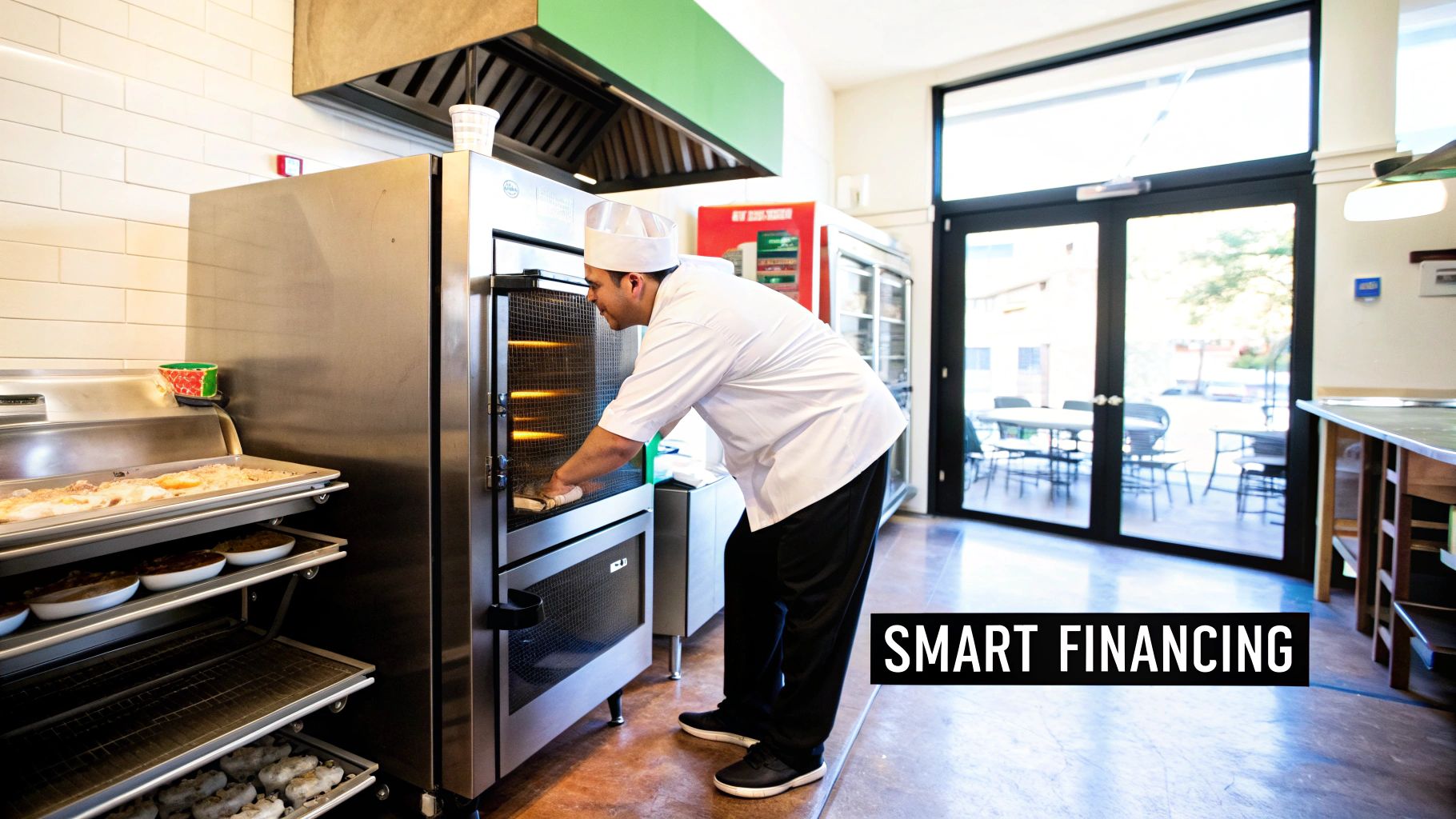
Let’s get real for a second. Imagine you're finally launching that dream Mexican food spot in East LA or a new Los Angeles pizza joint out in the Valley. The energy is electric, but then you see the five-figure price tag on a new commercial convection oven or an Atosa walk-in cooler. Just one of those essential pieces could wipe out a massive chunk of your operating budget, leaving you scrambling for payroll, marketing, and that all-important first month of inventory.
This is exactly why so many smart operators—from owners of Los Angeles food trucks hitting the streets of Orange County to established bar managers in Downtown LA—rely on equipment financing. It takes what would be a crippling capital expense and breaks it down into a manageable monthly payment.
The Power of Preserving Your Cash
Financing lets you get the new, energy-efficient equipment your kitchen needs today, not months or years down the line when you’ve saved up. By keeping your cash reserves full, you can put that money to work in other critical areas of your restaurant. This isn’t just about buying assets; it’s a strategic move that directly boosts your bottom line.
Think about the immediate perks:
- A Boost in Efficiency, Instantly: A new high-performance fryer or griddle can increase your kitchen's output and consistency from the moment it's installed, whether you're serving Mexican food or gourmet burgers.
- Healthier Cash Flow: Instead of one massive hit to your account, you get predictable monthly expenses that are much easier to build into your budget.
- A Serious Competitive Edge: Outdated equipment means slower service and inconsistent quality. Modern gear helps you crush the rush and keep customers happy, giving your Los Angeles pizza place or food truck a stellar reputation.
This isn't some niche strategy; it’s a fundamental part of how modern businesses grow. The global equipment finance market was valued at a staggering $1.2 trillion in 2022 and is on track to hit $3.1 trillion by 2032. Here in North America, independent restaurants make up a dominant 40% share of the foodservice equipment leasing market. The numbers don't lie—this is how smart restaurants level up.
A Smarter Path to Upgrading Your Kitchen
For restaurant owners here in Southern California, this financial tool gets even better when you pair it with warehouse-direct pricing. By cutting out the expensive showroom markups, the total amount you need to finance drops significantly. This one-two punch makes upgrading your kitchen far more accessible than you might think, whether you're outfitting a new food truck or revamping a classic Mexican food kitchen.
Of course, financing is just one piece of the puzzle. As you get your equipment sorted, it’s always a good idea to stay on top of broader operational strategies. You can find tons of helpful general restaurant industry insights to round out your business plan.
Next, we'll break down the specific types of financing out there and figure out which path makes the most sense for your culinary dream.
Decoding Your Financing Options: Which Path Is Right For You?
Choosing the right way to pay for your restaurant equipment can feel like staring at a complex menu. There are a ton of options, but each one serves a very different purpose.
The key isn't finding the single "best" option, but the one that fits your specific situation. Are you launching one of the new Los Angeles food trucks, or an established Mexican restaurant in Orange County looking to expand? Your answer changes everything.
Traditional Equipment Loans
The most straightforward path is often a traditional equipment loan. It works just like a car loan: you borrow money to buy the equipment, then make regular payments over a set period.
The biggest upside here is ownership. Once you make that final payment, the mixer, the oven, the walk-in—it's all yours. That asset adds real equity to your business's balance sheet, which is a huge plus for any long-term establishment, from a Mexican food kitchen to a Los Angeles pizza parlor.
Equipment Leases: Trading Ownership for Flexibility
On the other hand, you have an equipment lease. Think of it as a long-term rental. Because you're only paying for the equipment's depreciation during the lease—not its full price tag—your monthly payments are usually lower than a loan.
This makes leasing a brilliant move for tech that gets outdated fast, like POS systems or ordering tablets. It's also great for operators of Los Angeles food trucks who need to keep their monthly overhead as low as possible.
Imagine a busy Los Angeles pizza spot. They might finance a beast of a pizza deck oven with a loan, knowing it'll be a workhorse for decades. But for their ordering software? A lease gives them the flexibility to upgrade every couple of years without a massive cash outlay.
SBA Loans and Merchant Cash Advances
If you have a solid business plan and a little more time on your hands, SBA loans are a powerhouse. These loans are backed by the Small Business Administration, which means they often come with fantastic interest rates and some of the longest repayment terms you can find—sometimes up to 10 years for equipment.
The application is definitely more intensive, but the long-term savings can be massive. The SBA 7(a) program is a popular one that can fund a huge range of restaurant gear for your Mexican food concept.
But sometimes, speed is everything. A Merchant Cash Advance (MCA) isn't technically a loan; it's an advance on your future credit and debit card sales. You can get funded in just a few days, which is a lifesaver if your food truck's generator dies mid-event. Be warned, though: this convenience comes at a steep price, with effective interest rates that are much, much higher than a traditional loan.
Each of these paths offers a different mix of cost, speed, and ownership. Before you jump in, really think about your immediate cash flow needs and your long-term goals for the restaurant.
A great first step is getting quotes from different commercial kitchen equipment suppliers. This will help you nail down exactly how much financing you need to get the job done right.
Preparing Your Application: What Lenders Really Want To See
Before you even think about talking to a lender, getting your application in order is the single most important thing you can do. This isn't just about filling out paperwork. It's about building a compelling case for your restaurant's stability and its potential to grow.
Lenders want to see organized, confident operators who know their numbers cold.
When you walk in prepared, it shows you’re serious about the investment and respect their time. Whether you need a new pizza prep table for your Silver Lake spot or a fleet of Atosa freezers for your Los Angeles food trucks' commissary, the goal is to make saying "yes" an easy decision for them.
Building Your Document Checklist
Lenders need a quick, clear snapshot of your financial health. Having these documents ready to go from the start will dramatically speed up the process and prove you mean business. Think of it as your financial mise en place.
You'll almost always need:
- Business & Personal Tax Returns: Typically, the last two to three years. This gives them a clear history of your profitability and financial habits.
- Profit & Loss (P&L) Statements: An up-to-date P&L is non-negotiable. It shows your current revenue, costs, and bottom line.
- Bank Statements: Most lenders will ask for the last three to six months to see your actual cash flow in action—money in, money out.
- A Detailed Business Plan: This is absolutely critical, especially for newer restaurants. Your executive summary needs to spell out exactly how this new restaurant equipment will make you more money.
Lenders will be poring over your numbers to gauge your restaurant's health and future viability. Getting a handle on Mastering Cash Flow Projection is an essential skill to show you can comfortably take on new debt.
Showcasing Your Restaurant's Potential
Your business plan is where you sell the vision. Don't just throw numbers on a page; tell the story behind them.
If you run a Mexican food truck in East LA, explain how a new, larger griddle will boost your output by 30% during the lunch rush, translating directly into higher sales. You have to connect every single piece of restaurant equipment you’re asking for to a clear financial gain. For a deeper dive on budgeting, check out our guide on understanding the complete picture of restaurant startup costs.
In the fast-paced world of Southern California dining, where pop-ups and ghost kitchens are just as vital as brick-and-mortar spots, smart financing is your secret weapon. Independent restaurants commanded 40% of the market share last year, many of them leaning on leases to get cutting-edge refrigeration and cooking lines without draining their cash reserves. It’s a perfect strategy for LA's hustling culinary pros, from Los Angeles pizza shops to mobile taco stands.
From Your Application to a Final Approval
You’ve gathered your documents and hit "submit" on your application. Now, the real waiting game begins. This is when lenders put your business under the microscope to decide if they want to back your vision. Knowing what happens behind the scenes takes the mystery out of it and puts you in the driver's seat when offers start rolling in.
The first stop for your application is underwriting. A financial analyst digs into everything you sent over—bank statements, credit reports, your business plan. They aren't just ticking boxes; they’re trying to build a complete story of your restaurant's financial health to figure out their risk.
For one of the new Los Angeles food trucks, they'll zero in on seasonal sales trends. For a long-standing Mexican restaurant in East LA, they'll probably focus more on its history of consistent profitability. The end goal is always the same: to make sure your business has enough steady cash flow to easily handle a new monthly payment.
The Underwriting Wait and The First Offers
Depending on the lender and how complex your financials are, underwriting can take anywhere from a few hours to a few business days. Once they're done, the exciting part starts: offers will begin to land in your inbox. But this is where you need to slow down and get your head in the game.
Don't just look at the monthly payment, get excited, and sign. A smart restaurant owner knows to look at the whole picture to understand what that loan really costs over its entire lifespan.
Here's what to compare side-by-side:
- The Total Repayment Amount: This is the big one. It’s the full amount you'll pay back after all the interest and fees are tacked on.
- The Term Length: A longer term gives you a lower monthly payment, which is great for cash flow, but you’ll pay way more in interest over time. A shorter term is the reverse—tougher on the monthly budget but cheaper overall.
- Any Sneaky Fees: Keep an eye out for origination fees, prepayment penalties (fees for paying it off early!), or "documentation" fees that inflate the total cost.
A Tale of Two Pizzerias in LA
Let's play this out. Say you run a Los Angeles pizza place in the Valley and desperately need a new $15,000 convection oven to keep up with orders. You get two different offers for your equipment.
Offer A:
- Loan Amount: $15,000
- Term: 36 months
- Monthly Payment: $520
- Total Repayment: $18,720
Offer B:
- Loan Amount: $15,000
- Term: 60 months
- Monthly Payment: $345
- Total Repayment: $20,700
That $345 monthly payment in Offer B looks fantastic at first glance. It’s easy on your monthly cash flow. But do the math. Over the full five years, you’ll pay almost $2,000 more for the exact same oven. Offer A demands a bigger chunk of your monthly revenue but saves you a serious amount of cash in the long run.
There's no single "right" answer here. It all comes down to your restaurant's specific situation. If keeping your monthly expenses as low as possible is the absolute top priority, then the higher total cost of Offer B might be a trade-off you’re willing to make. If your goal is to pay the least amount possible and be debt-free sooner, Offer A is the obvious choice.
When you break down offers like this, you’re no longer just a passive borrower. You’re making a strategic financial decision for your business. This kind of hands-on analysis ensures you get the equipment you need to grow without accidentally shackling your restaurant to unnecessary debt.
The Local Advantage: Tips For Southern California Restaurants
Running a restaurant in Southern California is a different beast altogether. The market here is fast, demanding, and fiercely competitive. This is where leaning into your local advantage for equipment financing can turn potential headaches into major wins for your restaurant.
Working with a local supplier like LA Restaurant Equipment gives you access to warehouse-direct pricing. This isn't just a small discount; it can seriously lower the total cost of the restaurant equipment you need. A smaller price tag means you don't have to finance as much, saving you real money on interest right from the get-go.
Navigating The LA Market With Local Experts
Financing partners who actually get the Southern California landscape are worth their weight in gold. They understand the difference between a high-volume Los Angeles pizza place in DTLA and a laid-back brunch spot in Orange County. That local knowledge often translates into more flexible, common-sense underwriting and, most importantly, faster approvals.
They know the success of Los Angeles food trucks is tied to event seasons and that a coastal cafe has totally different traffic patterns than one inland. This kind of insight helps them structure financing that actually fits your business's cash flow, not some generic, one-size-fits-all template.
Let’s not forget about logistics. Getting your new restaurant equipment delivered and installed is critical, especially when you're on a tight timeline for a grand opening or a big renovation. Timing that delivery perfectly is an art, and a local supplier with a Brea-based warehouse can often get you what you need in just one to two business days.
This infographic breaks down what the financing process typically looks like.
From getting a quote to sifting through offers, having local partners on your side just makes the whole thing smoother and helps keep you on schedule.
Capitalizing On Industry Growth
The push for new gear is picking up speed. In fact, 67% of restaurant operators were planning on replacing kitchen equipment back in 2023. This national trend is a huge opportunity for Southern California restaurants—from Los Angeles food trucks to Orange County cafes serving Mexican food—to upgrade with more efficient equipment.
The market for this gear is booming. It's expected to jump from $92.89 billion in 2024 to over $206 billion by 2035, and local suppliers are right at the center of it all. You can get a deeper dive into these trends in the Equipment Leasing & Finance Foundation's latest report.
Choosing a local partner isn't just about convenience. It's about working with a team that has a vested interest in your success because your growth is part of what makes the entire Southern California culinary scene thrive.
This local-first approach helps you make smarter, more strategic decisions. If you're wondering where to even begin your search, our guide to finding restaurant equipment for sale near you is a great place to start. At the end of the day, this hyper-local strategy is what helps your restaurant not just survive, but truly succeed.
Your Equipment Financing Questions Answered
When you're looking into equipment financing for your restaurant, a few questions always seem to pop up. Getting straight answers helps you move forward confidently, whether you're launching a new Los Angeles pizza spot or upgrading a beloved Mexican restaurant in Orange County. Let's dig into some of the most common things we hear from operators just like you.
How Does My Restaurant's Age Affect Financing Options?
Lenders are all about stability, and they often see the age of your business as a big sign of that. An established restaurant with a few years of tax returns and a proven history of making money is just plain lower risk. This usually means you’ll have access to more traditional loans with better interest rates and longer payback periods.
But being the new kid on the block doesn't shut you out. For startups or businesses less than two years old, like many Los Angeles food trucks, lenders just shift their focus. A killer business plan, solid personal credit, and a clear forecast of how that shiny new restaurant equipment will boost revenue become absolutely critical. Leases are also a fantastic route for new businesses, since the equipment itself is the collateral, which can make getting an approval much easier.
Should I Finance Used Restaurant Equipment?
Financing used equipment can look like a smart way to slash upfront costs. And while the initial price tag is lower, it’s a path that can be loaded with hidden risks that end up costing you a lot more down the road.
Used gear almost never comes with a warranty. That means you're completely on the hook for any and every breakdown. A surprise repair on a vital piece of restaurant equipment, like your walk-in refrigerator, can trigger a cascade of costly downtime, spoiled food, and lost sales—exactly the kind of financial gut punch you're trying to avoid.
Financing new, warranty-backed equipment gives you something invaluable: peace of mind. You get a reliable, energy-efficient machine that's fully covered if anything goes sideways, making sure your kitchen stays humming. That slightly higher monthly payment is often a very small price to pay for that kind of operational security.
What Credit Score Do I Need for Equipment Financing?
There isn't a single magic number here, as every lender plays by slightly different rules. But as a general guide, a personal credit score of 650 or higher will open up a pretty good range of options with competitive rates. If you're sitting on a score above 700, you’re in an even stronger position to lock in the best possible terms.
Don't panic if your credit isn't perfect. Many financing partners, especially those who live and breathe the restaurant industry, get it. They know business owners hit financial bumps. They often have programs specifically for scores in the low 600s, particularly for equipment leases where the asset itself secures the deal. Strong cash flow and the overall financial health of your business can often carry more weight than a less-than-perfect credit score.
Ready to get the restaurant equipment your kitchen deserves without tying up all your capital? The team at LA Restaurant Equipment works with trusted financing partners to find a plan that fits your budget. Explore your options and get a fast quote today at https://larestaurantequipment.com.