

Your kitchen is the heart of your restaurant. Whether you're firing up pies at a Los Angeles pizzeria, hustling in a nimble LA food truck, or crafting authentic dishes at a vibrant Mexican food spot, the equipment you choose and the supplier you partner with will make or break your operation. A great supplier brings more than just boxes; they offer industry expertise, reliable support after the sale, and a solid foundation for your culinary vision. The goal is to find a partner, not just a vendor.
Finding the Right Kitchen Supplier for Your LA Restaurant
This guide is your roadmap for choosing the right commercial kitchen equipment suppliers. We're going to skip the generic advice and get straight to the real-world challenges Los Angeles restaurateurs face, from squeezing into tight kitchen spaces to making sure everything is up to local health codes.
Outfitting a kitchen is a serious investment. For a Los Angeles food truck, you can expect initial equipment costs to fall somewhere between $30,000 and $70,000. A full-service Mexican restaurant? That number can easily jump past $100,000. With stakes that high, you have to get it right from the very beginning.
The Path to a Successful Partnership
Picking a supplier is way more than just comparing price tags. It's a strategic process that starts with figuring out exactly what you need, thoroughly vetting potential partners, and then building a relationship that will support your business as it grows.
A supplier isn't just selling you a convection oven or a prep table; they are selling you uptime, reliability, and peace of mind. Their ability to provide fast, local service is just as valuable as the equipment itself.
This flow chart breaks down the core steps for picking the right commercial kitchen equipment suppliers. Think of it as your game plan.
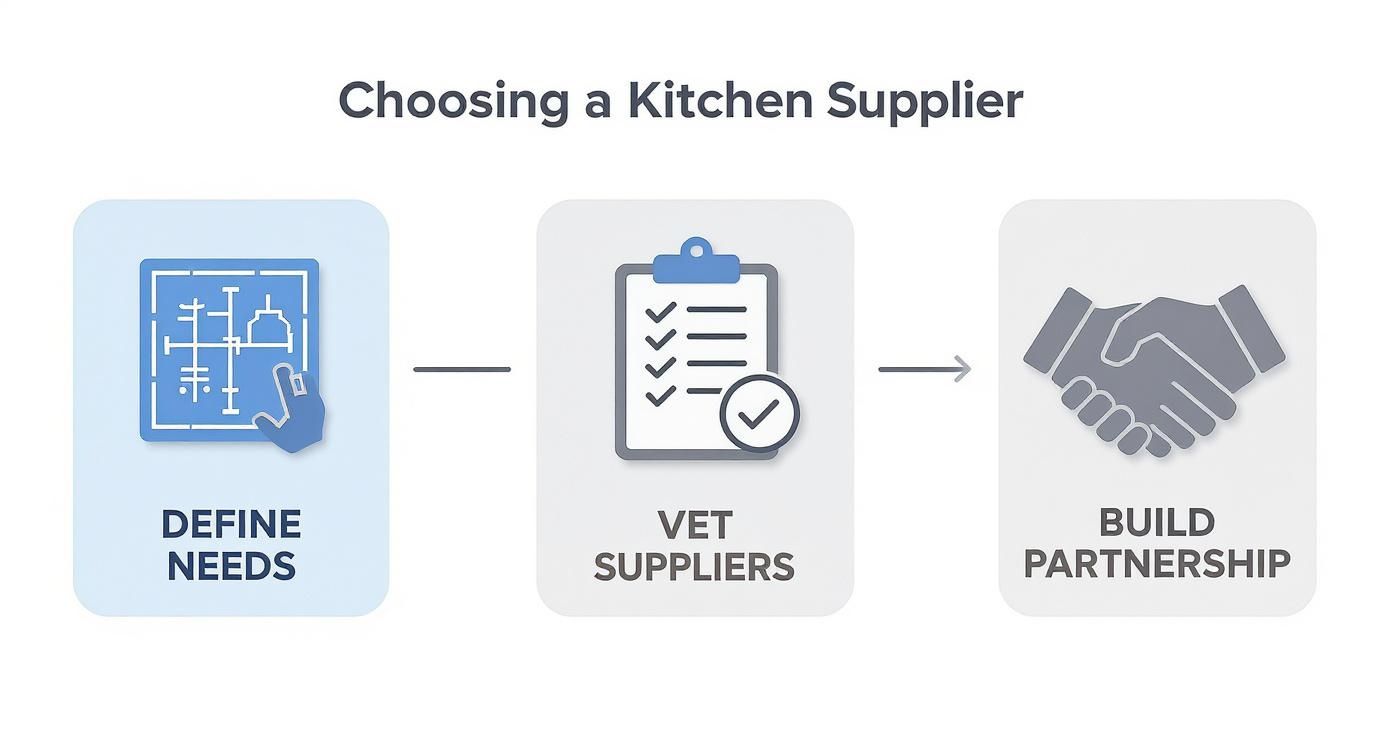
Following a simple framework like this ensures you cover all your bases, helping you avoid costly mistakes and setting your kitchen up for success from day one. In this article, we’ll walk you through this entire process.
Defining Your Kitchen's Real Equipment Needs
https://www.youtube.com/embed/7zwWe12lR58
Before you even think about picking up the phone to call commercial kitchen equipment suppliers, you need a solid game plan. This isn't just about a vague shopping list; it's about creating a detailed blueprint of exactly what your operation needs to succeed. A well-thought-out plan is the only way to get accurate quotes and land the equipment that will actually serve your business.
It all starts with your menu. Your menu dictates every single piece of cooking equipment you'll need. If you're opening a classic Los Angeles pizzeria, high-capacity deck ovens are non-negotiable. For a new Mexican food concept, you’ll absolutely need powerful ranges for simmering sauces and charbroilers to get that authentic flavor. Don't just list items—think through the actual cooking processes from start to finish.
From Menu to Workflow
Once you’ve translated your menu into specific cooking methods, you need to calculate your required throughput. Think about your busiest moments. How many pizzas does your oven really need to churn out during the Friday night dinner rush? How many tacos can your line handle per hour? This number directly impacts the size and capacity of every major appliance, from your fryers to your refrigeration units.
Mapping out your kitchen's workflow is just as critical. In a tight space like a Los Angeles food truck, for example, a galley layout is often your only choice, which means you'll have to prioritize multi-functional and space-saving equipment.
"Designing your kitchen workflow isn't just about efficiency; it's about meeting health and safety codes. A logical flow from receiving to prep, cooking, and serving minimizes cross-contamination risks and is something LA health inspectors look for."
A smart layout keeps the operation running smoothly and safely, preventing those kitchen-crippling bottlenecks when your team is in the weeds. It’s the physical engine of your restaurant.
Documenting Your Equipment Blueprint
The final step before reaching out to suppliers is to create a comprehensive document. This brief should detail every single requirement, making sure nothing gets overlooked. When you approach vendors with this level of preparation, you can have productive, professional conversations.
We've put together a list to help you get started. For a truly exhaustive, step-by-step guide, our Commercial Kitchen Equipment Checklist is an invaluable resource you'll want to check out.
Here’s a quick breakdown of what your needs assessment should cover:
- Major Cooking Lines: Specify the types and capacities you need (e.g., 6-burner gas range, 40 lb. deep fryer, double-deck convection oven).
- Refrigeration & Freezing: Calculate your total cold storage needs, including walk-in coolers, reach-in freezers, and any undercounter units.
- Ventilation: Document the requirements for your hoods and fire suppression systems. These must comply with local Los Angeles fire codes, so get this right.
- Food Preparation: List out all the prep tables, chef bases, slicers, and mixers you'll need based on how complex your menu is.
- Warewashing: Define your needs for a three-compartment sink and a high-temperature dishwasher.
When you arm yourself with a detailed blueprint like this, you're no longer just a casual shopper. You're an informed buyer, ready to find the perfect supplier for your vision.
Your Actionable Supplier Vetting Checklist
Alright, you’ve got your kitchen blueprint ironed out. Now the real fun begins: sifting through the dozens of commercial kitchen equipment suppliers in the Los Angeles area. It’s a crucial step. This isn't just about snagging the lowest price; it’s about finding a genuine partner who gets the relentless pace of the LA food scene.
Your first move should be to check their reputation on the ground. Forget the slick testimonials on their website for a minute. Ask for real references from local restaurants, busy pizzerias, or even a few food truck operators they've worked with. A supplier who is truly part of the local fabric will have a solid track record you can actually verify.
Digging Deeper Than the Price Tag
A supplier is only as good as the brands they stand behind and the service they provide after they’ve made the sale. The quality of your equipment is the backbone of your kitchen’s reliability and output, so you need to look at this with a microscope.
You want to see suppliers who offer a solid mix of reputable brands known for taking a beating and keeping on cooking. Sure, a cheaper option might look great for your new Mexican food restaurant's startup budget, but constant breakdowns will bleed you dry in the long run.
"Your most expensive piece of equipment is the one that's broken during a Friday night rush. Post-sale support, especially emergency repair availability in Los Angeles, is a non-negotiable part of the deal."
Here are the key things to drill down on with every potential supplier:
- Warranties and Returns: Get specific. What's the warranty on a brand-new Atosa refrigerator compared to that used fryer? What’s their policy if a piece of equipment shows up damaged or just isn't what you expected?
- Installation Services: Find out who’s handling the install. Do they have their own certified techs, or are they just subcontracting the job? Make sure they know the ins and outs of Los Angeles-specific code requirements for gas and electrical hookups.
- Preventative Maintenance: A supplier who's in it for the long haul will offer maintenance plans. These services are gold for extending the life of your equipment and stopping those soul-crushing failures that can shut down your food truck in the middle of a lunch rush.
The New vs. Used Equipment Debate
A supplier worth their salt will give you the straight scoop on buying new versus used equipment. There's definitely a smart way to play this to stretch your budget without rolling the dice on reliability.
For your core, high-use workhorses—ranges, ovens, fryers—investing in new, warranty-backed equipment is almost always the right move. The energy efficiency and sheer peace of mind are worth every penny of the upfront cost. But for things like stainless-steel prep tables, shelving, or storage racks? High-quality used pieces can be an absolute steal.
A good supplier will be totally transparent about how they inspect and refurbish their used gear. Ask them point-blank about their reconditioning process and if used items come with any kind of limited warranty. How they answer will tell you everything you need to know about whether they prioritize quality or just want to move inventory. Getting this right means building a kitchen that’s not just efficient, but tough as nails.
Navigating Pricing, Financing, and Lead Times
Alright, let's talk about the money and the waiting game. The financial and logistical details of outfitting your kitchen can feel like a mountain to climb, but this is where smart planning really pays off. Getting a firm grip on pricing, financing, and delivery timelines is make-or-break for launching your Los Angeles restaurant on time and within budget.
When you start getting quotes from commercial kitchen equipment suppliers, it’s tempting to just scan for the lowest number. Don't do it. A quality quote should break everything down for you: equipment costs, shipping fees, installation charges, and any taxes. Be wary of vague "miscellaneous" fees or bundled prices that obscure the real cost of each item. This kind of transparency isn't just a good sign—it's your leverage when it's time to negotiate.
Smart Financing for Your Kitchen
Look, for most new Los Angeles food trucks or Mexican restaurants, dropping a huge pile of cash upfront for equipment isn't just unrealistic—it's bad business. That's where financing and leasing come in, helping you manage capital and keep cash flowing for all those other startup costs.
- Equipment Loans: A classic loan lets you own the equipment outright once you've paid it off. It's a solid long-term play, and the interest you pay is often tax-deductible.
- Leasing: With leasing, you'll typically have lower monthly payments. This is a great move for gear you might want to upgrade in a few years, and it keeps your credit lines free for other business needs.
Understanding the right financial path is as important as choosing the right equipment. The goal is to acquire the necessary tools without putting undue strain on your operating budget, ensuring you have the capital to thrive.
It’s crucial to explore all your options. To get a better handle on this, you can check out our guide on financing restaurant equipment. It’ll walk you through the pros and cons to help you make the right call for your specific situation.
The Critical Role of Local Lead Times
In a market as competitive as Los Angeles, your opening date is everything. Equipment delays can become a massive roadblock, creating a domino effect of costly problems for your entire launch plan. The global commercial cooking equipment market, valued at around $13.7 billion in 2023, is enormous, meaning your gear could be coming from anywhere.
This is exactly why partnering with a supplier who has a local warehouse right here in Southern California is such a game-changer. Think about it: a supplier shipping from Brea, CA, can often get in-stock items to your restaurant in just one to two business days. That’s a world away from waiting weeks for a pallet to crawl its way across the country.
Choosing a local supplier means less guesswork, lower shipping costs, and the speed you need to get your kitchen fired up. It's a strategic move that has a direct, positive impact on your bottom line and your ability to finally open those doors.
Finalizing the Deal and Managing Installation
You’ve done the hard part and picked your supplier. Now it’s time to bring your kitchen to life. This is the execution phase—turning that quote into a fully functioning kitchen with as little friction as possible.
Think of the final purchase order as a legal document, because that's exactly what it is. You need to go over every single line item with a fine-tooth comb. Check the model numbers, quantities, agreed-upon pricing, and all the warranty details.
This is your absolute last chance to catch a mistake that could cost you big time. Did they list the high-efficiency fryer you talked about, or is it a standard model? Are the delivery and installation fees broken down and clearly itemized? Getting these details straight right now saves you from those head-scratching, project-stopping surprises down the road. Once you're certain the order is perfect, get clarity on the payment terms and schedule to make sure it all works with your budget.
Coordinating a Seamless Installation
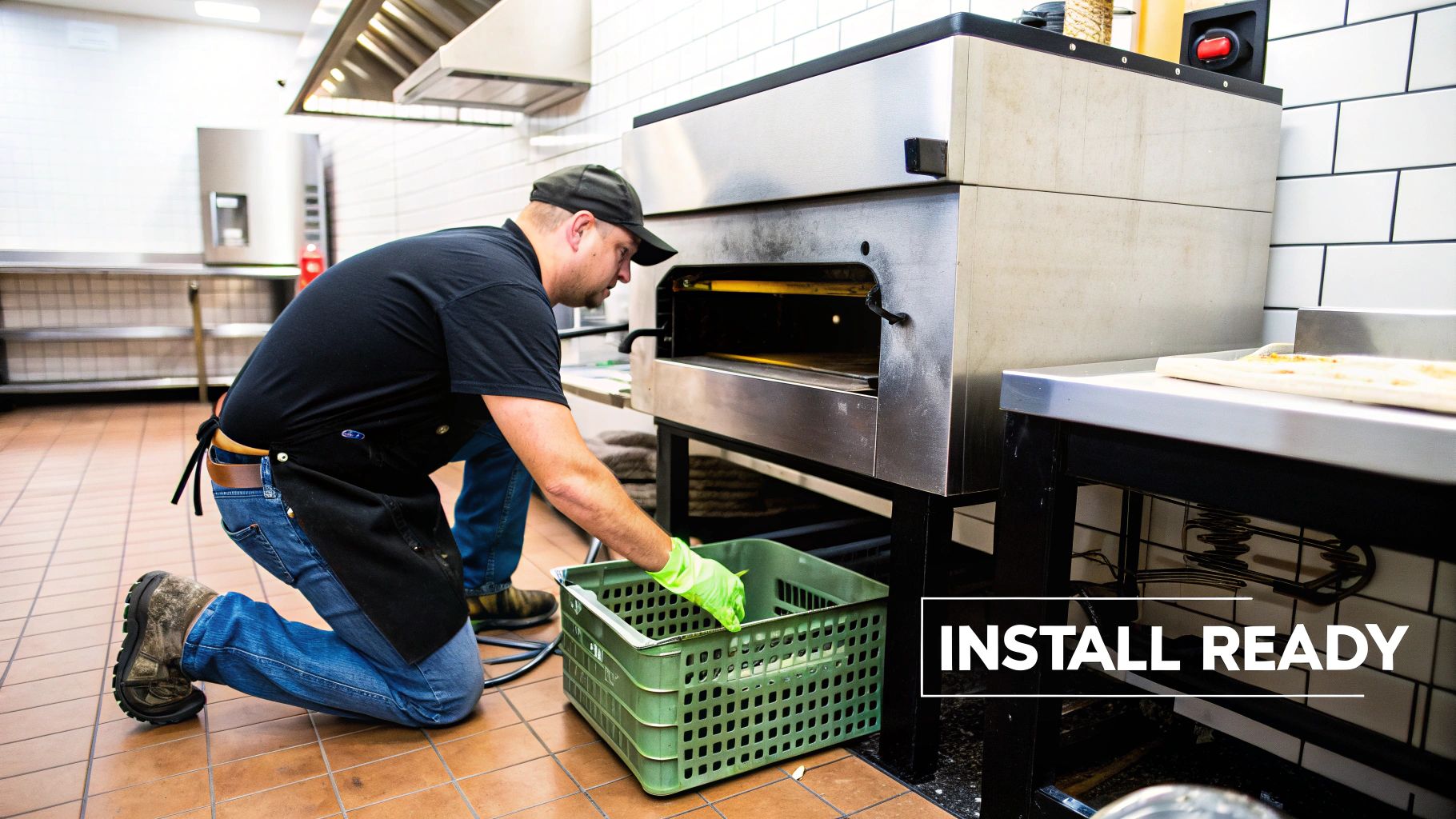
A smooth installation is all about careful planning, not luck. Your primary goal is to keep downtime to an absolute minimum. That means coordinating the delivery and installation schedule with near-military precision, especially in a competitive market where every single day you're closed is money down the drain.
The commercial kitchen equipment market is massive. Back in 2021, the North American market made up about 34.55% of the $8.57 billion global total—that's a lot of kitchens getting built and renovated. You can discover more insights about the commercial kitchen equipment market and its growth online.
To get your space ready for the installation crew, put together a simple, clear checklist:
- Utility Hookups: Make sure all your gas, electric, and water lines are exactly where they need to be and are ready for hookup by licensed pros.
- Site Access: Clear a path! Ensure the delivery team can get large, heavy equipment into your space without banging up your walls or doorways.
- Team Scheduling: Plan the install for a time that causes the least chaos for your staff. This might mean an overnight job or scheduling it for a day you're normally closed.
The Final Walkthrough and Sign-Off
The last piece of equipment is in and hooked up, but you're not done just yet. Now comes the most critical part: a detailed final walkthrough. Whatever you do, don't sign off on the project until you have personally tested every single piece of gear.
A supplier’s responsibility doesn’t end when the truck leaves. A true partner will walk you through each piece of equipment, confirm it’s operating to spec, and ensure your team understands the basics before they consider the job complete.
Turn on the ovens. Fire up the ranges. Run a full cycle on the dishwasher. Check the temps on your refrigerators and freezers to make sure they're holding steady. This hands-on check is your final layer of quality control.
Only when you are 100% satisfied that everything is working perfectly should you sign the final paperwork. Doing this with confidence means your kitchen is truly ready for action and solidifies your relationship with your chosen commercial kitchen equipment suppliers, setting you up for a successful opening.
Building a Long-Term Partnership Beyond the Sale
Your relationship with commercial kitchen equipment suppliers shouldn't just end when the final piece of equipment is installed. The best suppliers in Los Angeles understand that the sale is just the beginning of a partnership, not the end of the transaction. This long-term support is what separates a mere vendor from a true asset to your business.
Think about it. What happens when your walk-in cooler dies during a Southern California heatwave or your main range goes down on a packed Saturday night? A supplier who offers solid post-purchase support becomes an extension of your own team, ready to provide emergency service that keeps your doors open. This is where the real value of a local partner truly shines.
Protecting Your Investment
Ongoing support is what protects your significant investment in the first place. You need a partner with proactive service plans designed to prevent those catastrophic failures before they happen, ensuring your equipment runs efficiently for years to come.
- Preventative Maintenance: Think of it like a regular tune-up. These check-ups can spot potential problems early, extend the lifespan of your machines, and maintain energy efficiency—saving you real money on those utility bills.
- Warranty Leverage: A great supplier doesn't just sell you the box; they help you navigate and actually use the manufacturer warranties. They should be managing claims and repairs so you can focus on running your restaurant.
- Fast Response Times: When you're vetting suppliers in the LA area, ask them point-blank about their average response times for service calls. Quick turnarounds are completely non-negotiable for any high-volume kitchen.
To get the most life out of your gear, we've put together a guide on commercial kitchen equipment maintenance that you'll want to check out.
A supplier’s true worth is proven not at the point of sale, but six months later when you need a critical repair or advice on your next upgrade. This ongoing relationship is your insurance policy against operational downtime.
The commercial cooking equipment industry is on track to hit USD 26.5 billion by 2035, which means innovation isn't slowing down. A long-term partner keeps you in the loop about new technologies that can help you scale your Los Angeles pizzeria, food truck, or Mexican restaurant. You can learn more about these industry growth projections and see why staying current is so important. This partnership ensures your kitchen grows and adapts right alongside your business.
Here are some of the questions that come up time and time again when we're talking to restaurateurs trying to navigate the wild world of commercial kitchen equipment suppliers in Los Angeles. Let's get right to it.
New vs. Used Equipment: What's the Smart Play?
So, should you outfit your LA spot with brand-new gear or go the used route? Honestly, the smartest move is almost always a mix of both.
Think about the workhorses of your kitchen—that main cooking range, the fryer that's running non-stop. For those core, high-use pieces, buying new is a no-brainer. You get reliability, peace of mind, and a solid warranty to back it up. But for things like stainless steel prep tables or simple storage racks? High-quality used pieces can save you a serious chunk of change without sacrificing much.
A good supplier won't just try to sell you the most expensive option. They'll help you walk through the pros and cons, assess the real condition of any used gear, and make smart financial calls whether you're building out a food truck or a full-blown Mexican restaurant.
Critical Questions to Ask Any Supplier
Before you even look at a price tag, you need to ask a few questions that cut right to the chase. This is where you separate the real partners from the order-takers.
- Service Response Times: "If my oven goes down during a Friday night rush in LA, what’s your real-world response time for an emergency repair?"
- Maintenance Plans: "Do you have preventative maintenance plans? I want to keep my equipment from breaking down in the first place."
- The Installation Process: "Who is actually doing the installation, and what does that whole process look like from start to finish?"
How they answer these questions tells you everything you need to know about their commitment to your success after the sale is made.
How Much Should I Actually Budget for My Kitchen?
This is the million-dollar question, and the answer varies wildly depending on your concept. A nimble LA food truck might get fully equipped for $30,000 to $70,000. A full-service pizzeria, on the other hand, can easily run from $100,000 to well over $500,000.
The only way to get a real number is to build your equipment list based on your menu first. Once you know exactly what you need to produce your food, you can start getting quotes and build a budget that makes sense.
At LA Restaurant Equipment, we arm Southern California restaurants with new, warranty-backed equipment at warehouse-direct prices. You get the reliability you need with fast, free shipping. Build your kitchen with confidence and explore our full catalog at larestaurantequipment.com today.