

When you’re trying to nail down the best commercial refrigerator for your kitchen, it really boils down to one thing: finding a tough, efficient unit that fits right into your daily grind. For most spots in Los Angeles, from a pizza parlor to a bustling food truck, a stainless steel reach-in from a brand you can count on, like Atosa, hits that sweet spot between performance and price. These machines are built to take a beating in a hot, busy kitchen without sending your utility bills through the roof.
Choosing the Right Refrigerator for Your Los Angeles Kitchen
For any restaurant, café, or food truck owner here in LA, picking out a commercial refrigerator is one of the most important investments you'll make. This isn't just about keeping things cold—it’s the cornerstone of your food safety, your kitchen’s flow, and ultimately, your profits. A fridge from a big-box store just won't cut it; it can't handle the constant door openings, high kitchen heat, and strict health codes we deal with every day.
We put this guide together to help you skip the guesswork and pick a unit that can truly handle the heat of a Southern California kitchen. We’ll walk you through how to match a fridge to what you actually need, whether you’re running a classic Los Angeles pizza joint, a popular LA food truck, or a beloved spot for Mexican food.
Matching Equipment to Your Business Needs
It's simple: the perfect refrigerator for a high-volume pizza joint is going to be completely different from what a small café or a busy Mexican food truck needs. You have to understand that the intense demands of the Food and Hospitality Industry call for equipment that's both seriously tough and dead reliable. The choice you make here will echo in your daily operations for years.
Start by asking yourself a few basic questions to get pointed in the right direction:
- What's on your menu? A kitchen specializing in authentic Mexican food with fresh produce has different storage needs than a Los Angeles food truck that relies on pre-packaged goods.
- How busy are you? A Los Angeles pizza place with a line out the door needs a bigger fridge with faster temperature recovery than a catering business with a more predictable schedule.
- What does your kitchen layout look like? Your available space is the deciding factor between a reach-in, an undercounter unit, or a prep table.
A commercial refrigerator isn’t just another piece of equipment; it's the heart of your back-of-house. It’s guarding thousands of dollars in inventory and making sure every single dish you serve starts with safe, fresh ingredients.
Thinking through these things from the get-go helps you avoid expensive mistakes down the line. A unit that’s too small will lead to food waste and stressful mid-service scrambles for ingredients. On the flip side, an oversized one just eats up precious kitchen space and runs up your electric bill. We'll show you how to find that perfect balance of size, features, and efficiency to protect your product and your bottom line, so you can make a smarter, more confident purchase.
Decoding the Different Types of Commercial Refrigerators
Stepping into the world of commercial refrigeration can feel like trying to learn a whole new language. With so many models built for specific jobs, picking the right one is the first critical step toward a kitchen that actually works. The whole game is about matching the refrigerator type to your menu, your workflow, and the unique layout of your Southern California business.
Think of it this way: a reach-in refrigerator is the central library of your kitchen. It’s where you keep the bulk of your inventory, all organized and easy to get to. An undercounter unit, on the other hand, is like a quick-access drawer right where you need it, perfect for stashing frequently used items at a prep station. Getting this right is what creates a smooth, fast-paced service environment.
For kitchens where assembly is everything—like a slammed sandwich shop or a bustling Los Angeles food truck dishing out Mexican food—a refrigerated prep table is a total game-changer. It combines chilled storage below with a cutting board and ingredient wells on top, keeping everything for your signature dishes perfectly cold and within arm's reach.
This flowchart can help you visualize the decision-making process, guiding you based on your business type, space, and what you’re cooking.
The main takeaway here is that your day-to-day reality—from the square footage of your kitchen to how complex your dishes are—is what really decides which type of unit will be your best friend or your worst enemy.
Which Commercial Refrigerator Is Right For Your Business?
To help you narrow down the options, we’ve put together a quick comparison of the most common refrigerator types you’ll see in Southern California kitchens. This table breaks down what each unit does best and what you need to keep in mind before you buy.
| Refrigerator Type | Best For | Key Advantage | Consideration |
|---|---|---|---|
| Reach-In Refrigerator | Storing bulk ingredients, prepped items, and general inventory in the main kitchen. | High-capacity storage that keeps everything organized and accessible. The workhorse of any kitchen. | Requires significant floor space; workflow can be disrupted if placed far from prep stations. |
| Undercounter Refrigerator | Placing essential ingredients at specific workstations like the grill line or salad station. | Saves space by fitting under existing counters, speeding up service by keeping items at hand. | Limited storage capacity; not ideal for bulky items or large-scale inventory. |
| Refrigerated Prep Table | Los Angeles pizza places, sandwich shops, and Mexican food trucks that assemble dishes to order. | Combines refrigerated storage with a food-safe prep surface for maximum efficiency. | Requires regular cleaning of ingredient wells and cutting boards to maintain food safety. |
| Glass Door Merchandiser | Cafés, markets, and convenience stores displaying drinks, salads, and grab-and-go items. | Drives impulse sales by making products look attractive and easy for customers to grab. | Not as energy-efficient as solid-door units; requires consistent stocking and organization. |
| Back-Bar Cooler | Bars, pubs, and nightclubs needing quick access to chilled bottled beers, wine, and mixers. | Designed for speed and aesthetics, often with glass doors to showcase your beverage selection. | Can be noisy; interior lighting and door type can significantly affect energy consumption. |
| Kegerator / Draft System | Any establishment serving draft beer, cider, or kombucha. | Keeps kegs at the perfect temperature and pressure for a perfect pour every time. | Requires regular line cleaning and maintenance to ensure quality and prevent foaming issues. |
Ultimately, the best choice depends on your specific operation. A busy LA bar will have very different needs than a quiet Orange County café, so use this as a starting point to think about your own workflow.
A Closer Look at the Main Players
Let's dive a bit deeper into the units that form the backbone of most food service operations.
- Reach-In Refrigerators & Freezers: These are the versatile MVPs of most kitchens. Available with one, two, or three doors, they offer serious storage for everything from cases of produce to prepped sauces.
- Undercounter & Worktop Units: These are your space-saving champions. They slide neatly under existing counters to create efficient workstations or come with a stainless steel top to give you an extra prep surface. They keep key ingredients right where the action is.
- Chef Bases: Picture a low-profile set of refrigerated drawers built to sit directly underneath your griddle or charbroiler. That’s a chef base. They allow chefs to grab raw proteins like burger patties and steaks without ever leaving their station.
Specialized Units for Niche Menus
Beyond the basics, you’ll find specialized units designed to make a specific job faster and easier—something that’s crucial for businesses with a focused menu.
A pizza prep table, for instance, has a wide, refrigerated rail on top made to hold standard food pans full of toppings, plus a deep cutting board perfect for building pies. A sandwich/salad prep table has a similar setup but is scaled for smaller pans of meats, cheeses, and veggies, ideal for Mexican food prep. For high-volume Los Angeles pizza parlors and delis, these units are absolute efficiency machines.
Choosing the right type isn’t just about storage; it’s about designing a smarter workflow. The less time your staff spends walking back and forth to a central cooler, the faster they can prepare and serve food.
For businesses that sell products directly to customers, glass door merchandisers are a must. They keep drinks and grab-and-go meals cold while showing them off to encourage those profitable impulse buys. Likewise, bar and nightclub owners couldn't function without back-bar coolers and kegerators to keep bottled drinks and draft beer perfectly chilled and ready to pour.
Each type serves a very specific purpose. If you're trying to decide between top performers in each category, our guide to the best commercial refrigerator brands can help you compare your options.
The demand for these units is absolutely booming. North America holds 34% of the global commercial refrigeration market, with the U.S. market alone expected to jump from $9.77 billion to $18.54 billion by 2034. That growth is being driven by the explosion of foodservice businesses just like yours—from LA’s incredible restaurant scene to Orange County’s trendy cafés. Beverage refrigeration is seeing a massive surge, making efficient coolers more important than ever for local bars.
Essential Features That Impact Daily Performance and Cost
Once you’ve nailed down the right type of refrigerator for your LA spot, it's time to dig into the details. This is where you separate a true kitchen workhorse from a unit that’s just going to cause you headaches. Looking at a spec sheet can feel like reading a foreign language, but understanding what those terms actually mean in the real world is everything.
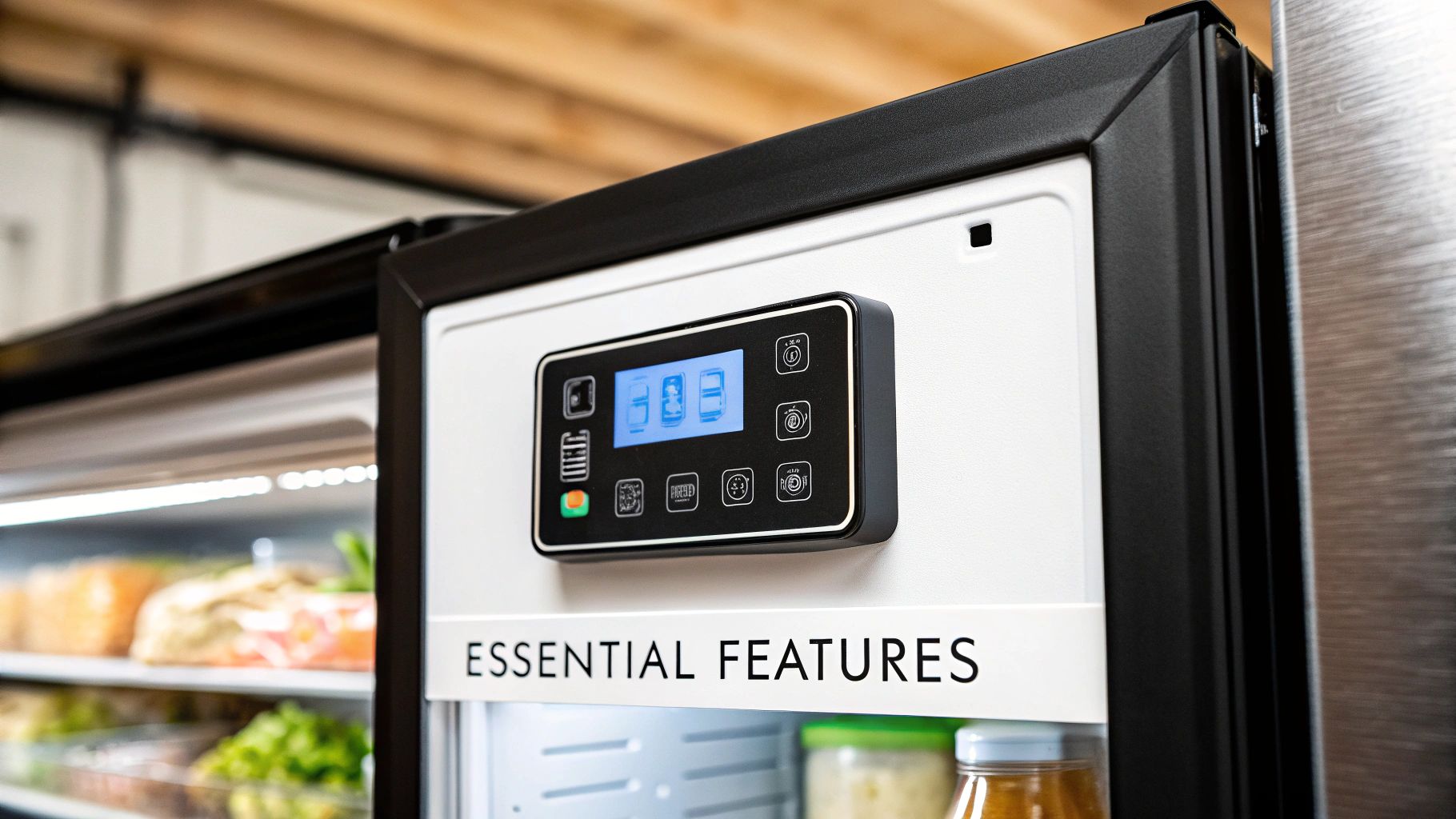
These features aren't just bells and whistles. They directly impact how smoothly your kitchen runs, the safety of your food, and your long-term costs. A precise digital thermostat, for instance, isn't just a cool gadget—it’s your front line of defense against temperature swings that could cost you thousands in spoiled inventory or a failed health inspection.
Mastering Temperature and Airflow
Keeping a consistent temperature is the single most important job your refrigerator has. Period. Look for units that come standard with digital thermostats and an external temperature display. This simple feature lets your staff check the temp at a glance without opening the door and letting all that precious cold air out.
Beyond the thermostat, a few other components are non-negotiable:
- Powerful Compressor: This is the heart of the whole machine. A bottom-mounted compressor is usually the way to go in a hot kitchen. It pulls in cooler air from down low near the floor and makes routine cleaning way easier.
- Dynamic Airflow System: You need a unit with fans that actively circulate cold air everywhere inside the cabinet. This eliminates those dreaded "hot spots" where food can spoil and helps the unit recover its temperature quickly after the door has been opened during a crazy-busy service.
Think of an automatic defrost system as a self-cleaning feature for your fridge's cooling system. It periodically melts any ice buildup on the coils so the compressor doesn't have to overwork itself to death.
Shelving and Doors Built for Business
The inside of your fridge and its doors are what your team interacts with all day, every day. Their design can make or break your kitchen's workflow.
Shelving:
Top-quality units, like the ones from Atosa, will include heavy-duty, epoxy-coated steel shelves. That special coating is a huge deal—it resists the rust and corrosion that comes from inevitable spills, making them last way longer than basic wire shelves. Adjustable clips are also a must for reconfiguring storage on the fly.
Door Type:
The right door choice really depends on how you'll use the unit.
- Solid Doors: These offer the best insulation, which means lower energy bills. They’re perfect for back-of-house storage where you don’t need to see what’s inside.
- Glass Doors: A must-have for merchandisers or prep lines where your crew needs to spot ingredients fast. Just know they are a little less energy-efficient.
- Self-Closing Doors: An absolute lifesaver in a chaotic kitchen. This feature ensures doors aren't accidentally left open, saving your inventory and preventing the compressor from running nonstop.
The push for better, more efficient equipment is huge right now. The global commercial refrigeration market, which was USD 85.6 billion, is expected to skyrocket to USD 161 billion by 2034. That growth is being driven by restaurant owners like you demanding smarter tech that slashes utility bills—especially when refrigeration can eat up 40% of a supermarket's energy costs.
To see what this looks like in a high-pressure environment, consider the demands of a high-spec commercial kitchen, where having robust, feature-rich refrigeration isn't a luxury, it's essential. Investing in a unit built for that kind of pace means you're ready for anything.
How to Size Your Unit and Maximize Energy Efficiency
Choosing the right size for a commercial refrigerator is a critical balancing act. Go too small, and you’re setting your kitchen up for chaos during a dinner rush. But go too big, and you're just paying to cool empty space—a painful mistake when you see those Southern California utility bills.Nailing the right size is the very first step toward building a smarter, more cost-effective kitchen.
Think of it this way: your fridge's capacity should be a direct reflection of your operation. A bustling Mexican food truck that gets fresh deliveries every day needs a lot less bulk storage than a high-end steakhouse that ages its own beef. You have to size your unit based on how your business actually runs, not just a generic guess.
Start by looking at your menu. How much of it is fresh versus frozen? A restaurant serving Mexican food with fresh salsas and produce is going to need way more refrigerated space than a Los Angeles pizza spot that relies heavily on dry goods and frozen ingredients. Next, think about your delivery schedule. If you get produce and proteins five times a week, you can get by with a smaller unit than a restaurant that only gets two massive deliveries.
Calculating Your Capacity Needs
There’s no magic formula, but a solid rule of thumb is to allow for about 1.5 to 2 cubic feet of storage per meal served during your busiest service. So, if your restaurant serves 100 dinners on a packed Saturday night, you should be looking for a refrigerator with at least 150 cubic feet of usable space.
To really dial in that number, ask yourself these key questions:
- Peak Customer Volume: How many covers do you do on your busiest day? That number dictates your absolute maximum inventory needs.
- Inventory Turnover: How fast do you burn through key ingredients like produce or dairy? High-turnover items don’t need as much long-term cold storage.
- Kitchen Layout: Does your line have space for a giant three-door reach-in, or would two smaller undercounter units actually improve your workflow?
Sizing your refrigerator correctly isn’t just about storage—it's about operational efficiency. The right size ensures your team can find ingredients quickly, reducing door-open times and maintaining safe food temperatures during a chaotic service.
Slashing Costs with Energy Efficiency
Once you've figured out the size you need, your next focus has to be energy efficiency. For any business in Los Angeles or Orange County, electricity is a major line item. An inefficient refrigerator will quietly bleed your profits month after month, running 24/7/365. Investing in an energy-efficient model isn’t a luxury; it’s one of the smartest long-term financial decisions you can make.
The most important thing to look for is the ENERGY STAR certification. Units with this label are, on average, 20% more energy-efficient than standard models. That translates directly to hundreds, or even thousands, of dollars in savings over the life of the unit.
But what actually makes one of the best commercial refrigerators more efficient than another? It all comes down to a few key pieces of engineering working in harmony.
The Anatomy of an Efficient Refrigerator
Modern, energy-saving units are more than just well-insulated boxes; they’re packed with advanced tech designed to cut down on waste.
- High-Efficiency Compressors: The compressor is the heart of your refrigerator. Modern versions simply use less juice to get the same cooling power, and many now use eco-friendly refrigerants that are better for the planet and your budget.
- Superior Insulation: Look for units with high-density, polyurethane insulation that's been "foamed in place." This creates a solid, gap-free barrier that keeps cold air in and the hot kitchen air out.
- Tight Door Seals: A worn-out gasket is like leaving a window open in winter. Features like self-closing doors and magnetic gaskets create an airtight seal, meaning the compressor doesn’t have to work overtime to make up for leaks.
When you choose a unit that combines the right size with top-tier energy features, you're not just buying a piece of equipment. You're making a strategic investment in lower operating costs and a more sustainable business. If you're looking for more ways to reduce your utility bills, check out our in-depth guide to choosing energy-efficient commercial refrigerators for your Southern California kitchen.
Making the Purchase Simple and Affordable
Alright, you’ve picked out the perfect unit—you know the size, the features, the whole nine yards. Now comes the part that makes most independent operators sweat: how to get it into your kitchen without tanking your budget. It’s a real hurdle, especially for small restaurants, Los Angeles food trucks, and cafés here in Southern California. But the good news? It doesn’t have to be that hard.
The old way of buying equipment meant trekking to a giant showroom where you’d pay a premium. Those prices had to cover their high rent and pushy sales commissions. That model is just plain outdated and expensive. A much smarter way to go is working with a warehouse-direct supplier like us at LA Restaurant Equipment.
By ditching the physical showroom, we slice out a massive layer of overhead. That means we can pass those savings directly to you. You end up with a brand-new, warranty-backed refrigerator for a price that often looks a lot like what you'd pay on the risky used market.
The Advantage of Local and Fast Shipping
When a cooler goes down on a busy Tuesday, you can’t afford to wait a week for a truck to cross the country. Every hour your kitchen is down, you're bleeding money from spoiled product and lost sales. This is where being local is a game-changer.
Because we ship straight from our warehouse in Brea, California, we’re able to offer fast, free shipping on orders inside the state. For our neighbors in Los Angeles and Orange County, that means your new unit usually shows up in just one to two business days.
When your old unit gives up the ghost, speed is everything. Getting a replacement delivered in 24 to 48 hours isn't just a perk—it's what saves your business from major disruption and protects your bottom line.
Whether you're making Mexican food in East LA, running a Los Angeles food truck in Irvine, or slinging slices at a Los Angeles pizza place, that kind of rapid turnaround gets you back in business almost immediately. What could have been a crisis becomes just a minor hiccup.
Flexible Financing to Get the Right Gear Now
Let's be real: a new commercial refrigerator is a big investment. Dropping all that cash at once can put a serious squeeze on your cash flow. That’s exactly why flexible financing options exist—to make top-tier equipment a reality for any business, big or small.
Financing lets you break up that big price tag into smaller, predictable monthly payments. Suddenly, a major capital expense feels more like a regular operational cost, just like your rent or utilities.
Here’s how financing can really help your operation:
- Keep Your Cash Free: Hold onto your capital for things that keep you running day-to-day, like payroll, inventory, and marketing.
- Don't Settle: Avoid the temptation to buy a smaller or less efficient unit just to save a few bucks upfront. Financing empowers you to get the exact refrigerator your kitchen needs to thrive.
- Simple and Quick Approval: We partner with financing companies that get the restaurant business. They know you're busy, so they make the application and approval process fast and painless.
By using these modern purchasing strategies—warehouse-direct pricing, lightning-fast local shipping, and easy financing—you can outfit your kitchen with the best equipment without wrecking your finances. It puts you in control, ensuring you get the reliable gear you need, right when you need it.
Installation Tips and Long-Term Maintenance for Your Investment
Your commercial refrigerator is the unsung hero of your kitchen. It's a workhorse that runs 24/7 to protect thousands of dollars in inventory. But just like any major piece of equipment, its lifespan and performance really depend on a solid installation and consistent care. Getting the setup right from day one is the single best thing you can do to avoid headaches down the road.

A good installation is about more than just plugging the unit in. You have to create the perfect environment for it to do its job. That starts with making sure the refrigerator is perfectly level. If it’s even slightly off-kilter, the doors won't seal correctly, letting cold air seep out and forcing the compressor to work overtime just to keep up.
Proper ventilation is also non-negotiable. Your refrigerator’s condenser needs room to breathe so it can push heat away from the unit. Jamming it against a wall or tucking it into a tight corner is a recipe for disaster. It’ll overheat, which can lead to premature failure and sky-high energy bills.
Creating a Simple Maintenance Routine
Once your fridge is humming along in its new home, a simple, proactive maintenance routine is your best friend. These small, consistent tasks can prevent the vast majority of expensive breakdowns and keep your unit running like new. Think of it as preventative care for the heart of your kitchen.
Just like a car needs regular oil changes, your refrigerator needs routine care. Neglecting simple tasks like cleaning the condenser coils can lead to major, expensive repairs down the line. A few minutes of maintenance each month saves you from days of downtime.
A great place to start is with the condenser coils. These coils are basically your fridge's lint trap; they get clogged with all the dust, flour, and grease floating around in the kitchen air. When that happens, the unit can't cool efficiently. Cleaning them every 90 days with a stiff brush makes a huge difference in performance.
Just as important are the door gaskets. Give them a quick check for cracks or tears every week. A bad seal is a massive energy drain. Finally, keeping the interior clean isn't just for sanitation—it also promotes better airflow, ensuring everything inside stays at a consistent, safe temperature.
This kind of proactive care is essential for any busy restaurant, Los Angeles food truck, or café. For a more detailed checklist, check out our guide to commercial kitchen equipment maintenance. By building these simple habits into your routine, you'll get more years out of your unit, minimize service calls, and ensure your refrigerator remains a reliable asset.
Answering Your Commercial Refrigerator Questions
When you're deep in the day-to-day grind of running a restaurant, food truck, or café in Southern California, practical questions about equipment are bound to pop up. Let's tackle some of the most common ones we hear from owners just like you, giving you clear, straightforward answers to help you lock in your final decision.
These are the kinds of questions that come up right before you’re ready to buy, and getting them sorted is the last step toward picking the perfect unit for your kitchen.
Is It Better to Buy a New or Used Commercial Refrigerator in Los Angeles?
A used refrigerator can seem like a great deal with that lower price tag, but it's a gamble that often comes with a lot of hidden risks. Those units almost never have a warranty, you have no idea what their service history looks like, and they’re almost always far less energy-efficient. That can quickly lead to surprise repair bills and higher utility costs each month, wiping out any money you thought you saved.
A new, warranty-backed unit from a supplier like LA Restaurant Equipment guarantees reliability and top-notch performance from the moment it’s plugged in. With our warehouse-direct pricing and flexible financing options, investing in a new unit is usually the smarter—and much safer—long-term move for your business.
How Quickly Can I Get a Refrigerator Delivered to My Orange County Restaurant?
When your main refrigerator goes down, every minute counts. You're facing lost inventory and a massive operational headache. Waiting a week or more for a replacement to show up just isn't an option for any busy kitchen.
This is exactly where having a local supplier changes the game. Because LA Restaurant Equipment ships directly from our Brea, California warehouse, we offer free shipping on in-state orders that typically arrives in just one to two business days. That kind of rapid response keeps the disruption to a minimum and gets your kitchen back to what it does best.
What Is the Most Important Feature for a Los Angeles Food Truck Refrigerator?
For a Los Angeles food truck, it all comes down to two things: durability and a robust cooling system. Food truck equipment has to take a beating from road vibrations and keep its cool in hot, tight spaces.
You’ll want a unit with a full stainless steel exterior and interior—it’s built to handle the unique stress of being on the move. Just as important is a powerful, well-ventilated compressor that can maintain safe food temperatures even on a sweltering Southern California summer day. And always, always make sure the unit you choose is NSF-certified to keep the health department happy.
Ready to find the perfect, reliable cooling solution for your business? The team at LA Restaurant Equipment is here to help you select the ideal unit with warehouse-direct pricing and fast, local shipping. Explore our full selection of new, warranty-backed commercial refrigerators at https://larestaurantequipment.com.