

If you're running a busy restaurant in Los Angeles, you know there’s no such thing as a one-size-fits-all freezer. The best commercial freezer for your kitchen is the one that fits your unique menu, floor plan, and budget. It could be a small undercounter unit for a bustling Los Angeles food truck or a massive walk-in for a pizzeria that goes through tons of dough and cheese.
The right choice is all about balancing your day-to-day needs with long-term efficiency—a huge deal when you’re looking at SoCal utility bills.
Your Guide to Choosing the Best Commercial Freezer
Let's be honest, navigating the world of commercial freezers can be a headache, especially when you'd rather be focused on creating amazing food. Every kitchen is different, from compact L.A. food trucks to sprawling Mexican restaurants managing ingredients in bulk. The trick is to stop thinking of a freezer as just another appliance and start seeing it as a cornerstone of your kitchen's strategy.
This guide is here to cut through the noise. We'll break down the must-know factors for restaurant owners in Los Angeles and Orange County. Forget the dense technical jargon; we’re focusing on how these machines work in the real world to impact your workflow and your bottom line.
Key Decisions for LA Restaurant Owners
Before you even start looking at specific models, you need to answer a few basic questions about your operation. Nailing these down first will narrow your search in a big way and point you toward the right equipment for your business.
Think about these three things:
- Available Kitchen Space: Are you working with enough vertical and horizontal room for a big reach-in, or are you limited to what can fit under a counter?
- Menu and Inventory Needs: A Los Angeles pizza place might need to store hundreds of pounds of ingredients, demanding a walk-in freezer. A food truck, on the other hand, might just need a small chest freezer for specialty items.
- Budget and Long-Term Costs: How much can you spend upfront, and more importantly, how will the freezer’s energy use hit your monthly bills?
This quick visual breaks down how space, menu, and budget steer your decision.
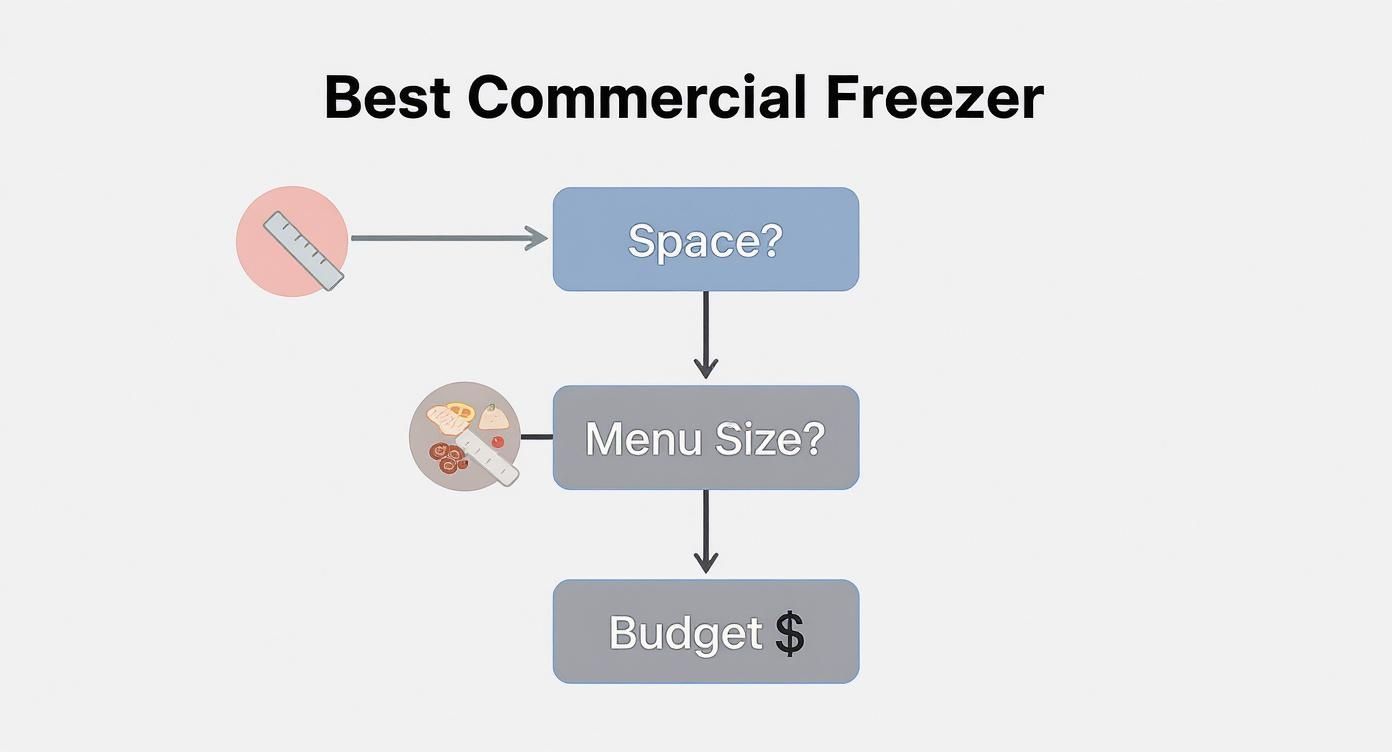
As you can see, your kitchen's physical footprint and what you're cooking are the first things to consider when finding the best commercial freezer.
The most common mistake I see restaurant owners make is underestimating how much storage they'll need down the road. It's almost always a good idea to get a unit with 15-20% more capacity than you think you need right now. It gives you room to grow, run seasonal specials, and take advantage of bulk-buy deals.
By thinking through these points first, you can pick a freezer that does more than just keep things cold—it can help you run a smarter, more profitable kitchen. Let's walk through the rest of the process.
How to Choose the Right Freezer for Your Kitchen
Picking out the best commercial freezer for your kitchen is about more than just finding a box that gets cold. You’re choosing a strategic partner for your kitchen's unique rhythm. In a place like Los Angeles, a Mexican food restaurant and a high-volume pizzeria have completely different demands, and the right freezer can be the difference between a smooth service and a chaotic one.
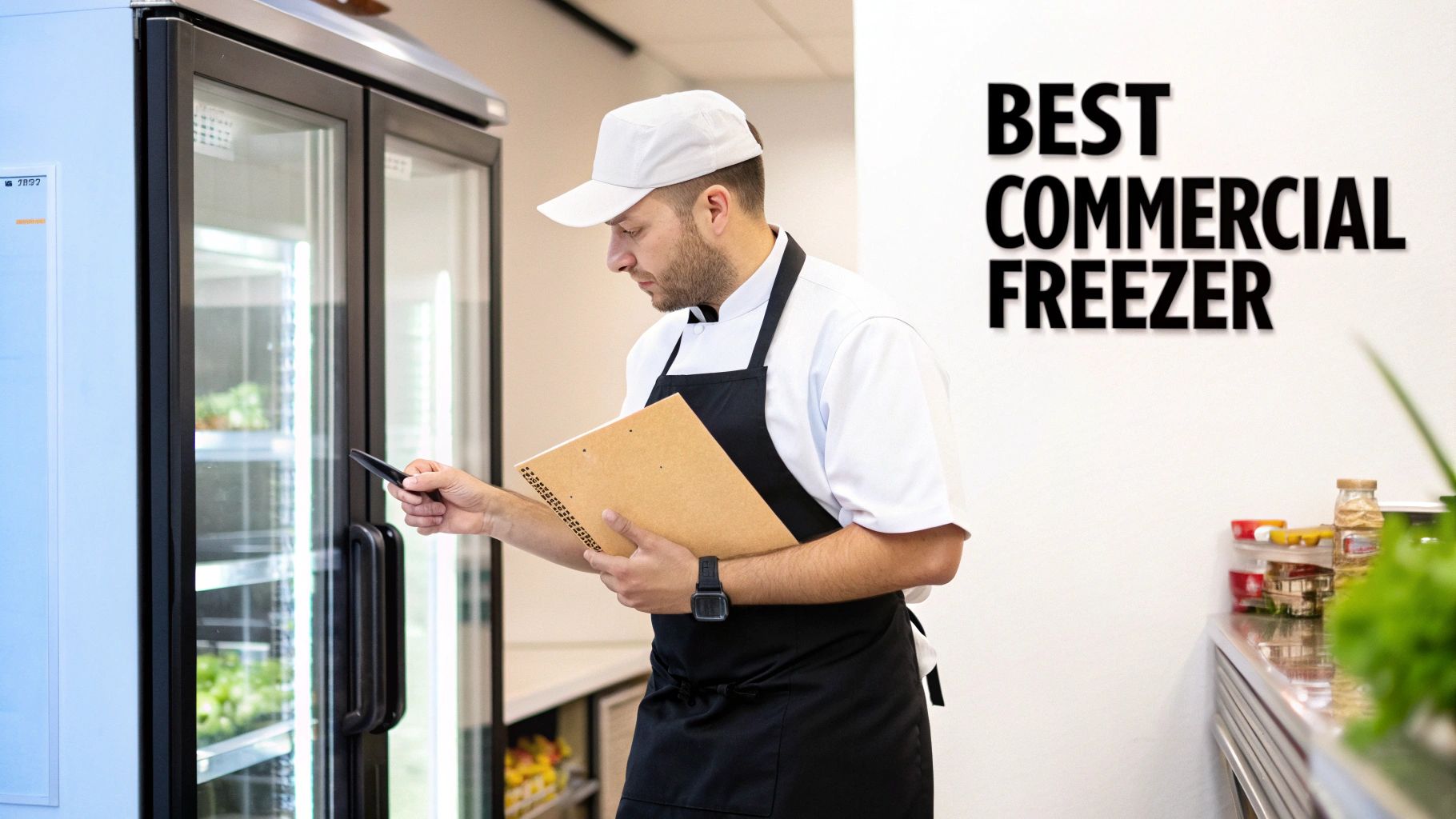
Think of your freezer as an active part of your kitchen's daily dance. The goal is to match the freezer to the job it needs to do, locking in efficiency, food safety, and a seamless workflow every single time.
Reach-In Freezers: The Everyday Workhorse
For most restaurants, the reach-in freezer is the undisputed champ for daily use. These upright units are the backbone of the kitchen, built specifically for grabbing ingredients on the fly during a busy service. They are all about speed and frequent access.
Picture a line cook in a fast-paced Los Angeles food truck. They need to get their hands on frozen items now without leaving their station. A reach-in, placed just a few steps away, lets them grab what they need and get right back to the flat-top, keeping those ticket times down.
You’ve got two main styles to consider:
- Solid Door Models: These are the kings of efficiency. Their insulated doors are fantastic at trapping cold air, which is a huge deal for maintaining consistent temps and keeping those Southern California energy bills from getting out of hand. They’re perfect for storing bulk items you don't need to see at a glance.
- Glass Door Models: What you give up in a tiny bit of insulation, you gain back in pure visibility. Glass doors let your chefs find ingredients instantly without yanking the door open, which helps keep the temperature stable and speeds up prep. They’re a great fit for high-turnover items where a quick visual check is part of the daily routine.
Undercounter Freezers: Maximizing Your Space
When every square inch of your kitchen counts—a common story for Los Angeles food trucks and cozy cafes—undercounter freezers are an absolute game-changer. These compact units slide right under prep tables and counters, turning what was once dead space into prime frozen storage.
An undercounter freezer is like a line cook’s personal toolkit. For a busy Mexican food spot, it might hold specialty meats or pre-portioned ingredients right where the action is. This completely cuts out the time-wasting trips to a bigger freezer in the back, making the whole cooking process smoother.
An organized freezer is an efficient freezer. By placing your most-used items at the front and clearly labeling everything, you reduce the time the door stays open. This simple habit can lower energy consumption by up to 10% and reduce strain on the compressor.
These units prove that the best commercial freezer isn't always the biggest; it's about smart placement that supports your kitchen's natural flow. Integrating these smaller units is a key piece of the puzzle, a topic we dive into deeper in our complete commercial kitchen equipment checklist.
Walk-In Freezers: The Central Warehouse
For the big players, the walk-in freezer is the ultimate storage solution. This isn't just an appliance; it's the central warehouse for your entire inventory. A high-volume Los Angeles pizza restaurant, for example, depends on its walk-in to store hundreds of pounds of cheese, dough, and toppings bought in bulk.
That ability to buy and store ingredients in massive quantities is a huge financial win. It lets a business lock in better pricing from suppliers and cut down on the number of deliveries, which directly helps the bottom line. The walk-in is the heart of a restaurant's inventory system, guaranteeing you have what you need for the week ahead. Choosing the right one is a foundational move for any large restaurant that’s serious about growth and cost control.
Sizing Up Your Freezer Needs: How to Calculate Capacity
Choosing the right commercial freezer isn't just about picking a model; it's about matching its size to the unique rhythm of your kitchen. Go too small, and you're constantly playing inventory Tetris, stuck making last-minute calls to suppliers and putting a hard limit on your menu's potential.
On the other hand, a freezer that’s way too big is a silent killer of your bottom line. It eats up precious floor space and quietly pads your Southern California Edison bill month after month. Nailing the capacity from day one is one of the smartest equipment decisions you can make—a true investment in your kitchen’s efficiency. A little planning now saves a world of headaches later.
A Simple Formula to Get You Started
While no two kitchens are the same, there’s a solid rule of thumb that gives you a great starting point. The goal here is to turn your daily service volume into a number: cubic feet. Don't worry, the math is easy.
The industry standard is to plan for 1.5 to 2 cubic feet of freezer space for every full-service meal you serve on a typical day. For faster operations like a Los Angeles food truck or a takeout joint, you can dial that back to about 1 cubic foot per meal.
Let’s put this into a real-world LA scenario. Imagine you're running a bustling full-service Mexican restaurant in Silver Lake, serving around 150 meals during your dinner rush.
- The Math: 150 meals x 1.5 cubic feet/meal = 225 cubic feet
Just like that, the owner has a baseline. They know they need to look for a combination of freezers that gets them somewhere in the neighborhood of 225 cubic feet of total storage.
Fine-Tuning Your Estimate for the Real World
That basic formula is a fantastic start, but it doesn't paint the whole picture. You've got to tweak that number based on how your kitchen actually runs day-to-day.
Think about these critical factors:
- Your Menu: A Los Angeles pizza place with a tight, focused menu of dough, cheese, and pepperoni needs way less freezer diversity than a gastropub juggling different proteins, house-made ice creams, and specialty frozen ingredients.
- Delivery Schedule: If your suppliers are dropping off orders every other day, you can get by with less space. But if you’re a food truck stocking up for a three-day weekend festival, you need to hold all that inventory at once.
- Buying in Bulk: Do you score better prices by buying pallets of fries or cases of chicken? That's a great way to save money, but you'll need significantly more freezer real estate to stash those bulk orders.
Here’s a pro tip that so many owners miss: plan for growth. Your business today isn't the business you'll have next year. Always add a 15-20% buffer to your final number. This gives you the breathing room to handle seasonal rushes, land a new catering gig, or simply grow your customer base without having to immediately buy another freezer.
Putting It All Together: A Food Truck Example
Let's walk through this for a gourmet pizza-by-the-slice truck gearing up for a busy Saturday at a Los Angeles outdoor market. They plan on selling about 200 slices.
- Baseline Calculation: This is a quick-service spot, so they’ll use the 1 cubic foot per "meal" rule. That's 200 slices x 1 cubic foot = 200 cubic feet just to get through Saturday's rush.
- Operational Adjustments: They only get one big delivery before the weekend, so they have to store enough dough, cheese, and toppings for both Saturday and Sunday. That instantly doubles their need to 400 cubic feet.
- Planning for Growth: To be ready for bigger events and future success, they add that 20% buffer. 400 cubic feet x 0.20 gives them an extra 80 cubic feet.
Their final target is 480 cubic feet (400 + 80). This smart, detailed calculation ensures they invest in a freezer that not only handles their current business but is ready to scale right along with them.
Why Energy Efficiency Is Your Secret Weapon
Let's be honest, for any restaurant owner in Southern California, that monthly utility bill is always lurking in the back of your mind. In a place where refrigeration and A/C are running nearly non-stop, energy costs can quietly drain your profits. This is why you need to stop thinking of energy efficiency as a "nice-to-have" feature and start seeing it as a core part of your financial strategy.
An energy-efficient freezer isn't just another piece of restaurant equipment; it's an investment that literally pays you back, month after month. Sure, a high-efficiency model might have a slightly higher sticker price, but it’s designed to be your secret weapon against climbing operational costs. That initial investment quickly turns into real savings, making a necessary expense a tool for boosting your bottom line.
The market is already shifting hard in this direction. The global commercial refrigeration sector, valued at a massive USD 85.6 billion in 2024, is expected to nearly double to USD 161 billion by 2034. A huge reason for this growth is the sheer power these units consume—sometimes up to 40% of the total energy in a U.S. supermarket. That pressure is forcing manufacturers to get smarter and build more efficient machines.
Decoding the ENERGY STAR Rating
When you’re comparing freezers, that little blue ENERGY STAR label is your best friend. It’s not just some marketing gimmick; it's a seal of approval from the U.S. Environmental Protection Agency (EPA) that guarantees the freezer meets tough energy performance standards.
On average, an ENERGY STAR certified freezer is about 20% more efficient than a standard one. It’s like looking at a car’s MPG rating. Two sedans can get you to work, but the one with better gas mileage will save you a ton of cash over the years. That’s exactly what an ENERGY STAR freezer does for your kitchen.
Choosing an ENERGY STAR model is one of the easiest financial wins a restaurant owner can make. Over its lifespan, a single two-door commercial freezer can save a business upwards of $400 in energy costs, and that’s just one unit. Imagine the impact across your entire kitchen.
This certified efficiency means lower utility bills, period. It frees up cash that you can put toward things that actually grow your business, like a new marketing push or experimenting with your menu.
Key Features That Drive Savings
So, what’s the magic behind an energy-efficient freezer? It really boils down to a few key design improvements that work together to stop wasting energy. Knowing what these are helps you see the real, long-term value baked into the best models.
Here are the components that make the biggest difference:
- Modern Insulation: Top-notch, thick polyurethane foam insulation is a game-changer. It acts like a fortress wall, keeping the cold air in and the hot kitchen air out. The result? The compressor doesn’t have to kick on nearly as often to keep things at the right temperature.
- LED Lighting: Those old incandescent bulbs are energy vampires. They not only burn more electricity but also create heat inside your freezer, making the compressor work even harder. Bright, cool-running LED lights fix both issues, using up to 90% less energy and cutting down the cooling load.
- Self-Closing Doors: In a hectic kitchen, freezer doors get left open. It happens. Every time it does, cold air spills out, and the compressor goes into overdrive. Self-closing doors with solid magnetic gaskets create a tight seal every time, plugging one of the most common energy leaks.
Calculating Your Return on Investment
Let’s put some simple numbers to this to see how it plays out in a real LA kitchen. Imagine you're deciding between a standard two-door reach-in freezer and an ENERGY STAR model that costs $500 more upfront.
The standard model runs you about $1,200 per year to operate. The ENERGY STAR unit, on the other hand, costs around $960 per year. That's a $240 annual savings right there.
In just over two years, the energy savings have completely paid for the higher initial price. After that, the $240 you save every year is pure profit going straight back into your business. When you’re ready to go deeper, our article on energy-efficient commercial refrigerators has even more insights.
Essential Features and California Compliance
Okay, let's get down to the details. Beyond just chilling things down and saving energy, the right freezer for your restaurant has to be tough enough for the LA kitchen scene. Think of it less as an appliance and more as a crucial team member—one that needs to pull its weight through every service while keeping the health inspector happy.
This means you have to look past the price tag. We’re talking about build quality, smart controls, and those all-important certifications. Getting this right from the start is how you make a smart investment that pays off for years, not a costly mistake you'll regret in six months.
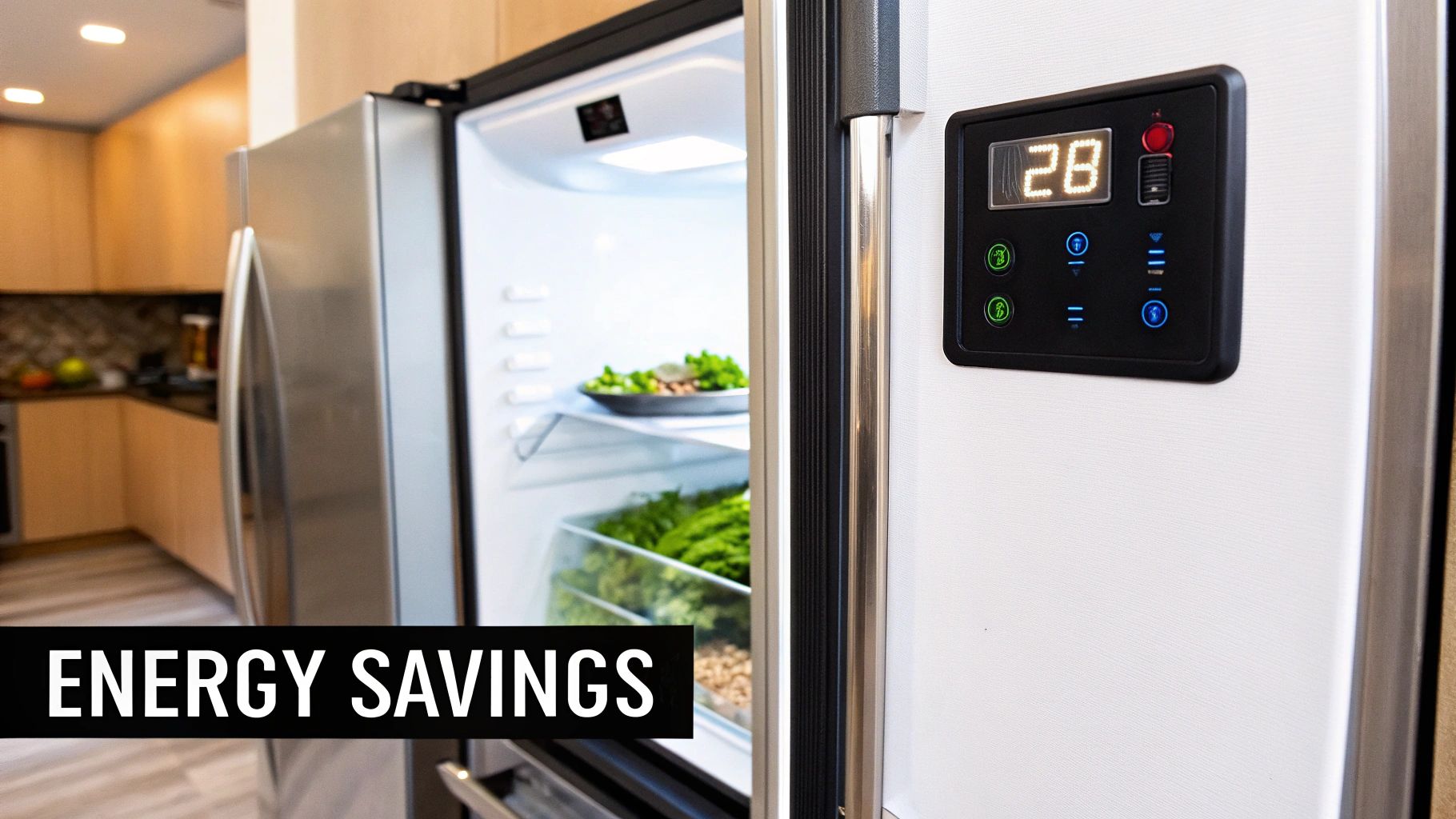
The right features separate a workhorse from a headache. Durable materials and time-saving tech are what really define a freezer's value and its ability to back you up when you're in the weeds.
Built to Survive the Kitchen Rush
A commercial kitchen is a battlefield. It’s hot, it’s hectic, and things get spilled and knocked around. A standard residential freezer wouldn't last a week. That’s why the construction of your unit is something you can't compromise on.
Stainless steel construction isn't just for looks; it's the gold standard for a reason. It fights off rust, shrugs off dents, and is a breeze to wipe down and sanitize—which is critical for food safety. A solid stainless steel body means your freezer can handle the daily chaos of any busy kitchen, from a bustling pizzeria to a cramped food truck, without falling apart.
Precision Controls and Smart Automation
Your freezer has one primary job: keep everything at a consistent, safe temperature. If it can't do that, you're risking spoiled inventory, lost money, and serious dings from the health department. Modern features take the guesswork out of temperature management.
Here’s what to look for:
- Digital Temperature Controls: These are a must. Forget those old analog dials. A clear digital display lets you set and monitor the exact temperature, ensuring everything stays in the food-safe zone. No guessing, no worrying.
- Automatic Defrost Systems: Manually defrosting a freezer is a miserable, time-sucking chore that takes your storage out of commission. An automatic system handles the ice buildup for you, preventing strain on the compressor and keeping air flowing freely. This feature alone keeps your unit efficient and gives your staff their valuable time back.
Investing in a freezer with an automatic defrost system is one of the smartest operational decisions a restaurant owner can make. The labor hours saved over the life of the unit can easily add up to hundreds, if not thousands, of dollars, making it a feature with a clear and immediate return on investment.
Meeting California's Strict Health and Safety Codes
Running a food business in Los Angeles or Orange County means compliance is everything. Your commercial freezer must meet specific standards to pass health inspections, period. Certifications aren't just nice to have; they are your proof that you’re playing by the rules.
To make sure your new freezer is ready for inspection day, we've put together a quick checklist of the non-negotiable features and certifications you need.
Must-Have Commercial Freezer Features
| Feature/Certification | Why It's Critical for LA Restaurants | Impact on Operations |
|---|---|---|
| NSF Certification | The National Sanitation Foundation mark is what health inspectors look for first. It proves the unit is designed for easy cleaning and won't harbor bacteria. | A non-NSF unit is an automatic red flag during an inspection, potentially leading to fines or a failed grade. |
| UL Certification | The UL (Underwriters Laboratories) listing confirms all electrical components are safe, reducing the risk of fire or electrical shorts in a busy kitchen. | Protects your staff, your kitchen, and your investment from dangerous electrical failures. |
| Stainless Steel Interior/Exterior | Withstands the daily abuse of a commercial kitchen—corrosion, dents, and high heat—while being simple to sanitize. | A durable unit means fewer repair bills and a longer lifespan, providing a better return on your investment. |
| Digital Thermostat | Ensures precise and consistent temperature control, which is essential for preserving food quality and safety. | Prevents food spoilage from temperature fluctuations and helps you easily demonstrate compliance to inspectors. |
| Automatic Defrost | Prevents ice buildup that can damage the compressor and block airflow, all without requiring manual labor. | Saves significant staff time and money while keeping the freezer running at peak energy efficiency. |
Choosing a unit that ticks all these boxes isn't just about following the rules—it's about setting your business up for smooth, safe, and profitable operation from day one. Skipping these certifications to save a few bucks upfront is a gamble that almost never pays off.
Your Guide to Installation and Maintenance
Getting that new commercial freezer into your kitchen is a huge win, but the real work starts now. Proper installation and a consistent upkeep routine are what will make or break your investment, guaranteeing it runs smoothly for years to come. Think of this as your roadmap for what comes next, especially if you're running a kitchen in Southern California's demanding climate.
A good setup is so much more than just plugging it in. Your freezer is a serious piece of machinery, and if you treat it that way from day one, you'll dodge a ton of future headaches. A sloppy installation can lead to weak performance, sky-high energy bills, and even cause the whole unit to fail way too soon.
Critical First Steps for Installation
A solid setup is the bedrock of your freezer's long life. Here in our warmer SoCal climate, giving your unit room to breathe isn't just a friendly suggestion—it's absolutely critical. Your freezer works hard to pump out heat, and it needs space to do it effectively.
Make sure the unit has plenty of clearance on all sides, paying special attention to the back where the condenser usually lives. A good rule of thumb is to leave at least three to four inches of open space around it. This simple step keeps the compressor from overworking itself to death, which is a classic cause of breakdowns in hot LA kitchens.
You also have to get the electrical right. Commercial freezers pull a lot of power, and sticking one on an already loaded circuit is asking for trouble.
- Dedicated Circuit: Always, always run your freezer on its own circuit. This prevents power dips and surges that can fry the motor.
- Voltage Check: Double-check that your outlet's voltage is a perfect match for what the freezer needs. No guesswork here.
- Professional Help: If you're even a little unsure, call an electrician. It's a small price to pay to protect a much, much bigger investment.
A Simple Maintenance Checklist
Stop thinking of maintenance as a chore. It's cheap insurance against a frantic, expensive emergency call down the road. Just a few simple, regular tasks can add years to your freezer's life and keep it humming at peak efficiency. Ignoring these basics is one of the fastest ways to turn a great piece of equipment into a massive liability.
Being proactive keeps your kitchen from grinding to a halt and protects your valuable inventory. For a more in-depth look at best practices, check out our guide on commercial kitchen equipment maintenance for more detailed strategies.
Here’s a no-fuss checklist to get you started:
- Clean Condenser Coils Monthly: Dust and grease are efficiency killers. A quick pass with a brush or vacuum over the coils helps the freezer get rid of heat, which means it uses less energy.
- Inspect Door Seals Weekly: Look for any cracks or gaps in the gaskets. A bad seal lets cold air pour out, forcing the compressor to work overtime just to keep up.
- Keep the Interior Clean: Wipe up spills right away to prevent funky smells and corrosion. Make sure your staff isn't blocking the interior vents with boxes—that chokes the airflow.
A well-maintained freezer doesn't just last longer—it works smarter. Keeping the condenser coils clean can boost a freezer's energy efficiency by up to 30%. That's a direct saving on your utility bill and less wear-and-tear on the machine.
The Local Advantage in Los Angeles
Finally, where you buy your freezer really does matter. Partnering with a local Southern California supplier gives you a serious edge that you won't get from an online-only giant. Getting fast delivery from a local warehouse in Brea means you're up and running sooner, with less downtime from the get-go.
Even more important is having access to local warranty support and technicians who know what they're doing. When something goes wrong—and in a busy kitchen, it eventually will—you need a team that gets the urgency. You need someone who can get you back in business fast, protecting your inventory and your bottom line.
Your Commercial Freezer Questions Answered
When you're in the thick of running a restaurant, the last thing you have time for is getting bogged down in equipment specs. Let's cut through the noise and get straight to the answers you need about commercial freezers.
Key Freezer Distinctions
What Is the Main Difference Between a Commercial and Residential Freezer?
It really boils down to three things: durability, cooling power, and health code compliance. Think of a commercial freezer as a workhorse built for the chaos of a professional kitchen. It's typically made from tough stainless steel that can take a beating.
More importantly, its compressor is a beast. It’s engineered to get back to freezing temperatures in a flash, even when your line cooks are opening the door every two minutes during a dinner rush. A home freezer just can't keep up. And, crucially, commercial units are NSF certified, which is a non-negotiable for passing health inspections.
Can I Place a Commercial Freezer Next to a Hot Cooking Line?
You really want to avoid this if you can. Shoving a freezer right next to a 500-degree oven or a charbroiler forces its cooling system to work overtime, 24/7. It's like trying to run a marathon in a heatwave.
This constant strain will send your energy bills through the roof and can slash years off the freezer's life. Always give your freezer some breathing room and proper ventilation to keep it running efficiently.
Regular professional servicing is the best way to prevent unexpected breakdowns and ensure efficiency. Annual check-ups help catch small issues before they become costly emergencies that could shut down your service.
Service and Maintenance
How Often Should I Have My Commercial Freezer Professionally Serviced?
For any busy kitchen in Southern California, getting a professional service check-up once a year is a smart move. It's the best preventative medicine for your equipment.
A technician will do the dirty work—like deep cleaning the coils—and check critical parts like refrigerant levels and electrical connections. Trust me, spending a little on preventative maintenance saves a fortune on energy bills and helps you dodge those catastrophic emergency repair calls that always seem to happen on a busy Friday night.
Ready to find the perfect freezer for your LA or Orange County restaurant? Explore our full selection of new, warranty-backed commercial freezers at LA Restaurant Equipment. We offer warehouse-direct pricing, fast local shipping from Brea, and flexible financing to get your kitchen the restaurant equipment it needs.