

When fitting out a commercial kitchen in Los Angeles—from a high-volume pizza place to a compact food truck—every inch counts. The most common undercounter refrigerator size is designed to slide perfectly under a standard 36-inch high commercial countertop. This is the magic number that keeps your workflow smooth and your surfaces seamless.
These units usually come in widths anywhere from a compact 24 inches to a spacious 72 inches, with depths hovering around 24 to 32 inches. This ensures they sit flush with your other equipment, giving you that clean, built-in look that maximizes every bit of space. For any professional kitchen, whether it's serving Mexican food or gourmet burgers, getting this right is fundamental.
Understanding Standard Undercounter Refrigerator Sizes
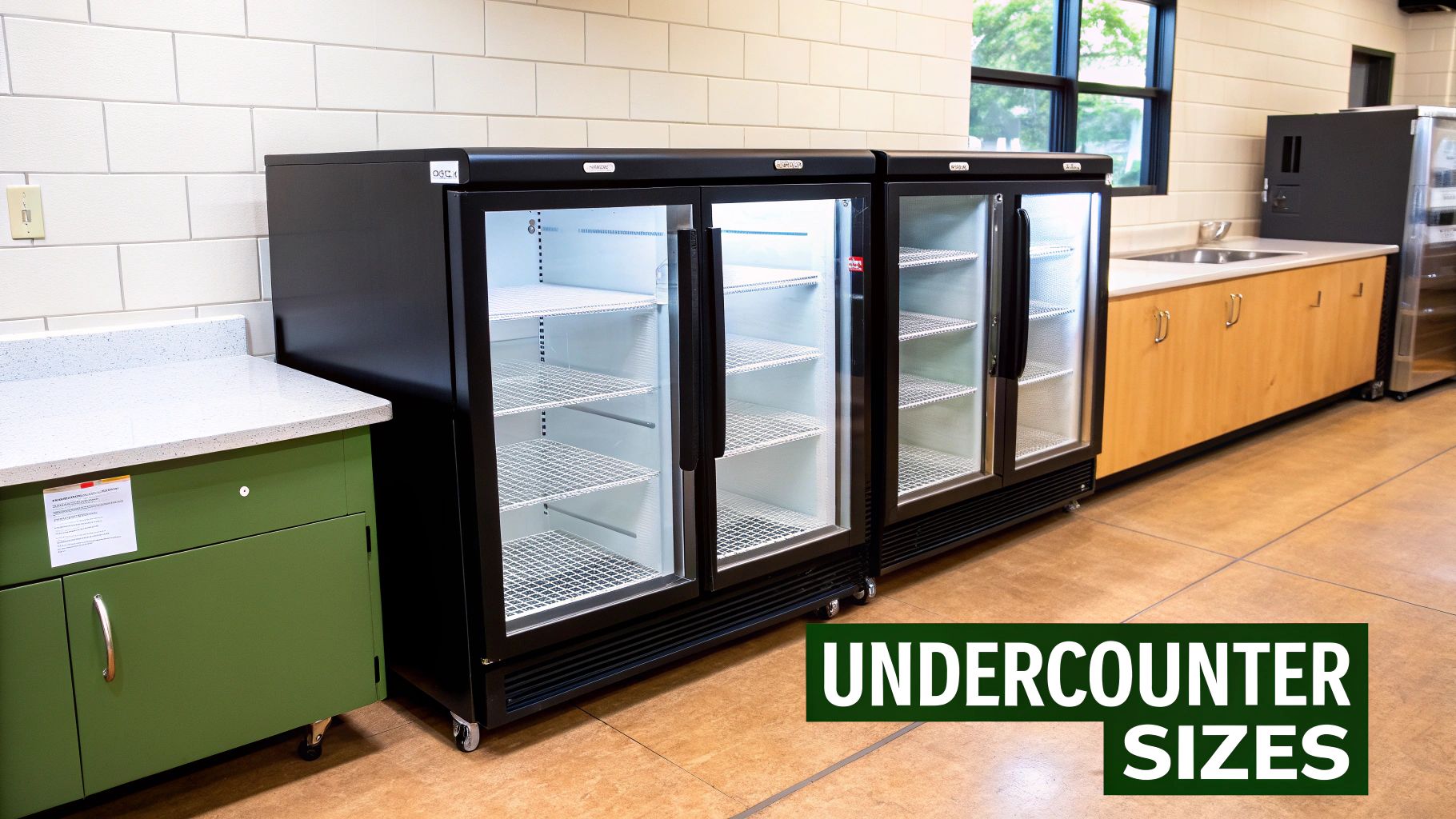
Choosing the right size isn't just about what fits—it's about building an efficient kitchen from the ground up. Think of these refrigerators as the building blocks for your entire line.
Whether you're slinging pies in a busy Los Angeles pizza joint and need toppings an arm's length away, or you’re running a tight Los Angeles food truck operation, the right dimensions mean your ingredients are chilled and ready to go. The proper restaurant equipment is essential for success.
What makes these units so essential is their ability to add massive cold storage capacity without eating up precious floor space. Sliding one under an existing work surface keeps your prep line organized and service moving. A correctly sized unit cuts down on wasted steps, which saves critical seconds when you're in the weeds during a dinner rush.
Common Dimensions and Their Applications
The size you pick has a direct impact on your kitchen’s productivity. A skinny 24-inch model could be the perfect fit for a small café’s milk station, while a wider 60-inch unit might be non-negotiable for a high-volume bar that needs to keep hundreds of bottles chilled.
To give you a better idea of how size translates to real-world use, let's break down the standard widths and where they shine:
- Compact Models (24-36 inches): These are great for low-volume stations, coffee shops, or Los Angeles food trucks where every square inch is premium real estate.
- Mid-Size Models (48-60 inches): The true workhorses. You’ll find these in countless kitchens, offering a fantastic balance of storage for prep stations in most restaurants.
- Large Models (72+ inches): Built for high-throughput spots. Think busy bars that need constant access to beverages or large institutional kitchens that require massive refrigerated storage right on the line.
A key thing for any Southern California operator to think about is how an undercounter refrigerator’s size supports your menu. The more complex your menu, the more you’ll benefit from having multiple, strategically placed units of the right size.
To make things even clearer, I’ve put together a quick-reference table. It matches standard sizes with their typical capacities and best uses, helping you zero in on the perfect fit for your operation.
Standard Undercounter Refrigerator Dimensions and Uses
| Standard Width | Typical Capacity (Cu. Ft.) | Ideal For |
|---|---|---|
| 24 Inches | 5 - 7 Cubic Feet | Small cafes, bars, or specialized ingredient stations |
| 48 Inches | 11 - 13 Cubic Feet | Standard restaurant prep lines, sandwich shops, and Los Angeles pizza kitchens |
| 60 Inches | 15 - 17 Cubic Feet | High-volume prep areas or busy back bars needing extra beverage storage |
| 72 Inches | 19 - 22 Cubic Feet | Large commercial kitchens, catering operations, and high-turnover bars |
This table should give you a solid starting point. Remember, the goal is to match the unit's footprint and capacity to the specific demands of a workstation to keep your team moving efficiently.
Why Capacity Matters More Than Dimensions
When you’re trying to squeeze new restaurant equipment into your line, it's easy to get fixated on the tape measure. But while dimensions tell you if the box will fit, the real make-or-break number is its capacity, measured in cubic feet. That’s what tells you if the unit will actually do its job.
Think of it this way: the right capacity means your Mexican food spot in Los Angeles has every salsa, pico de gallo, and batch of cilantro perfectly chilled and right where the team needs it. It’s not just a cold box; it’s a tool that makes your whole kitchen flow better.
If you go too small, you're signing your team up for a constant cycle of restocking. That means more trips to the walk-in, which slows down service and creates frustrating bottlenecks. On the flip side, a unit that’s too big is just a waste of electricity and valuable floor space that another piece of gear could be using.
Matching Capacity to Your Workflow
The goal is to hit that perfect sweet spot. You want a refrigerator that holds just enough product to crush a busy service without running empty or sitting half-full, wasting energy.
A bustling Los Angeles food truck, for instance, needs to maximize every single inch for high-turnover items. A fine-dining spot, however, might need less overall space but for more specialized, delicate ingredients.
This is where you have to think about throughput. How fast are you burning through certain products? A refrigerator dedicated to prepped veggies and sauces is going to have totally different capacity needs than one holding backup bottles of Topo Chico. Your menu is the map that leads to your storage needs.
For any restaurant operator, thinking about capacity isn't just about storage; it's about workflow engineering. The right cubic footage at each station means less running to the walk-in, faster ticket times, and a smoother, less chaotic kitchen environment.
Finding the Industry Sweet Spot
So, what's the magic number? Industry data shows that most kitchens find their sweet spot with mid-range units. The kings of the undercounter world are models between 5-10 cubic feet, which pull in about 50% of all revenue.
These units offer the perfect balance of serious storage power without a massive footprint, making them ideal for LA sandwich shops where every inch of counter space is gold during the lunch rush.
While classic single-door models still hold a 40% market share, you're seeing more double-door and multi-drawer units popping up in higher-end kitchens. If you're curious, you can explore more on these market trends to see how your own needs stack up.
Ultimately, focusing on capacity turns a simple equipment purchase into a smart operational investment. When you calculate your actual storage needs based on your menu and volume, you’re choosing a tool that will actively help your kitchen succeed, not just a box that fits in a hole.
How to Measure Your Space for a Perfect Fit
Choosing the right undercounter refrigerator starts with a tape measure, but it definitely doesn't end there. Getting the measurements right is the one step that prevents massive headaches down the line, especially in the unique, often cramped kitchens we see all over Los Angeles—from historic downtown spots to tight Los Angeles food trucks. Being off by even half an inch can be the difference between a smooth installation and a logistical nightmare.
Think of it like getting a custom suit made. You don't just give the tailor your height and weight. You account for how you move, making sure there's room to breathe. The same logic applies here. You need to look beyond the basic height, width, and depth and consider the "invisible" dimensions that make or break your kitchen's workflow.
Beyond the Basics: Height, Width, and Depth
First things first, grab that tape measure and get the core dimensions of the space where the unit will live. Measure the height from the floor to the underside of the counter, the width from one cabinet wall to the other, and the depth from the back wall to the front edge of your cabinetry. Quick tip: measure in a few different spots. You'd be surprised how many floors and walls aren't perfectly level.
But that's just the beginning. Stopping there is a rookie mistake. Now, you have to think about what makes an installation truly successful:
- Ventilation Clearance: Commercial refrigerators work hard, and that generates heat. If that hot air has nowhere to go, the compressor has to work overtime, jacking up your energy bills and shortening the unit's lifespan. Most models need 1-2 inches of clearance at the back and on the sides. If you're really tight on space, a front-venting model is your best friend—it breathes through a grille on the front, so you can install it flush with the surrounding cabinets.
- Door Swing Radius: This one gets overlooked all the time. Map out exactly how far that door will swing open. Is it going to block a high-traffic walkway during the dinner rush? Or worse, will it slam into that brand-new range next to it? Measure from the hinge out to the edge of the fully opened door to make sure it has a clear path.
- Electrical Access: Make sure there’s a dedicated, grounded outlet within easy reach of the unit’s power cord. Whatever you do, don't use an extension cord. They're a major fire hazard and often can't supply the consistent power a commercial compressor needs, which can lead to costly damage.
Planning for Capacity and Workflow
To make sure your new fridge fits into your kitchen's rhythm, not just its physical space, think about how different kitchen layout design ideas influence where you place appliances for the best flow. Planning this out ahead of time is what prevents bottlenecks when you're in the weeds.
This flow chart really nails the concept of choosing the right capacity—not too small, not too large—to create an optimal workflow.
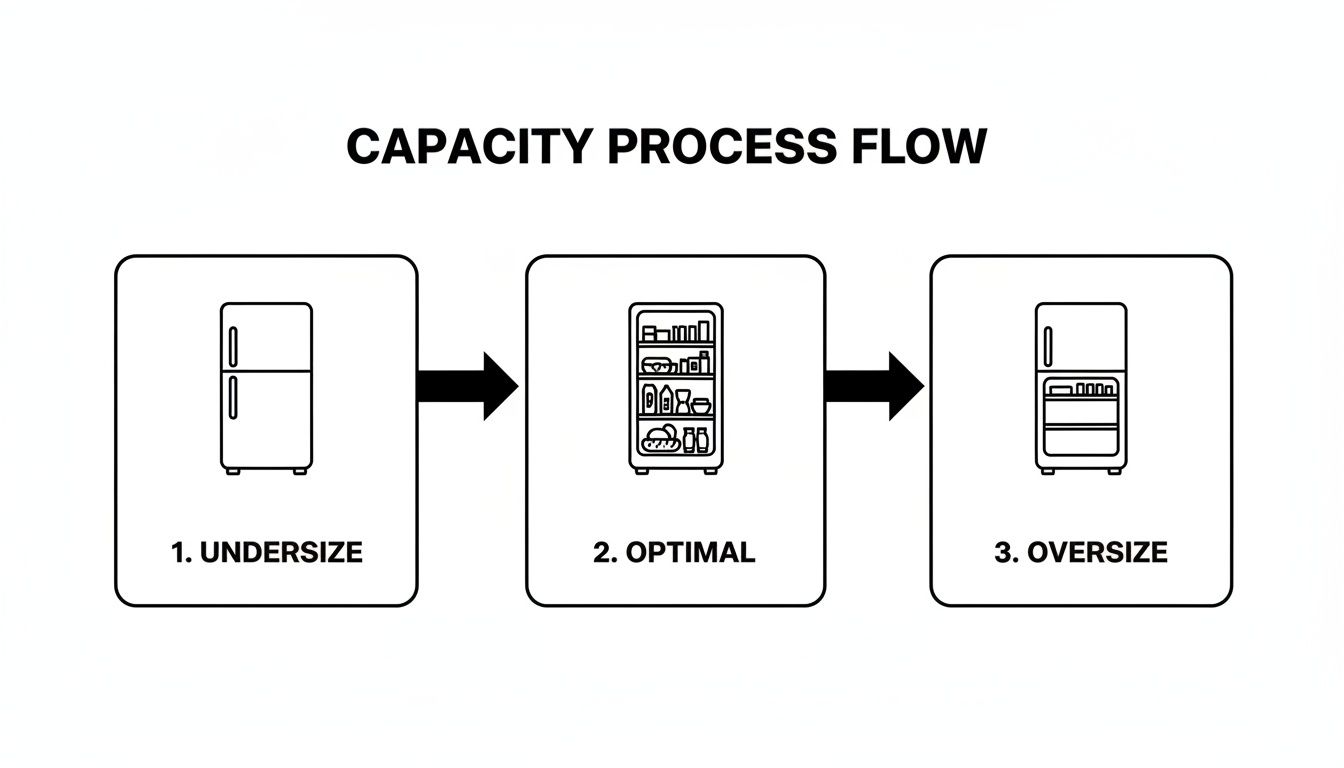
As you can see, an undersized unit means you're constantly restocking, while an oversized one is just wasting precious space and electricity. The sweet spot is a unit that perfectly matches your service volume.
By taking these extra measurements, you aren't just installing an appliance; you're engineering a more efficient workspace. This careful planning ensures your investment pays off in both performance and longevity.
Taking a few extra minutes to measure correctly will save you from the stress of returns and re-installations. For Los Angeles operators who need to get it right the first time, browsing the different undercounter refrigerator models available can help you match the perfect unit to your precisely measured space.
https://larestaurantequipment.com/collections/undercounter-refrigerator
Matching Refrigerator Type to Your Kitchen's Needs
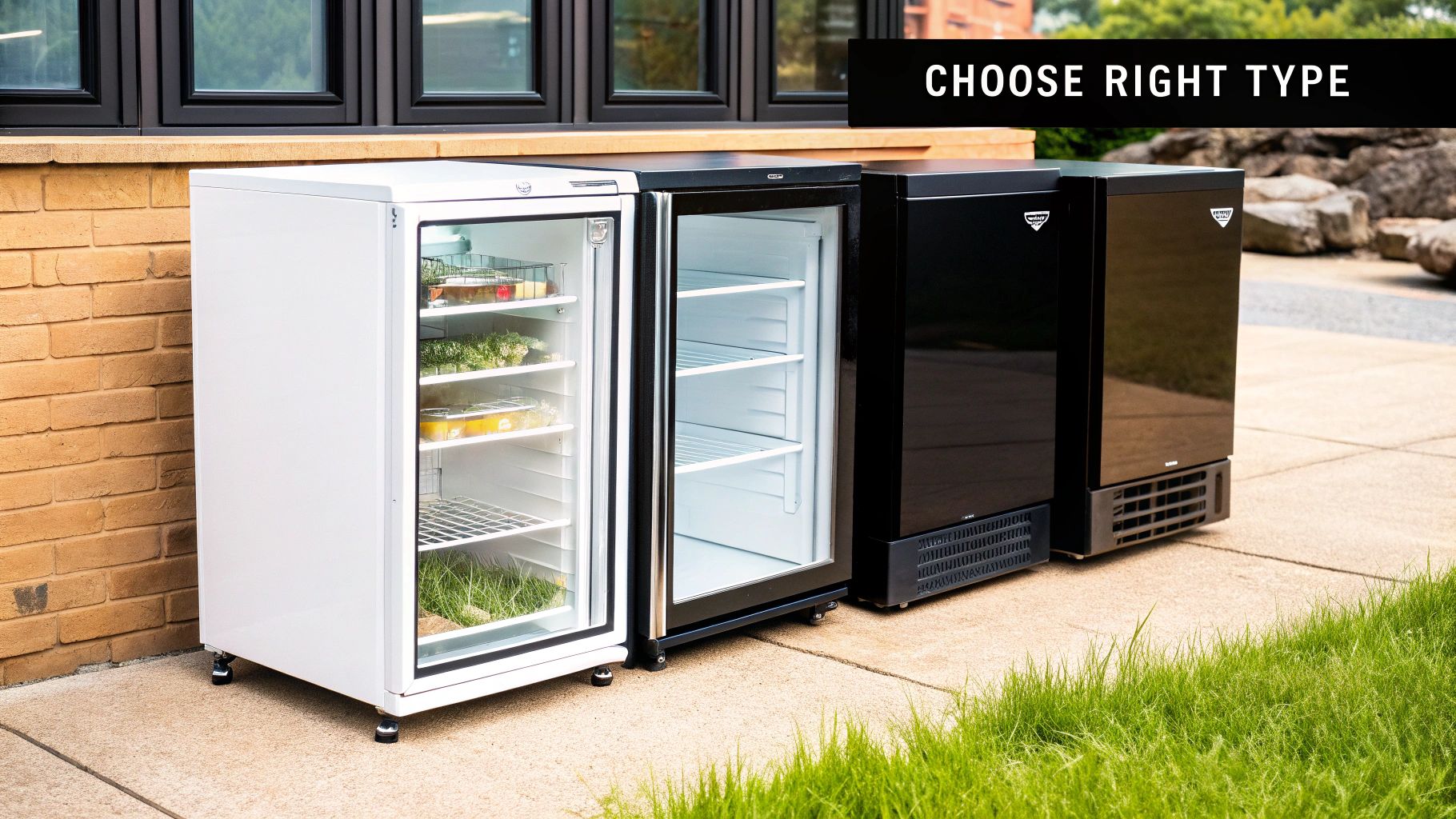
Alright, so you’ve got your measurements down. Now for the fun part: picking the right type of undercounter unit. This isn’t just about looks; it's about function. Think of it like building a kitchen crew—every piece of restaurant equipment has a job, and the right player can make your whole operation run smoother.
This isn’t a small niche, either. The global market for these compact workhorses was valued at a whopping USD 1,343.6 million in 2023, and it’s growing fast. Kitchens everywhere, especially in food hubs like Los Angeles, are demanding more specialized, efficient refrigeration. From ghost kitchens to Los Angeles food trucks, the right unit is a critical piece of the puzzle.
Solid Door and Glass Door Models
Solid door undercounter refrigerators are the tanks of the back-of-house. They're built to take a beating. The stainless steel doors can handle the chaos of a busy kitchen, and more importantly, they offer the best insulation. This makes them incredibly energy-efficient, perfect for storing bulk ingredients or prepped items where you don’t need to see inside constantly.
On the flip side, glass door models are all about visibility and speed, making them front-of-house stars. For a busy LA bar, this means your bartender can spot that specific craft beer without a second's hesitation. In a cafe, your team can grab milk or cream without holding the door open and letting all the cold air out. They might be a little less insulating, but the boost to workflow is often a worthy trade-off.
Drawer Units and Chef Bases
If your kitchen is all about assembly-line speed, drawer units are your best friend. Instead of swinging a door open into a crowded aisle, your cooks can pull out a perfectly organized drawer of ingredient pans. Picture a high-volume Mexican food restaurant—one fluid motion gives you access to pico de gallo, cheese, and cilantro. It keeps the line moving and the chaos to a minimum.
A chef base takes that idea and puts it on steroids. It's a heavy-duty refrigerated drawer unit built to have equipment like a griddle or charbroiler sitting right on top. For any burger joint or diner, this is an absolute game-changer. It puts your raw proteins right below the cooking surface, safely chilled and ready to go. You can't get much more efficient than that.
Choosing the right type isn't just a matter of preference; it's a strategic decision that directly impacts your kitchen’s speed, organization, and profitability. Matching the unit’s design to its function ensures you get the most out of your investment.
Of course, the brand matters, too. Some manufacturers are known for their durable solid doors, while others excel at building reliable chef bases. To get a better feel for the key players, check out our guide on the best commercial refrigerator brands. It breaks down who’s who in the industry so you can make a choice that truly fits your kitchen's unique rhythm.
Smart Purchasing and Installation Strategies
Okay, you’ve figured out the right size for your undercounter refrigerator. That’s a huge first step, but making a truly smart investment goes way beyond just the measurements. For restaurant operators in the thick of it in Los Angeles and Orange County, how you buy your restaurant equipment can make or break your budget and your sanity from day one.
One of the biggest questions is always: new or used? The low price tag on a used unit is definitely tempting, I get it. But it's a gamble. You're often inheriting a machine with a mysterious repair history, zero warranty, and older, less efficient parts. The last thing you need is a surprise breakdown during a Friday night rush or a utility bill that makes your eyes water.
This is why investing in new, warranty-backed equipment almost always pays off in the long run. It’s about peace of mind. Some suppliers, like us at LA Restaurant Equipment, operate with a warehouse-direct model. We skip the fancy, expensive showrooms, and that means we can pass those savings right on to you. It makes brand-new units a realistic option for everyone, from a local Mexican food spot to a bustling Los Angeles pizza joint.
Fast Shipping for SoCal Operators
The Southern California food scene moves at lightning speed, and it doesn't wait for anyone. When your old unit dies or you're opening a new line, you need a replacement now. This is where working with a local supplier is a massive advantage.
The global market for undercounter refrigerators hit USD 3.42 billion and is expected to climb to USD 6.27 billion by 2033. That’s a huge boom, driven by the need for compact, efficient kitchens everywhere, especially in high-energy hospitality hubs like ours. For SoCal's Los Angeles food truck owners and pop-up vendors, this growth is great news—it means more affordable, warranty-backed choices than ever before. Suppliers with local warehouses—like our spot in Brea—can often get a unit to your door in just one or two business days, with free shipping to boot.
Installation Best Practices
Getting the installation right is just as important as buying the right unit. A proper install is what ensures your refrigerator runs efficiently and lasts for years. Beyond just leaving enough room for ventilation, operators here in Southern California have to think about local rules.
California has some of the strictest energy efficiency standards in the country. Installing a compliant unit not only keeps you on the right side of the law but also leads to significant long-term savings on your energy bills.
If you’re doing a bigger kitchen overhaul, thinking about how your new appliances fit with your existing setup is key. For some great tips on the whole process, this guide to kitchen cabinets and renovation has some helpful insights. And while you're at it, it’s a smart move to learn more about choosing energy-efficient commercial refrigerators to make sure your purchase is good for your wallet and the planet. When you nail the purchasing and installation, you’re setting your business up for success.
Common Questions About Undercounter Refrigerator Sizes
Even after you've done all the planning, a few nagging questions always seem to pop up right before you pull the trigger on a new undercounter refrigerator. For busy operators here in Los Angeles, getting straight answers is the only way to move forward with confidence. We're going to tackle the most common questions we hear from restaurant and food truck owners every day.
Think of this as your final gut-check before you make that purchase. We’ll clear up any last-minute confusion and make sure you have all the info you need.
What Is the Standard Height of an Undercounter Refrigerator?
Most commercial undercounter refrigerators clock in between 34 and 36 inches tall. This isn't a random number; it's designed specifically so they can slide neatly under standard 36-inch commercial countertops, prep tables, and bar tops.
But don't just assume it will fit. Always, always measure your counter height before you buy to make sure you get that clean, built-in look. You'll also need to leave a little breathing room for ventilation—something the manufacturer's spec sheet will spell out for you.
How Much Clearance Do I Need Around My Unit?
Giving your refrigerator room to breathe is non-negotiable for its health and efficiency. While the exact specs can change from model to model, a good rule of thumb is to leave at least 1-2 inches of space at the back and on the sides.
Now, for those incredibly tight spots—and we see a lot of them in Los Angeles food trucks and historic downtown kitchens—you’ll want to look at a front-breathing model. These units are lifesavers because they pull air in and push it out from the front grille, meaning they need almost no clearance on the sides or back. Just be sure to double-check the spec sheet to avoid overheating your unit and facing a costly repair bill.
Can I Use a Residential Refrigerator in My Kitchen?
Putting a residential fridge in a commercial kitchen is just a bad idea, plain and simple. Commercial units are built like tanks, with powerful compressors and tough materials made to withstand the crazy heat and constant door-swinging of a professional kitchen. They also have to be NSF-certified to keep the health department happy.
A home refrigerator will almost certainly die an early death under that kind of pressure. Worse, it could void your insurance and get you written up on your next health inspection. It's a gamble that just isn't worth taking.
How Do I Choose Between a Solid and Glass Door?
This one comes down to where the unit is going and what it’s doing.
- Solid Door Models: These are your workhorses. They offer much better insulation, which means they're more energy-efficient. They’re the perfect choice for back-of-house prep lines where nobody needs to see what’s inside.
- Glass Door Models: These are for showing off. They’re ideal for front-of-house spots in bars, cafes, or grab-and-go markets. Staff and customers can see the drinks or snacks without opening the door, which saves energy and keeps the line moving.
It really is that simple: decide if insulation or visibility is more important for that specific spot in your workflow.
Ready to find the perfect undercounter refrigerator for your Los Angeles restaurant, bar, or food truck? At LA Restaurant Equipment, we offer a wide selection of new, warranty-backed units at warehouse-direct prices. Get fast, free shipping and the support you need to make the right choice. https://larestaurantequipment.com