

In the controlled chaos of a commercial kitchen, stainless steel tables are the unsung heroes. They’re the foundation of your entire operation, the dependable surfaces where everything from prep work to plating happens. Think of them as the backbone of your kitchen.
The Most Valuable Player in Any Kitchen
A good stainless steel table isn't just a piece of metal; it’s the most reliable member of your team. For Los Angeles Pizza joints, it’s the sprawling prep station where dough gets tossed and toppings are piled high. For bustling Los Angeles Food Trucks, it’s the compact, sturdy surface where hundreds of orders are assembled with precision. In a vibrant Mexican Food kitchen, it’s the central point where your workflow, hygiene, and speed all come together.
This essential piece of restaurant equipment plays several key roles that directly affect your team's output and your bottom line. Getting to know these functions is the first step toward making a smart purchase.
More Than Just a Surface
The right table does a lot more than just fill a space. Its contributions are felt across the entire kitchen:
- Food Preparation: It gives you a non-porous, easy-to-clean surface that health inspectors love. This is non-negotiable for safely handling raw ingredients, whether you're dicing onions or portioning proteins.
- Equipment Support: Need a solid spot for your 60-quart mixer or a heavy-duty slicer? A quality stainless steel table provides a stable, wobble-free platform that keeps your valuable appliances secure while they're running.
- Smart Storage: Many tables are built with undershelves or cabinet bases, which is a game-changer for maximizing your kitchen's footprint. You can keep tools, containers, and other small essentials organized and right where you need them.
A well-placed table doesn't just take up room—it defines your workflow. When you optimize the layout, your staff takes fewer steps, works faster, and stays safer. That all adds up to a healthier bottom line.
There's a reason demand for this equipment is on the rise. The global stainless steel tables market is expected to grow from USD 1.2 billion in 2024 to USD 1.8 billion by 2033, a clear sign of its critical role in commercial kitchens everywhere. You can dig deeper into this market growth to see where the industry is heading. Here at LA Restaurant Equipment, we help Southern California operators find the perfect tables to build a kitchen that’s ready for anything.
Understanding Steel Grades and Gauges
Trying to make sense of the technical specs on stainless steel tables can feel like learning a new language. But you really only need to get a handle on two key terms: grade and gauge. Getting these right is the difference between buying a table that lasts a lifetime and one that gives out way too soon.
Think of steel grades like different kinds of work boots. You wouldn't wear dress shoes to a construction site, right? Same idea here. The two grades you'll see everywhere in commercial kitchens are 304 and 430.
Each table in your kitchen has a specific job to do, whether it's holding up a 200-pound mixer or providing a clean surface for chopping vegetables.
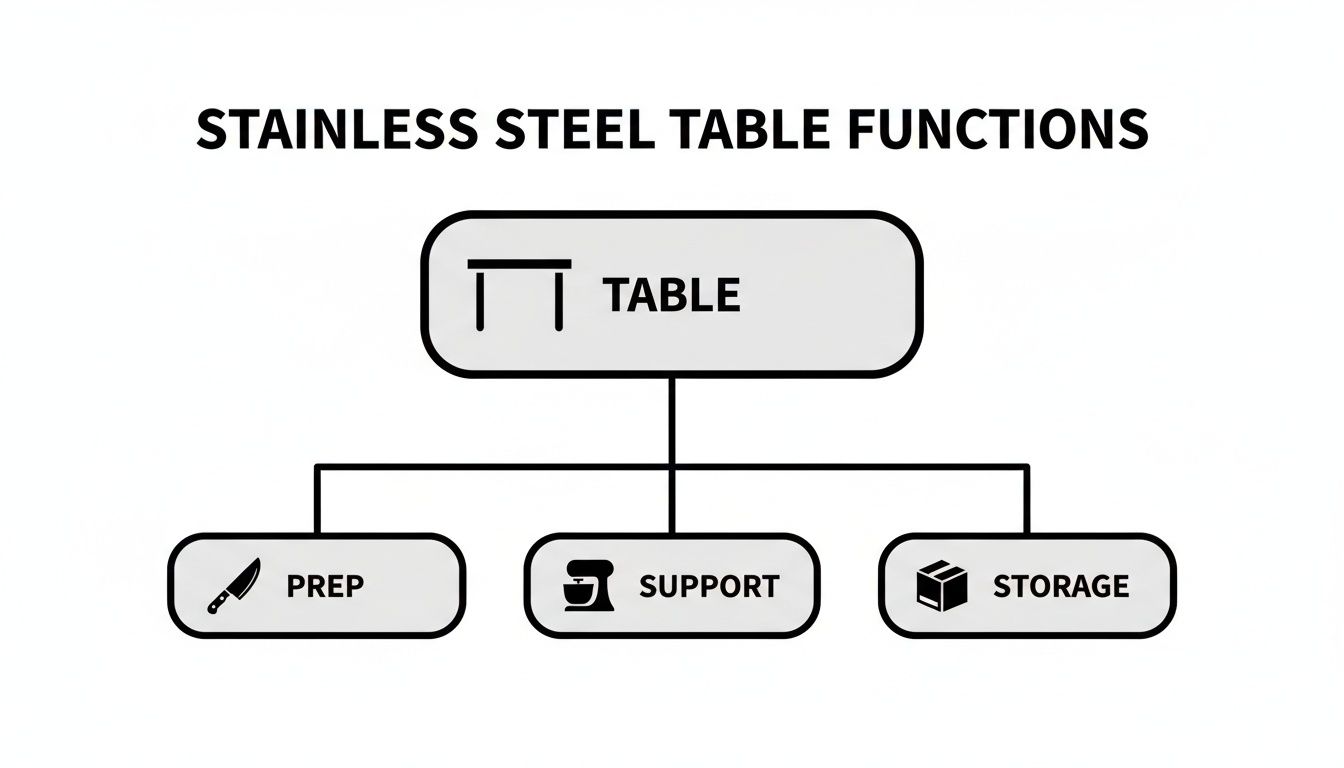
As you can see, these tables are the unsung heroes of the kitchen—they’re central hubs for prep work, heavy equipment support, and organized storage all in one.
Choosing the Right Steel Grade
304-grade stainless steel is the heavy-duty, all-weather work boot of the kitchen. It has more chromium and nickel in the mix, which gives it top-tier protection against rust and corrosion. This makes it a no-brainer for any "wet" areas or surfaces that will be in constant contact with acidic foods like tomatoes, citrus, or vinegar. If you’re running a Los Angeles Pizza shop or a kitchen focused on Mexican Food, this is the grade you want for your prep stations.
It’s so reliable that it has become the industry standard. In fact, the 304 grades segment held a massive share of the global market in 2023 and is only expected to keep growing. You can dig into the data on stainless steel market trends to see just how dominant it is.
430-grade stainless steel, on the other hand, is like a solid pair of indoor work shoes. It’s still tough and dependable, but it’s best kept in dry environments. Because it has less nickel, it's easier on the wallet but also more susceptible to corrosion. It’s the perfect budget-friendly choice for equipment stands, dry storage areas, and any work surfaces that aren’t going to be constantly splashed with water.
Decoding Steel Gauge
If grade is the type of boot, then gauge is the thickness of the sole. Gauge refers to how thick the steel is, and it works on a backward scale—the lower the gauge number, the thicker and stronger the steel. A thicker gauge can handle more weight and take more of a beating without showing it.
- 14-Gauge: This is the tank. It’s the thickest, toughest option you'll find for most commercial tables. You'll want 14-gauge for supporting seriously heavy equipment like floor mixers, big meat grinders, or commercial griddles. It won’t bend or warp, period.
- 16-Gauge: The workhorse of the kitchen. 16-gauge is the most popular choice for general prep tables because it hits that sweet spot between strength and price. It’s more than capable of handling the daily grind in most restaurant kitchens.
- 18-Gauge: The lightest of the bunch. 18-gauge steel is best for lighter-duty tasks. Think holding small appliances, storing dry goods, or as a utility table in a less chaotic spot, like in one of the many Los Angeles Food Trucks or a coffee bar.
Picking the right gauge isn't just about how much weight the table can hold. It's an investment in durability. A lower gauge means a table that can resist dents from dropped pots and pans and will simply last longer.
Smart operators in LA mix and match to build out their kitchens. You might go for a heavy-duty 14-gauge table for your dough sheeter, use 16-gauge tables for the main prep line, and grab an 18-gauge rolling cart for plating. By matching the spec to the job, you create a kitchen that's both more efficient and cost-effective.
Choosing Your Stainless Steel Grade and Gauge
Here's a quick cheat sheet to help you decide what's best for your operation.
| Specification | What It Means | Best For | LA Restaurant Example |
|---|---|---|---|
| 304-Grade Steel | The "premium" option. High chromium and nickel content. Superior corrosion and rust resistance. | Wet environments, direct food contact with acidic ingredients, high-volume prep areas. | Main prep table for a salsa station in a Mexican Food restaurant, a pizza sauce station, or a dishwashing area. |
| 430-Grade Steel | The "budget-friendly" option. Lower nickel content, magnetic. Good for dry applications. | Dry storage, equipment stands, general utility tables away from moisture. | A stand for a microwave, shelving for dry goods, or a work surface for boxing takeout orders. |
| 14-Gauge Steel | The thickest and strongest. Can support massive weight without bending. | Holding extremely heavy equipment like large mixers, ovens, or meat slicers. | The foundation for a heavy-duty planetary mixer in a pizzeria or a large griddle in a diner. |
| 16-Gauge Steel | The all-purpose standard. A great balance of durability and cost for everyday use. | General food prep, assembly lines, and all-around work surfaces. | The main line in a busy kitchen where chopping, mixing, and plating happen all day long. |
| 18-Gauge Steel | The lightest and most economical. Best for light-duty tasks and low-impact areas. | Holding small appliances, simple utility surfaces, or as a budget-friendly storage option. | A small table in one of the many Los Angeles Food Trucks or a lightweight cart used for bussing. |
By understanding these basics, you can walk into any supplier and know exactly what to ask for, ensuring you get a table that’s perfectly suited for the job at hand.
Choosing the Right Table for Your Kitchen Workflow
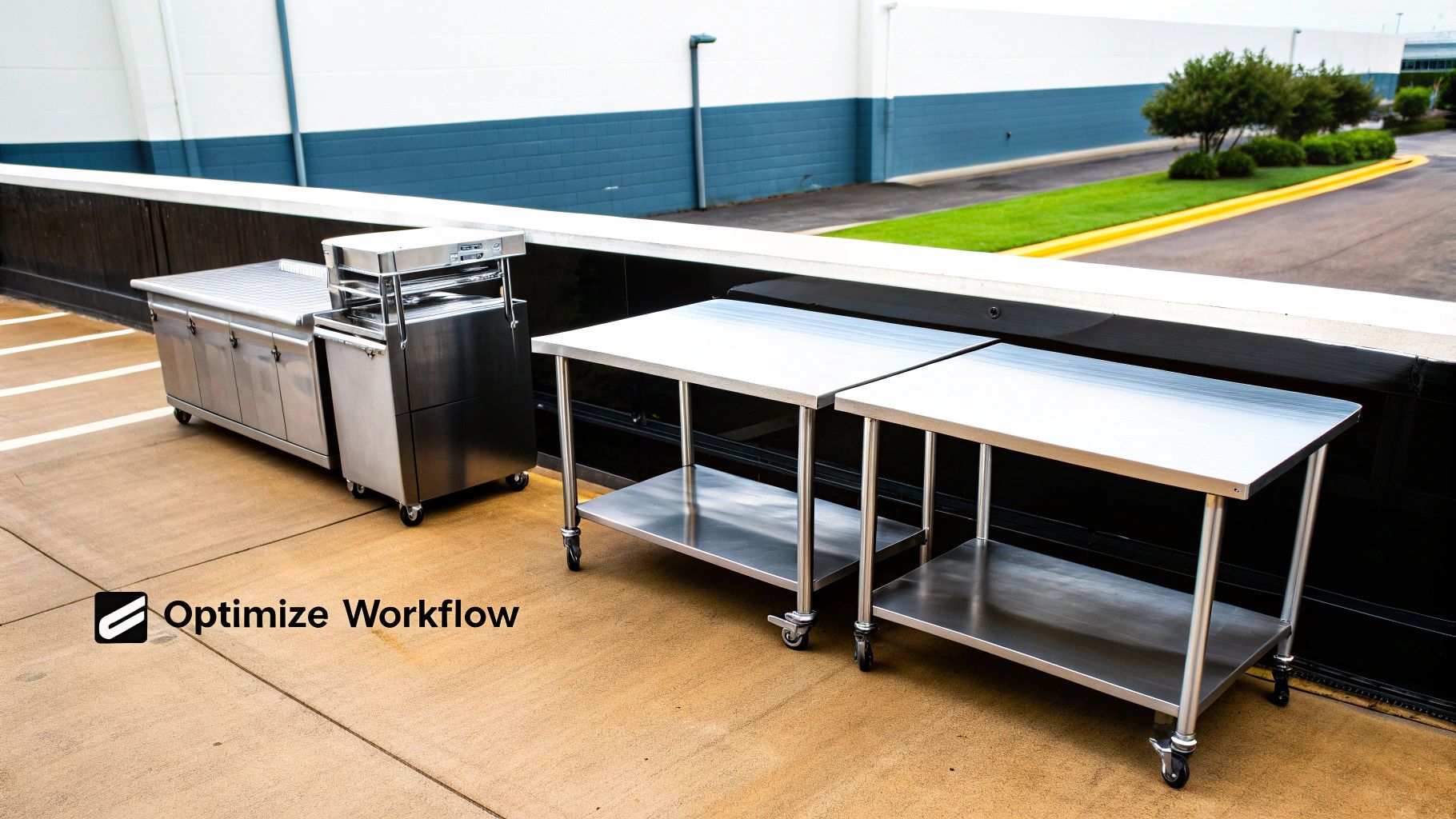
Okay, you’ve got the grades and gauges down. Now comes the fun part: picking the right table design for the job. A stainless steel table isn't just a slab of metal; it's a workstation. The right one will feel like a natural extension of your kitchen's rhythm, while the wrong one will just get in the way.
Think of it like setting up a highway system. Every table is an on-ramp or an exit. When you place them strategically, traffic flows smoothly. Your goal is to create a seamless path from the delivery door to the final plated dish, cutting out wasted steps and boosting efficiency.
This isn't just for huge restaurant kitchens, either. Whether you're running a sprawling Mexican Food restaurant in East LA or a tiny, high-volume food truck, the principles are the same. Every kitchen has a unique flow, and your stainless steel tables are the key to unlocking its full potential.
Matching Table Types to Kitchen Roles
Not all stainless steel tables are cut from the same cloth. Different designs are built for specific tasks, and knowing the difference is how you build a kitchen that just works. Let's break down the main players.
- Standard Work Tables: These are the dependable all-rounders of any kitchen. They almost always come with an undershelf, giving you a tough, flat surface for general prep while stashing containers, small appliances, or dry goods right where you need them.
- Equipment Stands: Built like a tank with heavy-duty, lower-gauge steel, these are made to handle the weight and vibrations of your big-ticket restaurant equipment. They provide a rock-solid base for everything from fryers and griddles to commercial mixers.
- Tables with Integrated Sinks: A true game-changer for efficiency. Combining a prep surface with a sink is perfect for washing produce, rinsing utensils, or any job that needs water on hand. No more walking back and forth across the kitchen.
- Mobile Tables on Casters: Flexibility is everything in some kitchens, and tables on locking casters are your secret weapon. For the typical Los Angeles Food Truck, for example, you can roll one out for extra prep space during a rush and then tuck it away when things slow down.
When you give every table a clear purpose, you create specific zones in your kitchen. This simple move helps prevent cross-contamination and keeps the team focused, even when you're slammed on a Saturday night.
Real-World Scenarios in Southern California Kitchens
To really see how this plays out, let's look at a few examples from the local SoCal food scene. Each one shows how a specific table solves a real-world problem.
Scenario 1: The High-Volume Pizzeria
A busy Los Angeles Pizza joint is all about the assembly line. A long, unbroken row of 16-gauge, 304-grade stainless steel tables with undershelves is the perfect setup. One table is for stretching dough, the next is for sauce and cheese, and the last is for toppings—all with the necessary ingredients stored neatly below. Multiple cooks can work shoulder-to-shoulder without tripping over each other.
Scenario 2: The Nimble Food Truck
In Los Angeles Food Trucks, every square inch is prime real estate. A compact, 18-gauge table on heavy-duty casters is the MVP here. It can slide over to support the griddle during the lunch rush and then get repositioned as a plating station for an evening event. You get maximum use out of a minimal footprint.
Scenario 3: The Authentic Mexican Kitchen
A kitchen making authentic Mexican Food needs a dedicated spot for fresh salsas and produce prep. A stainless steel table with an integrated prep sink is the ideal solution. Your staff can wash cilantro, jalapeños, and tomatoes right where they chop them, which contains the mess and speeds up the whole process. Interestingly, you can find some great transferable ideas on workspace planning in resources covering lab workstations and tables, which also emphasize material selection and workflow.
Proper Cleaning and Maintenance for Lasting Value
Think of your stainless steel tables as more than just surfaces; they're a long-term investment in your kitchen’s engine room. Keeping them in top shape isn't just about looks—it’s about protecting that investment, meeting health codes, and making sure they can handle the daily grind of a busy LA restaurant.
A solid, consistent cleaning protocol is your best defense against the buildup of grime and bacteria that can put your kitchen at risk. The good news? It doesn't have to be complicated, just consistent.
And these surfaces are everywhere. In 2025, flat stainless steel products, which include our trusty prep tables, made up a massive 73.0% of the market's revenue. The food service industry was the biggest customer, buying up over 38.0% of all stainless steel sold. That tells you just how fundamental this restaurant equipment is to day-to-day operations.
Your Daily and Weekly Cleaning Playbook
The most effective way to keep your stainless steel looking sharp is a simple, two-part approach: a quick wipe-down every day and a more thorough deep clean once a week. This keeps your tables ready for anything.
Daily Cleaning Routine (End of Every Shift):
- Clear the Decks: Get all the food scraps, containers, and tools off the surface.
- First Pass: Grab a soft cloth or sponge with warm water and a mild detergent (nothing with chlorine!). Give the whole table a good wipe.
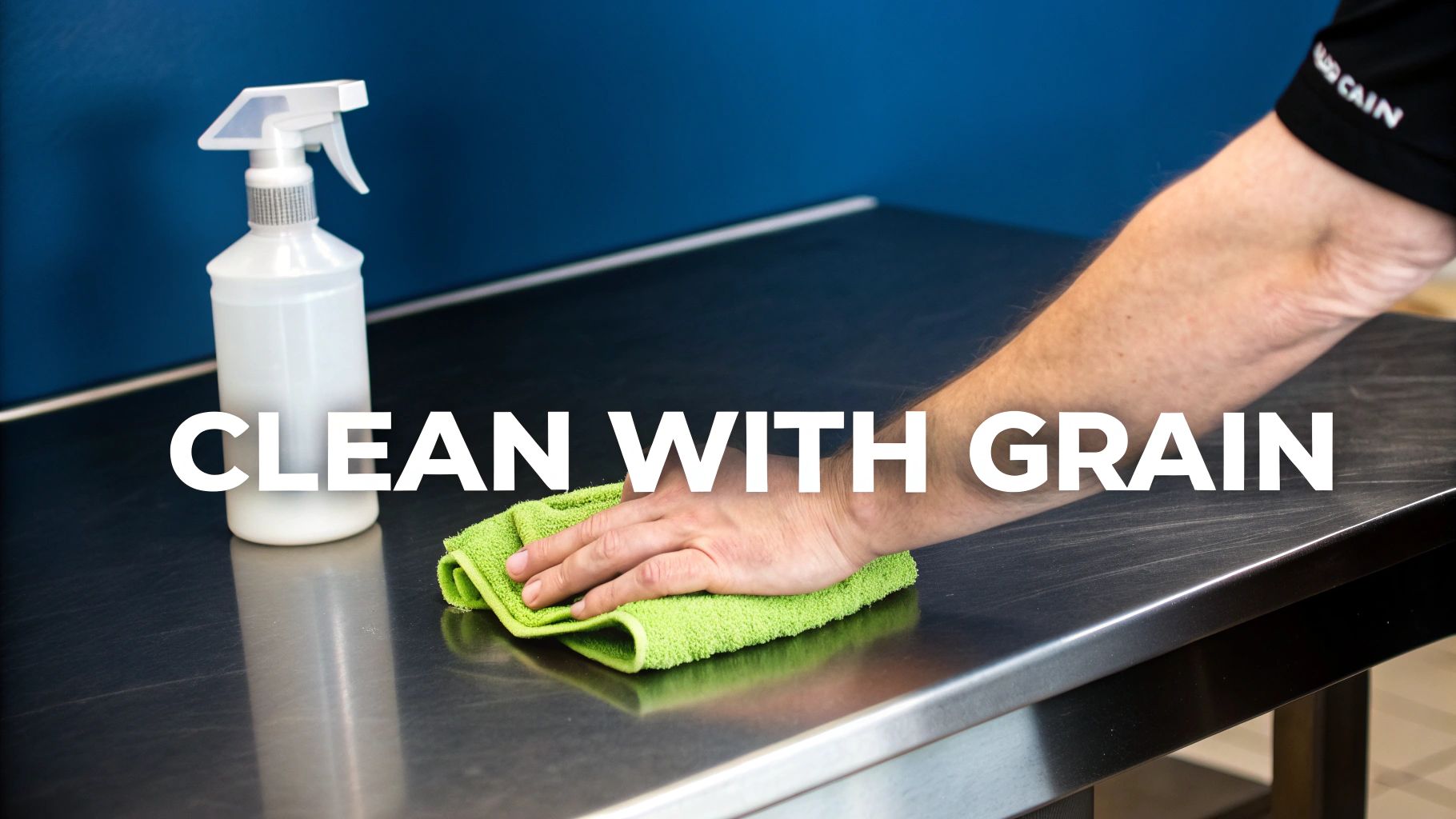
- Go With the Grain: This is a pro tip. Always wipe in the same direction as the faint lines, or "grain," in the steel. It helps prevent tiny scratches where bacteria love to hide.
- Rinse It Off: Use a clean, damp cloth to get rid of any soap residue.
- Dry It Completely: This is the most important step! Use a dry, lint-free microfiber cloth to wipe the surface totally dry. This is your secret weapon against water spots and mineral buildup.
Weekly Deep Clean:
Once a week, give your tables a little extra love with a dedicated stainless steel cleaner. Just apply it with a soft cloth (following the grain, of course), then rinse and dry just like you do daily. This will buff out stubborn fingerprints and bring back that original shine.
Common Cleaning Myths Debunked
In the heat of service in a food truck or a bustling Mexican Food restaurant, it’s tempting to grab the strongest cleaner you can find. But some of the go-to cleaning methods can actually cause permanent damage to your tables.
The biggest mistake we see is people thinking that "tougher" cleaners are better. Harsh abrasives and chlorine-based products can actually strip away the steel's natural protective layer, making it more likely to rust and corrode down the road.
Steer clear of these common mistakes:
- Steel Wool or Abrasive Pads: Never, ever use steel wool or harsh scouring pads. They'll scratch the heck out of the surface and can leave behind tiny iron particles that will definitely rust.
- Chlorine Bleach: Any cleaner with chlorine is an enemy of stainless steel. It attacks that protective layer, leading to ugly pitting and corrosion.
- Oven Cleaners: These chemicals are way too aggressive for stainless steel and can leave permanent stains and discoloration.
Keeping your tables clean is one piece of the puzzle. To get the full picture on kitchen hygiene, check out this comprehensive guide to cleaning commercial kitchens. And for more on making all your gear last longer, don't miss our guide on commercial kitchen equipment maintenance.
Smart Installation and Ergonomic Setup
Getting your new stainless steel tables delivered is exciting, but the job isn't done until they're set up for peak safety and efficiency. A proper installation is more than just sliding a table into a free spot; it’s about creating a workspace that actually helps your team, keeping them healthy and productive. This is where a little know-how about ergonomics and smart setup makes all the difference.
If you’ve ever worked in an older Los Angeles building, you know that perfectly level floors are a rare luxury. That slight slope can turn a brand-new, sturdy table into a wobbly mess. Thankfully, nearly all commercial stainless steel tables come with adjustable bullet feet for this exact problem. A few quick turns can compensate for an uneven floor, making your work surface perfectly level and rock-solid.
Don't skip this step. That stability is absolutely critical, especially for tables holding heavy mixers or slicers, or where your crew is doing precision knife work. A level surface keeps ingredients from rolling away and ensures equipment runs safely without vibrating or shifting.
Why Ergonomics in the Kitchen Isn't Just a Buzzword
Ergonomics is just a fancy word for designing a workspace that fits the people using it, instead of forcing people to contort themselves to fit the space. In a busy commercial kitchen, your staff is on their feet for hours doing the same motions over and over. Bad ergonomics leads directly to back pain, muscle strain, and overall fatigue.
This isn't just about comfort—it hits your bottom line. It tanks morale, increases the chance of injuries, and can bring your entire line to a crawl.
Repetitive motion injuries are a massive issue in the foodservice world. One study found that restaurant workers have one of the highest rates of injuries that cause them to miss work. Thinking about ergonomics isn't an extra—it's a simple, proactive way to protect your most valuable asset: your staff.
A well-designed station cuts down on all the unnecessary bending, reaching, and twisting. The foundation of it all? Getting the table height just right so cooks can work without wrecking their backs and shoulders.
Setting the Perfect Table Height
Most commercial stainless steel tables come at a standard height of 34 to 36 inches, which works well for the average person. But "average" doesn't cover every task in the kitchen. Different jobs call for different heights to be truly ergonomic.
- General Prep Work: For chopping, dicing, and mixing, the ideal surface should be about three inches below the user's elbow. This lets them move comfortably without hunching.
- Heavy-Duty Tasks: When you need to put some muscle into it—like kneading dough or grinding meat—a slightly lower table is better. It lets you use your body weight for leverage.
- Fine-Detail Work: For jobs that need a close eye, like intricate plating or decorating pastries, a slightly higher surface can be a lifesaver. It brings the work closer to eye level, reducing the need to stoop.
Casters and Mobility: A Food Truck's Best Friend
For any operation where you need to be flexible—think Los Angeles Food Trucks, pop-ups, or kitchens with constantly changing layouts—putting your stainless steel tables on casters is a total game-changer. It turns a fixed prep station into a mobile command center you can roll wherever it’s needed.
Just make sure you get heavy-duty, locking casters. The locking part is non-negotiable for safety; it keeps the table from rolling away when you need it to stay put. This kind of adaptability is perfect for deep cleaning days, reconfiguring the kitchen for a special event, or just making a tight space work better. A mobile table can be an extra prep surface during the lunch rush, then get rolled out of the way to clear a path. That's how you maximize every single square inch.
Why Smart Operators Choose LA Restaurant Equipment
Picking the right supplier for your restaurant equipment is just as important as picking the right grade of steel for your prep tables. For independent restaurant and food truck owners across Southern California, the choice is pretty clear. LA Restaurant Equipment isn't just another vendor; we’re a partner, and we’re here to help you win in a tough market.
Our entire business model is built on one simple, powerful idea: sell brand new, top-shelf equipment at warehouse-direct prices. We don't have fancy showrooms or commissioned salespeople, which means we cut out all that overhead and pass the savings straight to you. When you get new stainless steel tables from us, you get the confidence of a full manufacturer's warranty—something you'll never get with a used piece that has a mystery past.
Speed and Reliability When It Matters Most
In the LA and Orange County food scene, we all know time is money. A delayed opening or a busted prep station can absolutely wreck your week's profits. That’s why we’ve built our entire operation around getting you what you need, fast. Our warehouse is right here in Brea, which lets us offer quick, free shipping on every order in Southern California.
So whether you’re launching a new Los Angeles Pizza spot in DTLA or giving your Irvine food truck an upgrade, your gear will usually be at your door in just 1-2 business days. No long waits. No frustrating delays. Just the equipment you need, right when you need it.
Financing That Actually Works for You
Getting a restaurant off the ground—or just keeping it running—is a massive financial lift. We don't think getting quality equipment should be what holds you back. That’s why we offer flexible financing options designed for independent operators, from established kitchens focusing on Mexican Food to ambitious food truck startups.
We’ve partnered with trusted lenders to offer simple, manageable monthly payment plans. This lets you keep your cash for other critical things like marketing or inventory, while still fitting out your kitchen with the best new equipment on the market.
At the end of the day, our job is to help bring your vision to life. By mixing unbeatable prices, lightning-fast delivery, and supportive financing, we give you a solid foundation to build on. Our team is always here to offer real-world advice, helping you pick the perfect gear that fits your workflow and your budget.
Ready to build a tougher, more efficient kitchen? Start by checking out our huge selection of commercial stainless steel prep tables or just give our team a call today for a personalized quote.
Answering Your Top Questions About Stainless Steel Tables
Restaurant owners all over Southern California, from high-volume L.A. kitchens to nimble Los Angeles Food Trucks, tend to run into the same questions when buying equipment. We hear them all the time. Let's get you some direct, practical answers about stainless steel tables.
Getting these details right from the start is the key to investing in gear that will be a workhorse in your kitchen for years. It's all about matching the right table to the real-world demands of your operation.
What’s the Right Grade of Stainless Steel for My Kitchen?
For any surface that touches food, there's really only one answer: 304-grade stainless steel. This is the undisputed industry standard for a reason. If you're running a restaurant focused on Mexican Food and constantly working with acidic limes and tomatoes, the higher nickel and chromium content in 304-grade steel gives you top-tier protection against corrosion.
But what about an equipment stand for a fryer or some shelves in your dry stock room? For those jobs, 430-grade is a smart, budget-friendly choice. It's still tough as nails but is better suited for spots that aren't constantly wet or exposed to harsh ingredients. We can walk you through where you can save a few bucks and where you absolutely shouldn't.
How Can I Keep My Stainless Steel Tables from Rusting?
Let's be clear: true rust on quality stainless steel is pretty uncommon. What you're likely seeing is discoloration or minor pitting. This usually pops up after prolonged contact with corrosive stuff, like certain chloride-based sanitizers, or just letting hard water sit and air-dry on the surface.
The fix is simple: always rinse your tables clean and then—this is the important part—dry them completely. Use a soft, non-abrasive cloth and wipe with the grain. And whatever you do, never, ever use steel wool. It will scratch the protective layer and can leave behind tiny iron particles that will rust.
A lot of people think a used table is a great deal. The reality? It’s a huge gamble. You’re rolling the dice on hidden structural damage, deep scratches that are a nightmare to sanitize, or a warped surface—any of which can get you flagged on a health inspection.
Should I Buy a New Table or a Used One?
That low price on a used table can be tempting, but it’s a classic case of buyer beware. You have zero history on that piece of restaurant equipment. You don't know if it was properly cleaned, if it's been damaged, or what hidden issues are waiting to become your problem.
A new table from LA Restaurant Equipment is simply a better investment in your business. It shows up with a perfectly smooth, sanitary surface, guaranteed structural integrity, and the security of a full manufacturer's warranty. With our direct pricing and financing options, buying new, reliable gear is more doable than you probably think.
Can I Put Hot Pans Directly on a Stainless Steel Table?
Yes, one hundred percent. This is one of the biggest perks of stainless steel—it has incredible heat resistance. You can pull a searing hot pan off the range or a sheet tray straight from the oven and set it right on the table without a second thought.
This durability makes stainless steel tables the perfect choice for landing zones and prep areas right in the heat of the line, giving you a safe, tough surface you can count on during the busiest service.
At LA Restaurant Equipment, we stock the durable, high-quality stainless steel tables your kitchen needs to run smoothly. Explore our full selection online and build the foundation for your culinary success.