

Los Angeles is a food lover's paradise, a sprawling culinary landscape where diverse flavors collide. From the cheesy perfection of a classic pizza slice to the innovative creations served from a bustling food truck and the rich traditions of authentic Mexican food, the city's food scene is a vibrant tapestry. But behind every great dish is a kitchen that runs like a well-oiled machine, and that's where the right restaurant equipment becomes the unsung hero.
Choosing the right size under-counter fridge is way more than just plugging a hole in your kitchen—it's about making your entire workflow smoother. For any fast-paced Los Angeles restaurant, that's everything. These compact workhorses are built to be modular, fitting right under standard counters to give you back precious floor space while keeping key ingredients right where you need them.
Finding the Right Size Under Counter Fridge for LA's Kitchens
Think of picking an under-counter fridge like a mechanic grabbing a tool from their toolbox; you need the right size for the specific job at hand. Whether you're running a tight-squeeze food truck, a sprawling Mexican restaurant, or a high-volume pizza parlor, the dimensions you choose will either speed up your team or slow them down.
A little 24-inch unit could be the perfect fit for a small coffee bar's milk and cream. On the other hand, a massive 72-inch model is what a busy pizza prep line needs to keep all the toppings cold and ready.
The whole point is to find restaurant equipment that actually helps your service, not one that creates a bottleneck. Getting a handle on how width, height, and depth translate into real-world storage is the first step to building a smarter, more efficient kitchen.
From Dimensions to Daily Operations
In the dog-eat-dog world of commercial kitchens, especially in space-crunched areas like Los Angeles and Orange County, the under-counter fridge has been a total game-changer. Most of these units are 24 to 48 inches wide, 30 to 36 inches high, and 24 to 30 inches deep. That range is no accident—it's designed to slide right under a standard 36-inch counter, creating a comfortable, ergonomic workspace.
It's a huge trend. In fact, recent data shows that a whopping 60% of new foodservice setups in Southern California are choosing under-counter units over traditional full-size reach-ins. Why? They can slash energy costs by up to 25%, which is a nice bonus.
Picking the right size is a strategic move. A well-placed under-counter fridge can trim seconds off every single order. Over a busy dinner rush, that adds up to serious gains in both efficiency and customer happiness.
Standard Under Counter Fridge Sizes at a Glance
To make things easier, here’s a quick cheat sheet. Think of this table as a starting point to match a standard fridge width to your kitchen’s needs, whether you're making pizza or tacos.
| Fridge Width (Inches) | Typical Depth (Inches) | Typical Height (Inches) | Approx. Capacity (Cubic Ft.) | Best For |
|---|---|---|---|---|
| 24" | 24-30" | 32-36" | 5-7 | Bar stations, coffee shops, small prep areas |
| 36" | 24-30" | 32-36" | 8-10 | Sandwich stations, small kitchens, grab-and-go |
| 48" | 24-30" | 32-36" | 11-14 | Medium prep lines, high-volume bars |
| 60" | 24-30" | 32-36" | 15-18 | Busy kitchens, pizza prep, salad stations |
| 72" | 24-30" | 32-36" | 19-22 | High-volume production lines, large kitchens |
This table gives you a ballpark idea, but always double-check the exact specs of any model you’re considering to make sure it fits your unique space and menu.
Key Size Considerations
Before you pull the trigger on any restaurant equipment, you really need to think about your specific situation. The perfect size comes down to your menu, how busy you get, and the layout of your kitchen. Here are the big three things to nail down:
- Width: This is where you have the most options, and it directly controls how much you can store. Common widths are 24", 36", 48", 60", and 72".
- Height: Most units are built to play nice with standard 36-inch counters, but you absolutely have to measure your own counter height first. Don't guess!
- Depth: Standard depths hover around 24-30 inches, which lets them sit flush with your cabinets and stay out of high-traffic walkways.
At the end of the day, choosing the right model is about more than just measurements. To get the full picture, you can dive deeper by reading our guide on the best commercial refrigerator brands for a professional kitchen.
How to Measure Your Kitchen Space Accurately
Before you even think about buying a new under-counter fridge, your first and most important move is to grab a tape measure. Trust me on this one. A measurement that’s off by even half an inch can turn into a massive headache, causing installation delays and workflow nightmares—something no busy Los Angeles kitchen can afford. Adopting a "measure twice, order once" mindset is the secret to getting a perfect fit right out of the box.
And it’s not just about the hole you’re trying to fill. You have to think about how the unit actually lives in your space. This means planning for proper ventilation, thinking through door swing in a cramped prep line, and making sure your electrical outlets are exactly where you need them.
Mastering the Core Dimensions
First things first: measure the height, width, and depth of the space where the fridge will go. Be meticulous here. Write these numbers down. Use a good, rigid tape measure—not a flimsy one—and check the opening at a few different spots. Measure the height at the top, middle, and bottom, and do the same for the width at the front and back. You’d be surprised how often a space isn't perfectly square.
This diagram shows you exactly what to measure.
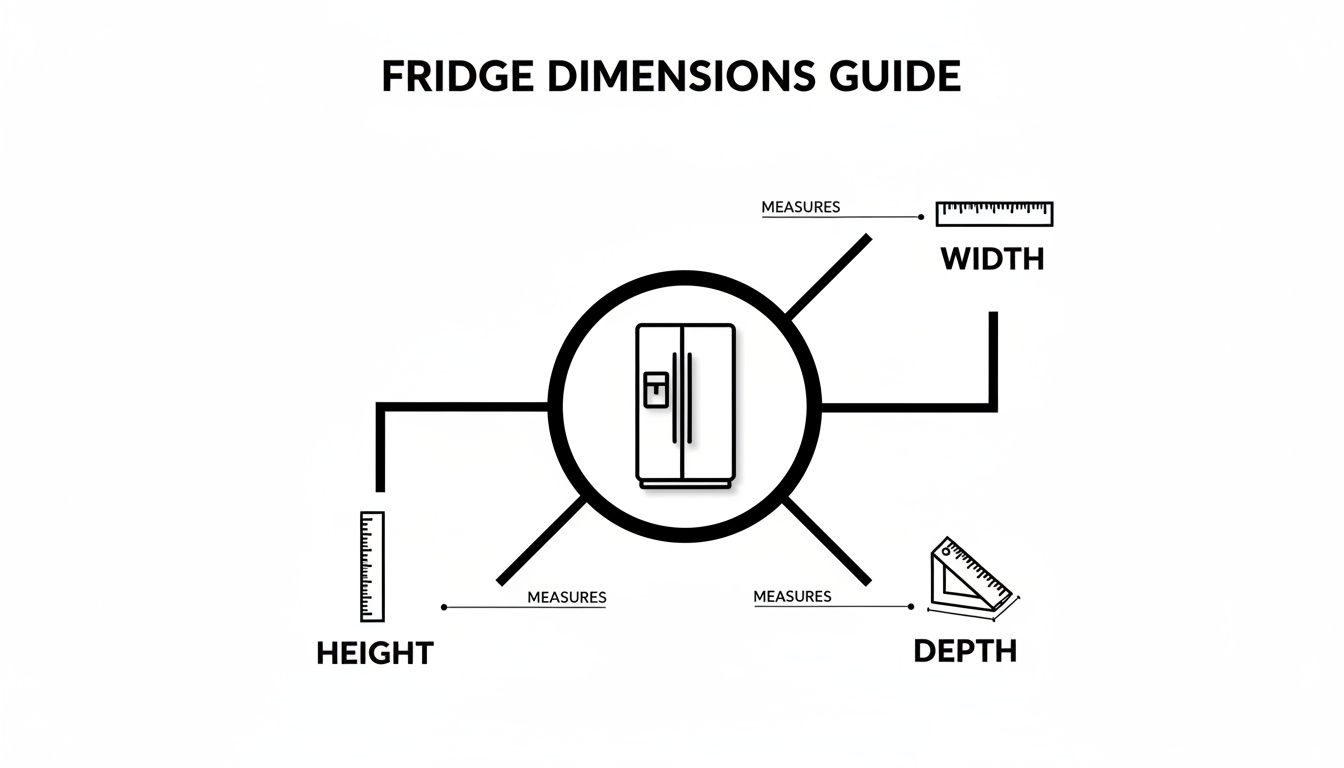
As you can see, getting the right size of under counter fridge all starts with these three basic numbers. Get these down before you worry about anything else.
Planning for Ventilation and Utilities
Proper airflow is completely non-negotiable. It's the lifeblood of your refrigerator. Commercial units throw off a lot of heat, and if that hot air gets trapped, the compressor has to work overtime. That means higher energy bills and, eventually, a much shorter lifespan for your expensive equipment.
Always, and I mean always, check the manufacturer's spec sheet for their exact clearance requirements. If you don't give it enough breathing room, you could damage the unit and even void your warranty. A simple mistake suddenly becomes a very expensive problem.
As a solid rule of thumb, plan for these minimum clearances:
- Sides: Leave at least 1-2 inches of breathing room on each side.
- Back: You need 1-2 inches between the back of the fridge and the wall.
- Top: Allow for a good 2-4 inches of open space above the unit.
Next up, the practical stuff. Make sure there’s a dedicated electrical outlet close enough for the fridge’s power cord to reach without an extension cord. Using one is often a health code violation, so don't even think about it.
Finally, consider the door swing. Physically measure how far the door will open. Will it block a busy walkway? Will it slam into your new lowboy freezer during a Saturday night rush? A poorly planned door swing can create a constant bottleneck and drive your staff crazy.
Matching Fridge Capacity to Your Menu and Service
Cubic feet and abstract dimensions don't mean much on their own. The real test for any size of under counter fridge is how well it holds up during a chaotic dinner rush. Let's translate those numbers into what really matters in a busy Los Angeles kitchen, whether it's for Los Angeles pizza, food trucks, or Mexican food.
You have to think beyond just the raw capacity. Instead, visualize what you actually need to put inside it. Will it be holding ninth pans of pico de gallo, gallon jugs of milk for the espresso machine, or stacks of craft beer bottles? Getting this right is absolutely crucial for picking a fridge that truly supports your menu and service style.
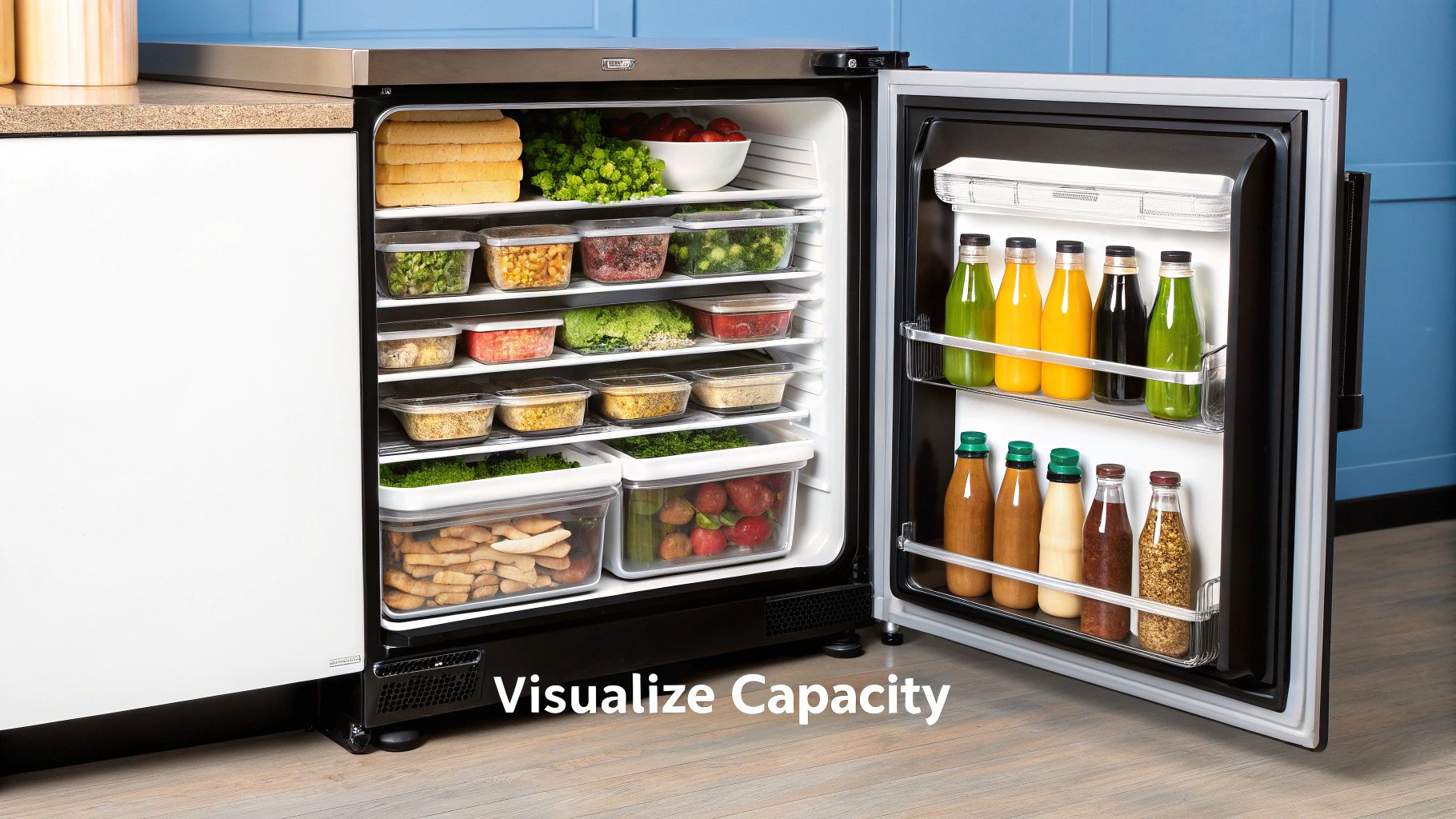
Making that connection ensures you’re investing in restaurant equipment that actually helps your operation, whether you're working out of a food truck or running a full-scale restaurant.
Sizing for Your Specific Los Angeles Kitchen
Every single foodservice operation is different. What works for a high-volume pizza joint would be total overkill for a small neighborhood coffee bar. Let's break it down with some practical examples you'd see around the LA scene.
-
For Los Angeles Food Trucks: A compact 24-inch unit is almost always the perfect fit. It’s small enough to tuck into tight spaces but still has plenty of room for the essentials like sauces, prepped produce, and beverages.
-
For a Mexican Food Restaurant Prep Station: This is where a mid-size 48-inch model really shines. It gives you ample space to organize all your pans of fresh salsa, guacamole, chopped cilantro, and other mise en place, keeping everything chilled and right where your cooks need it.
-
For a High-Volume Los Angeles Pizza Restaurant: A big 72-inch, three-door fridge is the kind of workhorse a busy pizza line demands. It can hold tons of full-size pans of dough, cheese, sauce, and a whole array of toppings, making sure cooks never have to step away from their station during peak hours.
This same logic applies to specialized operations like ghost kitchens and commissaries. In those setups, the 24-inch undercounter fridge size is king because it hits that sweet spot between storage and space efficiency. These units typically offer 5-10 cubic feet of space, which is often enough for a caterer's daily prep for 100-150 covers. In fact, some operators have found that standardizing with these smaller, efficient sizes can boost prep efficiency by as much as 35%.
Maximizing Your Chosen Capacity
Once you've landed on the right size for your menu, the next step is making every inch of that internal space count. Smart organization is what prevents waste and speeds up service, turning your fridge into an even more valuable tool for your team.
A disorganized fridge, no matter the size, is an inefficient one. Seconds spent searching for an ingredient are seconds lost during a busy service, which can impact ticket times and customer satisfaction.
Arranging your ingredients properly doesn't just improve workflow; it helps maintain consistent temperatures and food safety standards. After you figure out the best capacity for your needs, knowing how to maximize it is just as important. Take some time to explore effective fridge organization systems to get the most out of your investment and keep your line moving without a hitch.
Comparing Different Under Counter Fridge Models
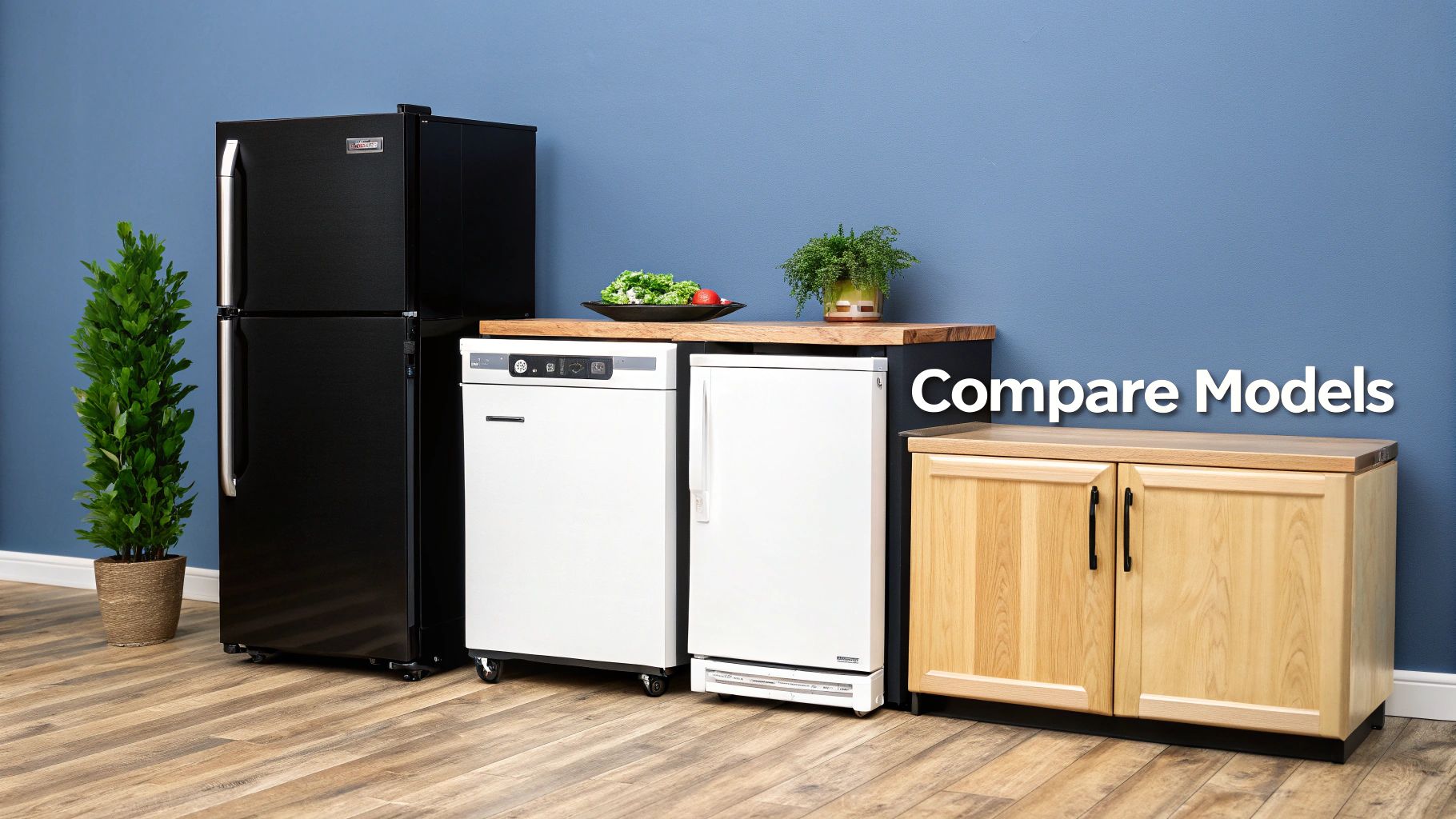
Once you’ve nailed down the right size of under counter fridge for your space, the next question is what type of unit you need. They’re not all created equal, and picking the right model can completely change your kitchen’s workflow—something every fast-paced Los Angeles establishment needs to get right.
From simple cold storage to heavy-duty prep stations, each piece of restaurant equipment serves a very different purpose. Figuring out these differences is the key to investing in equipment that actually helps your team instead of getting in their way.
Standard Units vs. Worktop Models
A standard under counter refrigerator is the most basic option. Think of it as a simple cooling box designed to slide right under an existing counter. It’s the perfect, no-fuss solution for adding extra cold storage to a bar or a small prep area without having to overhaul your setup.
A worktop model, on the other hand, pulls double duty. It comes with a durable stainless steel top, often with a backsplash, which turns the entire fridge into a functional prep surface. For a busy salsa station in a Mexican food restaurant or a Los Angeles food truck where every inch counts, this two-in-one design is a total game-changer. It combines storage and workspace into one slick, efficient footprint.
The Power of Chef Bases
Chef bases, sometimes called lowboys, take this idea of specialized design to the next level. These are heavy-duty units built with refrigerated drawers instead of doors. Their super-sturdy tops are engineered to hold heavy cooking equipment like griddles, fryers, or charbroilers.
For a busy line cook, a chef base is the ultimate ergonomic tool. It puts refrigerated ingredients like burger patties or pre-portioned steaks directly below the cooking surface, eliminating extra steps and speeding up ticket times significantly.
This drawer-based system creates a totally different workflow. Instead of swinging a door open and rummaging around, cooks can pull out an entire pan of ingredients at once. It’s fantastic for organization and keeps the cold air from escaping every time you need something.
To help you visualize the best fit for your kitchen, here's a quick breakdown of these common unit types:
Under Counter Unit Type Comparison
| Unit Type | Primary Use | Common Widths | Key Feature |
|---|---|---|---|
| Standard Undercounter | General cold storage, fits under existing counters | 24" - 72" | Maximizes storage in a compact, slide-in form |
| Worktop Refrigerator | Combined cold storage and food prep surface | 27" - 72" | Durable stainless steel top, often with a backsplash |
| Chef Base | Holds cooking equipment, refrigerated drawer storage | 36" - 110"+ | Low-profile, heavy-duty top, drawer access for pans |
Each model is designed to solve a specific problem in a commercial kitchen, so matching the unit to your workflow is crucial for efficiency.
Specialized Units for Bars and Breweries
For the bustling Los Angeles bar, brewery, and venue scene, specialized units like back bar coolers and kegerators aren't just a nice-to-have—they're essential. A back bar cooler is built with glass doors to show off your beverage selection, making it easy for bartenders to find what they need while also tempting customers.
Kegerators are designed with specific dimensions to hold one or more kegs and come equipped with the tap systems needed to pour the perfect draft beer. The market for these is huge, with dominant models typically running 48-72 inches wide and 34 inches high. Some back bar coolers can even hold over 200 bottles. These sizes make up 55% of sales in major cities like L.A., where venues need them to meet health codes that require temperatures below 41°F.
From standard models to highly specialized equipment, LA Restaurant Equipment offers a wide variety of undercounter refrigerator options to fit any kitchen's needs. And for those in medical or research fields with strict temperature requirements, it’s always a good idea to consult a comprehensive guide to laboratory refrigerators to understand their unique features.
Your Local Source for Commercial Refrigeration
Figuring out the perfect size of under counter fridge is a big step, but the last thing you need is a long wait for delivery and installation. For any restaurant or bar in Los Angeles or Orange County, downtime is money down the drain. Working with a local Southern California supplier means you get your gear faster, skipping the logistical nightmares of cross-country freight.
We get the urgency. That's why we offer fast, free shipping on all in-state orders, straight from our warehouse in Brea, California. This hometown advantage means most equipment shows up in just one to two business days. Your kitchen, bar, or food truck gets back to full strength without missing a beat.
Get the Right Equipment Without the Runaround
Sifting through restaurant equipment options can feel like a full-time job, but we've already done the hard work for you. Our selection is focused on solid, warranty-backed brands like Atosa that build the exact standard sizes we've covered in this guide. Whether you need a compact 24-inch unit for a tight spot or a 72-inch workhorse for a slammed line, we’ve got models that slide right in.
Our warehouse-direct model was built with independent operators in mind. We cut out the expensive showrooms and sales commissions to offer brand-new, reliable equipment at prices that actually help your bottom line. It’s a smarter way to equip your kitchen without the gamble of buying used.
Real Support for Your Business
We know that a Mexican food joint in East LA has totally different needs than a pizza place in the Valley. Our team is right here to offer personalized advice and quick quotes, making sure you feel confident in your choice. You don't have to jump through hoops to get the help you need.
- Live Chat: Get quick answers online while you’re browsing our site.
- Phone & Email: Talk directly to a real person who knows this equipment inside and out.
- Flexible Financing: We've partnered with trusted lenders to offer simple monthly payment plans, so you can get the gear you need now without the huge upfront hit.
When you're ready to upgrade, we're here to make it happen smoothly and quickly. We're all about providing the equipment and support that Southern California's amazing culinary scene needs to thrive, ensuring you get your new under-counter refrigerator plugged in and earning its keep as fast as possible.
Common Questions About Under Counter Fridge Sizes
Choosing the right size of under counter fridge can feel like a puzzle, but seeing how they work in the real world of Los Angeles restaurants makes all the difference. To help you feel confident in your decision, we've gathered answers to some of the most common questions we hear from Los Angeles restaurant, bar, and food truck owners.
What Is the Most Common Size for a Los Angeles Food Truck?
For food trucks, where every square inch is prime real estate, the 24-inch and 27-inch wide models are by far the most popular. A 24-inch unit gives you that essential refrigerated storage for daily prep ingredients without eating up your precious floor space.
The slightly larger 27-inch models offer a bit more breathing room, making them a great fit for trucks with a more extensive menu. Both sizes usually stand around 34 inches tall, so they slide perfectly under standard stainless steel prep counters to create a smooth, efficient workflow in a very tight spot.
How Much Clearance Do I Need to Leave Around My Fridge?
This is a critical question, and getting it right affects both performance and how long your unit will last. While it can vary slightly by model—always check the manufacturer's spec sheet—a good rule of thumb is to leave at least 1-2 inches of clearance on the back and sides, and 2-4 inches at the top.
That little bit of space is absolutely essential. It’s what allows the condenser coils to breathe and dissipate heat effectively.
Without adequate ventilation, the compressor has to work overtime, which leads to higher energy bills and a much shorter lifespan for your unit. Never box a commercial fridge into a fully enclosed cabinet without making sure it has that breathing room.
Proper installation also plays a major role in how much energy your unit consumes. You can learn more about maximizing efficiency by exploring our guide to energy-efficient commercial refrigerators and how they can impact your bottom line.
Can I Put a Commercial Unit in My Outdoor Kitchen?
While you technically can, we generally don't recommend it unless the unit is specifically rated for outdoor use. The reason is simple: commercial refrigerators are designed to operate within a specific ambient temperature range.
The extreme heat of a Southern California summer can force an indoor unit to run constantly, leading to premature burnout and potentially voiding your warranty. For an outdoor kitchen, always look for models specifically labeled "outdoor-rated." They’re built tougher, with more robust components and better insulation to handle wild temperature swings and humidity without breaking down.
What Is the Difference Between a Worktop Fridge and a Standard Unit?
The main difference all comes down to the top surface and what it’s meant for. A standard under counter refrigerator has a simple finished top, designed to slide neatly underneath an existing countertop. It's a straightforward way to add cold storage to your line.
A worktop refrigerator, on the other hand, features a durable, often stainless steel top surface that frequently includes a backsplash. This top isn't just a cover—it’s designed to be a food prep area itself.
It effectively combines a refrigerated base with a functional workspace, saving you a ton of floor space in a busy kitchen. If you need both cold storage and an extra prep surface in one footprint, a worktop model is the smarter, more efficient choice for your operation.
Ready to find the perfect under counter refrigerator for your Los Angeles business? At LA Restaurant Equipment, we offer a curated selection of new, warranty-backed units at warehouse-direct prices. Get fast, free shipping and the expert support you need by visiting https://larestaurantequipment.com today.