

When it comes to deep-frying a turkey, the golden rule is simple and fast: plan on frying for 3 to 4 minutes per pound.
That means your average 12-pound bird—a popular size for Los Angeles food trucks and holiday pop-ups—will be cooked to golden perfection in just 36 to 48 minutes. This is, of course, after you get the oil preheated to a stable 350°F.
Your Guide to Deep Frying Turkey Cooking Times
For any commercial kitchen in Los Angeles or Orange County, time is money. The difference between roasting a turkey and deep-frying one is a complete game-changer for high-volume service, especially around the holidays when demand skyrockets.
Deep-frying frees up precious oven space, letting you focus on other popular items, whether you're running a Mexican food concept or a classic American diner. This method is a staple for innovative Los Angeles food trucks and even some high-end Los Angeles pizza spots looking for a unique holiday special. The right restaurant equipment makes all the difference.
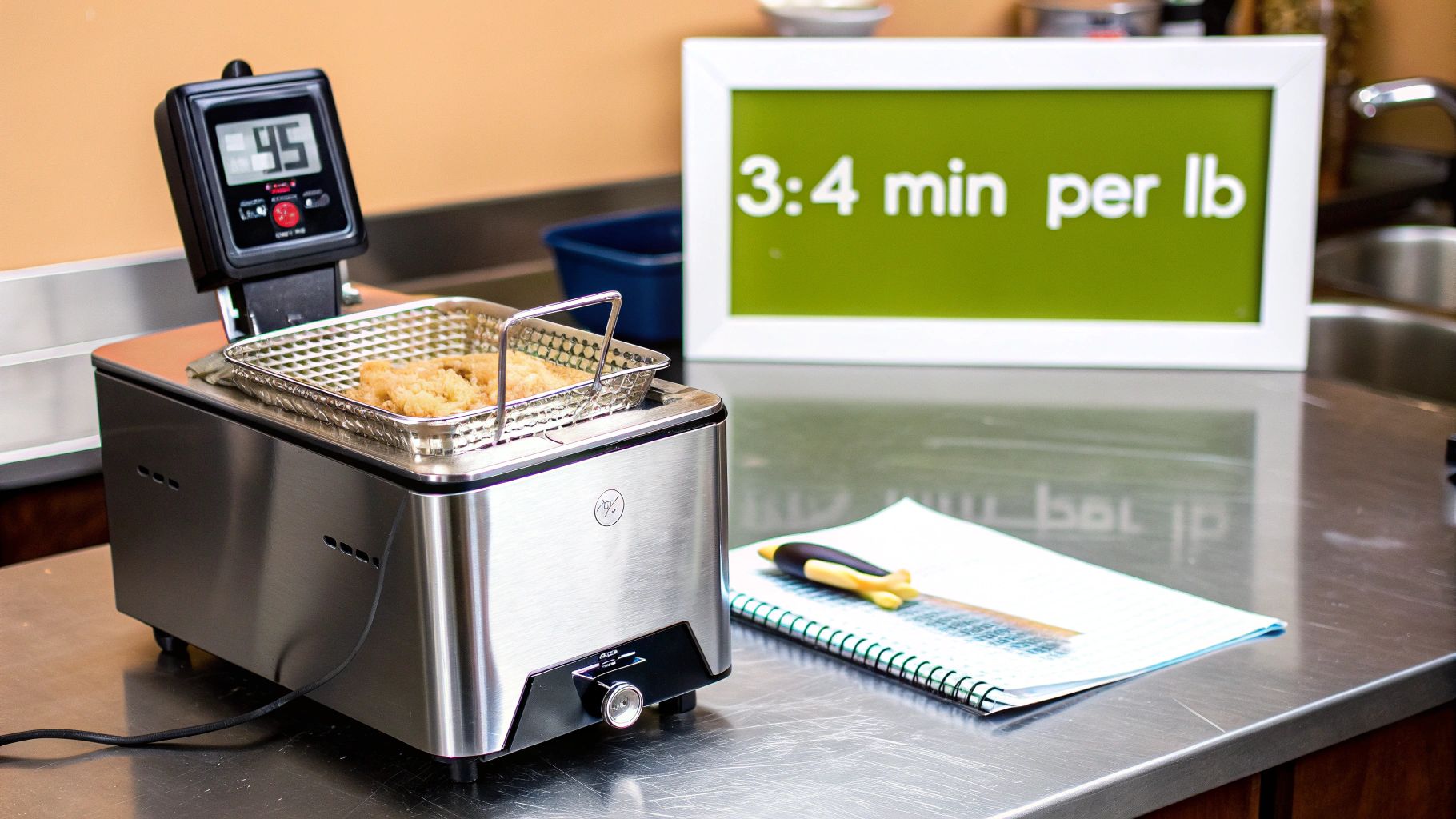
The real beauty of deep-frying is its sheer efficiency. It absolutely slashes cooking time. We're talking 3 to 4 minutes per pound at 350°F, compared to the typical 13 to 15 minutes per pound in a conventional oven set to 325°F.
Let's put that in perspective for a 12-pound bird: that's a blistering 36 to 48 minutes total in the fryer versus a sluggish 2.5 to 3 hours in the oven. Imagine serving up crispy, golden perfection while your oven-roasting rivals are still staring at a timer. This speed is a massive advantage for busy Southern California restaurant owners and food truck operators who need to handle high-volume holiday orders without tying up equipment for hours.
Just remember, as the USDA Food Safety and Inspection Service advises, time is just a guideline. Always, always verify doneness with a thermometer. You're looking for 165°F in both the breast and the thickest part of the thigh. You can learn more about why time is a critical factor and find some helpful comparisons.
Mastering the Time and Temperature Formula
Getting that perfect, crispy skin and incredibly juicy interior all comes down to precision. Your target oil temperature is a non-negotiable 350°F (175°C).
Maintaining this temperature is absolutely crucial. If it drops too low, the turkey will just soak up oil and turn out greasy. If it gets too hot, you'll burn the skin long before the inside is safely cooked.
This is where professional-grade restaurant equipment really proves its worth. Commercial fryers, like the ones you'll find at LA Restaurant Equipment, are built with powerful heating elements and reliable thermostats that hold a consistent temperature, even when you drop in a large, cold turkey. This is essential for Los Angeles restaurants aiming for consistency.
A reliable commercial fryer isn't just a piece of equipment; it's your insurance policy for consistency. It ensures every turkey you serve, from the first to the last, meets the high standards your customers expect.
Turkey Frying Times and Temperatures at a Glance
To help streamline things in your kitchen, here’s a quick-reference chart.
Use this table for fully thawed, unstuffed turkeys fried at a stable 350°F oil temperature. Always confirm doneness with a meat thermometer reading 165°F.
| Turkey Weight (Pounds) | Estimated Frying Time (Minutes) | Target Internal Temperature (Breast & Thigh) |
|---|---|---|
| 10 lbs | 30 - 40 minutes | 165°F |
| 12 lbs | 36 - 48 minutes | 165°F |
| 14 lbs | 42 - 56 minutes | 165°F |
| 16 lbs | 48 - 64 minutes | 165°F |
| 18 lbs | 54 - 72 minutes | 165°F |
Remember, these times are solid estimates, but your thermometer is the final word.
Why This Method Works for LA's Food Scene
In the fast-paced and competitive Los Angeles food scene—from trendy Los Angeles food trucks to established Mexican food restaurants and Los Angeles pizza joints—efficiency and quality are everything. Deep-frying a turkey brings some serious advantages to the table in a professional setting:
- Speed of Service: You can turn tables or serve more customers way faster. This is absolutely critical during peak hours and holiday rushes.
- A Better Product: You get an unbelievably moist bird with skin that's so crispy it shatters. That’s a texture that’s almost impossible to get from roasting.
- Kitchen Efficiency: By freeing up your oven, your team can prep and cook other menu items at the same time, which smooths out your entire workflow and boosts output.
To pull this off, you need the right setup. A couple of durable stainless steel prep tables for brining and seasoning, paired with a high-capacity commercial fryer, creates a safe and highly efficient workstation. By investing in the right restaurant equipment, Southern California businesses can confidently add this killer menu item and watch the profits roll in.
Prepping Your Turkey for Frying Success
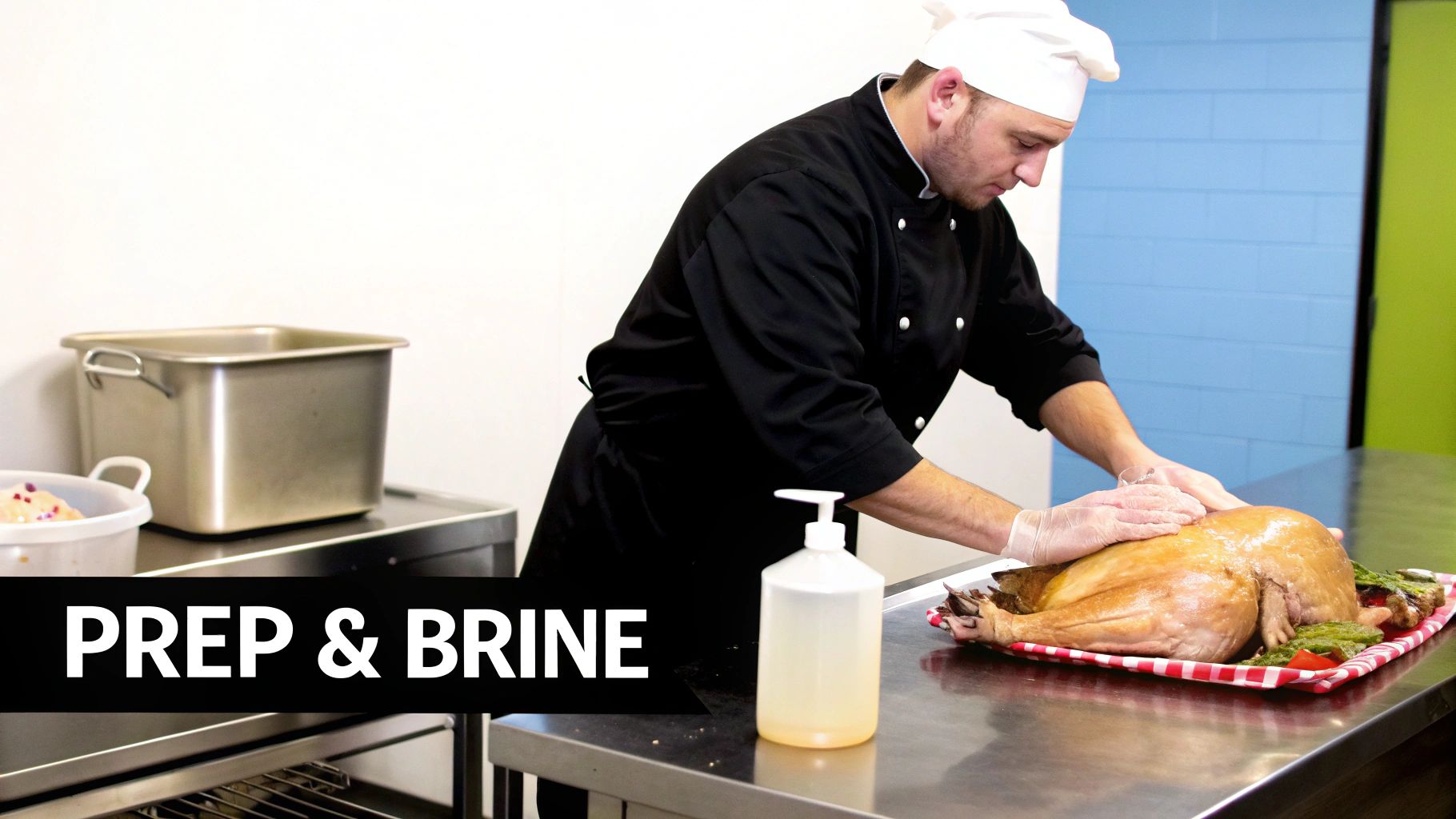
Here’s a secret every seasoned chef knows: a spectacular deep-fried turkey isn't made in the fryer. It’s made on the prep table. The time you invest upfront pays off in a safer cook, juicier meat, and that signature, shatteringly crisp skin your customers will be talking about for weeks. Cutting corners here is the single biggest mistake a kitchen can make.
The entire process boils down to one non-negotiable rule: your turkey must be completely thawed and bone-dry before it even sees the hot oil. A partially frozen bird introduces ice, which instantly flashes to steam and causes a violent, dangerous boil-over. Even a little surface moisture will lead to hazardous splattering.
Size and Thawing Are Your Top Priorities
First things first, let's talk size. When it comes to deep frying, bigger isn't better. We've found that turkeys under 15 pounds are ideal. They cook through much more evenly and are far easier—and safer—to handle in commercial fryers. A huge 20-pound bird just creates problems, risking an overcooked exterior long before the inside hits a safe temperature.
Thawing is a game of patience you can't afford to rush. The only safe way to do it is in the refrigerator, which requires about 24 hours for every 4-5 pounds of turkey. That means your average 12-pound bird needs at least three full days in the cooler. A good stainless steel prep table near your walk-in makes staging this whole process a breeze.
Pro Tip: Never, ever thaw a turkey at room temperature. You’re just inviting bacteria to the party by letting it sit in the "danger zone." Always plan ahead for a slow, safe thaw in the fridge.
Once it's fully thawed, getting rid of every last drop of moisture is critical. Pat the entire turkey dry with paper towels—inside and out. Really get into every crevice, under the wings, and deep inside the cavity. For truly perfect, crispy skin, let it sit on a rack in the refrigerator for another hour to air-dry.
Brining and Injecting for Unforgettable Flavor
With the safety checks out of the way, you can focus on flavor. Brining is a game-changer, transforming a good turkey into an unforgettable one by infusing it with moisture and seasoning from the inside out. A simple overnight soak in a solution of salt, sugar, and aromatics works wonders. This whole process is much easier with the right restaurant equipment, like a deep, easy-to-clean prep sink.
Injecting marinades gives you a more direct route to flavor and is a fantastic method for busy Los Angeles food trucks or Mexican food concepts looking to add a unique twist.
- Classic Marinade: Melted butter, Cajun seasoning, and garlic powder.
- Citrus & Herb: Olive oil, orange juice, rosemary, and thyme.
- Spicy Adobo: A purée of chipotle peppers in adobo, lime juice, and spices.
The deep-fried turkey we know and love today has roots in 1940s Louisiana, where African American cooks pioneered the method. For LA's fast-paced food scene, the speed of this technique is a massive asset. A ghost kitchen can serve up to 4x more birds per hour compared to conventional ovens, making it a lifesaver for holiday catering rushes.
Finally, choosing the right oil is the last piece of the prep puzzle. Understanding the ultimate guide to oils smoke point is crucial for both safety and quality. You need an oil with a high smoke point, like peanut or canola, that won’t break down and burn at the 350°F required for frying.
Choosing the Right Commercial Frying Equipment
In any professional kitchen, from a bustling Los Angeles pizza joint to a nimble food truck serving up Mexican food, your equipment is more than just a tool—it's your business partner. And when it comes to deep-frying turkey, that partnership is absolutely critical. While a standard outdoor propane setup might get the job done for a backyard cookout, a commercial kitchen needs gear that delivers precision, capacity, and most importantly, safety.
Making the move to a dedicated commercial turkey fryer is one of the smartest decisions a restaurant owner can make. These units are built from the ground up to handle the intense demands of a high-volume kitchen. They have key features that a residential fryer just can't compete with, ensuring you nail both product quality and operational safety every time. The right restaurant equipment can elevate any Los Angeles restaurant.
Why Commercial Fryers Are a Must
The gap between a consumer-grade fryer and a commercial one is huge. Professional units are built to a much higher standard, and those differences directly impact your bottom line and your reputation in the competitive Southern California food scene.
Here’s where they really pull ahead:
- Precise Thermostats: Commercial fryers are masters at maintaining a stable oil temperature. This is the secret to hitting those perfect deep frying turkey cooking times consistently. It stops the oil from dropping too low (which makes food greasy) or getting dangerously hot.
- Larger Capacity: Built for the rush, these fryers can handle bigger birds and, crucially, recover their heat much faster between batches. This keeps your kitchen pumping out orders during peak hours.
- Enhanced Safety Features: Things like built-in high-limit switches and heavy-duty construction are non-negotiable in a professional kitchen. They dramatically reduce the risk of flare-ups and accidents.
For any business serious about frying, exploring a range of commercial fryers is the only way to guarantee top-tier performance and reliability.
Calculating Oil Needs to Prevent Disaster
Overfilling the pot is one of the single most dangerous mistakes you can make when deep-frying. A turkey displaces a ton of oil, and one bad guess can lead to a hazardous overflow and a grease fire. The water displacement method is a simple, foolproof trick to find your exact oil level before you even turn on the heat.
Here's the safe way to do it:
- Place your completely thawed turkey into the empty fryer pot or basket.
- Fill it with cold water until the bird is covered by about one to two inches.
- Gently lift the turkey out, letting all the water drain back into the pot.
- The water level left behind is your perfect oil fill line. Mark it on the outside of the pot with a food-safe marker or just make a mental note.
- Dump the water and thoroughly dry the pot and the turkey before a single drop of oil goes in. Never add oil to a wet pot.
This simple, five-minute safety check prevents the most common cause of turkey fryer fires. It ensures you have enough oil to cook the bird perfectly without risking a catastrophic boil-over.
Creating an Efficient and Safe Frying Station
A top-tier fryer is the star of the show, but its supporting cast is just as crucial for a smooth, safe workflow. Investing in reliable, warrantied restaurant equipment from a trusted supplier isn't just about minimizing risk; it's about ensuring the kind of consistency that keeps customers coming back. A well-designed station cuts down on staff movement, reduces cross-contamination risks, and speeds up the entire process from prep to plating.
To create a true powerhouse cooking station, pair your fryer with the right support gear. A chef base—a refrigerated unit that sits right under your fryer—is a game-changer. It keeps your raw, prepped turkeys safely chilled and right where you need them, saving precious seconds during a hectic service. If space is tight, a nearby undercounter refrigerator works just as well. This kind of integrated setup keeps your frying area organized, efficient, and up to code—essentials for any food business in Los Angeles or Orange County.
The Commercial Kitchen Deep Frying Safety Checklist
In the high-pressure world of a professional kitchen, especially in competitive food scenes like Los Angeles and Orange County, safety isn't just a suggestion—it's everything. One bad accident can shut down production, torpedo your reputation, and put your staff in harm's way. That's why having a non-negotiable safety checklist for deep-frying turkeys is an absolute must for any restaurant, food truck, or Mexican food spot.
This isn't your backyard Thanksgiving setup; commercial kitchens operate under a much higher standard. Every single person on your team needs to get that frying comes with serious risks if you don't follow the rules to the letter. Think of this checklist as your game plan for a safe, successful service. It ensures every turkey that comes out of the fryer is a triumph, not a liability.
Setting Up a Safe Frying Zone
Your first line of defense is a well-planned frying station. You can't just plop this thing down anywhere. If you're using propane fryers, they absolutely must be set up outdoors on a flat, stable surface that won't catch fire.
Make sure the fryer is at least 10 feet away from any building, overhang, or flammable stuff. I can't stress this enough: never, ever use a propane fryer in a garage, under a tent, or on a wooden deck. The risk of a flare-up catching the whole place on fire is just way too high.
A huge part of this safe zone is having the right gear right there when you need it.
- Fire Extinguisher: A Class B or Class K fire extinguisher needs to be within arm's reach. No exceptions. Train your staff on the PASS method (Pull, Aim, Squeeze, Sweep) and drill it into their heads to never, ever throw water on a grease fire.
- Proper PPE: Make heat-resistant gloves, a heavy-duty apron, and non-slip, closed-toe shoes mandatory. Long sleeves are a good idea, too—they'll save you from nasty oil splatters.
- Clear Workspace: The area around the fryer has to stay clear of junk, things to trip over, and anyone who isn't supposed to be there. This is a dedicated cooking zone, not a shortcut to the back door.
An organized, well-equipped station is a safe station. When you treat your frying zone with the same respect you give your main cooking line, you drastically cut down the risk of accidents, even during the craziest dinner rush.
Preventing the Most Common Frying Disasters
Two mistakes cause the vast majority of deep-frying accidents: dropping a partially frozen turkey into hot oil and overfilling the fryer. The good news? Both are completely preventable if you have solid procedures and your team sticks to them. A turkey that's even a little bit frozen has ice crystals that flash into steam on contact with hot oil. This causes a violent boil-over that can easily ignite the propane burner.
Misjudging the oil level is just as dangerous. It leads to a massive overflow when you lower the bird in. These aren't small goofs; they are the number one cause of serious fires. The stats don't lie—U.S. fire departments respond to over 1,000 fryer-involved fires every year. Those fires lead to an average of 5 deaths, 60 injuries, and $15 million in property damage. For an independent restaurant owner in LA or Orange County, a single mistake can be catastrophic. In fact, more than a third of the time, flare-ups are caused by oil splashing onto the propane burners.
This is exactly why professional-grade restaurant equipment with advanced thermostat controls is so crucial. You can learn more about how to prevent a disastrous turkey frying situation from the USDA.
By implementing a strict safety checklist and investing in reliable commercial equipment, you build a system that protects your people, your business, and your customers. Make these protocols part of your kitchen's DNA.
The Frying Process from Start to Finish
Alright, your turkey is prepped and the commercial fryer is holding a perfect 350°F. This is the moment we've been working towards—where all that careful prep pays off and you turn a great bird into an unforgettable one.
The whole process, from the first safety check to the final temp reading, should be a smooth, controlled operation. The infographic below lays out the core phases to keep everything on track in your kitchen.
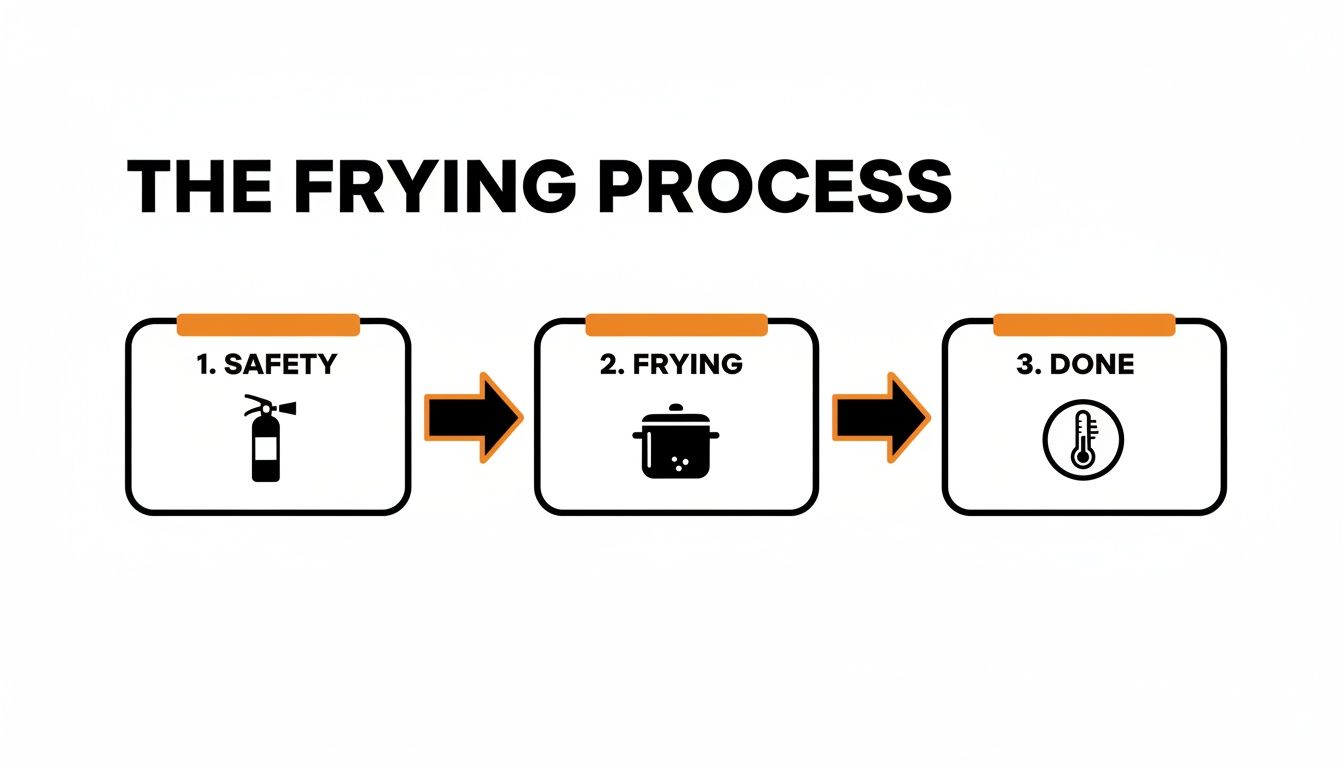
Think of it this way: safety, frying, and temping aren't separate jobs. They all flow together to get you that perfect, crispy result every single time.
Lowering the Turkey and Managing the Cook
This is the part that demands your full attention. First thing's first: turn the burner OFF before you even think about putting the turkey in the oil. Once it’s off, get the grab hook secured to the poultry rack. Then, wearing your heavy-duty, heat-resistant gloves, begin lowering the bird into the fryer very, very slowly. I'm talking a full minute, at least, to get it completely submerged.
You’re going to see some serious bubbling as the hot oil meets the turkey. That's totally normal. Going slow prevents that furious reaction from boiling over and creating a dangerous mess. Once the bird is all the way in and the bubbling calms down, you can safely relight the burner.
From here on out, your job is to babysit that temperature. You need to keep the oil right at 350°F. Adding a big, cooler bird will cause the temp to drop, but a good commercial fryer recovers fast. Keep an eye on your thermometer and tweak the burner as needed to hold that heat steady. This consistency is the secret to nailing your deep frying turkey cooking times and avoiding a greasy, undercooked bird.
The classic rule of thumb is 3 to 4 minutes per pound. But treat that as a starting point, not gospel. Your digital thermometer is the only thing that will tell you with 100% certainty when it's done.
Checking for Doneness with Precision
When your timer is getting close, it’s time to check the internal temp. Just like before, kill the burner first. Safety first, always. Now, carefully lift the turkey partway out of the oil—just enough so you can get a thermometer in there without getting splashed.
The magic number you're looking for is 165°F (74°C). It’s absolutely critical to check a few different spots to make sure the entire bird is cooked through.
- The Breast: Go for the absolute thickest part of the breast, but be careful not to hit the bone.
- The Thigh: Probe the deepest part of the thigh meat, right near the bone. This is usually the last part to finish cooking.
- The Wing: That joint where the wing connects to the body is another great spot to verify the temperature.
If any of those spots read below 165°F, gently lower the turkey back into the oil, relight the burner, and give it another five minutes before you check again. Once every spot is at or above 165°F, you’re golden. Literally.
Resting and Handling Used Oil
Gently lift the fully cooked turkey out of the fryer and set it on a wire rack over a baking sheet. This lets the extra oil drip off and keeps that skin perfectly crisp.
And now, for the step that too many people skip: let it rest. You need to give that turkey a good 20 to 30 minutes on the rack before you even think about carving. This lets all the juices settle back into the meat. If you slice into it right away, all that flavor will just end up in a puddle on your cutting board.
While it’s resting, you can deal with the oil. Turn the fryer completely off and let the oil cool for several hours. Once it's back to room temperature, you can filter it for reuse or get it ready for disposal. Proper cleaning is what keeps your gear running for years; you can learn more about how to clean commercial deep fryer units in our other guide. And please, never dump used oil down a drain. It’s a recipe for plumbing disasters and is terrible for the environment.
Common Questions About Deep Frying Turkey
Even with the best prep and the most reliable gear in your kitchen, questions are going to pop up. It happens all the time, especially when you're training new cooks or trying to nail down your workflow for a big rush. In the fast-paced kitchens across Los Angeles and Orange County, from Los Angeles food trucks to established Mexican Food spots, you need quick, solid answers.
Let's cut through the noise and tackle some of the most frequent questions I hear from professional chefs and food truck operators.
What Is the Best Oil for Deep Frying Turkey?
When you're running a commercial kitchen—especially a Mexican food or Los Angeles pizza spot where you can't have flavors clashing—the right oil needs two things: a high smoke point (think over 400°F) and a neutral taste.
Peanut oil has always been the gold standard. It’s got a smoke point of 450°F and a classic flavor that just works with turkey. But let's be realistic. With nut allergies being a huge concern for so many diners in Los Angeles, it's often not the smartest choice for a professional setup.
You've got great, cost-effective alternatives like canola, safflower, or soybean oils. They can all handle the high heat and won't mess with your carefully crafted brines or injection marinades. This way, the flavor of the turkey itself is the star of the show. The key is to always have a reliable thermometer in your oil, keeping the temperature well below its smoke point so nothing gets scorched.
How Do I Know the Turkey Is Done Without Overcooking?
That 3 to 4 minutes per pound rule is a fantastic starting point for figuring out your cooking times, but that's all it is—a starting point. The only surefire way to know your bird is perfectly cooked and, more importantly, safe to serve is with a good instant-read digital thermometer.
The USDA says the magic number is a minimum internal temp of 165°F. You have to be strategic about where you check.
- Probe the thickest part of the breast, but be careful not to hit the bone.
- Check the innermost part of the thigh, which is another spot that cooks slower.
- Finally, test the wing joint right where it connects to the body.
Once all three of those spots hit 165°F, get that turkey out of the oil immediately. Don't forget about carryover cooking—the internal temperature will keep climbing a few more degrees as it rests, leaving you with a juicy, perfectly finished bird.
Can I Reuse the Cooking Oil After Frying?
Absolutely. In a commercial kitchen, you should be reusing your oil. It’s a basic cost-management strategy for any food business, whether you're a small pop-up or a high-volume restaurant. The process is pretty simple.
After you're done frying, turn off the heat and let the oil cool down completely. Then, you'll need to strain it through a fine-mesh filter or a few layers of cheesecloth to get every last bit of sediment and food debris out. Store that clean oil in a sealed, light-proof container somewhere cool and dark.
You can typically get two or three more uses out of high-quality frying oil. If you start to see it darken a lot, smell off, or foam up too much when you heat it, it's time to get rid of it. Just be sure to dispose of it properly according to local Los Angeles County regulations—never pour old oil down the drain.
What Size Commercial Fryer Does My Food Truck Need?
Picking the right fryer for a Los Angeles food truck is a balancing act between your cooking capacity and your very limited space. The real answer depends entirely on your menu and how busy you expect to be.
For a typical food truck or a small restaurant that's just adding fried turkey as a special, a 30-40 quart fryer is a great, versatile place to start. A fryer this size can easily handle turkeys up to about 15 pounds.
But if fried turkey is going to be one of your signature items or you're bracing for a massive holiday rush, you'll be better off investing in a 60-quart model. That larger capacity lets you cook bigger birds or just keep frying back-to-back without the oil temperature dropping too much, which is crucial for keeping up during your busiest hours.
At LA Restaurant Equipment, we specialize in helping businesses across Southern California find the perfect restaurant equipment to match their ambition. From high-capacity commercial fryers for Los Angeles Food Trucks to the stainless steel prep tables that streamline your workflow for Mexican Food or Los Angeles Pizza concepts, we provide the reliable, warranty-backed gear you need to succeed. Explore our full collection and get warehouse-direct pricing at https://larestaurantequipment.com.