

In the wild, competitive food scene of Southern California, your commercial pizza oven is the absolute engine of your business. Whether you're slinging pies from a Los Angeles food truck, running a classic pizzeria, or adding a pizza menu to your Mexican restaurant, this isn't just another piece of equipment. It's the very heart of your operation, defining your pizza, your kitchen's rhythm, and ultimately, your profits.
Think of this guide as your roadmap to finding the perfect oven for what you do. We'll cover everything from the best ovens for Los Angeles food trucks to the right equipment for a sit-down Mexican food spot adding pizza to its menu.
Finding The Heart Of Your Southern California Kitchen
Let’s be real. In Los Angeles, a place known for everything from authentic Neapolitan to wild Mexican-fusion pizzas, the oven you choose can make or break you. This decision is about so much more than just BTUs and deck size—it's about finding the piece of restaurant equipment that matches your culinary dream and your daily operational grind.
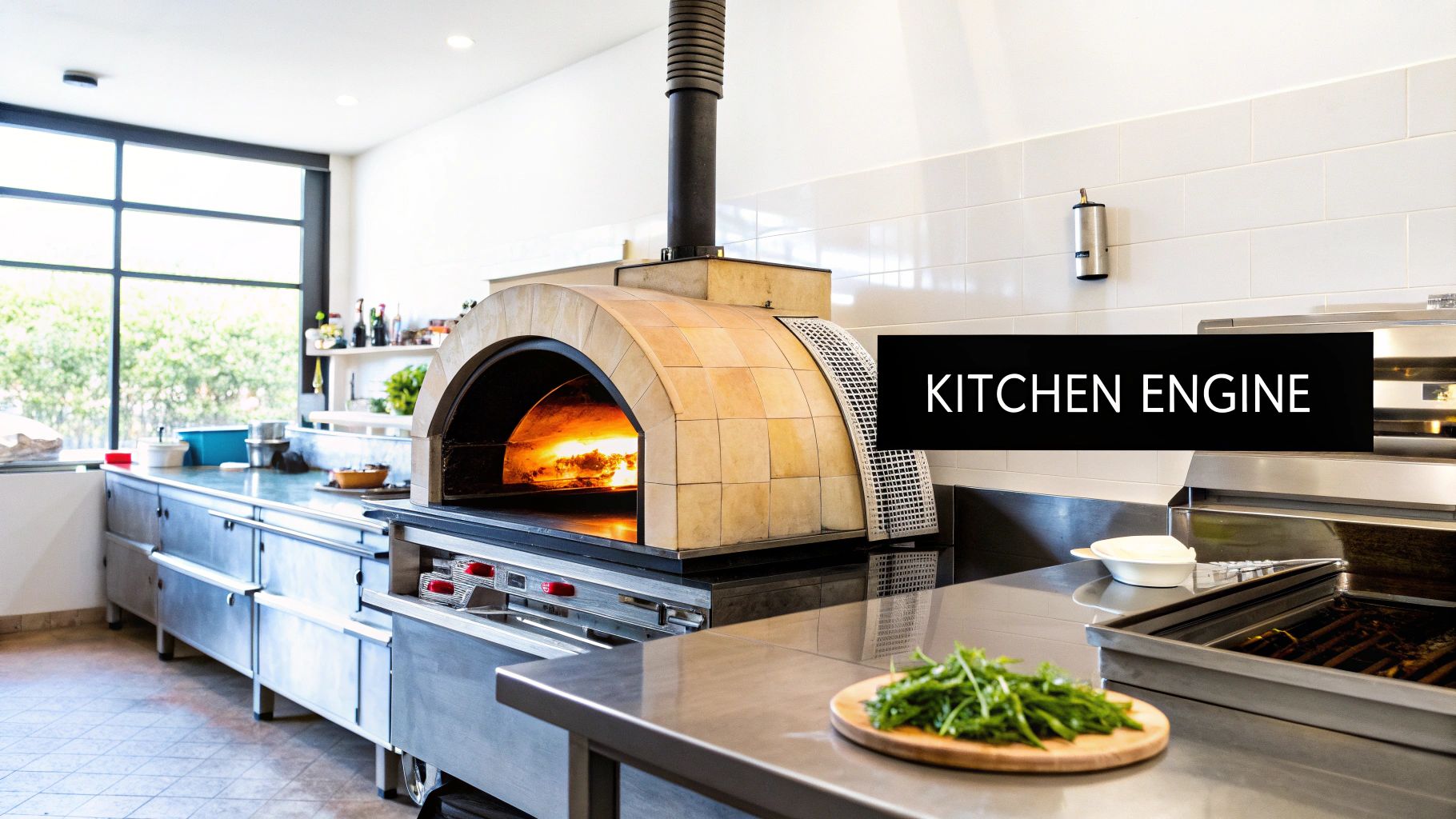
We're going to break down all the essential factors into simple, manageable steps. You'll see how different oven types create totally different styles of pizza, and how that choice ripples through your kitchen workflow and straight to your bottom line, whether you're a classic LA pizza joint or an innovative food truck.
Aligning Equipment with Your Vision
Picking an oven isn't just a purchase; it's a major investment in your brand's identity. The restaurant equipment you choose will dictate the crisp on your crust, the melt on your cheese, and how fast you can get orders out the door on a slammed Friday night.
A high-volume LA food truck has completely different needs than an artisanal spot chasing that perfect, smoky char. You need to get clear on a few key things:
- Oven Type: Are you a classic deck oven kind of place? Or do you need the sheer speed of a conveyor, perfect for a food truck? Maybe the rustic appeal of a brick oven is your calling card for your new Mexican restaurant's pizza menu.
- Capacity & Throughput: Be honest—how many pizzas really need to fly out of your kitchen during your busiest hour?
- Fuel Source: Does your menu—and your location—call for gas, electric, or the classic touch of wood?
- Kitchen Space: Where is this beast going to live? You have to make it fit. Our guide on commercial kitchen layout design can be a huge help here.
The global demand for great pizza isn't slowing down. In fact, the commercial pizza oven market is expected to jump from USD 4,845.4 million in 2025 to a whopping USD 9,181.3 million by 2035. This explosion shows just how critical it is to invest in efficient, high-throughput restaurant equipment to keep up.
At the end of the day, finding the right commercial pizza oven is about one thing: turning dough into dollars and making your Los Angeles spot a place people can't stop talking about.
Matching The Oven To Your Pizza Style
Choosing the right commercial pizza oven is a lot like a chef picking their favorite knife—the best one is all about the job you need it to do. Your oven is the heart and soul of your pizza operation. It dictates everything from the chewiness of the crust to how fast a pie gets to the customer.
Think of it this way: the oven you choose is a huge part of your brand's story. A fast-and-furious Los Angeles food truck slinging slices on the Venice boardwalk has totally different needs than a sit-down Mexican food restaurant in Beverly Hills crafting artisanal pies. Let's dig into the main players to see which restaurant equipment fits your vision.
The Traditionalist: The Deck Oven
The deck oven is the undisputed workhorse of the classic American pizzeria. If you can picture an old-school bakery hearth, you're on the right track. This oven uses a hot stone or ceramic surface—the "deck"—to cook the pizza from the bottom up with direct, conductive heat. At the same time, radiant heat from the top cooks the cheese and toppings.
It's that direct contact with the hot stone that creates the iconic, crispy-on-the-bottom, chewy-in-the-middle crust everyone loves. Deck ovens are the gold standard for New York-style or traditional American pizzas. The catch? They need a seasoned pro at the helm, someone who knows the oven's hot spots and can spin the pies at just the right moment for a perfect, even bake.
The Consistency King: The Conveyor Oven
Now, imagine a high-speed assembly line for pizza. That’s a conveyor oven in a nutshell. You place a raw pizza on a conveyor belt, it travels through a super-heated chamber, and a perfectly cooked pie emerges on the other side. No turning, no guesswork, and you don't need a master pizzaiolo babysitting it.
This makes conveyor ovens the champions of consistency and sheer volume. A slammed LA food truck or a delivery-focused spot that has to crank out hundreds of identical pizzas for the lunch rush will live and die by this machine. The trade-off is you sacrifice some of that artisanal character and char you get from other ovens.
Commercial kitchens are the engine of the pizza oven market. Back in 2022, they made up a massive 72% of the market, which was valued at $1.77 billion. This demand keeps climbing, and deck ovens are a huge piece of that pie, holding a 35.62% market share in 2025. Why? Their thermal mass mimics a wood-fired oven's results, hitting that sweet spot for LA's artisanal pizza trend. You can see more data on the pizza oven market growth on Research Nester.
The All-Rounder: The Convection Oven
If a deck oven is a specialist's tool, then a convection oven is the versatile multi-tool of the kitchen. It works by using powerful fans to blast hot air all around the food. This process strips away the cold air bubble surrounding the pizza, cooking it incredibly fast and evenly.
While it can definitely bake a great pizza with a perfectly uniform, golden-brown crust, its true power is in its flexibility. A convection oven can also roast your veggies, bake bread, or handle just about any other item on your menu. This makes it a smart pick for a Mexican restaurant adding a pizza option or a bar with a diverse menu that needs one piece of restaurant equipment to do it all.
The Artisan: The Brick or Wood-Fired Oven
And finally, we have the showstopper: the brick or wood-fired oven. This is the master of true artisanal pizza. Burning wood or gas, these beasts reach scorching temperatures, often well over 800°F. This intense heat can cook a pizza in as little as 90 seconds, creating a crust that's impossibly light and airy with that beautiful, slightly smoky char known as "leoparding."
This is the oven you get when you want to make authentic Neapolitan or other gourmet-style pizzas. It’s more than just an oven; it’s a centerpiece, a statement piece that screams to your customers that you're serious about craft and tradition. The downsides are significant, though—they demand a lot of space, require specialized ventilation, and need a highly skilled operator to manage the fire.
Commercial Pizza Oven Comparison At A Glance
To help you see how they stack up, we've put together a quick comparison. Think of this as your cheat sheet for finding the oven that matches your restaurant's personality and goals.
| Oven Type | Best For | Cooking Style | Pros | Cons |
|---|---|---|---|---|
| Deck Oven | New York-Style, Traditional Pizza | Conductive & Radiant Heat | Excellent crust texture, great flavor | Requires skilled operation, has hot spots |
| Conveyor Oven | High-Volume, Los Angeles Food Trucks | Forced Air (Impingement) | Extremely consistent, high output, easy to use | Less artisanal result, large footprint |
| Convection Oven | Versatility, Mexican Restaurants | Circulated Hot Air | Fast and even cooking, very versatile | Can dry out crusts if not monitored |
| Brick/Wood-Fired | Neapolitan, Artisanal Pizza | Intense Radiant Heat & Flame | Unmatched smoky flavor, fast cook times | Requires expertise, long preheat, costly |
Ultimately, the best commercial pizza oven for your Southern California business is the one that serves your menu, your brand, and most importantly, your customers. By understanding what makes each type of restaurant equipment tick, you can make a smart investment that will be the heart of your kitchen for years to come.
Sizing Your Oven: How to Calculate Your Pizzeria's Production Needs
When you're shopping for a commercial pizza oven, it’s easy to get hung up on the physical dimensions. But the real question isn't about how much floor space it takes up; it's about its production muscle. You need to perfectly match the oven's output to your restaurant's absolute busiest moments.
Get this wrong, and you've created a major problem. You either end up with a frustrating bottleneck that torpedoes your Friday night rush, or you overspend on a massive oven that sits idle, burning through cash and energy.
The magic number you need to know is Pizzas Per Hour (PPH). This single metric will guide your entire decision, making sure you invest in restaurant equipment that’s an asset, not an anchor. Let’s figure out how to find yours.
Figuring Out Your Peak Demand
First things first, you need an honest look at your peak service hour. Don't just guess. Dig into your sales data. If you’re a brand-new spot, make a realistic projection based on your location and concept.
A bustling pizzeria near the Santa Monica Pier might need to crank out 80 pizzas between 7 PM and 8 PM. A quiet neighborhood joint, on the other hand, might only need to handle 30. This peak number is your benchmark—it’s the maximum stress your kitchen will face, and your oven needs to handle it without breaking a sweat.
Factoring in Cook Time
Next up is the average cook time for your style of pizza. This can vary wildly from one oven to another and will have a massive impact on your PPH calculation.
- Wood-Fired/Brick Ovens: These high-heat artisans can fire a Neapolitan pie in as little as 90 seconds.
- Conveyor Ovens: The champs of speed and consistency for LA food trucks, these might take 4-6 minutes per pizza.
- Deck Ovens: A classic New York-style slice could need 6-8 minutes on the stone.
This quick guide can help you match an oven type to your operational style, whether you're going for classic or full-on artisan.
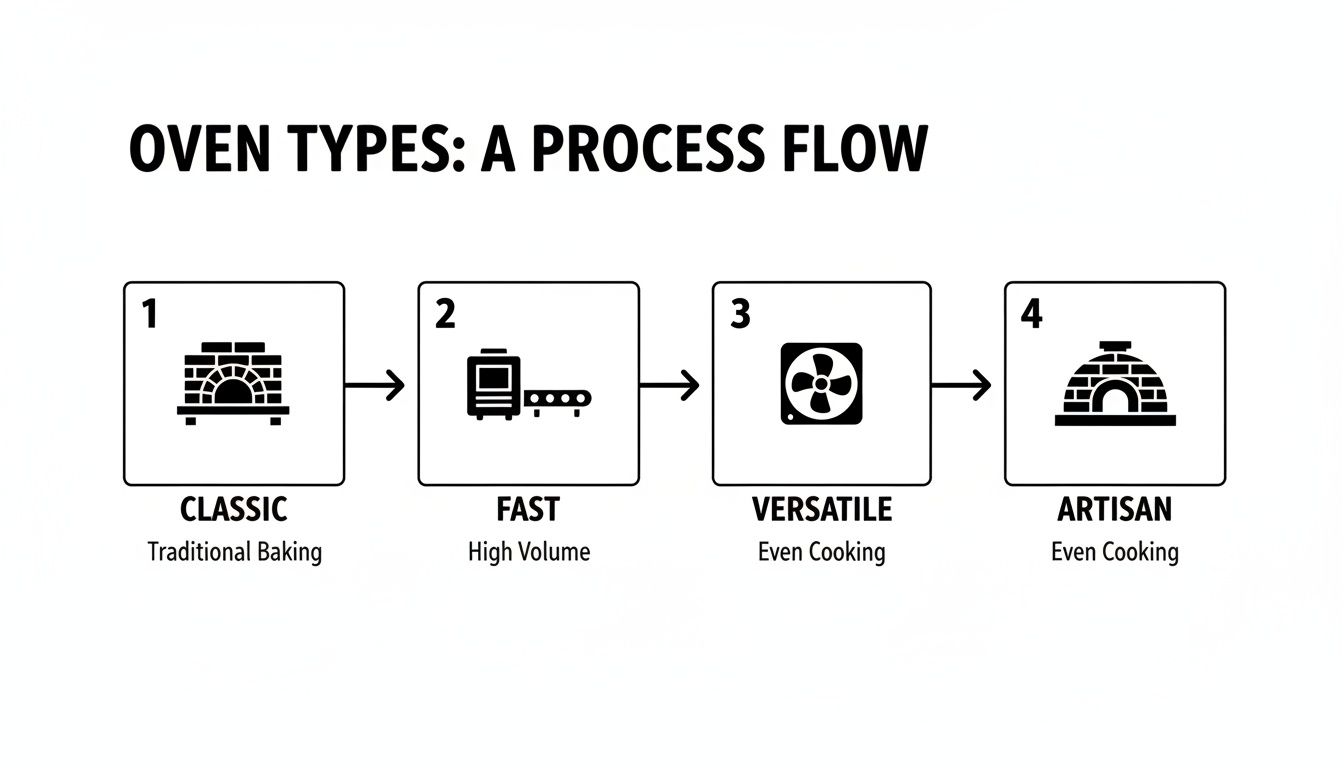
As you can see, deck ovens are your go-to for classic pies, conveyors are built for speed, convection ovens offer versatility, and brick ovens are all about that artisan quality.
Putting It All Together: A Real-World Example
Let's run the numbers for a hypothetical Mexican restaurant here in Los Angeles that's decided to add pizza to its menu.
They estimate their busiest hour will demand 24 pizzas. They've got their eye on a deck oven, and their recipe takes about 6 minutes to cook to perfection.
- Calculate Pizzas Per Deck: A standard deck oven can probably hold four 16-inch pizzas at a time.
- Calculate Cook Cycles Per Hour: With a 6-minute bake, they can run 10 full cycles in one hour (60 minutes / 6 minutes = 10 cycles).
- Find the Total PPH: Now, just multiply the pizzas per cycle by the number of cycles. Voilà: 4 pizzas x 10 cycles = 40 PPH.
That 40 PPH capacity easily covers their peak demand of 24 pizzas, leaving them a nice buffer for those unexpectedly busy nights or when a big party walks in. This simple math is what keeps them from buying an undersized oven and turning their kitchen into a traffic jam.
But don't forget the human factor. The fastest oven in the world is still limited by how quickly your crew can stretch dough, top pies, and work the peel. Your kitchen workflow and your team's efficiency are just as critical to hitting those production numbers.
A well-organized station with the right restaurant equipment is every bit as important as a high-capacity oven. Make sure you have the right setup, like a proper pizza prep table, to keep things moving smoothly. By calculating your true PPH needs, you can invest with confidence, knowing you've got an oven that’s ready to grow with you.
Navigating SoCal Utilities And Ventilation Codes
You’ve finally landed on the perfect commercial pizza oven for your shop. It’s the right size, the right style, and you can already smell the incredible pizzas it’s going to produce. But hold on. The next step is what can bring a restaurant project to a screeching halt: installation.
Here in Southern California, that means wading through a tangled web of utility requirements and notoriously strict ventilation codes. It can feel like a nightmare. But getting it right isn't optional—the world’s best oven is just a very expensive paperweight if it can’t be legally and safely hooked up in your Los Angeles kitchen or food truck.
Let's cut through the red tape and get your restaurant equipment set up for a smooth, compliant installation.
Matching Your Oven to Your Utilities
Before you even schedule an installation, you have to play detective with your building's utilities. Every single commercial pizza oven has a specific appetite for power and fuel, and your space absolutely must be able to feed it.
- Electric Ovens: These are picky about their electricity. A beast of a conveyor oven might demand a 208V three-phase connection, while a small countertop model could be happy with a standard 120V circuit. Always, always check the spec sheet and get an electrician to confirm your panel can handle the new load.
- Gas Ovens: Natural gas is the go-to for many pizza pros, and its power is measured in BTUs (British Thermal Units). Your gas line needs the right diameter and pressure to safely fuel your oven's burners. An undersized line will literally starve your oven, leading to weak flames and frustratingly inconsistent temps.
Thinking this through from day one can save you from the headache and massive expense of last-minute electrical or plumbing overhauls.
Understanding Southern California Ventilation Rules
Ventilation is where many SoCal restaurant owners get tripped up, especially with the tough air quality standards in places like Los Angeles and Orange County. This is all about the hood system, and you need to know the difference between the two main types.
A Type 1 hood, often called a grease hood, is mandatory for any appliance that kicks out grease-laden vapors. This means most gas deck ovens, and especially wood-fired brick ovens that produce smoke and embers. These are complex, expensive systems that have to meet strict fire safety codes.
A Type 2 hood, or a condensate hood, is for restaurant equipment that only produces heat and steam. Think certain electric convection or ventless ovens. The requirements are far less intense, which is why they’re a popular choice for operators trying to simplify their build-out.
The rule of thumb couldn't be simpler: if it makes smoke or grease, it needs a Type 1 hood. Trying to skirt local fire and health codes can lead to huge fines, failed inspections, and brutal delays in opening your doors. Do yourself a favor and consult the Los Angeles County Department of Public Health or your city’s equivalent.
The Special Case of Food Trucks and Wood Ovens
Two situations demand extra homework. First, Los Angeles food trucks operate under a unique set of rules for ventilation and fire suppression systems designed for a mobile kitchen. All the restaurant equipment has to be bolted down and secured, and the systems must be incredibly compact and efficient.
Second, wood-fired ovens are the biggest challenge of all. On top of needing a heavy-duty Type 1 hood, they require special clearance from walls and ceilings and can face extra rules tied to air quality control. Some cities have very specific regulations about burning solid fuel, so checking with the local fire marshal is an absolute must before you fall in love with that gorgeous brick oven.
Understanding The Total Cost Of Ownership
The sticker price on a commercial pizza oven is just the first chapter of its financial story. If you want to make a truly smart investment for your restaurant, you have to read the whole book—and that means understanding the Total Cost of Ownership (TCO).
This is a critical number that goes way beyond the initial purchase of your restaurant equipment. It pulls back the curtain on everything from installation and daily energy use to the inevitable costs of maintenance and repairs down the road.
For a busy Los Angeles restaurant, food truck, or Mexican food spot, getting a handle on TCO is the secret to protecting your cash flow. It’s the difference between buying an asset that makes you money and a liability that slowly drains your budget with surprise bills and crippling downtime.
Beyond The Purchase Price
It's always tempting to jump on what looks like a great deal for a used or older model oven. But be careful. That lower upfront cost can be a Trojan horse, hiding much higher long-term expenses inside. A brand-new, modern oven is engineered for efficiency, and that translates directly into lower monthly utility bills.
Think of it like buying a car. An old, cheap clunker might get you off the lot for less, but its terrible gas mileage and constant need for repairs will cost you far more over time than a new, reliable model with a great warranty. The same principle applies directly to your kitchen's most important restaurant equipment.
Newer ovens, especially the electric ones, are built differently. They often have far better insulation and smarter heating technology. This means they heat up faster and hold that heat longer, using way less energy during a long service. Over a single year, those savings can easily add up to thousands of dollars, making the new oven a much better return on investment.
The Hidden Costs Of Old Equipment
When you buy a used oven, you're also buying its entire, unknown history of wear and tear. Without a warranty, a single major breakdown—like a failed thermostat or a cracked deck—can hit you with a repair bill that completely wipes out any initial savings.
Even worse, it means kitchen downtime, lost sales, and customers you can't serve.
A new oven from a trusted supplier like LA Restaurant Equipment comes with a manufacturer's warranty. This is your financial safety net. It protects you from the cost of unexpected component failures and gives you some much-needed peace of mind. For most independent operators, investing in new restaurant equipment is simply the most financially sound decision.
To get a better sense of how these expenses fit into the bigger picture, check out our complete guide on restaurant startup costs.
Calculating Your Long-Term Investment
To get a clearer picture of your own potential investment, you need to look at all the variables. This isn't just about the purchase and installation; it's also about projecting your monthly energy use and potential maintenance costs.
Here are the key components of TCO to map out:
- Initial Purchase Price: The upfront cost of the oven itself.
- Installation & Shipping: The cost to get the oven delivered and professionally installed.
- Monthly Energy Costs: An estimate of your gas or electricity consumption based on the oven's specs and how much you plan to use it.
- Maintenance & Repairs: A budget for routine upkeep and any potential repairs that aren't covered by a warranty.
For a really detailed financial analysis of your potential investment, a dedicated savings calculator can be a huge help. By looking at the complete financial picture, you can confidently choose a commercial pizza oven that will serve as a profitable engine for your business for years to come.
Making Your Purchase With Confidence
Okay, you’ve done the heavy lifting. You’ve waded through the different oven types, crunched the numbers on your production needs, and even wrestled with the details of utilities and long-term costs. Now it’s time to pull it all together and make the final call on your restaurant equipment.
Investing in a commercial pizza oven is a huge step, no doubt about it. But if you’ve followed along and done your homework, you can walk into this decision with total confidence. This last part is all about double-checking the details and, just as importantly, finding the right partner to help you get that oven into your kitchen.
Your Final Pre-Purchase Checklist
Before you sign on the dotted line or hit that "buy" button, do one last quick sanity check. Trust me, spending a few extra minutes here can save you a world of headaches later.
- Confirm Your Pizza Style: Is this really the right oven for the pizza you want to be famous for? Whether it's for your LA pizza shop or your Mexican restaurant, make sure the oven matches your vision.
- Verify Your Production Needs: Look at your pizzas-per-hour (PPH) calculation again. Does the oven’s capacity easily handle your busiest Friday night, with a little room to spare for when you get even more popular?
- Double-Check Your Space: Get out the tape measure one more time. It's not just about where the oven will live; it’s about getting it there. Measure your doorways, hallways, and any tight corners.
- Audit Your Utilities: Get the final thumbs-up from your electrician or plumber. Confirm that your gas lines, electrical setup, and ventilation can handle the specific model you’re about to buy.
Once you've ticked these boxes, you're ready to make it happen.
The Advantage Of A Local SoCal Partner
For anyone running an independent spot in Los Angeles or Orange County, going with a local supplier like LA Restaurant Equipment just makes sense. It’s the difference between a complicated, stressful purchase and a smooth, guided process.
Choosing the right restaurant equipment partner is just as important as choosing the right oven. A local supplier who gets the breakneck pace of the Southern California market can provide the kind of responsive service and expert advice you just won’t find anywhere else.
Here’s what you get when you work with a local pro:
- Accessible Financing: We have connections with lenders who understand the restaurant business. That means flexible financing options to get you a brand-new, fully-warrantied oven without draining your cash reserves.
- Rapid In-State Shipping: Why wait weeks for an oven to cross the country? With our warehouse right here in Brea, we can often get new restaurant equipment to your spot in LA or OC in just one to two business days. Less waiting, less downtime.
- Expert Support: You get to talk to actual people who know this equipment inside and out and understand the challenges you face. Whether you need a quick quote or help figuring out the specs, that personal support is a game-changer.
Making a confident purchase isn't just about the oven; it's about having support you can count on for the long haul. And speaking of long-term success, getting customer feedback through smart restaurant review strategies is key to building that confidence in your brand. By pairing a smart approach with a reliable local partner, you can invest in an oven that will be the heart of your kitchen for years to come.
Your Top Commercial Pizza Oven Questions Answered
We get a lot of questions from restaurant owners across Southern California. Whether you're starting a new Los Angeles pizza shop, a food truck, or adding pizza to a Mexican food menu, it's natural to have a few final things to clear up. Here are some of the most common questions we hear, with straight-up answers to help you feel confident in your choice of restaurant equipment.
What Is The Best Commercial Pizza Oven For A Food Truck?
When you’re working in the tight quarters of a food truck, space and speed are everything. That's why for most Los Angeles food trucks, we almost always point to compact countertop convection or conveyor ovens. They're built for the hustle.
Their small footprint, ridiculously fast preheat times, and consistent results are a perfect match for a mobile kitchen. Plus, they're versatile enough to handle other menu items, which is a massive win when every square inch counts. They also tend to have simpler ventilation needs, making it easier to stay compliant with local codes.
Can I Get Financing For A New Commercial Pizza Oven?
Absolutely. Financing is one of the smartest ways to get the restaurant equipment you need without draining your bank account. We work with operators all the time to set up flexible financing options, letting you get a brand-new, reliable, and efficient oven for a manageable monthly payment.
This strategy keeps your working capital free for the things that keep you running day-to-day, like payroll, inventory, and getting the word out. In a market as competitive as Southern California, that kind of financial breathing room is a game-changer.
It’s an incredibly popular route for independent restaurants that want to upgrade their kitchen without taking a huge upfront financial hit.
Is Buying A Used Pizza Oven A Good Idea?
I get it, the low sticker price on a used oven is tempting. But from what we've seen over the years, that initial savings often gets eaten up by long-term headaches. Used restaurant equipment usually comes with no warranty, a mystery maintenance history, and older, less efficient technology that jacks up your utility bills.
Investing in a new oven with a solid warranty gives you reliability you can count on, lower operating costs from day one, and priceless peace of mind. Nine times out of ten, it’s the safer and more profitable choice for your business.
How Fast Can A Pizza Oven Be Delivered In Los Angeles?
This is where working with a local supplier really pays off. If your business is in Los Angeles or Orange County, ordering from a company with a warehouse right here in California means you can often get your restaurant equipment delivered in just one to two business days.
That quick turnaround means less downtime for your kitchen and a faster path to making money. No more waiting around for a truck to make its way across the country.
Ready to find the perfect commercial pizza oven for your Southern California spot? Check out our warehouse-direct pricing on new, warrantied restaurant equipment at LA Restaurant Equipment and get it delivered fast. Visit us online at https://larestaurantequipment.com to see our full selection.